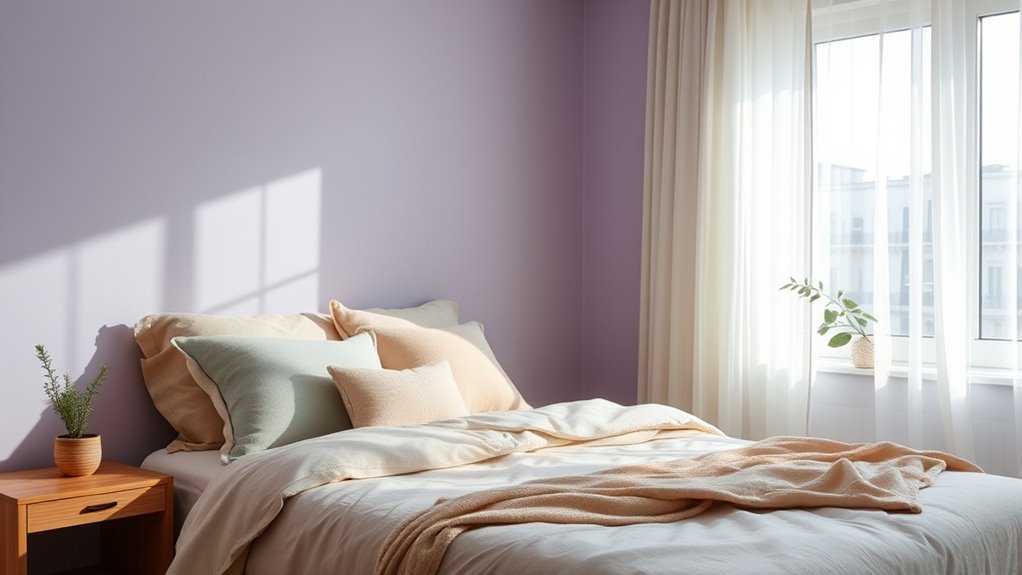

Choosing calming bedroom colors like soft blues, greens, or warm neutrals can greatly enhance your sleep mood by lowering stress and promoting relaxation. These hues leverage color psychology to create a peaceful environment that helps you unwind and fall asleep more easily. Avoid stimulating colors like bright reds or dark, heavy shades that can increase tension. For more tips on creating a serene sleep space, you’ll find useful ideas to help transform your bedroom environment.

Get health and wellness essentials delivered free — and shop member deals
- Fast, free delivery on millions of items
- Access to Prime Big Deal Days deals on October 6–7
- Prime Video, Amazon Music and more included
Key Takeaways
- Soft blues and greens promote relaxation by lowering stress and creating a tranquil sleep environment.
- Warm neutrals and beiges foster comfort and help reduce anxiety, improving sleep quality.
- Using calming shades with proper lighting and minimal clutter enhances sleep-friendly atmospheres.
- Avoid bright, stimulating colors like reds or neon tones, which increase alertness and hinder sleep.
- Incorporating soothing hues in wall paint or accessories can transform your sleep mood and promote restful nights.
calming bedroom wall paint colors
As an affiliate, we earn on qualifying purchases.
As an affiliate, we earn on qualifying purchases.
The Science Behind Color Psychology and Sleep
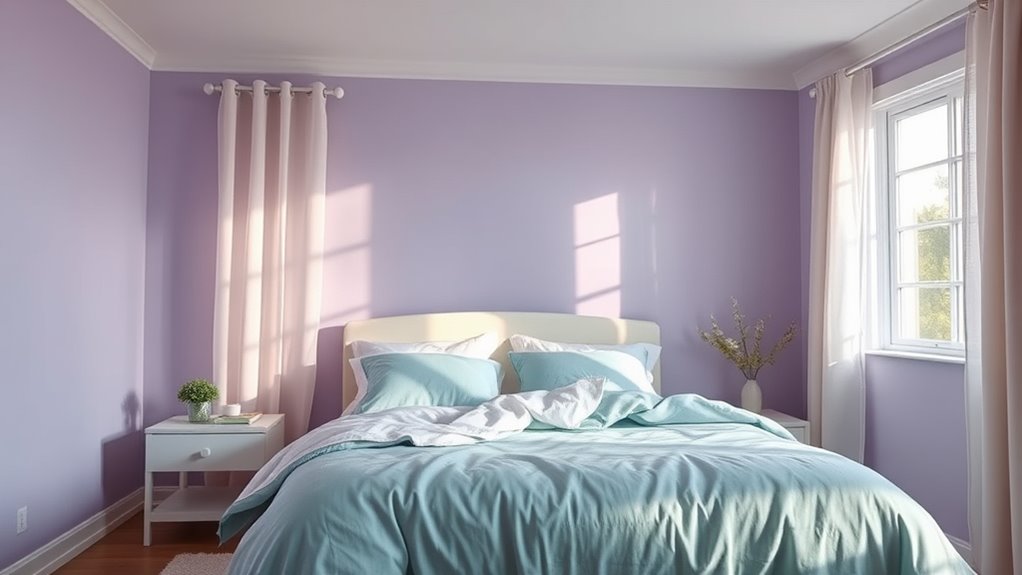
Understanding how colors influence your mood begins with the science of color psychology. This field reveals how different hues can affect your emotions and overall well-being. Color therapy, a related concept, uses specific shades to promote relaxation and improve sleep quality. For example, calming colors like soft blues and gentle greens are believed to lower stress levels and create a tranquil environment. When you choose bedroom colors thoughtfully, you’re tapping into this science to enhance your sleep. The right shades can help your mind relax, making it easier to fall asleep and stay asleep longer. Additionally, color saturation can enhance or diminish the calming effects of your chosen shades, further influencing your sleep quality. The impact of essential oils on mood and relaxation also supports creating an optimal sleep environment. By understanding how color impacts your mood, you can craft a bedroom that supports restful, rejuvenating sleep every night. Incorporating curiosity-driven exploration into your bedroom design process can also lead to discovering new shades that uniquely promote relaxation.
soothing blue green bedroom accessories
As an affiliate, we earn on qualifying purchases.
As an affiliate, we earn on qualifying purchases.
How Soft Blues and Greens Promote Calmness

Soft blues and greens naturally evoke a sense of tranquility, making them ideal choices for creating a calm bedroom environment. These soothing shades leverage color therapy principles to promote relaxation and reduce stress, helping you unwind before sleep. Their gentle tones can enhance your mood by fostering feelings of safety and serenity. Incorporating energy-efficient lighting can further support these calming effects by adjusting brightness and color temperature to promote relaxation. To maximize their calming effect, consider incorporating these ideas:
- Use light, muted shades to avoid overstimulation
- Pair with natural textures like wood or linen for added comfort
- Keep accessories minimal to maintain a clutter-free space
- Incorporate soft lighting to complement the calming palette
- Integrate smart lighting automation that adjusts brightness and color temperature to support circadian rhythms and enhance relaxation.
As an affiliate, we earn on qualifying purchases.
The Restorative Power of Warm Neutrals and Beiges
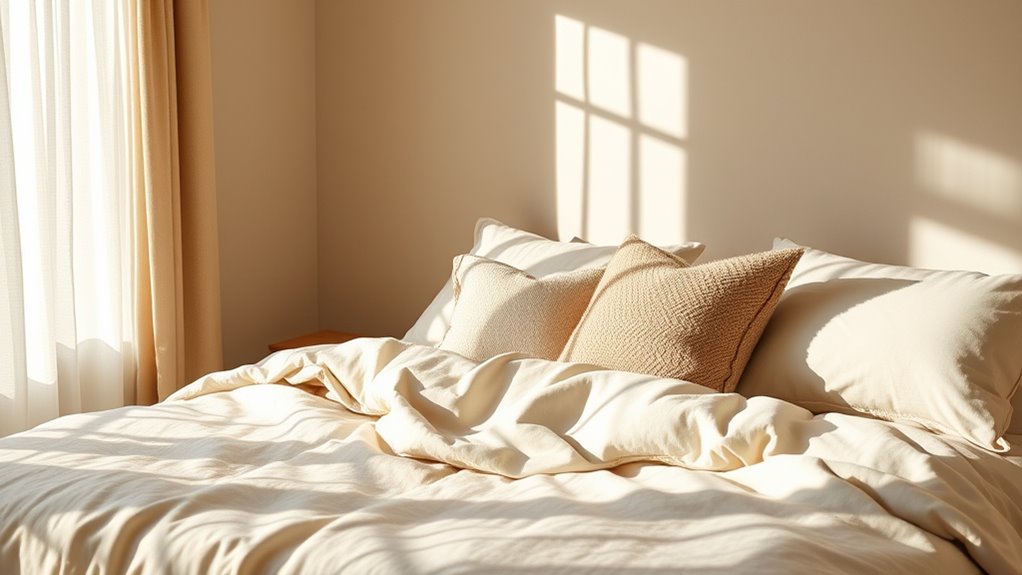
Warm neutrals and beiges create a calming atmosphere that makes your bedroom feel more inviting. They promote relaxation and help you unwind after a long day. Incorporating these colors can enhance your comfort and support restful sleep. Additionally, choosing the right shades can affect sleep quality by influencing your mood and overall sense of tranquility. Using natural materials and textures that complement these shades can further promote a peaceful environment, making your bedroom a true sanctuary. Selecting color schemes that align with your personal preferences can also significantly impact how restful and restorative your sleep feels. When selecting these hues, consider how their psychological effects can support your overall well-being and sleep patterns. Incorporating calming color psychology principles can help create a more soothing and balanced space for rest.
Calming Atmosphere Creation
Creating a calming atmosphere in your bedroom often begins with choosing the right colors, and warm neutrals and beiges are perfect for this purpose. These shades foster a soothing environment that promotes relaxation and better sleep. To enhance this calming effect, consider optimizing your bedroom lighting—soft, warm lights reduce stress and create a cozy ambiance. Incorporate sleep environment accessories like plush pillows, calming artwork, or textured blankets to add tactile comfort. Keep clutter minimal to maintain tranquility. Remember, the goal is to create a space that feels safe and inviting, encouraging your mind to unwind. Using warm neutrals and beiges as your foundation, paired with thoughtful lighting and accessories, sets the perfect stage for restful sleep and a peaceful mood. Additionally, choosing ambient-light playbooks can help you tailor your lighting to support your sleep environment and mood. Incorporating color psychology principles can further optimize your bedroom palette for relaxation and restful sleep. Implementing proper color coordination can also reinforce the soothing atmosphere you aim to create. For a more comprehensive approach, selecting optimal lighting strategies ensures you enhance the calming ambiance effectively.
Enhances Relaxation and Comfort
Because warm neutrals and beiges naturally evoke a sense of safety and stability, they substantially enhance relaxation and comfort in your bedroom. These shades create a soothing backdrop that promotes calmness, helping you unwind after a busy day. Incorporating warm neutrals into your bedroom decor makes your sleep environment feel more inviting and restful. They serve as a versatile foundation, allowing you to add textures and subtle accents without overwhelming the space. This balance encourages a peaceful atmosphere, which can improve your overall sleep quality. By choosing these calming hues, you foster a sense of stability and serenity that makes it easier to relax and drift off to sleep. Additionally, color psychology suggests that these gentle tones can positively influence your mood and promote better sleep patterns. Moreover, selecting these calming shades can also contribute to a more consistent sleep cycle by reducing visual stimuli that might interfere with rest. Incorporating elements of sound healing science, such as gentle background sounds or soothing frequencies, can further enhance your sleep environment. Creating a dedicated sleep sanctuary with these colors can help signal to your brain that it’s time to relax and prepare for rest. Engaging in a calming bedtime routine, like gentle stretches or meditation, can also support your relaxation response and improve sleep quality. Ultimately, warm neutrals and beiges support a restorative sleep environment for better rest.
sleep-friendly lighting for bedroom
As an affiliate, we earn on qualifying purchases.
As an affiliate, we earn on qualifying purchases.
Shades to Avoid for Better Sleep Quality

Bright, stimulating colors can keep you alert rather than relaxed, making it harder to fall asleep. Dark, heavy hues might feel cozy but can also make your space feel oppressive and disrupt your rest. Clashing color combinations create visual chaos, which can prevent your mind from winding down at night.
Bright, Stimulating Colors
Stimulating colors like vibrant reds, electric blues, and bright yellows can make your bedroom feel energetic rather than restful. These shades often lead to a heightened alertness that hampers sleep. Avoid using vibrant accent walls or bold bedding patterns in these hues, as they can intensify the stimulating effect. Instead, opt for calmer shades to promote relaxation. Bright colors tend to increase heart rate and distract your mind, making it harder to unwind at night. Think twice before choosing these shades for walls or accessories. Their lively nature can disrupt your sleep environment, preventing you from achieving deep, restful sleep. Instead, focus on soothing tones that foster tranquility and ease your transition into sleep. Incorporating color psychology into your bedroom design can help select shades that promote calmness and improve sleep quality. Bright, stimulating colors are best reserved for lively spaces rather than your bedroom sanctuary.
Dark, Heavy Hues
Dark, heavy hues such as deep browns, charcoal grays, and rich blacks can substantially hinder your ability to relax and fall asleep. These shades tend to create a sense of heaviness and can increase feelings of tension or alertness. The high color saturation of dark, heavy hues intensifies this effect, making your space feel less open and more oppressive. When your bedroom walls or decor lean toward these shades, it can be difficult to achieve the calm atmosphere needed for restful sleep. Instead of promoting relaxation, these colors may evoke feelings of gloom or unease. If you’re aiming for better sleep quality, it’s best to avoid dark, heavy hues and opt for softer, more soothing tones that encourage tranquility. Additionally, incorporating light, neutral colors can help create a more peaceful environment conducive to sleep.
Clashing Color Combinations
Clashing color combinations can considerably disrupt your sleep environment by creating visual chaos that prevents relaxation. When your bedroom features mismatched hues or bold color clashes, your mind struggles to unwind. Such mismatched hues stimulate your senses rather than calm them, making it harder to fall asleep. Avoid using these problematic combinations:
- Bright reds with neon greens
- Sharp yellows paired with stark blues
- Clashing purples and oranges
- Overly contrasting black and white patterns
These combinations generate visual noise that distracts your brain, increasing alertness instead of promoting rest. Stick to harmonious, soothing shades to foster a tranquil atmosphere. By steering clear of color clash, you help your mind relax, making it easier to drift into restful sleep.
Combining Colors for a Harmonious Sleep Environment
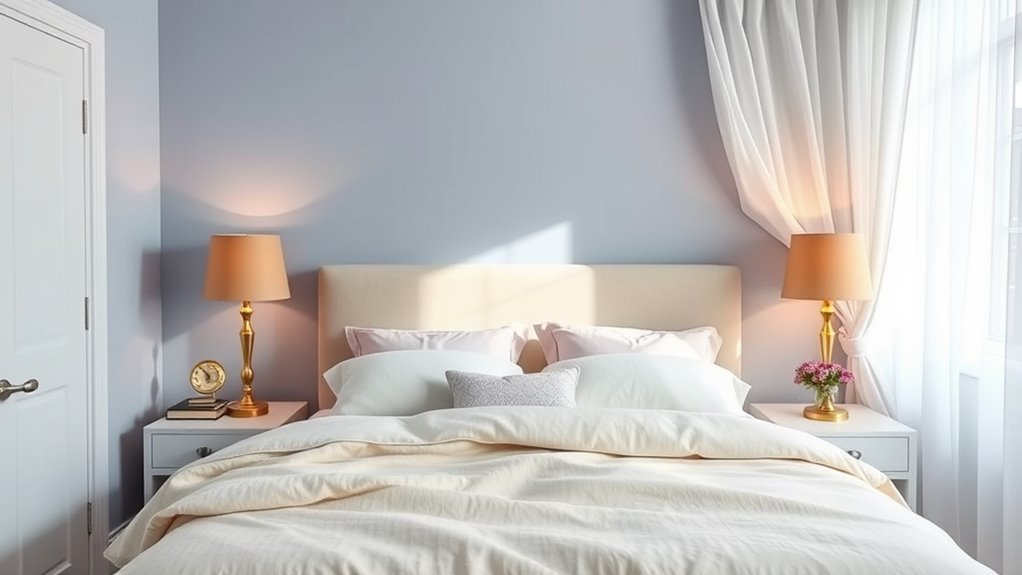
Creating a harmonious sleep environment often involves thoughtfully combining colors that promote relaxation. Color therapy plays a key role here, as certain shades work together to foster calmness and reduce stress. When selecting colors, consider pairing soft neutrals with gentle blues or greens, which naturally complement each other and enhance your sleep environment. Avoid harsh contrasts or overly bright hues that can disrupt your mood. Instead, aim for a balanced palette that soothes your mind and body. Combining colors thoughtfully helps create a cohesive look, making your bedroom feel more serene and inviting. Remember, the goal is to craft a space that encourages relaxation and prepares your mind for restful sleep, with each color working in harmony to support your sleep quality.
Tips for Incorporating Soothing Colors Into Your Bedroom

Incorporating soothing colors into your bedroom can transform it into a peaceful retreat. Start by choosing calming shades like soft blues, gentle greens, or warm neutrals as your primary wall colors. Use decorating tips such as selecting compatible bedroom accessories—think plush pillows, cozy throws, or calming artwork—that complement your palette. To create a cohesive look, keep accessories simple and avoid clutter. Consider painting an accent wall in a soothing hue for visual interest without overwhelming the space. When decorating, stick to a consistent color theme to enhance relaxation. Avoid harsh contrasts and busy patterns. Remember, the goal is to foster tranquility; subtle, harmonious colors and thoughtfully chosen accessories will help you achieve this.
Real-Life Examples of Color Choices and Sleep Improvement

Many people have experienced tangible sleep improvements after choosing calming colors for their bedrooms. For example, some select soft blues or gentle greens for their bedroom paint choices, creating a more restful sleep environment design. One individual switched from bright, vibrant hues to muted, cool tones and found falling asleep easier and waking less during the night. Others report that a bedroom painted in calming shades like lavender or pale gray has helped reduce stress and promote relaxation before bed. These real-life examples highlight how intentional color choices can transform your sleep experience. By focusing on bedroom paint choices that evoke serenity and tranquility, you can enhance your overall sleep quality and wake up feeling more refreshed each morning.
Frequently Asked Questions
Can Bedroom Colors Influence My Overall Sleep Duration?
Yes, bedroom colors can influence your overall sleep duration through color psychology. Calming shades like blues and greens create a relaxing sleep environment, helping you fall asleep faster and stay asleep longer. Bright or bold colors may disrupt your sleep, reducing its quality. By choosing soothing hues, you optimize your sleep environment, potentially increasing your sleep duration and improving overall rest.
Are There Specific Shades That Help Reduce Insomnia Symptoms?
Think of your bedroom as a refuge, where calm washes over you like gentle waves. Certain shades, rooted in color psychology, can help ease insomnia symptoms. Opt for relaxing color palettes like soft blues, muted greens, or warm neutrals—these hues promote tranquility and reduce overstimulation. By choosing these colors, you create a sleep sanctuary that signals your mind it’s time to unwind, making restful nights more achievable.
How Long Does It Take for Color Changes to Improve Sleep Quality?
Color therapy can start improving your sleep quality within a few days to a week once you update your sleep environment. You’ll notice better sleep as your brain adapts to the new calming shades. Consistency is key, so stick with your chosen colors for at least 7-14 days. Over time, these soothing hues help reduce stress and promote deeper, more restful sleep, enhancing your overall sleep quality.
Do Personal Color Preferences Impact the Effectiveness of Bedroom Colors?
Your personal color preferences can profoundly impact how effective your bedroom colors are for sleep. If you adore calming blues or gentle greens, you’re more likely to feel relaxed and ready for rest. Your bedroom color choices should reflect what soothes your soul, because ignoring your preferences might turn your sleep sanctuary into a battlefield. Trust your instincts—your ideal hue can transform your sleep experience into a peaceful paradise.
Can Lighting Adjustments Enhance the Calming Effects of Bedroom Colors?
Lighting adjustments can markedly enhance the calming effects of your bedroom colors. You should try dimming your lights in the evening to create a cozy, relaxing environment. Using color-changing LEDs allows you to customize your lighting to match soothing shades, promoting better sleep. These options help reinforce the mood set by your bedroom colors, making it easier for you to unwind and prepare for restful sleep each night.
Conclusion
Choosing calming colors for your bedroom can transform it into a sanctuary of rest, where peaceful shades foster relaxation instead of restlessness. While vibrant hues might energize, soothing tones like soft blues or warm neutrals invite tranquility. The contrast between chaos and calm is striking—your color choices hold the power to either disturb your sleep or nurture it. Embrace the hues that nurture your mind and body, and let your bedroom become your ultimate retreat.
Fall Picks
fall essentials
As an affiliate, we earn on qualifying purchases.