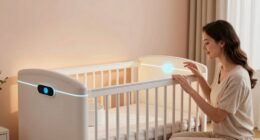
Waterbeds can provide personalized comfort and temperature control, making your sleep more relaxing and cozy. However, they may cause disturbances if you share the bed or if the water shifts during the night. Maintenance is essential to keep the temperature just right, and malfunctions can lead to discomfort. If you’re curious about how waterbeds might fit your sleep needs, exploring more details can help you decide if they’re right for you.
Key Takeaways
- Waterbeds conform to body shape, providing enhanced comfort and reducing pressure points during sleep.
- They offer adjustable temperature control for personalized warmth or cooling, promoting restful sleep.
- Motion transfer can disturb partners due to water movement, despite design features like baffles.
- Regular maintenance and monitoring of heaters are necessary to prevent malfunctions and ensure comfort.
- Waterbeds may not be suitable for everyone, especially light sleepers or those sensitive to movement or temperature fluctuations.

Waterbeds have experienced a resurgence in popularity, thanks to their unique comfort and soothing qualities. When you lie down on one, you might notice how it gently conforms to your body, providing a sense of weightlessness and relaxation that traditional mattresses often can’t match. This contouring can help reduce pressure points and improve your overall sleep quality. However, as appealing as these benefits are, there are some factors you should contemplate before making the switch.
One of the main advantages of waterbeds is their temperature regulation. Water responds quickly to changes in ambient temperature, allowing you to easily adjust the bed’s warmth to suit your preferences. Many waterbeds come with built-in heaters, so you can keep the surface warm during colder months or cool it down if you tend to overheat at night. This level of control can lead to more restful sleep, as you’re less likely to wake up feeling too hot or too cold. On the flip side, maintaining a consistent temperature requires energy and regular monitoring. If the heater malfunctions or is turned off, the bed can become uncomfortable, especially if it cools too much or doesn’t warm up enough.
Motion disturbance is another critical factor to consider. Waterbeds are known for their unique feel, but the motion of the water can be a problem if you share your bed. When one person moves, the entire mattress responds, causing ripples and waves that can disturb your partner’s sleep. This constant shifting can make it difficult to stay asleep through the night, especially if you’re sensitive to movement. Some modern waterbeds are designed to minimize this issue with baffles or divided chambers, which restrict water movement. However, these features don’t completely eliminate the motion transfer, so if you’re a light sleeper or share your bed with a partner, this could be a significant drawback.

The Bedroom Store Waterbed Heater 325W – Temperature Control, Safe & Efficient Heating, Even Heat Distribution, Energy-Saving Design for Hardside Waterbed Mattresses
Advanced Heating Technology: Waterbed heater 325W provides even, consistent heating; prevents cold spots; maintains ideal waterbed temperature for…
As an affiliate, we earn on qualifying purchases.
As an affiliate, we earn on qualifying purchases.
Frequently Asked Questions
How Do Waterbeds Impact Sleep Quality Over Long-Term Use?
Long-term, waterbeds can impact your sleep quality by offering good sleep comfort initially, but they may cause movement disturbance, making it hard to stay asleep through the night. As the water shifts, you might wake up more often, disrupting your rest. Over time, this can reduce sleep quality, especially if you’re sensitive to motion. Regular adjustments can help, but some users find sleep becomes less restful.
Are Waterbeds Suitable for People With Back Pain or Arthritis?
If you have back pain or arthritis, waterbed comfort might seem appealing, but waterbed durability varies. While some find the gentle support soothing, others may experience uneven pressure or leaks that worsen discomfort. Waterbeds can offer customizable firmness, yet their long-term stability isn’t guaranteed. You need to weigh the benefits of adjustable support against potential issues with durability, as they may not be the best choice for chronic pain conditions.
What Is the Cost Difference Between Waterbeds and Traditional Mattresses?
Waterbeds typically cost more upfront than traditional mattresses, with a price comparison showing waterbeds often range between $500 and $2,000, while standard mattresses cost $300 to $1,000. Affordability considerations include maintenance costs and potential repairs, which can add to the long-term expense. If budget is a concern, a traditional mattress might be more economical initially, but waterbeds could offer unique comfort if you’re willing to invest.
Can Waterbeds Be Easily Moved or Relocated?
Like trying to move a boat on dry land, waterbeds aren’t exactly portable. Waterbed portability is limited, making relocation challenging. You’ll need to drain the water, disconnect hoses, and carefully transport the mattress, which can be cumbersome. If you frequently move, a traditional mattress might be a better choice, since waterbeds present significant relocation challenges that can turn a simple move into a complex task.
Do Waterbeds Require Special Maintenance or Repairs?
You do need to perform regular waterbed maintenance to keep it in good shape. This includes checking for leaks, balancing the water level, and ensuring the heater functions properly. If problems arise, waterbed repairs might be necessary, such as patching leaks or replacing the liner. Staying on top of maintenance prevents bigger issues and extends the lifespan of your waterbed, making it a more comfortable and reliable sleep surface.

Quilted Comfort Waterbed Anchor Band Mattress Pad – King
Brushed fabric for a nice/soft, touch and feel.
As an affiliate, we earn on qualifying purchases.
As an affiliate, we earn on qualifying purchases.
Conclusion
Thinking about a waterbed is like weighing a ship’s stability against its movement in choppy waters. While it can offer a cozy, customizable sleep, it might also rock your rest with temperature issues or leaks. Ultimately, whether it’s a smooth sail or turbulent tide depends on your personal comfort and needs. Make sure to weigh these pros and cons carefully—your sleep sanctuary deserves a steady, peaceful voyage.

INNOMAX Vinyl Thermal Guardian Quantum Solid State Waterbed Heater, Full Watt
State-of-the-art Ultra sensitive electronic control that holds the temperature to 1/8 degree of set point ensures accurate temperature…
As an affiliate, we earn on qualifying purchases.
As an affiliate, we earn on qualifying purchases.

The Bedroom Store Semi-Waveless 60%, Hardside Water Bed Mattress, Contains Two Wave Reducing Fiber Layers, Bladder Corners are Reinforced, 18ml Smooth Vinyl (Supper Single)
Comfort and Stability: The 60% semi-waveless waterbed mattress offers a great balance between motion reduction and wave reduction,…
As an affiliate, we earn on qualifying purchases.
As an affiliate, we earn on qualifying purchases.