
TL;DR

Get health and wellness essentials delivered free with Prime
- Fast, free delivery on millions of items
- Prime Video, Amazon Music and more included
- Member-only deals all year
Researchers at Nottingham Trent University and Integrated System Technologies Ltd developed and tested a home-monitoring prototype that combines radar, low-resolution thermal sensors and smart plugs. In a mock home, the combined sensors performed better at recognizing activities than the technologies used alone, but the study does not establish that the system can reliably detect real medical emergencies or prolong independent living.
Researchers from Nottingham Trent University and Integrated System Technologies Ltd have developed and tested a prototype that combines radar, thermal sensors and smart plugs to monitor activity in older people’s homes. The system is designed to identify unusual patterns that could signal an emergency or a change in health, while avoiding cameras and wearable devices; its testing so far took place in a mock domestic environment, not a trial of real-world medical outcomes.
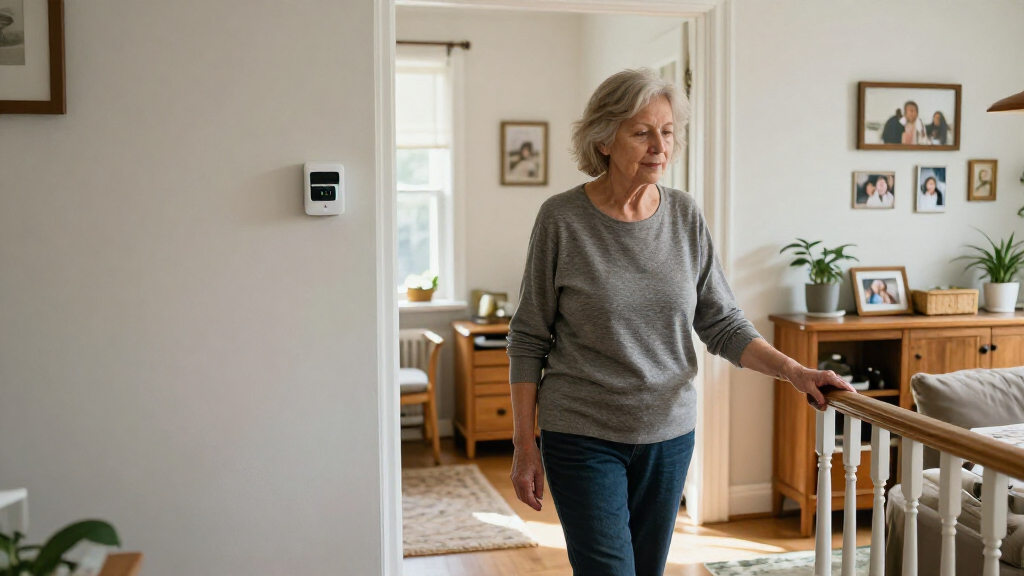
The system uses millimeter-wave radar to detect movement, thermal sensors to identify broad postures such as sitting, standing, walking or lying down, and smart plugs to track activity involving connected household appliances. The researchers say the thermal data is kept at low resolution and does not show facial features or personal identity. The sensors are intended to be placed discreetly around a home.
An AI system combines information from the different devices and learns a resident’s behavior patterns over time. Researchers say it could flag possible events, including a fall or other serious health incident, as well as deviations such as prolonged inactivity or a change in everyday routines. If the system detects a potential emergency, it is intended to notify care professionals or loved ones, who could check on the resident remotely or in person.
The team assessed activity and posture recognition in a mock home with six room layouts, including bedrooms and living areas with different furniture arrangements. The study reports that combining data from all three sensor types improved performance compared with using the technologies separately. The paper, “Privacy-Preserving Ambient Sensing for Activities of Daily Living: Multimodal Radar-Thermal Human Activity Recognition and Smart Plug Appliance Recognition,” was published in the journal Sensors in 2026.
Monitoring Without Cameras or Wearables
The prototype addresses a practical challenge for people who want to remain at home as they age: noticing a fall or a concerning change in routine when no one is present. Ambient monitoring could offer another way for caregivers to learn that someone may need a check-in, without requiring the resident to wear a device or be recorded by a conventional camera.
The potential benefit remains a proposal, not a demonstrated outcome. The study tested recognition of activities in a simulated domestic setting; it did not show that the system prevents injuries, accurately diagnoses illness, reduces care needs or enables people to live independently for longer. Any real-world value would depend on reliable detection, appropriate follow-up and whether residents and caregivers accept the monitoring.
home activity monitoring sensors for elderly
As an affiliate, we earn on qualifying purchases.
As an affiliate, we earn on qualifying purchases.
How the Prototype Combines Sensors
The research was conducted by NTU’s School of Architecture, Design and the Built Environment, NTU’s School of Science and Technology, and Integrated System Technologies Ltd. The project focuses on recognizing activities of daily living: movement and ordinary household behaviors that may help indicate how someone is managing at home.
Each sensor supplies a different kind of information. Radar detects movement, thermal sensing estimates posture without producing a detailed image, and smart plugs register appliance use that may be associated with tasks such as making tea or preparing food. The researchers’ test suggests that bringing these signals together can improve activity recognition in the layouts they examined. It does not establish how the system performs across a broad range of real homes or residents.
“By combining these three technologies, we can establish a complete picture of how someone is coping at home.”
— Dr. Yangang Xing, lead researcher at Nottingham Trent University
privacy-focused elder care sensors
As an affiliate, we earn on qualifying purchases.
As an affiliate, we earn on qualifying purchases.
Real-World Performance Still Unknown
The published test does not establish how often the system would detect a genuine emergency, or how often it might issue a false alert. The source report gives no real-world trial results, participant numbers for a deployment study, or evidence that alerts lead to faster care or better health outcomes. It is also unclear how well the system would adapt to different homes, household routines, disabilities or changes in residents’ behavior.
Privacy is a stated design aim, but practical questions remain about data storage, access, security, consent and how residents could pause or stop monitoring. The report also does not specify a commercial release date, final price, or whether the prototype has been assessed for use as a medical device. The researchers’ claims about supporting longer independent living should be understood as potential benefits, not findings proven by this test.
smart home sensors for fall detection
As an affiliate, we earn on qualifying purchases.
As an affiliate, we earn on qualifying purchases.
Further Testing Before Home Use
The next step would be to test the system in occupied homes over longer periods and assess both activity recognition and the handling of alerts. Such work would need to establish how reliably it distinguishes an emergency from ordinary changes in routine, and whether caregivers can respond effectively. The source report does not announce a schedule for further trials or a launch.
The study provides an early assessment of a multi-sensor approach, with the authors reporting better performance when the devices were combined. Until additional evidence is available, the prototype should be viewed as a research system rather than a proven emergency-monitoring service for older adults.
thermal and radar sensors for home safety
As an affiliate, we earn on qualifying purchases.
As an affiliate, we earn on qualifying purchases.
Key Questions
What does the home sensor system use?
It combines millimeter-wave radar for movement, low-resolution thermal sensors for broad posture recognition, and smart plugs that monitor connected appliance use.
Does it use cameras or wearable devices?
The system is designed to work without conventional cameras or wearables. The researchers say its thermal output is low-resolution and does not reveal facial features or personal identity.
Has it been shown to detect real medical emergencies?
Not in the testing described. The team assessed activity recognition in a mock domestic environment; the report does not provide results from real-world emergency detection or clinical outcome trials.
Could the system help older people live independently longer?
That is a proposed potential benefit, not an outcome established by the study. The researchers say alerts and routine monitoring could support care, but further testing is needed to show whether the system improves safety or extends independent living.
Source: rss
Cold & flu season Picks
humidifiers
As an affiliate, we earn on qualifying purchases.