
TL;DR

Get health and wellness essentials delivered free — and shop member deals
- Fast, free delivery on millions of items
- Access to Prime Big Deal Days deals on October 6–7
- Prime Video, Amazon Music and more included
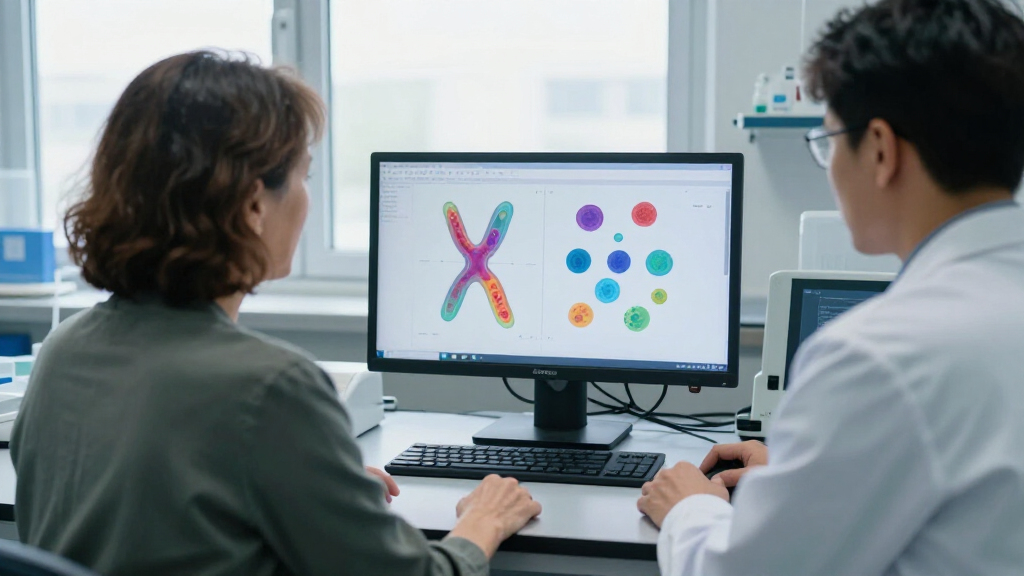
A review in Science brings together human, animal and genomic evidence that X and Y chromosome genes can affect immunity, cancer, aging and other disease processes, independently of and alongside sex hormones. The authors say the findings support more sex-aware research and clinical trials, but many links—particularly those involving age-related chromosome loss—need further study.
A review published in Science argues that genes on the X and Y chromosomes help shape immunity, cancer, aging and other disease risks—not just biological sex—drawing on evidence from human studies, mouse models and genomic research. The authors say chromosome effects can operate alongside sex hormones, a distinction that could inform future diagnosis, treatment research and clinical-trial design.
The review was co-led by Dr. Dan Theodorescu, a physician-scientist at the University of Arizona Cancer Center, and Dr. Dena B. Dubal of the University of California, San Francisco. It examines proposed chromosome-related effects across immune function, metabolism, brain aging, cancer, neurological conditions and cardiometabolic disease. It synthesizes existing findings rather than reporting a new clinical trial or a single new experiment.
One focus is the way cells use the two X chromosomes typically present in women. One X is largely inactivated early in development, but some genes escape that process, and some may become active again with age. The review discusses how these patterns can give cells different doses of particular genes. Mouse studies also suggest that the parent from whom an active X was inherited may matter; a finding in mice is not, by itself, proof of the same effect in people.
The authors also cover age-related loss of sex chromosomes in some cells. Loss of an X chromosome in women has been associated with higher leukemia risk, while loss of the Y chromosome in men—often measured in blood—has been linked in studies to cancer, heart disease, severe infections and Alzheimer’s disease. These associations do not settle whether chromosome loss causes disease, results from other processes, or serves as a marker of risk.
Why Chromosome Biology Matters
The review challenges an approach to sex differences in health that focuses mainly on circulating hormones. If chromosome genes also affect how cells function, age and respond to disease, hormone levels alone may not explain differences in risk or treatment response. That could matter when researchers interpret medical evidence and decide who is represented in studies.
Potential clinical uses remain under investigation. Theodorescu said his laboratory has found that tumors that lose the Y chromosome can evade immune detection, while potentially responding better to immunotherapy. That is a research finding, not a treatment recommendation for an individual patient. The broader value of the review is to identify questions that future studies can test, including whether chromosome changes can help identify risk or guide care.
The authors argue that sex-aware clinical trials could help researchers detect meaningful differences rather than treating them as noise in pooled results. Better understanding of chromosome effects might eventually support more individualized diagnostics or therapies. The review does not establish that such changes should already be used routinely in screening or treatment.
genetic testing kits for sex chromosome analysis
As an affiliate, we earn on qualifying purchases.
As an affiliate, we earn on qualifying purchases.
From Sex Differences to Chromosomes
Health differences between men and women have often been discussed in relation to hormones such as estrogen and testosterone. The review adds chromosome genes as another part of that picture, emphasizing that chromosomes and hormones can work together rather than offering competing explanations.
The paper grew from discussions at the 2025 National Institute on Aging workshop on sex differences affecting human health across the lifespan, including discussions with Francesca Duncan of Northwestern University’s Feinberg School of Medicine. The authors bring together work from several fields and stages of research, from laboratory models to observations in people.
Theodorescu’s earlier research examined Y chromosome loss in T cells and cancer cells, including how it may help tumors evade immune responses. His group has also reported that Y loss in tissue that appears normal may act as an early warning sign of genetic risk. The new review places such work within a wider account of chromosome biology; it does not mean that chromosome loss alone predicts that a person will develop cancer.
““When we look inside human cells, we see that X and Y chromosomes are participants in health and disease throughout a person’s life.””
— Dr. Dan Theodorescu
As an affiliate, we earn on qualifying purchases.
Which Links Need More Evidence
The review combines evidence with different levels of certainty, and many reported links do not establish cause and effect. For example, Y chromosome loss measured in blood is associated with several diseases, but the review does not resolve whether loss contributes directly to those conditions or reflects other age-related changes. The broader health effects of X chromosome loss in women also remain unclear beyond reported links such as leukemia risk.
Some findings come from mouse models, including the reported effects of parental origin of the active X on brain aging and memory. Whether those results apply to people, and how large any effect might be, requires further research. The review also does not provide a validated clinical test, specify a treatment change, or establish which patients would benefit from chromosome-based risk assessment.
The authors’ discussion of possible diagnostic and therapeutic applications is forward-looking. The source material does not give a timeline for clinical adoption or quantify how much chromosome information would improve outcomes compared with current approaches.
As an affiliate, we earn on qualifying purchases.
Research Needed Before Clinical Use
The next step is further research to test the mechanisms and associations highlighted in the review, including studies that distinguish chromosome effects from hormone effects and other factors. The authors call for greater attention to sex chromosomes in cancer and other disease research, as well as clinical trials designed to account for sex-related biology.
For clinical use, researchers would need to establish which chromosome changes reliably predict meaningful outcomes and whether using that information improves diagnosis or treatment. The review sets out areas for investigation, but reports no specific upcoming trial or policy change. Until stronger evidence is available, the clinical implications remain possibilities for future study rather than established guidance.
As an affiliate, we earn on qualifying purchases.
Key Questions
What did the Science review report?
It synthesized existing evidence that X and Y chromosome genes may affect immunity, cancer, aging, metabolism and other aspects of health, both independently of and alongside hormones.
Does the review show that chromosome loss causes disease?
No. It discusses associations between chromosome loss and several diseases, but those links do not establish that the loss causes the disease. The authors identify further research as necessary.
What is known about Y chromosome loss?
Studies have linked Y chromosome loss, often measured in men’s blood, with cancer, heart disease, severe infections and Alzheimer’s disease. Research cited in the review also suggests that Y loss in some tumors may affect immune evasion and response to immunotherapy; this is not an individual treatment recommendation.
Could these findings change medical care now?
The review points to possible future uses in diagnosis and treatment research, but it does not establish a chromosome-based test or new standard of care. Clinical applications require validation in further studies.
Source: rss
Cold & flu season Picks
humidifiers
As an affiliate, we earn on qualifying purchases.