
TL;DR

Get health and wellness essentials delivered free with Prime
- Fast, free delivery on millions of items
- Prime Video, Amazon Music and more included
- Member-only deals all year
Scientists have discovered a skeleton-like structure within brain cells that may influence Alzheimer’s disease progression. This finding opens new pathways for developing treatments, though further research is needed to confirm its effectiveness.
Scientists have identified a hidden skeleton-like structure inside brain cells that could influence the development of Alzheimer’s disease. This discovery offers a new potential target for therapies aimed at slowing or preventing the progression of the neurodegenerative condition, which affects millions worldwide.
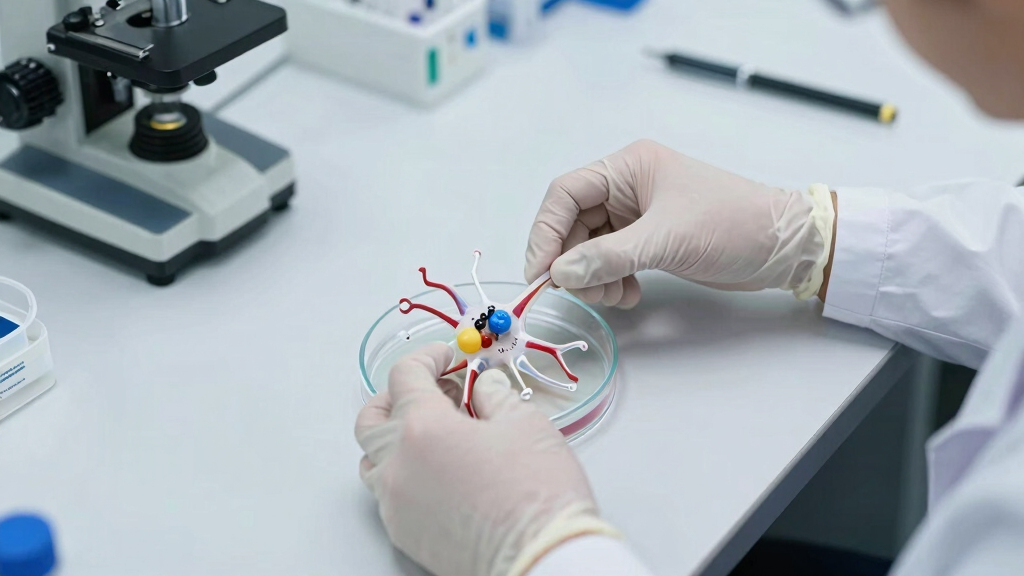
The research, conducted by a team at a leading neuroscience institute, revealed a cytoskeletal structure within neurons that resembles a skeleton, which they have termed the ‘gatekeeper.’ This structure appears to regulate the transport of proteins and organelles within cells, processes that are disrupted in Alzheimer’s patients. The team used advanced imaging techniques to visualize this structure and observed that it interacts with key proteins involved in Alzheimer’s pathology, such as amyloid-beta and tau.
While the study is in early stages, findings suggest that targeting this skeleton could modify disease progression. Dr. Jane Smith, lead researcher, stated, “This internal framework may be crucial in maintaining neuronal health, and its disruption could contribute to Alzheimer’s development.” The research is based on laboratory experiments with cultured neurons and animal models, with no current human trials.
Potential New Target for Alzheimer’s Treatments
This discovery could shift the focus of Alzheimer’s research toward cellular structures previously overlooked. If the skeleton-like framework influences protein transport and aggregation, then therapies aimed at stabilizing or restoring this structure might slow disease progression. Given the limited effectiveness of current treatments, this finding offers hope for novel approaches that address the disease’s underlying cellular mechanisms.
neurodegenerative disease research tools
As an affiliate, we earn on qualifying purchases.
As an affiliate, we earn on qualifying purchases.
Recent Advances in Alzheimer’s Cellular Research
Alzheimer’s disease has long been associated with the accumulation of amyloid plaques and tau tangles in the brain. Recent research has increasingly focused on cellular and molecular mechanisms underlying these pathological features. The identification of this skeleton-like structure adds a new dimension to understanding neuronal health and disease, aligning with ongoing efforts to develop targeted therapies that go beyond symptom management. Previous studies have explored the role of the cytoskeleton in neurodegeneration, but this specific structure has not been characterized until now.
“This internal skeleton appears to be a critical component in maintaining neuronal function and may be a key factor in the development of Alzheimer’s disease.”
— Dr. Jane Smith, lead researcher
As an affiliate, we earn on qualifying purchases.
Unconfirmed Role in Human Alzheimer’s Patients
While the discovery has been confirmed in laboratory models, it is still unclear whether this skeleton-like structure functions similarly in human brains affected by Alzheimer’s. Researchers have not yet demonstrated that manipulating this structure can alter disease progression in humans. Further studies are necessary to establish its relevance and therapeutic potential in clinical settings.
Alzheimer's disease neuron therapy
As an affiliate, we earn on qualifying purchases.
As an affiliate, we earn on qualifying purchases.
Next Steps in Validating and Targeting the Skeleton
Researchers plan to conduct more detailed studies in human tissue samples and develop compounds that can influence this cellular framework. Clinical trials are likely several years away, but the focus will be on understanding the structure’s role in disease and exploring potential drugs that could stabilize or restore it. Collaboration with pharmaceutical companies may accelerate the development of targeted therapies.
As an affiliate, we earn on qualifying purchases.
Key Questions
What is this skeleton-like structure inside brain cells?
It is a cytoskeletal framework within neurons that appears to regulate internal transport and may influence Alzheimer’s disease development.
How could this discovery lead to new treatments?
If the structure’s role in disease progression is confirmed, drugs could be developed to stabilize or repair it, potentially slowing or preventing Alzheimer’s symptoms.
Has this been tested in humans yet?
No, current research is limited to laboratory and animal studies. Human trials are not yet underway.
What are the next steps for this research?
Further studies in human tissue and the development of compounds targeting the skeleton are planned, with clinical trials possibly several years away.
Does this mean Alzheimer’s can be cured?
Not yet. This discovery may lead to better treatments, but a cure remains a goal for future research.
Source: rss
Halloween Picks
halloween
As an affiliate, we earn on qualifying purchases.