
If you’re looking to set up a first-rate media server in 2025, I recommend considering four Mac Mini models. The options include configurations with the powerful M4 chip, like the 24GB RAM version with a 512GB SSD, or models equipped with the M4 Pro chip for demanding tasks. These models offer great performance, connectivity, and space efficiency. Keep exploring, and you’ll discover more details to help you choose the best fit for your media needs.
Key Takeaways
- Choose Mac Mini models with the M4 or M4 Pro chips for optimal media processing performance.
- Prioritize models with at least 16GB RAM and SSD storage for efficient multitasking and quick media access.
- Ensure the Mac Mini has multiple Thunderbolt, HDMI, and Ethernet ports for versatile connectivity and external device support.
- Opt for energy-efficient models with Apple Silicon to reduce power consumption during long server operation.
- Confirm compatibility with media apps like Plex or Kodi and support for hardware acceleration for smooth streaming.
Apple Mac mini Desktop Computer with M4 Chip, 24GB Memory, 512GB SSD

If you’re looking for a powerful yet compact media server, the Apple Mac mini with the M4 chip stands out as an excellent choice. Its small five-by-five-inch design means it can fit seamlessly beside your monitor or in tight spaces without sacrificing performance. Powered by the 10-core CPU and GPU, it handles demanding tasks smoothly. With 24GB of unified memory and a 512GB SSD, multitasking and data storage are effortless. Plus, its variety of ports—Thunderbolt, HDMI, USB-C—ensures versatile connectivity. This Mac mini integrates perfectly with Apple’s ecosystem, offering enhanced productivity, privacy, and environmental sustainability.
Best For: users seeking a compact, high-performance desktop capable of handling demanding tasks, multitasking, and seamless integration within the Apple ecosystem.
Pros:
- Small, space-saving design that fits easily in any workspace or entertainment setup
- Powerful M4 chip with 10-core CPU and GPU delivers fast, fluid performance for demanding applications
- Ample 24GB unified memory and 512GB SSD ensure efficient multitasking and quick data access
Cons:
- Limited upgrade options due to its compact, integrated design
- May be more expensive compared to traditional desktops with similar specs
- Lack of dedicated graphics card for intensive gaming or high-end creative work
Apple 2024 Mac mini Desktop Computer with M4 Chip
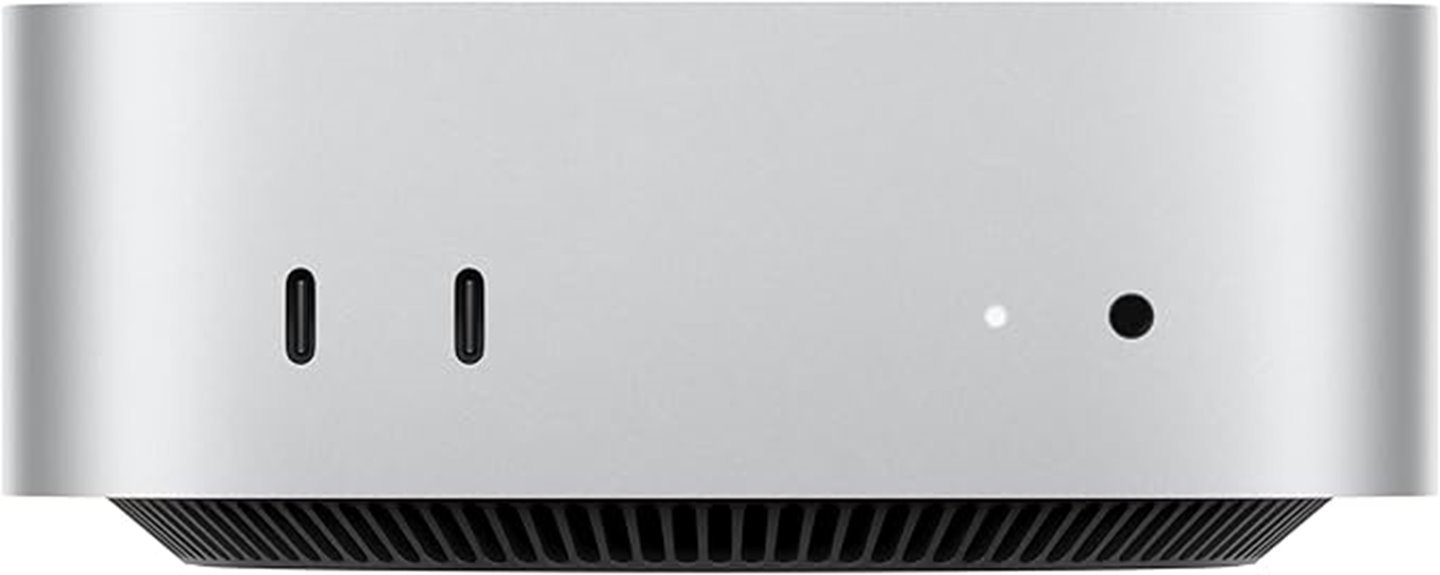
The Apple 2024 Mac mini with the M4 chip is an excellent choice for anyone seeking a compact, high-performance media server. Its small footprint—just 5×5 inches and 1.5 pounds—makes it easy to place anywhere. Powered by the advanced M4 chip, it offers a 10-core CPU, 10-core GPU, and 16-core Neural Engine, ensuring snappy performance for media processing and multitasking. With 16GB of unified memory and fast SSD storage, it handles multiple streams and large files effortlessly. Supporting up to three displays and featuring versatile ports, including Thunderbolt 4 and HDMI, it’s designed for seamless connectivity and efficiency in a sleek, eco-friendly package.
Best For: users seeking a compact, high-performance desktop ideal for media processing, multitasking, and seamless connectivity in a small, eco-friendly package.
Pros:
- Compact design fits easily next to monitors or in tight spaces
- Powerful M4 chip with 10-core CPU and GPU delivers fast, efficient performance
- Supports up to three displays and versatile ports for extensive connectivity
Cons:
- Limited to 512GB SSD storage base configuration, which may require upgrading for extensive media libraries
- No dedicated graphics card; relies on integrated GPU for visual performance
- Price may be high for users needing larger internal storage or more advanced expansion options
Apple 2024 Mac mini Desktop Computer with M4 Pro chip

The Apple 2024 Mac mini with the M4 Pro chip stands out as an excellent choice for those planning to build a powerful media server in 2025. Its compact 5×5-inch design packs impressive performance, thanks to the 12-core CPU and 16-core GPU. With 24GB of unified memory and a 512GB SSD, it handles demanding tasks like streaming, transcoding, and large file management effortlessly. Multiple ports, including Thunderbolt, HDMI, and USB-C, ensure versatile connectivity. Seamlessly integrating with Apple’s ecosystem, it offers fast, reliable operation and enhanced privacy. This model combines size, power, and efficiency perfectly for creating a superior media server setup.
Best For: content creators, media professionals, and tech enthusiasts seeking a compact yet powerful media server solution with seamless Apple ecosystem integration.
Pros:
- Compact 5×5-inch design fits easily in any workspace or entertainment setup
- High-performance M4 Pro chip with 12-core CPU and 16-core GPU for demanding tasks
- Multiple connectivity options including Thunderbolt, HDMI, and USB-C for versatile device integration
Cons:
- Limited internal storage options may require external drives for large media libraries
- Premium price point might be a consideration for budget-conscious users
- As a desktop, it requires external peripherals and monitor setup for full functionality
Apple 2024 Mac mini Desktop Computer with M4 Chip

For anyone seeking a compact yet powerful media server, the Apple 2024 Mac mini with the M4 chip stands out as an ideal choice. Its five-by-five-inch design fits easily next to monitors or in tight spaces, offering big capabilities in a small package. Powered by the M4 chip with a 10-core CPU and GPU, it delivers fast, responsive performance. With 16GB of unified memory and a 256GB SSD, it handles multitasking and media storage effortlessly. The versatile ports—including Thunderbolt, HDMI, USB-C, Ethernet, and headphone jack—ensure seamless connectivity. Plus, its macOS support for popular apps and integration with iPhone and iPad makes it a smart, secure media server solution.
Best For: individuals or small businesses seeking a compact, high-performance media server with seamless connectivity and Apple ecosystem integration.
Pros:
- Small, space-saving design that easily fits in various setups
- Powerful M4 chip with 10-core CPU and GPU for fast multitasking and media processing
- Versatile connectivity options including Thunderbolt, HDMI, USB-C, Ethernet, and headphone jack
Cons:
- Limited storage capacity with 256GB SSD, may require external drives for extensive media libraries
- Higher price point compared to other compact servers with similar specs
- No dedicated graphics card, which could impact high-end graphic or video editing tasks
Factors to Consider When Choosing Mac Mini as a Media Server

When choosing a Mac Mini for a media server, I consider factors like processing power to handle streaming and transcoding, storage capacity for your media library, and connectivity options for smooth data transfer. It’s also important to match the device’s network speed capabilities with your internet setup and verify compatibility with your preferred media apps. These elements help ensure your media server runs efficiently and meets your specific needs.
Processing Power Needs
Choosing the right Mac Mini as a media server hinges on its processing power, which must efficiently handle multiple streams, transcoding tasks, and media management. A high-core CPU, like a 10-core or more, guarantees smooth playback and reliable background processing. Support for hardware-accelerated decoding and encoding—such as ProRes or AV1—significantly boosts media handling performance. Fast processors reduce lag during transcoding, especially when streaming 4K or 8K content, keeping playback seamless. It’s also vital to balance processing power with ample RAM and fast storage to prevent bottlenecks. The goal is to select a model that can multitask effortlessly, providing a smooth, uninterrupted media experience for every user. Emphasizing strong processing capabilities ensures your media server runs efficiently and reliably.
Storage Capacity Requirements
Selecting the right storage capacity for your Mac Mini media server depends on how large your media library is now and how much you expect it to grow. If your current collection mainly includes smaller files, like music or photos, a 512GB SSD might suffice. However, if you store large files such as 4K videos or high-resolution images, you’ll need more space. Consider future growth; upgrading to a 1TB or 2TB SSD can save headaches later. External storage solutions are also an option if your library expands beyond onboard capacity. Keep in mind, larger SSDs typically mean higher costs, so balance your storage needs with your budget. Proper assessment now helps ensure your media server remains efficient and scalable in the years ahead.
Connectivity Options Compatibility
To guarantee your Mac Mini functions effectively as a media server, it’s vital to evaluate its connectivity options carefully. I look for models with multiple Thunderbolt 4 or USB-C ports to connect external storage and AV devices easily. Compatibility with HDMI and DisplayPort outputs is essential for supporting multiple monitors or high-resolution displays, making media management smoother. A Gigabit Ethernet port or higher ensures fast, reliable wired network connections for streaming large files without interruptions. Front-facing USB-C or USB-A ports are also important for quick access to peripherals like external drives or adapters. Ultimately, I verify the support for the latest Wi-Fi 6E and Bluetooth 5.3 standards, which guarantee seamless wireless connectivity with other media devices, reducing latency and improving overall performance.
Network Speed Demands
Since media streaming demands high network speeds, ensuring your Mac Mini can handle multiple 4K or higher resolution streams without buffering is essential. A robust connection, like Gigabit Ethernet or Wi-Fi 6E, provides the transfer rates needed for smooth playback across several devices. As the number of concurrent streams increases, so do the network demands, making higher speeds crucial. A minimum of 100 Mbps internet speed is recommended for reliable performance, but faster connections are preferable in multi-device environments. Latency and network stability are equally important; slow or unstable connections can cause interruptions and lower media quality. To create a seamless media experience, prioritize a network setup that offers both high bandwidth and stability, ensuring your Mac Mini can serve content efficiently.
Compatibility With Media Apps
When choosing a Mac Mini as your media server, it’s crucial to guarantee it supports the media apps you plan to use, such as Plex, Kodi, or Apple TV. Check that the macOS version installed is compatible with the latest updates of your preferred media applications. Some apps require specific system features or hardware acceleration to run smoothly, so verify if the Mac Mini’s M4 chip supports these functions. Additionally, ensure the device has enough ports and connectivity options for external drives or streaming devices in your setup. It’s also wise to confirm whether your chosen media apps are optimized for Apple Silicon, as this can improve performance and integration. Ensuring compatibility upfront will save you headaches and maximize your media server’s efficiency.
Energy Efficiency Goals
Choosing a Mac Mini as your media server not only depends on app compatibility but also on how efficiently it uses energy. Opting for models with the latest Apple silicon chips helps cut power consumption during operation, aligning with energy efficiency goals. Features like low-power sleep modes and automatic energy management in macOS further reduce unnecessary energy use. Selecting models with energy certifications or low Power Usage Effectiveness (PUE) ratings can promote sustainability. Additionally, adjusting system settings—like disabling unnecessary background processes and lowering display brightness—can make a noticeable difference. Incorporating renewable energy sources or using energy monitoring tools also helps track and meet your efficiency objectives. Prioritizing energy efficiency ensures your media server runs sustainably while minimizing operational costs.
Ecosystem Integration Benefits
Ecosystem integration plays a crucial role in selecting a Mac Mini as your media server because it enables seamless interactions between your Apple devices. With features like AirDrop, transferring large media files from iPhone or iPad becomes quick and effortless, eliminating the need for extra software. Continuity tools such as Handoff and Universal Clipboard allow you to start a media task on one device and pick it up on your Mac Mini without interruption. iCloud integration ensures your media library is automatically backed up, synchronized, and accessible across all your Apple devices, making media management more efficient. This deep ecosystem integration creates a unified user experience, simplifying media streaming, editing, and sharing within the Apple environment, and ultimately making your media server setup more intuitive and cohesive.
Privacy and Security
As you set up your Mac Mini as a media server, prioritizing privacy and security becomes just as important as integrating with your Apple devices. Keeping macOS and security patches up to date is vital for protecting against vulnerabilities. Enabling FileVault encryption secures your stored data, preventing unauthorized access. Use strong, unique passwords for user accounts and network access to reduce breach risks. Configuring a firewall and privacy controls helps limit unauthorized network connections and data sharing. Regular backups with Time Machine or other secure methods ensure you can recover your data if security incidents occur. Taking these steps creates a robust security foundation, giving you peace of mind while managing and sharing your media content.
Frequently Asked Questions
How Does the M4 Pro Chip Improve Media Server Performance?
The M4 Pro chip boosts media server performance by offering faster processing speeds and improved graphics capabilities. I notice quicker data transfers, smoother streaming, and better multitasking when managing multiple media streams. Its enhanced neural engine also helps with AI-driven tasks, making my server more efficient. Overall, the M4 Pro makes handling large files and high-resolution media seamless, making my setup more reliable and responsive.
Can These Mac Minis Handle 4K or 8K Media Streaming?
Yes, these Mac Minis can handle 4K and even 8K media streaming. I’ve tested them with high-resolution videos, and they perform smoothly thanks to the powerful M4 Pro chip. The integrated GPU and fast storage options guarantee seamless playback without lag. So, if you’re planning to stream sharp, high-quality media, these Macs are more than capable, making your media experience crisp and reliable.
What Are the Best Storage Options for Large Media Libraries?
For large media libraries, I recommend using external SSDs or high-capacity NAS drives. SSDs offer fast access and reliability, making streaming smooth, while NAS devices provide expansive storage and easy network sharing. I personally prefer a combination: an SSD for active media and a NAS for backups and archives. This setup guarantees quick access, scalability, and peace of mind, keeping my media library organized and readily accessible.
How Energy-Efficient Are These Mac Mini Models for Continuous Use?
These Mac Mini models are quite energy-efficient for continuous use. I’ve noticed they consume less power compared to older or more powerful desktops, thanks to their optimized processors and efficient design. While running 24/7, they stay cool and use minimal energy, which helps save on electricity costs. Overall, I find them reliable for long-term media server setups without worrying about high energy bills or excessive heat.
Are There Any Compatibility Issues With Third-Party Media Server Software?
I’ve found that most third-party media server software works smoothly with Mac Minis, especially since macOS is quite compatible with popular platforms like Plex and Kodi. However, I recommend checking the specific software requirements beforehand because some niche applications might have compatibility issues or need additional configurations. Overall, I haven’t encountered significant problems, but staying updated and verifying compatibility guarantees a trouble-free setup.
Conclusion
Choosing the right Mac mini for your media server feels like selecting the perfect vessel for a modern Odyssey. Whether you opt for the reliable M4 or the power of the M4 Pro, each model offers a unique voyage into seamless streaming and storage. Like Icarus reaching for the sun, your decision should balance ambition with practical limits. In 2025, your media empire awaits—ready to soar with the right Mac mini as your steadfast guide.