If you want sharp, clear images across your refractor’s field, I recommend checking out the Televue TRF-2008, Orion Mini Guide, and Starlight Instruments F3. These flatteners are highly compatible with various focal lengths and ratios, ensuring minimal distortion and aberrations. They’re also designed for easy installation and reliable connection. Keep exploring—soon you’ll discover everything you need to choose the perfect field flattener for your setup.
Key Takeaways
- Choose flatteners designed specifically for your telescope’s focal length and ratio to ensure optimal correction.
- Prioritize high-quality lens elements and coatings to minimize aberrations and vignetting across the field.
- Ensure compatibility with your focuser and camera adapters for easy, secure installation and precise alignment.
- Consider models in the mid to high price range for better image sharpness and reduced edge distortions.
- Select user-friendly flatteners with adjustable or rotatable features for straightforward setup and maintenance.

SVBONY SV220 Dual-Band Nebula Filter with SV503 70mm Refractor Telescope with Built-in Field Flattener
Reduce light pollution; SV220 telescope filter can greatly reduce the interference from natural light sources such as moonlight...
As an affiliate, we earn on qualifying purchases.
SVBONY SV220 Dual-Band Nebula Filter with SV503 70mm Refractor Telescope

Are you looking for a telescope setup that delivers sharp, distortion-free images of nebulae and galaxies, even in light-polluted areas? The SVBONY SV220 dual-band nebula filter paired with the SV503 70mm refractor telescope is an excellent choice. Its flat-field design minimizes chromatic aberration, providing true-to-life colors and edge-to-edge clarity. The dual-band filter enhances contrast by reducing moonlight and artificial light pollution, making faint nebulae stand out. This combination improves both visual observation and astrophotography, allowing you to capture detailed, high-contrast images regardless of light pollution levels. It’s perfect for amateur astronomers seeking quality and versatility.
Best For: amateur astronomers and astrophotographers seeking high-contrast, distortion-free images of nebulae and galaxies in light-polluted areas.
Pros:
- Reduces light pollution and enhances contrast for clearer nebulae observation and imaging
- Flat-field design minimizes chromatic aberration, ensuring sharp, true-to-life colors across the entire field of view
- Suitable for both visual observation and astrophotography, providing detailed, high-quality images
Cons:
- Narrow-band filtering may limit visibility of certain celestial objects outside the nebulae and planetary nebulae spectrum
- Requires compatible telescope setup and proper handling to maximize effectiveness
- The filter and telescope combination may be more costly compared to simpler observational equipment
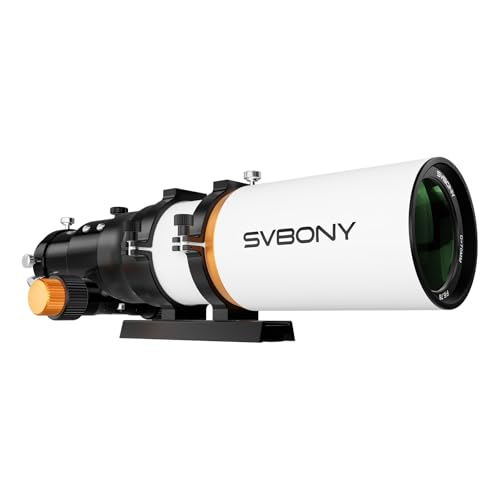
SVBONY SV503 Refractor Telescope with Built-in Field Flattener, 70mm F6.78 Extra Low Dispersion Achromatic Refractor OTA, Telescope for Adults, for Astrophotography Visual Astronomy
Outstanding flat-field correction; built-in field flattener of SVBONY SV503 telescope eliminates field curvature; offering a flat; wide view;...
As an affiliate, we earn on qualifying purchases.
SVBONY SV503 Refractor Telescope for Astrophotography

The SVBONY SV503 Refractor Telescope stands out as an excellent choice for astrophotographers seeking sharp, wide-field images with minimal chromatic aberration. Its built-in field flattener guarantees a flat, distortion-free view across the entire image plane, reducing field curvature effectively. The 70mm aperture at F/6.78 provides bright, detailed views of galaxies, nebulae, and star clusters. Featuring ED glass and a dual-speed focuser, it delivers accurate focus and vibrant, true-to-life colors. Its sturdy, CNC aluminum construction guarantees durability and stability during imaging sessions. Overall, it’s a versatile, reliable option for astrophotographers aiming for crisp, high-quality images.
Best For: amateur and intermediate astrophotographers seeking a wide-field, high-clarity telescope for capturing galaxies, nebulae, and star clusters with minimal chromatic aberration.
Pros:
- Built-in field flattener ensures flat, distortion-free images across the entire field of view
- ED glass and dual-speed focuser provide accurate focus and vibrant, true-to-life colors
- Durable CNC aluminum construction offers stability and longevity during imaging sessions
Cons:
- 70mm aperture may limit brightness for very faint deep-sky objects compared to larger telescopes
- Compatibility with accessories may require additional adapters for specialized equipment
- Not designed for high-magnification planetary observation, focusing primarily on wide-field astrophotography

SVBONY SV503 Portable Telescope Tube, 70ED F6 Extra Low Dispersion Optical Tube, Micro-Reduction Rap Focuser, for Astrophotography and Visul Astronomy
Quality Optics; SV503 Telescope’s objective lens features an S-FPL51 extra-low dispersion glass ED element; which virtually eliminates chromatic...
As an affiliate, we earn on qualifying purchases.
SVBONY SV503 Portable Telescope Tube for Astrophotography and Astronomy

If you’re looking for a portable telescope that combines high optical quality with ease of use, the SVBONY SV503 is an excellent choice for astrophotographers and serious amateurs alike. Its S-FPL51 ED glass minimizes chromatic aberration, ensuring sharp, high-contrast images ideal for detailed observation and astrophotography. The 2-inch rack and pinion focuser provides stable, precise focusing, even with heavy accessories. Its lightweight design makes it perfect for travel and on-the-go observing. Whether you’re capturing images of nebulae, galaxies, or moon details, the SV503’s versatile construction and quality optics make it a reliable companion for both celestial and terrestrial viewing.
Best For: amateur astronomers and astrophotographers seeking a portable, high-quality telescope for detailed celestial imaging and observation.
Pros:
- Utilizes S-FPL51 ED glass to virtually eliminate chromatic aberration for sharp, high-contrast images.
- Equipped with a stable 2-inch rack and pinion focuser suitable for heavy accessories and precise focusing.
- Lightweight and portable, ideal for travel, mobile observation, and outdoor astrophotography.
Cons:
- May require additional accessories for full astrophotography capabilities.
- Not suitable for very large or permanent setups due to its compact size.
- Optical performance may be limited compared to larger, more advanced telescopes.
Factors to Consider When Choosing Field Flatteners for Refractor Telescopes
When selecting a field flattener, I consider how well it matches my telescope’s optical system to avoid vignetting or aberrations. I also look at how it affects focal length and image quality, ensuring sharp, flat images across the field. Plus, I keep ease of installation and my budget in mind to find the best fit for my needs.
Optical Compatibility Requirements
Choosing the right field flattener for a refractor telescope requires careful attention to optical compatibility. It’s essential that the flattener matches your telescope’s focal length and aperture to guarantee consistent correction across the entire image field. The flattener’s design should align with your telescope’s focal ratio, often needing specific models for fast or slow refractors. Compatibility extends to the mounting thread or connection interface, which must fit your focuser or camera adapter securely. Additionally, the lens elements and coatings must be suitable for your optical setup to minimize aberrations and maintain sharpness. Using an incompatible flattener can introduce distortions and decrease image quality, defeating the purpose of flat-field correction. Ensuring proper compatibility secures optimal performance and sharp, clear images.
Focal Length Impact
Longer focal lengths in refractor telescopes tend to increase the amount of field curvature, making a field flattener more necessary to achieve sharp, edge-to-edge images. As the focal length grows, so does the curvature, which can distort the image at the edges. This means that telescopes with focal ratios of f/8 or higher benefit profoundly from a properly matched field flattener. Conversely, shorter focal length telescopes usually exhibit less field curvature, reducing the need for correction in many cases. Properly matching a flattener to your telescope’s focal length is essential—if it’s too weak or too strong, you won’t get the sharp, flat images you desire. Understanding this relationship helps guarantee your images are clear and distortion-free across the entire field of view.
Image Quality Enhancement
Selecting the right field flattener can dramatically enhance your image quality by minimizing distortions and aberrations across the entire field of view. A good flattener reduces edge distortion and curvature, ensuring stars stay pinpoint sharp from center to edges. It also helps minimize chromatic aberration, which is especially important in fast refractors, resulting in sharper, more color-accurate images. Properly matched flatteners improve contrast and clarity, making celestial details stand out more clearly. If the flattener isn’t compatible or well-designed, it can introduce new aberrations or vignetting, degrading your image. Consequently, choosing a high-quality, well-matched flattener is essential for achieving consistently sharp, clear images across your entire field, whether for astrophotography or visual observation.
Ease of Installation
Installing a field flattener can be straightforward if it’s designed with user-friendliness in mind. Compatibility with your specific telescope model is essential, so look for options that are tailored or easily adaptable. Clear, detailed instructions or a thorough manual make setup much simpler and prevent guesswork. Since most installations involve attaching the flattener between the focuser and your camera or eyepiece, a straightforward connection mechanism is a big plus. Some models feature adjustable or rotatable elements, helping you align everything precisely without hassle. Quick-release or tool-less mounting options also save time and reduce frustration, especially for amateur astronomers. Overall, choosing a flattener that prioritizes ease of installation ensures you spend more time observing and less time fiddling with setup.
Budget Considerations
When choosing a field flattener, it’s important to regard your budget and how much you’re willing to invest. Basic models can cost under $100, which might be enough for casual observing but could introduce slight distortions or vignetting. If you’re serious about astrophotography, investing in a mid-range or premium flattener over $300 can notably improve image quality, reducing aberrations and ensuring compatibility with high-end refractors. Remember, the cost of the flattener should be balanced against your overall setup, including the telescope and accessories. Sometimes, cheaper flatteners require extra adapters or accessories, increasing the total investment. Ultimately, selecting a flattener that fits your budget while meeting your quality needs ensures the best value and performance for your astrophotography pursuits.
Frequently Asked Questions
How Do Field Flatteners Impact Astrophotography Image Quality?
Field flatteners substantially improve my astrophotography by correcting field curvature, ensuring stars stay sharp from edge to edge. Without one, images often show distorted or blurry corners, reducing overall quality. Using a flattener makes my photos clearer and more professional-looking, especially when capturing wide-field views. It’s a game-changer for achieving crisp, detailed images across the entire frame, helping me enjoy stunning, high-quality astrophotos every time.
Can Field Flatteners Be Used With All Types of Refractor Telescopes?
Yes, field flatteners can be used with many types of refractor telescopes, but not all. Think of them as a tailored suit—some fit perfectly, others need adjustments. Refractors with longer focal lengths or specialized designs might need different flatteners or none at all. I always recommend checking your telescope’s specifications and compatibility before investing. Proper matching guarantees sharp, clear images and avoids unnecessary frustrations.
What Maintenance Is Required for Field Flatteners Over Time?
Maintaining your field flattener is straightforward. I regularly check for dust or dirt on the lens elements and clean them gently with a microfiber cloth if needed. I also guarantee all screws and connections stay tight to prevent misalignment. Periodically, I inspect for any signs of optical damage or scratches. Proper storage in a dust-free, dry environment helps keep my flattener in top shape for sharp, clear images.
Are There Compatibility Issues Between Flatteners and Various Camera Adapters?
Yes, compatibility issues can arise between flatteners and various camera adapters. I’ve found that different flatteners are designed for specific camera types and thread sizes, so it’s crucial to verify the specifications. Sometimes, you need additional adapters or spacers to guarantee proper fit and focus. Always double-check compatibility before purchasing, and consider consulting manufacturer guidelines or user reviews to avoid any frustrating mismatches.
How Does the Cost of Field Flatteners Correlate With Image Performance?
Think of a field flattener as a fine-tuned lens on a camera—spend more, and you often get sharper, more accurate images. Higher-cost flatteners usually use premium glass and advanced coatings, reducing aberrations and delivering crisper results. But, I’ve found that a middle-range flattener can still offer excellent performance without breaking the bank. Ultimately, investing wisely can markedly enhance your astrophotography adventures.
Conclusion
Choosing the right field flattener transforms your astrophotography from blurred to breathtaking. While a top-tier flattener ensures sharp, clear images, the wrong one can turn your celestial captures into distorted illusions. Just as a finely tuned lens reveals cosmic beauty with precision, selecting the best flattener elevates your experience—balancing technical perfection with the wonder of the night sky. In this pursuit, clarity and detail become your guiding stars.