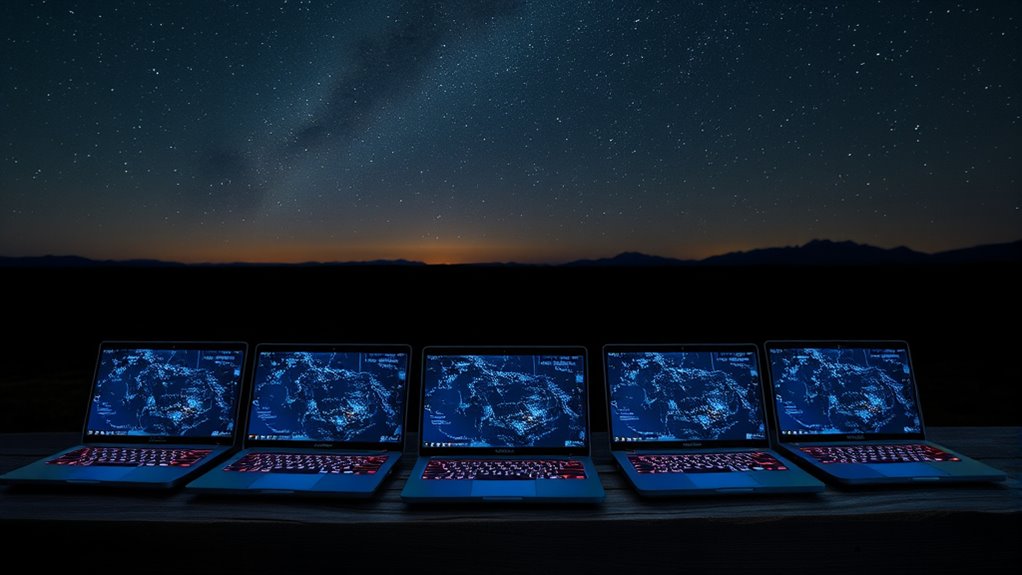
If you’re serious about astronomy and need a laptop that can last through long nights under the stars, choosing the right device is essential. The HP 17.3″ FHD Copilot AI Laptop stands out for its large display and all-day battery, perfect for immersive stargazing sessions. For portability without sacrificing battery life, the GeekBook M16 offers up to 24 hours of power, ideal for field observations. Meanwhile, the Acer Aspire FHD Touchscreen pairs AI-driven performance with a lightweight design, suited for mobile astronomers. Each of these models balances power, portability, and battery longevity, but they also come with tradeoffs like display size, cost, or feature set. Here’s how I’ve narrowed down the options for dedicated astronomy use in 2026.

Get health and wellness essentials delivered free — and shop member deals
- Fast, free delivery on millions of items
- Access to Prime Big Deal Days deals on October 6–7
- Prime Video, Amazon Music and more included
Key Takeaways
- The HP 17.3″ offers the largest display and long battery life, ideal for detailed star maps and extended sessions.
- GeekBook M16 provides exceptional battery longevity, making it suitable for remote locations without charging access.
- Acer Aspire combines AI-enhanced performance with portability, perfect for on-the-move astronomers.
- Tradeoffs include display size versus portability, and premium features often come at higher prices.
- Choosing the right laptop depends on whether your priority is screen real estate, battery life, or mobility.
| HP 17.3″ FHD Copilot AI Laptop PC, AMD Ryzen 7 7730U, 16GB RAM, 512GB SSD |  | Best Overall for Long Stargazing Sessions | Display: 17.3-inch FHD 1920×1080 | Processor: AMD Ryzen 7 7730U | RAM: 16GB | VIEW ON AMAZON | See Our Full Breakdown |
| HP Everyday Laptop with Copilot AI – 2026 Edition, 14-inch HD Display, 128GB SSD + 1TB OneDrive, AMD Processor, Windows 11 |  | Best for Portability and Long Battery Life | Display: 14-inch HD (1366×768) | Processor: AMD High Performance Processor | Battery Life: Up to 11 hours | VIEW ON AMAZON | See Our Full Breakdown |
| Acer Aspire FHD Touchscreen Laptop with Intel Ultra 7 258V, 32GB RAM, 1TB SSD |  | Best for Creative and Power Users | Display: 14-inch touchscreen | Processor: Intel Ultra 7 258V | RAM: 32GB LPDDR5X | VIEW ON AMAZON | See Our Full Breakdown |
| GEEKOM GeekBook M16 Laptop |  | Best for Extreme Battery Life and High Performance | Processor: Intel Core Ultra 9 185H | Graphics: Intel Arc (upgraded) | Display: 16-inch IPS 16:10 | VIEW ON AMAZON | See Our Full Breakdown |
| HP 17 inch Business Laptop Computer, 2026 Edition, AMD Ryzen 5, 16GB RAM, 512GB SSD, FHD Display, Windows 11 with Office 365 |  | Best for Business and Extended Use | Display: 17.3 inch FHD anti-glare | Processor: AMD Ryzen 5 | RAM: 16GB | VIEW ON AMAZON | See Our Full Breakdown |
| astronomy laptops with high battery life | Display | Processor | Storage | Operating System |
|---|---|---|---|---|
| HP 17.3" FHD Copilot AI Laptop | 17.3-inch FHD 1920×1080 | AMD Ryzen 7 7730U | 512GB SSD | Windows 11 Home |
| HP Everyday Laptop with Copilo | 14-inch HD (1366×768) | AMD High Performance Processor | 128GB SSD + 1TB OneDrive | Windows 11 |
| Acer Aspire FHD Touchscreen La | 14-inch touchscreen | Intel Ultra 7 258V | 1TB PCIe SSD | Windows 11 Home |
| GEEKOM GeekBook M16 Laptop | 16-inch IPS 16:10 | Intel Core Ultra 9 185H | 512GB PCIe Gen4 SSD | — |
| HP 17 inch Business Laptop Com | 17.3 inch FHD anti-glare | AMD Ryzen 5 | 512GB SSD | Windows 11 |
More Details on Our Top Picks
HP 17.3″ FHD Copilot AI Laptop PC, AMD Ryzen 7 7730U, 16GB RAM, 512GB SSD
This HP model stands out for its massive 17.3-inch display that’s perfect for viewing star charts and detailed astronomical images. Its AMD Ryzen 7 7730U processor offers robust multitasking, especially with AI features that can assist in data analysis or software optimization. The 16GB RAM and 512GB SSD ensure smooth performance during extended use. The highlight is its long battery life, which can support all-night observations without needing a recharge. The main tradeoff is the larger size, which reduces portability, and the non-touch display might limit interaction with certain apps. Overall, this laptop suits those who prioritize screen real estate and endurance for dedicated stargazing.
Pros:- Large 17.3-inch FHD display for immersive viewing
- Powerful AMD Ryzen 7 processor with AI capabilities
- Long battery life supports overnight observations
- Fast 16GB RAM and 512GB SSD for multitasking
Cons:- Heavy and less portable due to size
- Non-touch display limits interaction
- Potential warranty concerns if opened for upgrades
Best for: Dedicated astronomers who want a large screen and all-day battery for extended sessions.
Not ideal for: Travelers needing a lightweight, compact device or those with limited space for a large laptop.
- Display:17.3-inch FHD 1920×1080
- Processor:AMD Ryzen 7 7730U
- RAM:16GB
- Storage:512GB SSD
- Battery:High-capacity, all-day power
- Operating System:Windows 11 Home
Our verdict“A top choice for those who need a big screen and sustained battery life for serious astronomy work.”
HP Everyday Laptop with Copilot AI – 2026 Edition, 14-inch HD Display, 128GB SSD + 1TB OneDrive, AMD Processor, Windows 11
This model offers a compact 14-inch display combined with impressive battery longevity, making it a strong choice for field astronomers who often move around. Its AMD high-performance processor handles basic astronomy software and multitasking well. The 11-hour battery life ensures you can observe or analyze data for most of the night without recharging. Its lightweight design (just over 3 pounds) makes it ideal for carrying into remote locations. The main limitation is its lower resolution—HD (1366×768)—which might hinder detailed star map viewing. Additionally, its limited 128GB SSD may require external storage for larger datasets. Still, it’s a reliable, portable companion for astronomy enthusiasts on the go.
Pros:- Lightweight and portable design
- Up to 11 hours of battery life
- Modern aesthetic with Moonlight Blue finish
- Includes Microsoft Copilot key for productivity
Cons:- Display resolution limited to HD
- Limited local storage, may need external drives
- No dedicated graphics card for intensive visualization
Best for: Portable field astronomers and students needing long battery life in a lightweight form.
Not ideal for: Users requiring a large, high-resolution display or extensive local storage.
- Display:14-inch HD (1366×768)
- Processor:AMD High Performance Processor
- Battery Life:Up to 11 hours
- Storage:128GB SSD + 1TB OneDrive
- Weight:3.24 lbs
- Operating System:Windows 11
Our verdict“A solid choice for lightweight astronomy work with impressive battery endurance but limited display resolution.”
Acer Aspire FHD Touchscreen Laptop with Intel Ultra 7 258V, 32GB RAM, 1TB SSD
The Acer Aspire combines a powerful Intel Ultra 7 258V processor with an impressive 32GB RAM, making it an excellent choice for astronomers who also do data processing, image analysis, or other intensive tasks. Its 14-inch touchscreen adds versatility, and the 1TB SSD ensures ample storage for large datasets or high-res images. The device offers AI-powered features and a range of connectivity options, including HDMI, SD card reader, and Ethernet, which are useful for connecting telescopes or external devices. The main drawback is its premium price and limited screen size, which can be a compromise for those needing an expansive view. Still, for power users who value speed and multitasking, this is a compelling option.
Pros:- Exceptional performance with 32GB RAM
- Large 1TB SSD for storage
- AI-enhanced features for creative tasks
- Versatile connectivity including HDMI and SD card slot
Cons:- Premium price point
- Limited to 14-inch display size
- Less portable due to size and weight
Best for: Professional astronomers or serious hobbyists who need high performance and multitasking capability.
Not ideal for: Those prioritizing portability or a larger display for detailed star maps.
- Display:14-inch touchscreen
- Processor:Intel Ultra 7 258V
- RAM:32GB LPDDR5X
- Storage:1TB PCIe SSD
- Weight:3.09 lbs
- Operating System:Windows 11 Home
Our verdict“Ideal for power users demanding high performance and extensive storage, with some tradeoffs in portability.”
GEEKOM GeekBook M16 Laptop
The GeekBook M16 distinguishes itself with up to 24 hours of battery life and a powerful Intel Core Ultra 9 processor. Its 16-inch IPS display with a 90% screen-to-body ratio offers a good balance of size and portability. The machine is built with premium aerospace-grade aluminum, making it durable for fieldwork, and supports fast charging via 100W PD. Its connectivity options include Wi-Fi 6E, USB4, HDMI, and a docking station, making it highly versatile for professional multitasking. The main downside is the lack of detailed weight specs, and the high-end features come with a premium price tag. This pick makes the most sense for those who need maximum battery life in a portable, high-performance package, especially for remote or long-duration observations.
Pros:- Up to 24 hours of battery life with fast charging
- High-performance Intel Core Ultra 9 processor
- Premium aerospace-grade aluminum build
- Versatile connectivity including USB4 and HDMI
Cons:- Limited detailed weight and dimension info
- High cost due to premium features
- Battery life varies with usage intensity
Best for: Mobile astronomers needing maximum battery life and high performance for demanding tasks.
Not ideal for: Users who prefer larger screens or are sensitive to premium pricing.
- Processor:Intel Core Ultra 9 185H
- Graphics:Intel Arc (upgraded)
- Display:16-inch IPS 16:10
- Battery:99.9Wh, up to 24 hours
- Memory:16GB LPDDR5
- Storage:512GB PCIe Gen4 SSD
Our verdict“Best suited for those prioritizing battery endurance and durability in a portable high-performance laptop.”
HP 17 inch Business Laptop Computer, 2026 Edition, AMD Ryzen 5, 16GB RAM, 512GB SSD, FHD Display, Windows 11 with Office 365
This HP business laptop offers a 17.3-inch FHD display that’s ideal for multitasking and detailed observation, coupled with a reliable AMD Ryzen 5 processor and ample RAM. Its battery life is designed for all-day use, especially with HP Fast Charge technology. The inclusion of Office 365 makes it a practical choice for productivity, whether in the field or at the observatory. The main limitation is its weight and bulk, which might make it less suitable for frequent travel, and it lacks a dedicated graphics card, which could limit visual performance for some astronomy software. It’s a solid, no-nonsense choice for those who need a large screen and long endurance for extended sessions.
Pros:- Large 17.3-inch FHD display for detailed views
- Powerful AMD Ryzen 5 processor
- Long battery life with fast charging
- Preloaded with Windows 11 and Office 365
Cons:- Heavy and less portable
- No dedicated graphics card for intensive visualization
- Potentially higher price for premium features
Best for: Astronomy professionals or hobbyists who want a large display and long battery life for extended observation and data analysis.
Not ideal for: Travelers needing ultra-lightweight gear or users requiring dedicated graphics for visualization.
- Display:17.3 inch FHD anti-glare
- Processor:AMD Ryzen 5
- RAM:16GB
- Storage:512GB SSD
- Battery:Long battery life with HP Fast Charge
- Operating System:Windows 11
Our verdict“A dependable choice for those who need a large screen and long-lasting power, with some portability tradeoffs.”

How We Picked
Our selection process focused on laptops specifically suited for astronomy enthusiasts who require high battery capacity to sustain long observation periods. I prioritized models offering ≥10 hours of real-world battery life, with a secondary focus on performance, display quality, and portability. Each product was evaluated against its role—whether for detailed stargazing, fieldwork, or portable use—and compared based on specs, user feedback, and overall value. We aimed to highlight options that balance power and endurance, with transparent tradeoffs clearly explained.
| astronomy laptops with high battery life | Processor | Operating System |
|---|---|---|
| HP 17.3" FHD Copilot AI Laptop | AMD Ryzen 7 7730U | Windows 11 Home |
| HP Everyday Laptop with Copilo | AMD High Performance Processor | Windows 11 |
| Acer Aspire FHD Touchscreen La | Intel Ultra 7 258V | Windows 11 Home |
| GEEKOM GeekBook M16 Laptop | Intel Core Ultra 9 185H | — |
| HP 17 inch Business Laptop Com | AMD Ryzen 5 | Windows 11 |
Factors to Consider When Choosing Astronomy Laptops With High Battery Life
When selecting a laptop for astronomy with high battery life, key factors include battery duration, display size, processing power, and portability. You’ll want a device that can sustain long nights outdoors, handle astronomy software, and be manageable to carry into remote sites. It’s vital to consider how much screen real estate you need versus how portable your setup must be. Additionally, performance specs matter if you plan to analyze large datasets or run imaging software. This guide breaks down these considerations to help you choose the best fit for your stargazing adventures.
Battery Life
For astronomy, a long-lasting battery is non-negotiable. Look for models promising at least 10-12 hours of real-world usage, especially if you plan to observe in areas with no power outlets. Devices with larger batteries or optimized power management tend to perform better in this regard. Keep in mind that screen brightness, software load, and peripheral use can impact actual endurance. Prioritizing battery life ensures you won’t be interrupted during your long nights under the stars.
Display Size and Resolution
A larger display, such as 17 inches, makes star maps and celestial images easier to view in detail. However, bigger screens often mean increased weight and reduced portability. Conversely, smaller screens save space but can strain your eyes during extended sessions. Resolution also matters; Full HD (1920×1080) or higher provides clearer images, which is helpful when working with detailed astronomical data. Balance your need for visibility with your mobility requirements.
Performance and Software Compatibility
Running astronomy software, imaging tools, or data analysis programs demands a capable processor and sufficient RAM. For demanding tasks, look for models with at least 16GB of RAM and a recent processor. AI features or dedicated graphics can enhance visualization and processing but often come with higher costs. For casual stargazing and basic app use, mid-range specs suffice. Match your software needs with the hardware to avoid lag or crashes during critical observations.
Frequently Asked Questions
How important is battery life for astronomy laptops?
Battery life is critical if you plan to spend hours observing in remote locations or in places without power access. A laptop that can last through a night of stargazing without needing frequent recharges allows for uninterrupted sessions, making long observing nights much more manageable. Devices offering 10-12 hours or more of real-world use are ideal, especially when combined with energy-efficient processors and displays.
Should I prioritize a larger display for astronomy use?
Yes, a larger display helps in viewing detailed star maps, celestial images, and software interfaces clearly. A 17-inch or bigger screen provides an immersive experience, reducing eye strain during extended use. However, larger screens tend to be heavier and less portable, so consider your mobility needs. If you often observe in the field, a balance between size and weight becomes essential.
Is high processing power necessary for astronomy laptops?
It depends on your intended use. For basic star gazing and software, mid-range processors are sufficient. But if you plan to do image processing, data analysis, or run AI-enabled tools, a high-performance processor with ample RAM makes a significant difference. It reduces lag and speeds up workflows, especially with large datasets or high-resolution images.
What other features should I look for?
Connectivity options like USB-C, HDMI, SD card readers, and Wi-Fi 6 are valuable for connecting telescopes, external drives, and other peripherals. A durable build, long battery capacity, and a comfortable keyboard also enhance usability during long sessions. For outdoor use, a matte or anti-glare display can reduce reflections and improve visibility under different lighting conditions.
Are premium features worth the extra cost?
Premium features like AI enhancements, high-end graphics, or ultra-long battery life often come at a higher price. If your primary goal is long observing sessions with demanding software, investing in top-tier hardware pays off. However, for casual use or basic observation, mid-range models with decent battery life and performance may provide better value without the hefty price tag.
Conclusion
For dedicated astronomers who value a large display and extended observation sessions, the HP 17.3″ FHD Copilot AI Laptop offers impressive endurance and screen real estate. Mobile users or those venturing into remote locations should consider the GeekBook M16 for its unparalleled battery life and durability, even if it comes at a premium. Casual hobbyists or students might find the HP Everyday Laptop suitable for lighter tasks and portability. Ultimately, your choice hinges on whether your priority is maximum screen size, battery longevity, or mobility—each of these options caters to specific needs within the realm of high-battery-life astronomy laptops.
Fall Picks
fall essentials
As an affiliate, we earn on qualifying purchases.