Students spend hours typing essays and taking online classes, and the right ergonomic desk accessories can mean the difference between pain-free focus and sore wrists by midterm season. After comparing the leading options, the ErgoComfort Gel Wrist Rest Mouse Pad and Keyboard Set earns my best overall pick for balancing gel comfort, a matched two-piece design, and a fair price. If budget is the priority, the Vaydeer Wrist Rest for Keyboard and Mouse delivers dependable memory foam at a lower cost, while the Laborio Ergonomic Keyboard Wrist Rest and Stand stands out for its steeper, more aggressive typing angle. The main tradeoff in this category is simple: soft cushioning versus firm elevation — gel pads soothe wrists while risers change your typing posture more dramatically. Keep reading for the full breakdown of all seven picks.
Key Takeaways
- Two-piece sets (ErgoComfort, Ospelelf, Vaydeer) outperformed standalone wrist rests for students who alternate between typing and mouse-heavy coursework, simply because uneven support for one hand causes asymmetric strain.
- Gel-filled pads like the ErgoComfort set consistently felt cooler during long study sessions, while memory foam options such as the Ospelelf retained more heat but offered softer, more forgiving pressure relief.
- Keyboard stands with built-in risers (Laborio, the two keyboard-stand wrist rests) fixed posture more aggressively than flat pads, but their steeper angle takes adjustment and suits students who already type with bent wrists.
- The Vaydeer options appeared twice in this comparison for a reason: the standalone set wins on price, while the wrist rest with keyboard stand justifies its premium with a more stable, non-slip base — a real difference on slick dorm desks.
- Aesthetic choices mattered more than expected: the pink Ospelelf and green keyboard riser proved that color options drive satisfaction for students personalizing small dorm workspaces, something the neutral black options can’t match.
| Wrist Rest with Keyboard Stand, Ergonomic Computer Wrist Support Pad |  | Best Overall | Keyboard Rest Dimensions: 17.3″L x 4″W | Wrist Rest Dimensions: 17.3″L x 6″W | Tilt Options: 7° and 13.3° | VIEW LATEST PRICE | See Our Full Breakdown |
| Ospelelf Ergonomic Mouse Pad and Keyboard Wrist Rest Set |  | Best Value Bundle | Material: High-density memory foam, breathable fabric | Includes: Mouse pad, keyboard wrist rest, coaster | Color: Pink | VIEW LATEST PRICE | See Our Full Breakdown |
| ErgoComfort Gel Wrist Rest Mouse Pad and Keyboard Wrist Rest Set |  | Best for Beginners | Brand: DEMON CHEST | Items Included: Gel mouse wrist rest, memory foam keyboard wrist rest | Warranty: 1 Year | VIEW LATEST PRICE | See Our Full Breakdown |
| Vaydeer Wrist Rest for Keyboard and Mouse, Ergonomic Memory Foam Support Pads | 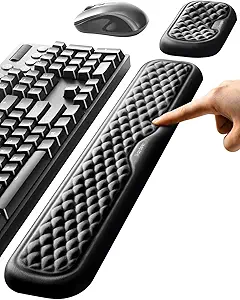 | Best Compact Pick | Keyboard Wrist Rest Dimensions: 17.32 x 3.15 x 0.83 inches | Mouse Wrist Support Dimensions: 5.94 x 3.15 x 0.83 inches | Material: Memory foam, lycra, anti-skid rubber base | VIEW LATEST PRICE | See Our Full Breakdown |
| Vaydeer Wrist Rest with Keyboard Stand Ergonomic Support Pad |  | Best Premium 2-in-1 | Design: 2-in-1 keyboard stand with integrated wrist rest | Adjustable Angles: 12.5° and 3° | Material: High-density silicone, memory foam, lycra fabric | VIEW LATEST PRICE | See Our Full Breakdown |
| Laborio Ergonomic Computer Keyboard Wrist Rest and Stand |  | Best Tilt Adjustment | Dimensions: 16.77″L x 5.43″W x 1.45″H | Wrist Rest Size: 16.9″L x 3.5″W | Wrist Rest Height: 0.62″ – 0.94″ | VIEW LATEST PRICE | See Our Full Breakdown |
| Computer Keyboard Wrist Rest Stand for Desktop (Green), Keyboard Riser |  | Best Budget-Friendly Riser | Overall Size: 16.8″L × 5.1″W × 1.46″H | Material: Acrylic | Base: Non-slip silicone | VIEW LATEST PRICE | See Our Full Breakdown |
| ergonomic desk accessories for student | Material | Base |
|---|---|---|
| Wrist Rest with Keyboard Stand | High-density memory foam, non-slip PU base | — |
| Ospelelf Ergonomic Mouse Pad a | High-density memory foam, breathable fabric | Anti-slip rubber |
| ErgoComfort Gel Wrist Rest Mou | Eco-friendly gel and memory foam | Non-slip |
| Vaydeer Wrist Rest for Keyboar | Memory foam, lycra, anti-skid rubber base | — |
| Vaydeer Wrist Rest with Keyboa | High-density silicone, memory foam, lycra fabric | Anti-slip silicone bottom |
| Laborio Ergonomic Computer Key | Acrylic, memory foam | Non-slip silicone |
| Computer Keyboard Wrist Rest S | Acrylic | Non-slip silicone |
More Details on Our Top Picks
Wrist Rest with Keyboard Stand, Ergonomic Computer Wrist Support Pad
This pick earns the top spot because it solves two problems at once: wrist support and keyboard angle, with a choice between 7° and 13.3° tilt options. Compared with the simpler Ospelelf set, which offers cushioning but no elevation, this one lets a student actually adjust typing geometry as coursework shifts from essays to long study marathons. The high-density memory foam holds its shape better than softer budget pads, and the bundled mouse pad and cup holder make a dorm desk feel deliberate rather than cluttered. The tradeoffs are real, though: the pink cloud-shaped styling is polarizing, and the foam can’t be tossed in the washing machine — spot cleaning only. If aesthetics matter less than function, the Vaydeer 2-in-1 covers similar ground in a more muted army green.
Pros:- Two adjustable tilt angles (7° and 13.3°) for real ergonomic customization
- Complete set includes mouse pad and cup holder for a tidy desk
- High-density memory foam resists flattening over time
- Non-slip PU base keeps everything planted during fast typing
Cons:- Cheerful cloud design won’t suit minimalists or shared workspaces
- Spot-clean only — memory foam requires careful maintenance
- Keyboard not included, so the total cost of an ergonomic setup adds up
Best for: Students with long typing sessions who want adjustable keyboard tilt plus full-desk cushioning in one purchase
Not ideal for: Anyone who dislikes playful pink styling or needs machine-washable accessories
- Keyboard Rest Dimensions:17.3″L x 4″W
- Wrist Rest Dimensions:17.3″L x 6″W
- Tilt Options:7° and 13.3°
- Material:High-density memory foam, non-slip PU base
- Set Includes:Wrist rest, mouse pad, cup holder
- Color:Pink
Our verdict“The most complete ergonomic kit here for students who want adjustable tilt, cushioning, and desk organization in a single buy.”
Ospelelf Ergonomic Mouse Pad and Keyboard Wrist Rest Set
For students on a tight budget, this set delivers the core ergonomic trio — mouse pad, keyboard wrist rest, and coaster — without the tilt hardware that pushes the top pick’s price up. Compared with the ErgoComfort gel set, the Ospelelf leans softer and plusher, which is a plus for lighter typists but a drawback for anyone who wants firm, structured support during marathon sessions. The therapeutic massage beads in the wrist rest are a nice touch that helps circulation during all-night study stretches, and the breathable fabric keeps things from getting clammy. The minimalist design blends into any dorm setup far better than the cloud-shaped alternative. Just know that foam this soft bottoms out under heavier wrists, and pink is essentially your only color choice.
Pros:- Three-piece set covers keyboard, mouse, and drink protection at a low price
- Massage-bead wrist rest promotes circulation during long sessions
- Breathable fabric and durable stitching extend the set’s lifespan
- Anti-slip rubber base keeps pads anchored on slick dorm desks
Cons:- Softer foam may compress too much for users who prefer firm support
- Essentially single-color availability limits matching with existing gear
Best for: Budget-conscious students who type lightly and want a plush, simple cushioning set
Not ideal for: Heavy-handed typists or gamers who need firmer, more structured wrist support
- Material:High-density memory foam, breathable fabric
- Includes:Mouse pad, keyboard wrist rest, coaster
- Color:Pink
- Base:Anti-slip rubber
- Special Features:Therapeutic massage beads, durable stitching
Our verdict“The smartest cheap entry point into ergonomic desk setup — plush comfort and full coverage if you don’t need adjustability.”
ErgoComfort Gel Wrist Rest Mouse Pad and Keyboard Wrist Rest Set
This set stands out as the gentlest introduction to ergonomics because its gel-cushioned mouse pad offers a different feel from the all-memory-foam Vaydeer and Ospelelf sets — gel distributes pressure more evenly and feels cooler against the wrist during long library sessions. For a student buying their first ergonomic accessory, that hybrid approach (gel for mouse, memory foam for keyboard) means less of the squish-and-bottom-out problem common to cheaper foam-only pads. The eco-friendly materials and one-year warranty add peace of mind that entry-level sets rarely include. The compromises: it lacks any tilt or stand functionality like the two Vaydeer options, and softness again limits appeal for firm-support seekers. Compared with the Ospelelf, you trade the coaster and massage beads for better pressure distribution where the mouse hand actually rests.
Pros:- Gel mouse pad distributes pressure more evenly than foam-only alternatives
- Covers both keyboard and mouse with non-slip bases for stability
- One-year warranty adds confidence for a first ergonomic purchase
- Eco-friendly, durable construction suitable for daily student use
Cons:- No tilt or stand functionality — support is static and unadjustable
- Limited color options restrict personalization
Best for: First-time ergonomic buyers who want a low-risk, warranty-backed starter set with a cooler gel feel
Not ideal for: Students who already want keyboard elevation or adjustable angles — this set is flat cushioning only
- Brand:DEMON CHEST
- Items Included:Gel mouse wrist rest, memory foam keyboard wrist rest
- Warranty:1 Year
- Base:Non-slip
- Material:Eco-friendly gel and memory foam
Our verdict“A forgiving, warranty-backed starter set for students new to wrist care who prioritize pressure relief over adjustability.”
Vaydeer Wrist Rest for Keyboard and Mouse, Ergonomic Memory Foam Support Pads
Where other sets in this roundup sprawl across the desk, this Vaydeer pair keeps things tight: the keyboard rest measures a slim 17.32 x 3.15 inches, taking up noticeably less depth than the six-inch-wide pad on the top pick. That makes it the natural choice for a cramped dorm desk or a shared library table where every inch counts. The silky lycra covering feels smoother than the breathable fabric on the Ospelelf set, and the anti-skid rubber base holds steady through both typing and gaming. The obvious sacrifice is capability — there’s no stand, no tilt, no extras like a cup holder or coaster, just pure cushioning. At 0.83 inches thick, the foam is also on the thinner side, so heavier wrists may press through to the desk. It’s the pared-down option for students who value desk space over features.
Pros:- Slim footprint suits cramped dorm desks and shared workspaces
- Silky lycra covering feels smoother than standard fabric wraps
- Anti-skid rubber base stays put during gaming and fast typing
- Versatile enough for studying, typing, and casual gaming
Cons:- Thinner 0.83-inch foam may bottom out under heavier wrists
- No tilt mechanism, stand, or bundled extras compared to pricier rivals
Best for: Students with small dorm desks or minimal setups who need slim, no-frills wrist cushioning
Not ideal for: Buyers wanting adjustable keyboard tilt or extras like coasters and stands
- Keyboard Wrist Rest Dimensions:17.32 x 3.15 x 0.83 inches
- Mouse Wrist Support Dimensions:5.94 x 3.15 x 0.83 inches
- Material:Memory foam, lycra, anti-skid rubber base
- Compatibility:Fits most desks, keyboards, and mice
Our verdict“The space-saver of the lineup — slim, smooth, and simple for students whose desks can’t spare an inch.”
Vaydeer Wrist Rest with Keyboard Stand Ergonomic Support Pad
This is the most engineered option in the lineup: a 2-in-1 stand and wrist rest that eliminates the gap where separate pads tend to slide away mid-essay. Compared with the top pick’s cloud-shaped set, the Vaydeer offers a more mature design — moisture-wicking lycra over silicone and memory foam, plus a 12.5°/3° angle range that suits both negative and positive keyboard tilt preferences. The anti-slip silicone base is grippier than typical rubber bottoms, which matters during intense gaming sessions or a frantic deadline sprint. The tradeoffs are structural: it’s keyboard-size specific, so students with tenkeyless or compact boards should measure before buying, and the unit’s footprint can overwhelm a small desk — the compact Vaydeer pads are the better fit there. Army green is also your only colorway.
Pros:- Integrated 2-in-1 design eliminates pad drift and gaps entirely
- Adjustable 12.5° and 3° angles support multiple typing positions
- Moisture-wicking fabric keeps wrists dry during long sessions
- High-grip silicone base outperforms standard rubber for stability
Cons:- Only fits certain keyboard sizes — measure before buying
- Bulkier footprint than simple pad sets, a problem on shallow desks
- Single army-green colorway with no alternatives
Best for: Serious students and gamers who want an integrated, gap-free stand-and-rest combo with adjustable angles
Not ideal for: Owners of compact or tenkeyless keyboards, or students with very limited desk depth
- Design:2-in-1 keyboard stand with integrated wrist rest
- Adjustable Angles:12.5° and 3°
- Material:High-density silicone, memory foam, lycra fabric
- Base:Anti-slip silicone bottom
- Color:Army green
Our verdict“The most refined pick here for students with standard keyboards who want angle adjustability and a rock-solid, gap-free typing setup.”
Laborio Ergonomic Computer Keyboard Wrist Rest and Stand
Among the keyboard stands in this roundup, this Laborio model stands out for its adjustable tilt combined with a detachable-feel memory foam wrist rest, which is more than the basic Wrist Rest with Keyboard Stand offers. Students who write essays for hours will appreciate that the foam actually compresses to wrist shape rather than sitting rigid like pure acrylic risers. Compared with the Green Keyboard Riser Stand below, the thicker 0.62″–0.94″ foam padding makes it the better pick for long typing sessions, though it trades away a little desk-space efficiency because of the separate 16.9-inch rest. The non-slip silicone base keeps it planted even during fast typing, and the acrylic frame feels like it belongs in a dorm or home office that doubles as a study space.
Pros:- Adjustable tilt lets you dial in the wrist angle that suits your desk height
- Memory foam rest is noticeably softer than all-acrylic rivals for long sessions
- Non-slip silicone base prevents sliding during fast typing
- Sturdy acrylic build suits daily student use
Cons:- Won’t fit irregular-shaped or compact keyboards
- Protective film must be removed before use — a fiddly first step
- Color selection is more limited than some competitors
Best for: Students who type for hours daily and want cushioned wrist support with adjustable tilt
Not ideal for: Owners of irregularly shaped or compact keyboards — the 16.77-inch length won’t accommodate them
- Dimensions:16.77″L x 5.43″W x 1.45″H
- Wrist Rest Size:16.9″L x 3.5″W
- Wrist Rest Height:0.62″ – 0.94″
- Material:Acrylic, memory foam
- Base:Non-slip silicone
- Adjustability:Adjustable tilt
- Color Options:Multiple colors available
Our verdict“This is the pick for students whose wrists ache after long papers and who want both tilt control and genuine foam cushioning in one unit.”
Computer Keyboard Wrist Rest Stand for Desktop (Green), Keyboard Riser
This green acrylic riser takes the value position in the stand category: it delivers the core ergonomic benefit — an elevated, angled typing plane with a built-in wrist rest — at a lower complexity level than the Laborio. Its broad compatibility with membrane and foldable keyboards is a real differentiator, since most rivals in this roundup, including the Vaydeer Wrist Rest with Keyboard Stand, focus on standard full-size boards. The integrated wrist rest means one fewer piece on a cramped dorm desk, though the harder rest surface won’t match the Laborio’s memory foam for all-day comfort. Stability is solid thanks to the silicone base, and the green acrylic adds personality that plain clear stands lack. Just budget a minute for peeling the protective film before first use.
Pros:- Works with membrane and foldable keyboards, not just standard boards
- Built-in wrist rest keeps the desk setup to a single piece
- Non-slip silicone base holds steady during typing
- Distinct green acrylic finish adds style to a student desk
Cons:- Firmer wrist rest than foam-padded picks like the Laborio
- Not suitable for irregular-shaped keyboards
- Protective film needs removal before use
Best for: Budget-minded students with membrane or foldable keyboards who want a simple one-piece riser
Not ideal for: Anyone needing plush cushioning for marathon typing sessions — the integrated rest is firmer than memory foam options
- Overall Size:16.8″L × 5.1″W × 1.46″H
- Material:Acrylic
- Base:Non-slip silicone
- Adjustability:Adjustable height and tilt
- Wrist Rest:Built-in
- Compatibility:Most standard, membrane, and foldable keyboards
- Color Options:Multiple colors available
Our verdict“A sensible low-fuss riser for students who want a typing-angle fix for a membrane or foldable keyboard without paying for premium foam.”

How We Picked
I evaluated each product through a student’s actual day: long typing sessions for essays, mouse-heavy research, and cramped dorm or library desks. The core criteria were wrist alignment support (does the pad height actually keep wrists neutral?), comfort over extended sessions (gel versus memory foam heat and pressure behavior), desk footprint, and build durability — memory foam that flattens within a semester fails even if it feels great on day one. Price-per-value was weighted heavily because students replace accessories often and move between locations.
Ranking logic followed role differentiation: the ErgoComfort set took best overall for matching gel comfort across both hands at a midrange price. Vaydeer’s two-piece set earned best value, while its keyboard-stand version placed as the premium posture-fixing option. The Ospelelf won best for style-conscious beginners, and the remaining risers filled compact and budget-riser niches. Products that did one thing exceptionally — rather than everything adequately — ranked higher.
| ergonomic desk accessories for student | Base |
|---|---|
| Wrist Rest with Keyboard Stand | — |
| Ospelelf Ergonomic Mouse Pad a | Anti-slip rubber |
| ErgoComfort Gel Wrist Rest Mou | Non-slip |
| Vaydeer Wrist Rest for Keyboar | — |
| Vaydeer Wrist Rest with Keyboa | Anti-slip silicone bottom |
| Laborio Ergonomic Computer Key | Non-slip silicone |
| Computer Keyboard Wrist Rest S | Non-slip silicone |
Factors to Consider When Choosing Ergonomic Desk Accessories For Students
Choosing the right ergonomic accessory for a student desk involves more than picking the softest pad. These are the factors that actually change comfort and posture over a semester of heavy use.
Gel vs. Memory Foam: Which Cushioning Suits Long Study Sessions?
The cushioning material determines how the accessory behaves three hours into an essay marathon. Gel-filled pads stay cooler and maintain their shape under sustained pressure, which matters for students in warm dorm rooms who type for hours. Memory foam contours more precisely to individual wrist shapes and feels softer initially, but cheaper foam compresses permanently within months — a common failure point with no-name brands. A quick press test before buying (or checking reviews for flattening complaints) reveals whether the foam is high density. Students with existing wrist pain usually tolerate gel better because it distributes pressure without the sinking sensation that lets wrists drop below keyboard height.
Flat Pad vs. Riser: Matching the Accessory to Your Typing Posture
This is the decision most buyers get wrong. A flat wrist rest supports the heel of your hand at keyboard level, which suits students who already type with relatively straight wrists. A wrist rest with a keyboard stand tilts the entire keyboard, changing the wrist angle more dramatically — helpful for people whose wrists bend upward, but uncomfortable for anyone already typing at a neutral angle. Elevating the back of the keyboard is actually the opposite of classic ergonomic advice (negative tilt is often preferred), so risers work best for students using low-profile desks or chairs set too high. Before buying a riser model, spend a day noticing your natural wrist position; the wrong direction can worsen strain.
Desk Space and Portability for Dorm Life
Student workspaces are rarely generous. A full two-piece set with a large mouse pad can consume a foot of desk width, leaving no room for textbooks or a second monitor. Students who study in libraries or coffee shops should factor portability: memory foam pads roll or slide into a backpack easily, while rigid risers and gel pads with hard bases take more space and can crack in a stuffed bag. Also check the base material — rubberized non-slip bottoms matter enormously on the glossy, laminate surfaces common in dorm furniture, where cheaper pads slide constantly and force you to readjust mid-typing.
Cover Fabric, Cleaning, and the Semester-Long Durability Question
The fabric touching your skin every day determines both comfort and lifespan. Smooth lycra or spandex covers reduce friction (important during long mouse movements), while rougher woven covers can irritate skin over hours of contact. Student desks accumulate spills — coffee, highlighter ink, snack crumbs — so a water-resistant or wipeable cover extends the accessory’s usable life considerably. Check whether the cover is removable and washable; stitched-shut covers on cheap pads become permanently stained within weeks. Seams matter too: pads with raised stitching along the edges can press into the wrist, negating the cushioning underneath.
When to Pay More — and When Cheap Is Fine
Prices in this category range from around ten dollars to thirty, and the value curve is not linear. Below roughly ten dollars, foam density and base grip are usually sacrificed, and replacement within a semester erases the savings. Between fifteen and twenty-five dollars, you get the sweet spot: quality memory foam or gel, proper non-slip bases, and matched two-piece sets. Paying more than that mainly buys aesthetics or brand name rather than better ergonomics. A reasonable rule: spend more if you type more than four hours daily or have existing wrist discomfort; a budget pad is genuinely fine for casual use. The most expensive mistake is buying a premium riser you don’t actually need for your wrist angle.
Frequently Asked Questions
Do wrist rests actually help, or can they make wrist pain worse?
Wrist rests help when used correctly — resting the heel of your palm, not the wrist itself, during pauses between typing. The problem arises when students plant their wrists and stretch fingers across the keyboard, which increases pressure inside the carpal tunnel and can worsen symptoms over time. A rest is a pause point, not a continuous contact point. If you notice numbness or tingling, the accessory may be compensating for a desk or chair set at the wrong height, which no pad can fix. Pair any rest with proper monitor and chair height for real relief.
Is a wrist rest with a keyboard stand better than a flat wrist rest?
It depends entirely on your current wrist angle. A keyboard stand tilts the keyboard’s rear upward, which suits students whose wrists bend downward because their chair sits high relative to the desk. However, most ergonomists actually recommend a flat or negatively tilted keyboard, so a riser can push an already-neutral typist into a worse position. Flat pads are the safer default for most students. If you already experience discomfort while typing flat, a riser model is worth trying — but return it if the angle feels strained within the first week.
Should I buy a set with both mouse and keyboard rests, or just one?
A matched set is almost always the better choice for students. When one wrist is supported and the other isn’t, you create asymmetric posture that shifts strain to the unsupported side — especially during research sessions that mix typing and heavy mouse use. Sets also guarantee matching heights, which mismatched separately-bought pads rarely achieve. The exception is a student who uses a laptop trackpad exclusively; in that case a single keyboard rest plus the laptop’s own palm area may be sufficient. Otherwise, the modest price difference between singles and sets makes the pair the stronger value.
How long do memory foam wrist rests last before they need replacing?
Quality memory foam pads typically hold their shape for one to two years of daily use, while budget versions can flatten within three to six months. The telltale sign is a visible permanent indent where your wrist rests, which means the foam has lost its supportive density and is no longer keeping your wrist aligned. Gel pads generally outlast foam because liquid doesn’t compress the way open-cell material does. For a student on a semester schedule, a midrange set should comfortably cover an academic year. If a pad flattens within the first month, that points to low-density foam and it’s worth replacing rather than tolerating.
Are these accessories compatible with laptops, or only full keyboards?
Most work fine with laptops, but the fit differs. Laptop keyboards sit lower and shallower than external keyboards, so a full-height wrist rest can actually raise your hands above the keys and bend wrists upward — the opposite of the intended effect. Students using laptops should choose a slim, low-profile pad and position it flush against the laptop’s front edge. If you use an external keyboard with your laptop docked at home, standard-height rests apply and compatibility is universal. Measuring your keyboard’s front height before ordering takes thirty seconds and prevents the most common return reason in this category.
Conclusion
The right choice comes down to how you study. For best overall, the ErgoComfort Gel Wrist Rest Set pairs cool, shape-holding gel support for both hands at a price students can absorb. The Vaydeer two-piece memory foam set is my best value pick — dependable comfort for noticeably less. For posture correction, the Vaydeer Wrist Rest with Keyboard Stand earns the best premium slot with its stable base and steeper typing angle, while the Laborio offers a similar riser concept for less money. Style-conscious buyers and beginners will enjoy the Ospelelf pink set, which makes ergonomic habits easier to adopt. The flat Ergonomic Computer Wrist Rest with Keyboard Stand suits minimalists, and the green keyboard riser is the niche pick for small desks needing height. Whatever you choose, prioritize matching heights for both hands — that single factor separates the picks that help from the ones that just sit on your desk.