

TL;DR
A recent article highlights three specific questions that individuals can ask themselves to better manage stress. These questions are backed by psychological research and aim to promote mental clarity and resilience. The approach is gaining attention as a simple, practical method for stress reduction.
Psychologists and mental health experts have identified three specific questions that can help individuals manage stress more effectively, according to a recent article in The New York Times. These questions are designed to promote self-awareness and emotional regulation, making them practical tools for everyday stress management.
The article outlines three key questions: ‘Is this situation within my control?’, ‘What can I do about it?’, and ‘Will this matter in five years?’. Experts suggest that asking these questions helps individuals distinguish between controllable and uncontrollable stressors, focus on actionable steps, and gain perspective on the significance of their worries.
Psychologists cited in the article emphasize that these questions are grounded in cognitive-behavioral therapy principles, which aim to challenge negative thought patterns and foster resilience. Dr. Lisa Nguyen, a clinical psychologist, explained that such self-inquiry can reduce feelings of helplessness and anxiety, particularly in high-pressure situations.
Why It Matters
This approach matters because stress is a widespread issue affecting mental and physical health. By providing simple, evidence-based questions, the strategy offers a practical way for people to regain control over their emotional responses, potentially reducing the risk of stress-related health problems such as hypertension, depression, and burnout. The method is accessible and easy to implement, making it relevant for diverse populations.

Worry for Nothing: Guided Anxiety Journal, Cognitive Behavioral Therapy Mental Health Journal, Anxiety Relief & Self Care, Journal for Men & Women, Mental Health Gifts
IMPROVES MENTAL HEALTH: Use this journal to improve mindfulness, uncover triggers, track physical and emotional sensations, document your…
As an affiliate, we earn on qualifying purchases.
As an affiliate, we earn on qualifying purchases.
Background
Stress management techniques have evolved over decades, with cognitive-behavioral strategies gaining prominence for their effectiveness. Learn more about effective health strategies. The current focus on self-questioning aligns with broader trends toward mindfulness and emotional regulation. This development builds on prior research that shows how reframing thoughts can mitigate stress responses. You can read about related health innovations here. The article references studies indicating that individuals who regularly practice such self-inquiry report lower stress levels over time.
“Asking these three questions helps people step back from their immediate reactions and see the bigger picture, which can significantly reduce feelings of overwhelm.”
— Dr. Lisa Nguyen, clinical psychologist
“Simple questions can be powerful tools in managing our mental health, especially when we feel out of control.”
— Jane Carter, mental health advocate

Uflognirz ADHD Tools for Kids (Ages 5-12) – 50 Emotional Regulation Tool & Coping Skills for Kids Cards | Calm Down Corner Supplies, Focus Training, and Stress Relief | Self-Esteem & Mindfulness Item
🔹 50 ADHD Strategies – A Toolkit for Kids to Thrive. This ADHD tool for kids includes 50…
As an affiliate, we earn on qualifying purchases.
As an affiliate, we earn on qualifying purchases.
What Remains Unclear
It is not yet clear how universally effective these questions are across different populations or cultural contexts. Further research is needed to determine long-term impacts and how best to integrate this approach into broader mental health practices. For related insights, see this article.

Retrain Your Brain: Cognitive Behavioral Therapy in 7 Weeks: A Workbook for Managing Depression and Anxiety (Retrain Your Brain with CBT)
As an affiliate, we earn on qualifying purchases.
As an affiliate, we earn on qualifying purchases.
What’s Next
Researchers plan to conduct more extensive studies to evaluate the long-term effectiveness of these questions. Mental health professionals may begin incorporating this method into therapy and self-help resources. Public health campaigns could also promote this simple strategy as part of stress reduction initiatives.
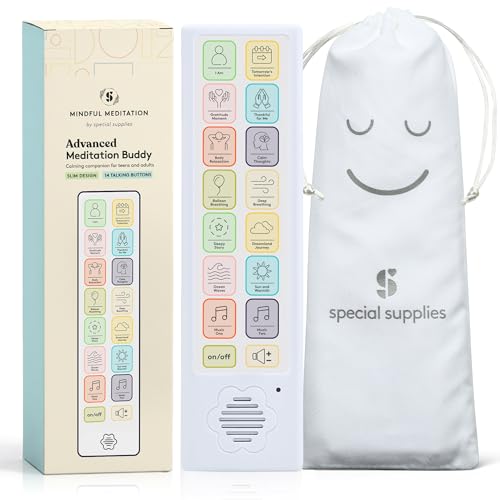
Special Supplies Meditation Buddy – Screen-Free Mindfulness & Breathing Device for Stress Relief, Daily Meditation, Anxiety Relief, Calm Focus & Emotional Balance for Kids and Adults (Adults)
Screen-Free Mindfulness Tool – Enjoy guided meditation, calm breathing, and daily mindfulness without apps, phones, or distractions. Perfect…
As an affiliate, we earn on qualifying purchases.
As an affiliate, we earn on qualifying purchases.
Key Questions
Are these questions suitable for everyone?
While generally helpful, individual differences mean some may find other strategies more effective. Consulting a mental health professional can help tailor approaches.
How often should I ask myself these questions?
Practicing these questions regularly, especially during stressful moments, can be beneficial. Incorporating them into daily routines may enhance resilience over time.
Do these questions replace other stress management techniques?
No, they are intended as complementary tools. Combining them with other methods like mindfulness, exercise, or therapy can provide a more comprehensive approach.
What if I find it hard to answer these questions?
This is common. Seeking support from a mental health professional can help develop personalized strategies for managing stress effectively.
Source: NYT · Well