To maintain good sleep habits while traveling, plan ahead by packing essentials like earplugs and sleep masks, and use sleep tracking apps to monitor your rest. Create a comfortable environment by adjusting lighting, controlling temperature, and reducing noise in your accommodation. Manage jet lag by exposing yourself to natural light and sticking to consistent sleep schedules. Incorporate relaxing techniques and prioritize your sleep routine for better rest—continue exploring ways to stay energized on the road.
Key Takeaways
- Pack essential sleep accessories like eye masks, earplugs, and portable pillows to create a comfortable environment.
- Maintain a consistent sleep schedule and bedtime routine, even across different time zones.
- Optimize your sleeping environment with blackout curtains, comfortable bedding, and controlled room temperature.
- Use relaxation techniques such as deep breathing, meditation, or aromatherapy to reduce travel stress before sleep.
- Limit stimulants like caffeine and alcohol before bedtime and minimize electronic device use to enhance sleep quality.
Planning Ahead for Better Sleep

To guarantee a restful night while traveling, it’s essential to plan ahead. Start by packing useful travel accessories like a comfortable sleep mask, earplugs, and a portable pillow to block out noise and light. These items help create a familiar sleep environment regardless of where you are. Additionally, consider using sleep tracking apps or devices to monitor your sleep patterns during the trip. Sleep tracking provides insights into your sleep quality, helping you identify disruptions and adjust your habits accordingly. Planning ahead ensures you’re prepared with the right tools to promote better sleep, even in unfamiliar settings. Being mindful of your sleep environment and ergonomic considerations can further enhance your comfort. Incorporating simple systems into your travel routine can make maintaining good sleep habits easier and more sustainable. Recognizing the importance of sleep environment optimization can significantly improve your rest while on the go. Paying attention to sleep hygiene and establishing a consistent pre-sleep routine can also help your body adjust more quickly to new surroundings. By anticipating your needs and carrying essential accessories, you set yourself up for more restful nights and a more energized trip. Additionally, understanding common sleep challenges encountered during travel can help you develop effective strategies to overcome them.
Creating a Restful Environment in Your Accommodation

Creating a restful environment in your accommodation starts with optimizing your surroundings to promote sleep. Begin by adjusting bedroom lighting; use blackout curtains or an eye mask to block out unwanted light, helping your body recognize it’s time to wind down. Keep the lighting dim in the evening to signal your body that sleep is approaching. Noise reduction is equally important—consider using earplugs or a white noise machine to drown out unfamiliar sounds that might disrupt your rest. Verify your bed is comfortable and the room temperature is cool, around 65-70°F. Additionally, proper ventilation considerations can improve air quality and comfort, further supporting restful sleep. Proper application of sleep environment tips can make a significant difference in the quality of your rest. Ensuring good air circulation can also help prevent stuffiness and promote a more restful environment. Incorporating natural elements like plants may enhance overall relaxation and air quality in your space, especially when integrated with smart home automation features that can regulate lighting and temperature for optimal sleep conditions.
Managing Jet Lag and Time Zone Changes
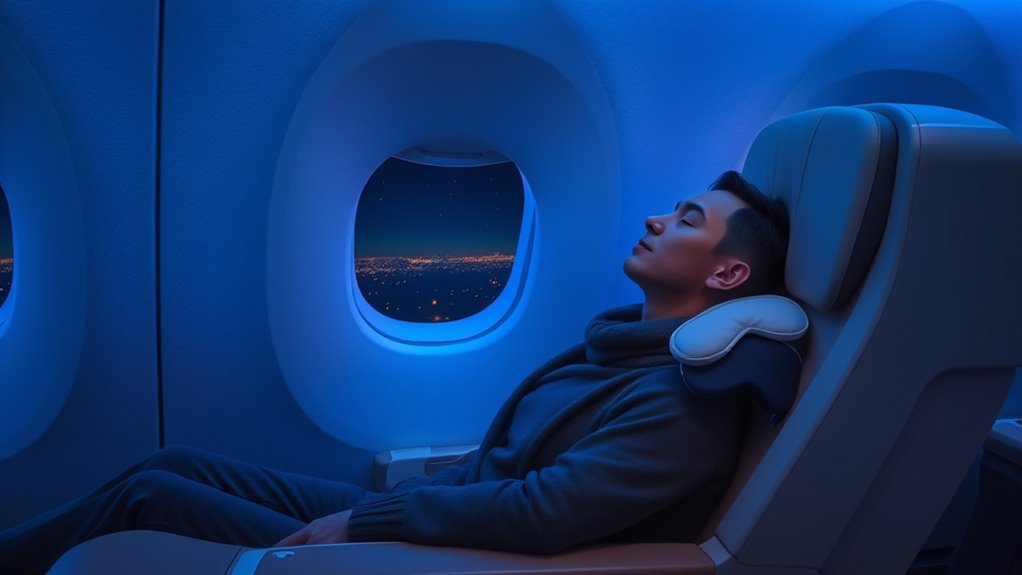
When you travel across multiple time zones, your internal clock can become out of sync with the local schedule, causing jet lag. Cultural differences in sleep routines and meal times can make adjusting even more challenging. To combat travel fatigue, try to expose yourself to natural light at your destination, which helps reset your internal clock. Gradually shift your sleep schedule before departure if possible. Stay hydrated and avoid alcohol or caffeine close to bedtime, as these can worsen jet lag symptoms. Be patient—your body needs time to adapt. Recognizing that some discomfort is normal helps you stay flexible. Additionally, using cloud-based sleep tracking tools can help monitor your sleep patterns and facilitate adjustments. Understanding individual sleep needs can also improve your adaptation process, making your travel experience more comfortable. Incorporating sleep hygiene practices, such as maintaining a consistent sleep environment, can further enhance your ability to adjust quickly. Being mindful of circadian rhythms can also support your adjustment process. Developing a personalized sleep routine that considers your unique chronotype may help you adapt more efficiently. Ultimately, understanding these factors allows you to better manage jet lag and enjoy your trip more fully.
Establishing a Consistent Sleep Schedule
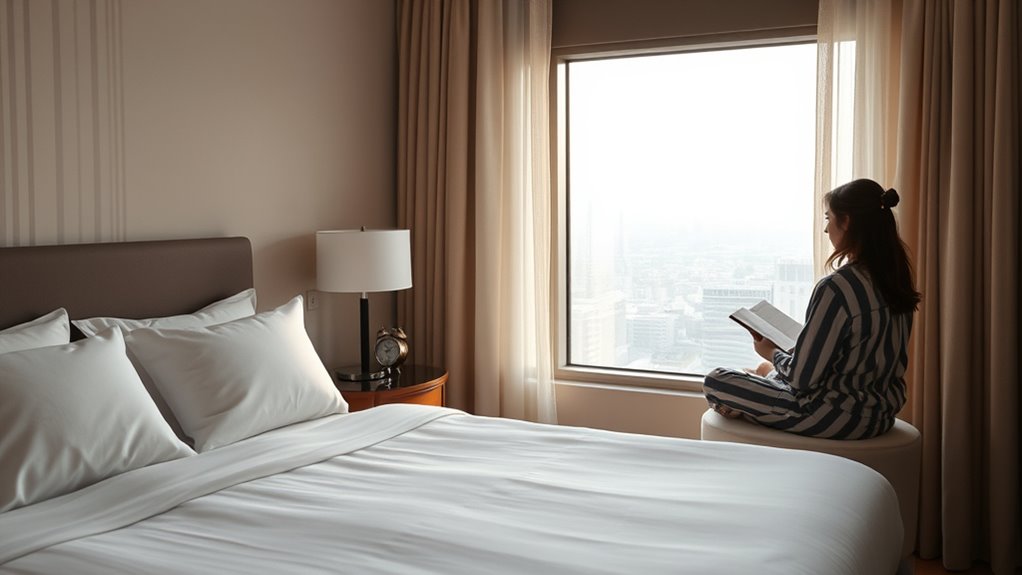
Establishing a consistent sleep schedule is key to maintaining good sleep habits, especially when traveling or adjusting to new routines. Good sleep hygiene relies on going to bed and waking up at the same times each day, which helps regulate your body’s internal clock. To stay consistent, set a realistic bedtime that aligns with your schedule and stick to it—even on weekends or travel days. Use bedtime routines to cue your body for sleep, such as reading or gentle stretches. Here’s a simple plan to keep you on track:
| Bedtime | Wake-up time | Routine focus |
|---|---|---|
| 10:00 PM | 6:30 AM | Wind down with calming activities |
| 11:00 PM | 7:30 AM | Limit screen time before bed |
| 9:30 PM | 6:00 AM | Prepare for restful sleep |
| 10:30 PM | 7:00 AM | Maintain consistency |
| 11:30 PM | 8:00 AM | Prioritize sleep hygiene |
Staying disciplined and mindful of sleep hygiene practices helps to support your sleep health wherever you are. Incorporating consistent sleep schedules can also help your body adapt more quickly when adjusting to new environments or time zones. Additionally, paying attention to sound environments during travel can further improve your sleep quality by reducing disruptions. Recognizing the impact of celestial influences may also be beneficial for some individuals seeking holistic approaches to health and well-being. Paying attention to light exposure during travel can also help regulate your circadian rhythm and improve sleep quality.
Incorporating Relaxation Techniques and Sleep Aids

Building on the importance of maintaining a consistent sleep schedule, incorporating relaxation techniques and sleep aids can further enhance your ability to fall asleep and stay restful throughout the night. Meditation techniques, such as deep breathing or progressive muscle relaxation, help calm your mind and reduce travel-related stress. Aromatherapy options, like lavender or chamomile essential oils, can create a soothing environment that signals your body it’s time to rest. You might use a portable diffuser or apply oils to your pillow. These methods are simple yet effective ways to relax your body and mind, making it easier to drift off even in unfamiliar surroundings. Using essential oils for sleep, such as lavender or chamomile, can help promote a more restful sleep. Incorporating calming aromatherapy methods into your nightly routine can further improve your sleep quality while on the go. Additionally, understanding credit card insights and managing your travel expenses efficiently can reduce financial stress that might interfere with your sleep. Being aware of durable survival gear essentials and ensuring your belongings are secure can also contribute to peace of mind during your travels. Combining relaxation techniques with sleep aids offers a natural, non-invasive approach to improve your sleep quality while traveling.
Prioritizing Sleep Amidst Travel Activities

To prioritize sleep during your travels, start by setting a consistent sleep schedule that works across time zones. Limit evening stimulants like caffeine or alcohol, which can disrupt your rest, and create a comfortable, quiet environment wherever you stay. These simple steps help you stay rested and energized despite busy travel plans.
Set Consistent Sleep Schedule
Even amidst the excitement of travel, maintaining a consistent sleep schedule is essential for staying energized and alert. Sticking to regular bedtimes helps your body’s internal clock stay on track, making it easier to fall asleep and wake up refreshed. To do this, establish bedtime routines that signal winding down, even on the road. Use sleep tracking apps to monitor your sleep patterns and identify disruptions. Remember, consistency is key, so try to go to bed and wake up at similar times each day, regardless of your activities. This helps your body adapt, reducing fatigue and jet lag. Keep these tips in mind:
- Stick to your regular sleep and wake times
- Use sleep tracking to identify issues
- Develop calming bedtime routines
Limit Evening Stimulants
Ever wonder why you often feel restless or alert when trying to sleep after a busy evening of travel activities? It’s likely due to your caffeine consumption and electronic device use. Consuming caffeine late in the day can stay in your system longer than you think, making it harder to wind down. Additionally, scrolling through your phone or tablet emits blue light, which suppresses melatonin—the hormone that helps you sleep. To prioritize sleep, cut off caffeine at least six hours before bedtime. Limit electronic device use in the evening, and consider switching to relaxing activities like reading or listening to calming music. By reducing these stimulants, you give your body a better chance to relax and shift smoothly into restful sleep.
Create a Restful Environment
Creating a restful environment is essential when traveling, especially if you want to get quality sleep despite a busy schedule. To do this, focus on minimizing disruptions and creating a calm space. Use soundproofing strategies like earplugs or white noise apps to block out noise and guarantee restful sleep. Adjust your sleep environment with sleep-friendly lighting—dim the lights or use a sleep mask to signal your body it’s time to rest. Keep your room cool and comfortable, and remove any distractions. Remember, a quiet, dark, and cool environment helps reinforce your natural sleep cues.
- Use earplugs or white noise devices for soundproofing
- Dim or block out light with sleep masks or blackout curtains
- Maintain a comfortable, cool room temperature
Frequently Asked Questions
How Can I Deal With Noisy Environments While Sleeping Away From Home?
To block out noise while sleeping away from home, use earplugs to create a quiet environment and try white noise machines or apps to mask disruptive sounds. You can also bring a portable white noise device or use your phone’s app to generate consistent background noise. These strategies help you relax and fall asleep faster, ensuring better rest despite noisy surroundings.
What Are Quick Tips for Adjusting Sleep Patterns During Last-Minute Travel Plans?
Did you know that switching sleep routines suddenly can increase jet lag severity by up to 40%? To adjust quickly, try to align your sleep schedule with your destination’s time zone as soon as possible. Expose yourself to natural light during the day, avoid screens before bed, and stay hydrated. These quick tips help reset your internal clock, easing jet lag and helping you adapt faster to new sleep patterns.
How Do I Handle Sleep Disruptions Caused by Unfamiliar Bedding or Mattresses?
If unfamiliar bedding disrupts your sleep, start by adjusting the bedding to improve mattress comfort, like adding a pillow or a rolled towel for support. Bring your own pillow if possible, or ask for extra blankets to create a familiar feel. You can also use a sleep mask or earplugs to block out unfamiliar sounds and light, helping you relax despite bedding differences. These bedding adjustments help restore your sleep quality quickly.
Are There Specific Foods That Can Improve Sleep Quality While Traveling?
You can boost your sleep quality by choosing healthy snacks like nuts, bananas, and yogurt, which provide calming nutrients. Herbal teas such as chamomile or peppermint are great for relaxation without caffeine. Some might worry about digestion or allergies, but sticking to moderate portions and familiar flavors helps avoid issues. Incorporate these foods into your routine before bedtime for a more restful, travel-friendly sleep experience.
How Can I Maintain Sleep Hygiene When Using Unfamiliar Hotel Amenities?
To maintain sleep hygiene in unfamiliar hotel rooms, control the lighting by bringing a sleep mask or requesting blackout curtains. Limit bathroom amenities that disrupt sleep, like loud bathroom fans or bright lights. Keep your sleep routine consistent by sticking to your usual bedtime and wake-up time. Avoid screens before bed, and relax with calming activities. These steps help you rest well despite unfamiliar hotel amenities.
Conclusion
Think of your sleep as a travel buddy—essential for your adventures. While some believe sleeping in a new place disrupts rest, studies show creating a familiar routine and environment can actually boost sleep quality. By planning ahead, managing jet lag, and sticking to your schedule, you set yourself up for restful nights. Remember, good sleep isn’t just a myth; it’s the secret ingredient to truly enjoying every moment of your journey.