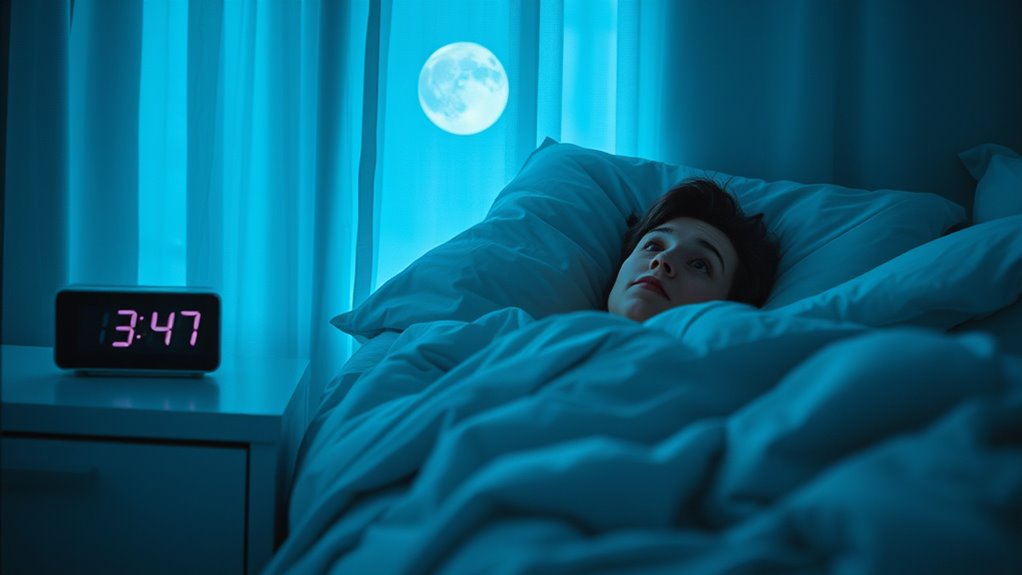

When you can’t sleep, experts recommend getting out of bed after about 20 minutes instead of staying in bed awake. Engage in calming activities like reading or listening to soft music in a quiet, dim environment. This approach helps reset your mind and avoid negative associations with the bed. Staying up briefly can reduce frustration and promote better sleep overall. If you want to learn more strategies, keep exploring proven tips to improve your rest.

Get health and wellness essentials delivered free — and shop member deals
- Fast, free delivery on millions of items
- Access to Prime Big Deal Days deals on October 6–7
- Prime Video, Amazon Music and more included
Key Takeaways
- If you’re awake for more than 20 minutes, get out of bed to engage in calming activities.
- Staying in bed when awake can reinforce negative sleep associations and worsen insomnia.
- Use relaxation techniques outside the bed to reset your mind and reduce sleep-related anxiety.
- Returning to bed only when sleepy helps establish a healthy sleep routine and promotes better rest.
- Consistency and patience are key; if problems persist, consult a healthcare professional for guidance.
Have you ever found yourself staring at the ceiling, unable to drift off no matter how exhausted you feel? It’s a frustrating experience that can leave you feeling helpless, but understanding what to do next can make a real difference. Many experts agree that when sleep eludes you, the first step is to evaluate your sleep hygiene. This involves creating an environment and routine conducive to rest. You want to keep your bedroom cool, dark, and quiet, minimizing distractions that could interfere with sleep. Avoid screens at least an hour before bed because the blue light emitted by phones and computers can disrupt your body’s natural melatonin production. Stick to a consistent sleep schedule, even on weekends, to train your internal clock. These small adjustments can considerably improve your ability to fall asleep naturally. Additionally, incorporating connected sleep technology can help monitor and optimize your sleep patterns more effectively.
But what happens if you’re lying in bed, wide awake, for what feels like hours? Many people struggle with whether to stay in bed or get up and do something else. Here’s where relaxation techniques come into play. If you can’t sleep after about 20 minutes, experts often recommend getting out of bed rather than scrolling through your phone or tossing and turning. When you get up, choose a quiet, dimly lit activity — reading a book, listening to calming music, or practicing deep breathing exercises. These relaxation techniques help calm your mind and body, making it easier to fall asleep when you return to bed. The goal is to associate your bed with restful sleep, not frustration or wakefulness.
Staying in bed when you’re wide awake can sometimes backfire, creating a negative association that makes falling asleep even harder. By getting up and engaging in a relaxing activity, you reset your mental state and reduce anxiety about sleep. When you do return to bed, do so with a sense of calm, knowing you’re taking steps to improve your sleep hygiene and reduce stress. Remember, consistency is key. Developing a routine that incorporates relaxation techniques and good sleep habits can gradually improve your sleep quality. If sleeplessness persists despite these efforts, it might be time to consult a healthcare professional for additional guidance. But for now, focus on creating a peaceful sleep environment and using relaxation methods to help your body and mind transition into restful slumber.
blue light blocking glasses for sleep
As an affiliate, we earn on qualifying purchases.
As an affiliate, we earn on qualifying purchases.
Frequently Asked Questions
How Long Should I Stay in Bed if I Can’t Sleep?
If you can’t sleep, stay in bed for about 20 minutes to avoid associating your bed with wakefulness. Use this time to relax and avoid screens, while maintaining a calm sleep environment. If sleep doesn’t come, get up and engage in a quiet activity, then return to your bedtime routine. Keeping a consistent sleep environment and routine helps train your body for better sleep over time.
Does Reading in Bed Help or Worsen Insomnia?
Reading in bed can help your bedtime routine by relaxing your mind, but it might worsen insomnia if it keeps you alert or exposes you to bright screens. Think of your sleep environment like a sanctuary—calm and distraction-free. If reading helps you unwind without over-stimulating your brain, it’s beneficial. But if it makes you more awake, it’s better to put the book down and focus on calming activities.
Can Exercise Before Bed Improve Sleep Quality?
Exercise before bed can improve sleep quality if you follow good sleep hygiene and establish relaxing bedtime routines. Engaging in moderate activity earlier in the evening helps you unwind and promotes deeper sleep. However, intense workouts close to bedtime may interfere with your ability to fall asleep. To optimize sleep, aim for light exercise at least a few hours before bed, and pair it with calming routines to prepare your body for restful sleep.
Are Sleep Aids Recommended for Occasional Insomnia?
Sleep aids can help with occasional insomnia, but you should use them cautiously. Always consider medication safety and follow your healthcare provider’s guidance to avoid dependency. Natural remedies like melatonin or herbal teas might be safer options to try first, as they typically pose fewer risks. If insomnia persists, consult a professional to explore underlying causes and develop a personalized plan for better sleep.
What Relaxation Techniques Are Most Effective for Falling Asleep?
Focus on calming your mind through relaxation exercises like deep breathing, progressive muscle relaxation, or visualization. Incorporate calming bedtime routines such as dimming lights, avoiding screens, and listening to soothing sounds. These techniques help signal to your body that it’s time to wind down, making it easier to fall asleep. Consistent relaxation exercises and bedtime routines create a peaceful environment, helping you shift smoothly into restful sleep.
As an affiliate, we earn on qualifying purchases.
Conclusion
So, next time sleep eludes you, remember: staying in bed might be like chasing shadows, only fueling frustration. Instead, get up, stretch, or do something calming until sleep gently returns. Think of this as your secret weapon against insomnia—your personal knight in shining armor. Don’t let restless nights rule your life; take charge and reclaim your peace. Because in the battle of sleep, sometimes the bravest move is simply to stand up and walk away.
relaxation and meditation apps for sleep
As an affiliate, we earn on qualifying purchases.
As an affiliate, we earn on qualifying purchases.
As an affiliate, we earn on qualifying purchases.
Fall Picks
fall essentials
As an affiliate, we earn on qualifying purchases.