
To sleep better, avoid caffeine and artificial sweeteners close to bedtime, as they can disrupt your sleep cycle. Skip alcohol, spicy, and acidic foods that cause discomfort or acid reflux. Steer clear of heavy or fatty meals and sugary snacks, which can lead to blood sugar crashes. Large portions and fast food also interfere with rest. If you keep these tips in mind, you’ll find it easier to enjoy a restful night. Keep exploring to learn more!
Key Takeaways
- Avoid caffeine and artificial sweeteners in beverages close to bedtime to prevent sleep disruptions.
- Refrain from alcohol consumption before sleep, as it reduces REM sleep and causes awakenings.
- Steer clear of spicy, acidic, heavy, or fatty foods that cause digestive discomfort and acid reflux.
- Limit sugary snacks and desserts in the evening to avoid blood sugar spikes and crashes that disturb sleep.
- Eat smaller, balanced meals at least 2-3 hours before bed, and avoid fast food to support better sleep quality.
Caffeinated Beverages

Caffeinated beverages, such as coffee, tea, and energy drinks, are common pick-me-ups that can disrupt your sleep if consumed too close to bedtime. Caffeine and sleep disruption go hand in hand, as caffeine blocks adenosine, a chemical that promotes relaxation and sleepiness. To improve your chances of falling asleep quickly and enjoying restful sleep, it’s best to avoid beverages to avoid in the hours before bed. Even if you think you can handle a small amount, caffeine’s effects can last for several hours, interfering with your sleep cycle. Cutting back on these beverages in the evening helps your body wind down naturally. Opt for caffeine-free alternatives instead, ensuring you won’t wake up feeling groggy or unrested. Being aware of how sleep disruption occurs can help you make better choices for your bedtime routine.
Alcoholic Drinks

While avoiding caffeine can help you wind down, consuming alcoholic drinks before bed can have just as disruptive an effect. Alcohol may initially make you feel sleepy, but it interferes with your sleep quality by reducing REM sleep and causing frequent awakenings. This fragmentation prevents deep, restorative rest. Additionally, alcohol acts as a diuretic, increasing dehydration risks, which can cause dry mouth and headaches upon waking. These dehydration effects further impair sleep by disrupting your comfort and hydration levels overnight. Even small amounts of alcohol can lead to poor sleep quality, leaving you tired and unrefreshed in the morning. To promote better sleep, it’s best to avoid alcoholic drinks at least a few hours before bedtime. Understanding sleep disruption can help you make healthier choices for restful nights. Incorporating hydration management into your pre-sleep routine can further enhance sleep quality and overall well-being. Being mindful of alcohol’s effects on sleep can also guide you toward more restful nights.
Spicy and Acidic Foods

Spicy and acidic foods can disrupt your sleep by irritating your stomach and causing discomfort throughout the night. These foods often trigger digestive discomfort, making it harder to fall asleep peacefully. They can also lead to acid reflux, where stomach acid flows back into your esophagus, causing a burning sensation and chest discomfort. Eating spicy or acidic foods close to bedtime increases the risk of waking up frequently due to these symptoms. To improve your sleep quality, avoid dishes with hot peppers, citrus fruits, tomatoes, or vinegar at least a few hours before bed. Opting for milder, less acidic options can help prevent digestive issues and promote a more restful night’s sleep. Being mindful of digestive health can further support better sleep by reducing discomfort. Additionally, understanding how acid reflux can interfere with sleep may motivate you to make better dietary choices in the evening. Incorporating dietary modifications such as choosing soothing, bland foods for dinner can further enhance sleep quality. Maintaining a balanced digestive system is essential for overall health and restful sleep.
Heavy or Fatty Meals

Heavy or fatty meals can considerably interfere with your ability to fall asleep and stay asleep throughout the night. Consuming such meals too close to bedtime can disrupt your meal timing, making it harder for your body to prepare for sleep. These foods slow down food digestion, leading to discomfort, bloating, and acid reflux, all of which can wake you up or prevent deep sleep. It’s best to finish heavy or fatty meals at least two to three hours before bed, giving your body enough time to process the food. If you eat too late, your digestive system works overtime, diverting energy from sleep processes. Prioritizing lighter meals in the evening helps promote better sleep quality and reduces unnecessary disruptions during the night. Additionally, eating heavy meals can activate your digestive system, which can interfere with your sleep cycles, and make it harder to reach restorative sleep stages. Engaging in mindful eating earlier in the evening can further support your sleep health by reducing stress on your digestive system. Incorporating proper meal timing can optimize your body’s natural sleep patterns and improve overall rest. Being mindful of meal composition can also help you avoid nutrient imbalances that might disrupt sleep. Paying attention to food choices and their impact on digestion can enhance your overall sleep quality and well-being.
Sugary Snacks and Desserts

Sugary snacks and desserts can markedly disrupt your sleep, especially if eaten close to bedtime. They cause blood sugar spikes followed by crashes, making it harder to fall asleep and stay asleep. Instead of reaching for candy or cake, opt for healthy bedtime snacks like a handful of nuts or a small bowl of Greek yogurt. If you crave something sweet, try natural sweet alternatives such as fresh fruit or dried berries. These options provide the sweetness you desire without the sugar rush that can interfere with your sleep cycle. Avoid high-sugar desserts in the evening to prevent restless nights and disrupted sleep patterns. Making smarter choices helps you fall asleep more easily and enjoy a more restful night. Incorporating nutrient-rich foods into your evening routine can also support better sleep quality. Additionally, choosing foods with sleep-promoting nutrients can further enhance your ability to rest peacefully. Being mindful of blood sugar fluctuations through your food choices is key to maintaining consistent sleep patterns.
Artificial Sweeteners
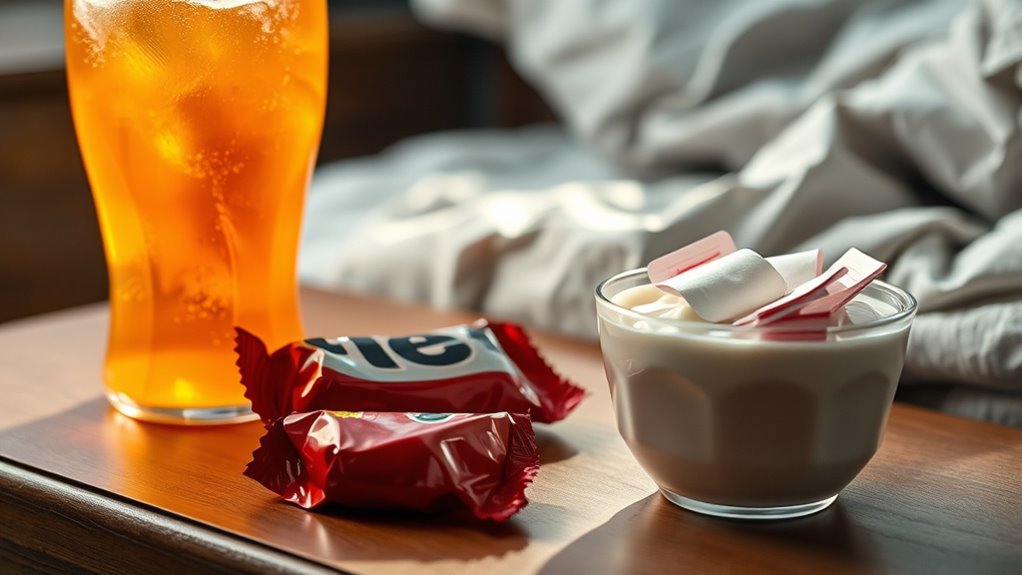
Although artificial sweeteners are often marketed as a healthier alternative to sugar, consuming them close to bedtime can interfere with your sleep. These sweeteners may disrupt sleep quality by affecting your body’s natural rhythms. Additionally, artificial sweeteners and digestion can cause bloating or discomfort, making it harder to fall asleep. Some common types, like aspartame or sucralose, can trigger digestive issues or alertness, impairing your rest. To illustrate, consider this comparison:
| Effect on Sleep Quality | Effect on Digestion |
|---|---|
| May cause wakefulness | Can cause bloating |
| Disrupts sleep cycles | Leads to discomfort |
| Interferes with rest | Causes indigestion |
| Affects melatonin production | Impairs digestion |
Furthermore, consumption of artificial sweeteners may interfere with the metabolic processes, potentially impacting overall sleep quality. Consuming them late at night can also lead to blood sugar fluctuations, which may further disturb sleep patterns. In addition, some artificial sweeteners may contain chemicals that can trigger alertness, making it harder to relax before sleep. Moreover, artificial sweeteners can sometimes alter gut bacteria, which plays a role in sleep regulation. Research also suggests that artificial sweeteners can impact hormonal balance, which influences sleep cycles.
Large Portions and Fast Food

Consuming large portions or fast food close to bedtime can considerably disrupt your sleep. Heavy meals delay digestion, causing discomfort and making it harder to fall asleep. To improve your sleep quality, pay attention to portion sizes and food timing. Here are three reasons to avoid large portions and fast food before bed:
- Digestive Overload: Large portions strain your stomach, leading to indigestion and acid reflux. Incorporating proper meal timing can help minimize this issue. Additionally, understanding water chemistry can aid in managing digestion and hydration effectively.
- Sleep Disruption: Fast food often contains unhealthy fats and salt, which can interfere with sleep cycles.
- Delayed Sleep Onset: Eating too late or eating big portions can keep your body active longer, delaying sleep onset. Proper meal timing is essential for restful sleep.
Stick to smaller, balanced meals and avoid fast food at least 2-3 hours before bedtime for better sleep.
Frequently Asked Questions
Can Drinking Herbal Tea Before Bed Help Improve Sleep?
Drinking herbal tea before bed can help improve your sleep, especially if you choose varieties with calming benefits like chamomile or valerian root. These herbal tea benefits include reducing stress and promoting relaxation. Opt for caffeine-free options to avoid disrupting your sleep cycle. By incorporating herbal teas into your nightly routine, you may find it easier to unwind and enjoy a restful night’s sleep.
Are Natural Fruit Juices Suitable Bedtime Drinks for Better Sleep?
Natural fruit juices can be tempting, but they may not be ideal for bedtime. While fruit juice benefits include vitamins and hydration, natural sugar effects can spike your energy and disrupt sleep. If you want better rest, opt for low-sugar options or dilute the juice. This way, you enjoy the nutrients without the negative impact of excess sugar, helping you fall asleep more easily.
How Do Late-Night Snacks Affect Sleep Quality?
Late-night snacks can negatively impact your sleep quality by causing digestive issues and sleep disruption. Eating heavy or spicy foods close to bedtime may lead to discomfort, acid reflux, or indigestion, making it harder to fall asleep or stay asleep. Even light snacks can sometimes interfere with your rest if they contain caffeine or sugar. For better sleep, opt for a small, healthy snack that’s easy to digest, and avoid eating too late.
Does Drinking Water Before Bed Impact Sleep or Cause Disruptions?
Think of water as your sleep’s gentle guardian. Drinking it before bed can boost hydration levels, helping you relax and support overall rest. However, too much might turn into sleep interruptions, as your bladder signals you to get up. To strike a balance, sip modestly and avoid excessive intake. This way, you enjoy the benefits of hydration without disrupting your sleep journey.
Are There Any Drinks That Can Promote Relaxation and Sleep?
You can try warm herbal teas like chamomile or valerian root to promote relaxation and sleep. These drinks act as natural sleep aids, helping you unwind without caffeine effects that could disrupt your rest. Avoid caffeinated beverages close to bedtime, as they can interfere with your sleep cycle. Instead, opt for calming drinks that support relaxation, making it easier to fall asleep and enjoy restful nights.
Conclusion
Just like Icarus flying too close to the sun, indulging in these foods can cause your sleep to crash and burn. Cutting back on caffeine, alcohol, spicy, fatty, and sugary foods before bed helps you avoid the turbulence of restless nights. Think of it as steering clear of the siren’s call—choosing calmer, sleep-friendly options instead. By making smarter choices, you’ll wake up refreshed, ready to conquer your day like a hero returning from a well-earned victory.