

To combat insomnia, establish a consistent bedtime schedule and create a relaxing pre-sleep routine by dimming lights, avoiding screens, and engaging in calming activities like gentle stretches or meditation. Use soothing aromatherapy with lavender or chamomile, listen to calm music or white noise, and keep your sleep space cool and comfortable. Steer clear of caffeine and heavy meals before bed. Continue exploring these tips for more ways to transform your nights and get restful sleep.
Key Takeaways
- Establish a consistent bedtime routine with calming activities like gentle stretches, journaling, or mindfulness exercises.
- Use aromatherapy with lavender or chamomile to create a relaxing sleep environment.
- Dim the lights and avoid screens at least one hour before sleep to signal winding down.
- Practice deep breathing or body scan relaxation techniques to reduce stress and promote sleep.
- Play soothing sounds or white noise to help block distractions and signal bedtime.
Establish a Consistent Bedtime Schedule
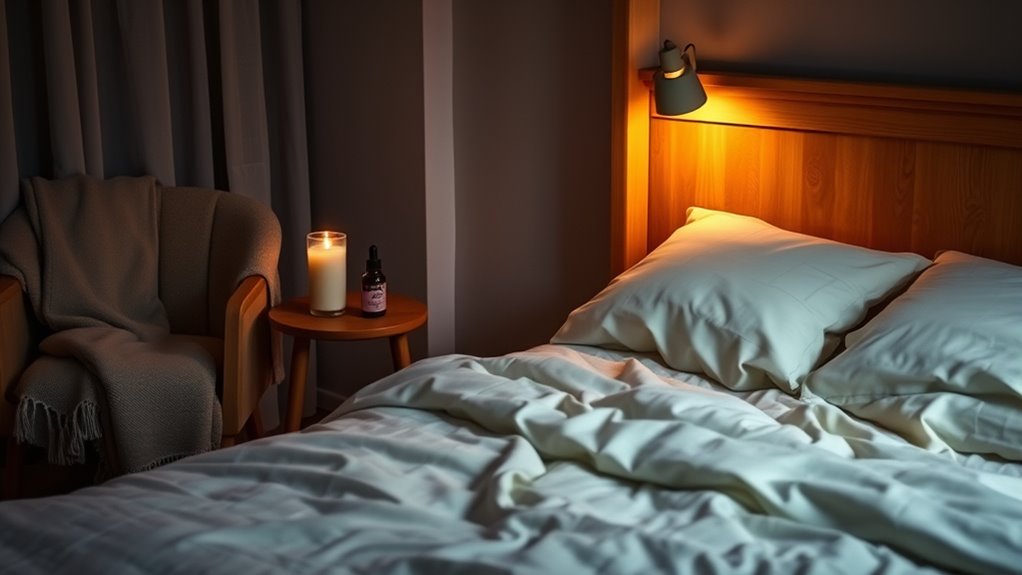
Having a consistent bedtime schedule can considerably improve your sleep quality. When you stick to regular bedtime routines, your body learns to anticipate sleep, making it easier to fall asleep and stay asleep. Focus on creating a sleep environment that promotes relaxation—keep your room dark, quiet, and cool. Avoid screens and stimulating activities before bed, as they can disrupt your circadian rhythm. By going to bed and waking up at the same time every day, even on weekends, you reinforce your body’s natural sleep-wake cycle. This consistency helps regulate your internal clock, reducing insomnia symptoms. Incorporating consistent sleep patterns can further strengthen your circadian rhythm, making it easier to establish restful sleep habits. Over time, establishing a reliable sleep routine makes it easier to drift off naturally and enjoy restful, restorative sleep night after night. Incorporating calming activities before bed can further enhance your ability to unwind and prepare for sleep. Using calming aromatherapy with essential oils such as lavender or chamomile may support relaxation and improve sleep quality. Additionally, maintaining a relaxation routine can help signal to your body that it’s time to wind down.
Create a Relaxing Pre-Sleep Routine

To signal to your body that it’s time to wind down, creating a relaxing pre-sleep routine is essential. Start by dimming the lights and ensuring your sleep-friendly bedding feels inviting and comfortable. Incorporate bedtime journaling into your routine—spend a few minutes writing down your thoughts or reflecting on the day. This helps clear your mind and reduces stress, making it easier to fall asleep. Avoid screens and bright lights during this time, focusing instead on calming activities. Incorporating practical mindfulness techniques can further enhance your ability to relax and transition smoothly into sleep. Engaging in consistent habits each night signals to your body that bedtime is approaching, helping you segue smoothly into sleep. Establishing a connected home fitness environment with soothing sounds or gentle stretches can also promote relaxation and prepare your body for rest. Creating a sleep-conducive environment by controlling room temperature and minimizing noise can significantly improve your sleep quality. Additionally, incorporating gentle relaxation exercises can help reduce physical tension, further preparing your body for restful sleep. Creating a soothing, intentional routine sets the stage for restful, uninterrupted sleep.
Practice Deep Breathing and Mindfulness Exercises

After establishing a calming pre-sleep routine, focusing on your breath can further ease your mind and body. Try a guided meditation that emphasizes deep breathing, inhaling slowly through your nose, and exhaling gently through your mouth. This helps lower your heart rate and calms racing thoughts. Incorporating a body scan to enhance mindfulness—start at your toes and gradually move up, noticing tension or discomfort without judgment. As you breathe deeply, observe how your body feels with each inhale and exhale. These exercises anchor your awareness in the present moment, reducing anxiety and promoting relaxation. proper lighting control can also make your environment more conducive to restful sleep. Additionally, creating a sustainable and secure environment with optimal lighting and climate control can support your sleep quality. Recognizing the importance of environmental factors in sleep hygiene can motivate you to optimize your bedroom for better rest. Being mindful of rhythm failure or disruptions in your sleep cycle can help you address underlying issues that affect sleep quality. Developing awareness of AI ethics and its impact on daily life can also reduce subconscious worries that interfere with sleep. Consistently practicing deep breathing and mindfulness before bed can create a peaceful shift from wakefulness to sleep.
Dim the Lights and Limit Screen Time
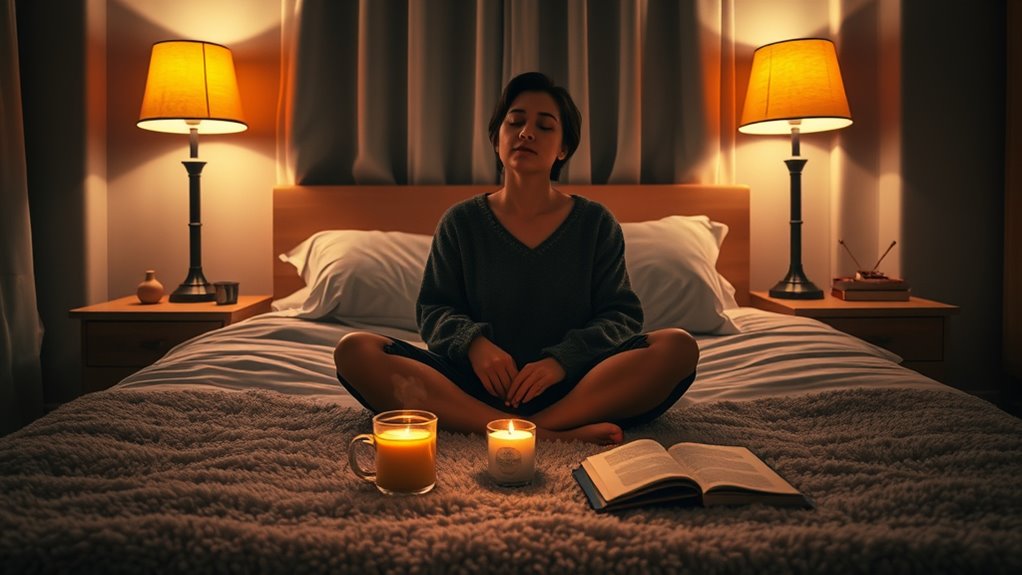
Dimming the lights and limiting screen time before bed signals to your body that it’s time to wind down. Bright lighting and exposure to screens emit blue light, which can interfere with your body’s production of melatonin—the hormone that regulates sleep. To create a calming environment, make lighting adjustments by switching to soft, warm lights in your bedroom. Turn off or put away electronic devices at least an hour before bed to reduce screen time. This helps your mind relax and prepares your body for restful sleep. Additionally, lighting habits can reinforce your sleep routine and improve overall sleep quality. Establishing these simple lighting adjustments can send a clear signal that it’s time to unwind, making it easier to fall asleep naturally and stay asleep longer. Incorporating blue light reduction strategies, such as using blue light filters or glasses, can further enhance your sleep environment. Practicing a consistent bedtime routine also helps condition your body for better sleep.
Incorporate Soothing Aromatherapy

Using essential oils like lavender or chamomile can create a calming environment that helps you fall asleep faster. Aromatherapy diffusers disperse these scents evenly, enhancing their relaxing effects throughout your bedroom. Incorporating this simple practice can make your bedtime routine more soothing and effective. Additionally, incorporating relaxation techniques such as deep breathing or gentle yoga alongside aromatherapy can further improve sleep quality. Ensuring proper sleep hygiene by maintaining a consistent bedtime and limiting screen time can also support your relaxation efforts. Creating a serene environment with dim lighting and minimal noise can further enhance these calming effects. For example, choosing a restaurant with live music that features soothing melodies can help set a peaceful mood before bed. Incorporating aromatherapy as part of your nightly ritual can also promote emotional well-being and reduce stress.
Essential Oils for Sleep
Essential oils for sleep can offer a natural and calming way to ease insomnia through soothing aromatherapy. You can create personalized aromatherapy blends using calming oils like lavender, chamomile, or bergamot, which are known for their relaxing properties. When using essential oils, it’s important to prioritize essential oil safety by diluting them properly and performing a patch test to avoid skin irritation. Diffusing these oils in your bedroom can help set a peaceful atmosphere, promoting relaxation and sleep. Remember, consistency is key; incorporating these oils into your nightly routine can make a significant difference over time. Always choose high-quality, pure oils to maximize their benefits and ensure a safe, effective sleep aid. Additionally, understanding the essential survival gear items can be helpful in preparing for unexpected situations that may affect your sleep environment.
Aromatherapy Diffusers Benefits
Aromatherapy diffusers enhance the benefits of soothing aromatherapy by dispersing calming essential oils evenly throughout your space. This promotes consistent essential oil diffusion, allowing you to fully experience their relaxing properties. The benefits of using an aromatherapy diffuser include creating a peaceful environment, reducing stress, and improving sleep quality. By diffusing essential oils like lavender or chamomile, you can establish a calming atmosphere that signals your body to unwind. The gentle mist ensures the aroma lingers without being overpowering, encouraging relaxation and helping to ease insomnia. An aromatherapy diffuser is a simple yet effective tool for integrating calming scents into your nightly routine, making it easier to drift into restful sleep each night.
Enjoy Gentle Stretching or Yoga

If you’re struggling to fall asleep, gentle stretching or yoga can help relax your body and calm your mind. These practices promote the release of tension, easing muscle tightness that may keep you awake. Focus on slow, deliberate movements that target your neck, shoulders, and back, helping to unwind stress accumulated during the day. Calming yoga poses like legs-up-the-wall or child’s pose encourage relaxation and deep breathing. Engaging in gentle stretching or calming yoga before bed creates a peaceful progression from wakefulness to sleep. Keep your movements smooth and mindful, avoiding any vigorous poses. This routine can signal to your body that it’s time to wind down, making it easier to drift into restful sleep.
Listen to Calm Music or White Noise

Listening to calm music or white noise can create a soothing environment that signals your brain it’s time to relax. These sounds help block out distracting noises, making it easier to fall asleep. Choosing the right calming sounds can enhance your sleep quality and make bedtime more peaceful.
Soothing Sound Choices
Choosing soothing sounds can make a significant difference when trying to fall asleep. Listening to nature sounds or calming melodies can relax your mind and body, easing you into rest. Whether it’s gentle rain, ocean waves, or soft instrumental music, these sounds create a peaceful environment. Here’s a quick look at some options:
| Sound Type | Benefits |
|---|---|
| Nature sounds | Reduce stress, promote relaxation |
| Calming melodies | Lower heart rate, soothe anxiety |
| White noise | Mask disruptive noises, maintain consistency |
| Ambient soundscapes | Create a calming atmosphere |
| Gentle instrumental music | Enhance focus on sleep, tranquility |
Experiment with different sounds to find what best helps you unwind.
Noise-Blocking Benefits
Have you ever noticed how disruptive noises can keep you awake at night? Noise can easily break your concentration and disturb your sleep. Using soundproof curtains helps block out street sounds or household noise, creating a calmer environment. Noise canceling headphones are another great tool; they actively reduce ambient sounds, allowing you to listen to calming music or white noise without interruption. These devices help mask disruptive noises, making it easier to relax and fall asleep. Combining soundproof curtains with noise canceling headphones maximizes noise reduction, creating a peaceful space. This layered approach minimizes external disturbances, so your mind can unwind. Embracing these noise-blocking benefits supports better sleep hygiene and helps you establish a restful nighttime routine.
Keep Your Sleep Environment Cool and Comfortable
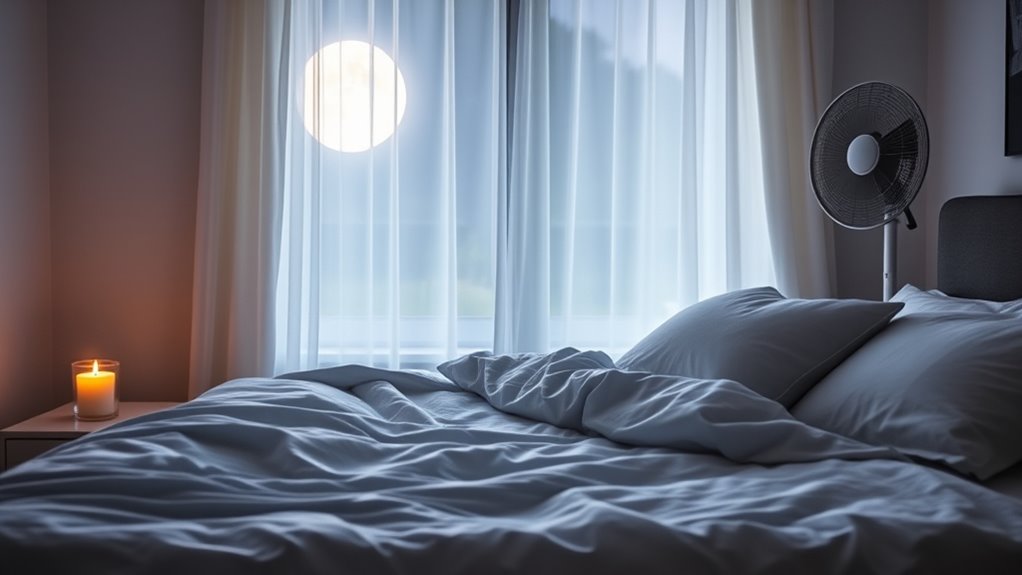
A cool and comfortable sleep environment is essential for overcoming insomnia. Maintaining the right temperature helps your body relax and signals that it’s time to sleep. Use temperature control devices like fans or air conditioners to keep your bedroom between 60-67°F (15-19°C). Your choice of bedding materials can make a big difference—opt for breathable fabrics like cotton or linen that wick away moisture and promote airflow. Visualize your sleep space with this imagery:
| Cozy & Cool Scene | Warm & Heavy Scene |
|---|---|
| Light, breathable sheets | Thick, insulating blankets |
| Gentle breeze from a fan | Overheated, stuffy room |
| Calm, dim lighting | Harsh, bright lights |
Keeping your environment cool and comfortable sets the foundation for restful sleep.
Avoid Stimulants and Heavy Meals Before Bed

Consuming stimulants like caffeine or nicotine, as well as heavy meals close to bedtime, can substantially disrupt your sleep. Caffeine intake, even in the afternoon, can stay in your system and make it harder to fall asleep. Heavy meals before bed can cause discomfort and indigestion, preventing restful sleep. To improve your sleep quality, avoid caffeine at least six hours before bedtime and cut back on nicotine in the evening. Also, steer clear of large, rich meals at least two to three hours before sleep. Instead, opt for light snacks if needed. By minimizing stimulants and heavy meals before bed, you give your body the best chance to relax and shift smoothly into restful sleep.
Frequently Asked Questions
How Long Does It Typically Take to See Improvements in Sleep?
You’ll likely notice improvements in your sleep within a week or two if you maintain consistent sleep and wake times. Incorporate relaxation techniques like deep breathing or meditation before bed to enhance sleep quality. Keep in mind, it can take up to a month for significant changes, but staying committed to your calming night rituals and prioritizing sleep consistency helps your body adjust faster and promotes better rest over time.
Can Nighttime Habits Impact Overall Health Beyond Sleep Quality?
Yes, your nighttime habits can impact your overall health beyond sleep quality. By practicing stress management techniques, you reduce cortisol levels, which benefits your immune system and mental health. Additionally, maintaining good nutritional habits before bed, like avoiding heavy meals or caffeine, supports better digestion and reduces inflammation. These habits promote not only restful sleep but also contribute to your long-term physical and emotional well-being.
Are There Specific Scents That Are Most Effective for Relaxation?
Lavender and chamomile are your top relaxation scents, offering soothing aromatherapy benefits that calm your mind. Imagine a gentle breeze carrying these calming aromas, easing your worries as you unwind. These scents work by reducing stress and promoting restful sleep. Incorporate essential oils or diffusers into your nightly routine to harness their calming effects, transforming your space into a tranquil retreat that prepares you for a restorative night’s sleep.
How Do Sleep Rituals Differ for Shift Workers or Irregular Schedules?
If you work irregular hours, you should develop flexible scheduling and personalized routines to improve sleep. Adjust your bedtime and wake time as consistently as possible, even on days off. Use calming rituals like dimming lights, listening to soothing sounds, or practicing relaxation techniques tailored to your schedule. These customizable habits help your body recognize sleep cues, making it easier to rest despite shift work or irregular hours.
What Should I Do if I Wake up During the Night and Can’t Fall Back Asleep?
When you wake up during the night and can’t fall back asleep, don’t toss and turn. Instead, get rid of sleep distractions like bright screens or noisy surroundings. Try a calming activity, like deep breathing or listening to soothing music, to restore sleep. Avoid clock-watching, which can increase anxiety. Stay relaxed, and trust that your body knows how to find its way back to restful sleep.
Conclusion
By building a bedtime buffer of calming cues, you create a cozy cocoon for restful nights. Consistently calming routines, gentle stretches, and soothing scents set the stage for serene slumber. Limit lights and screens, avoid stimulants, and craft a cool, comfortable haven. With mindful moments and mellow music, you’ll master the art of peaceful sleep, turning restless nights into restful retreats. Embrace these calming cues and drift into dreamy, delightful dreams.