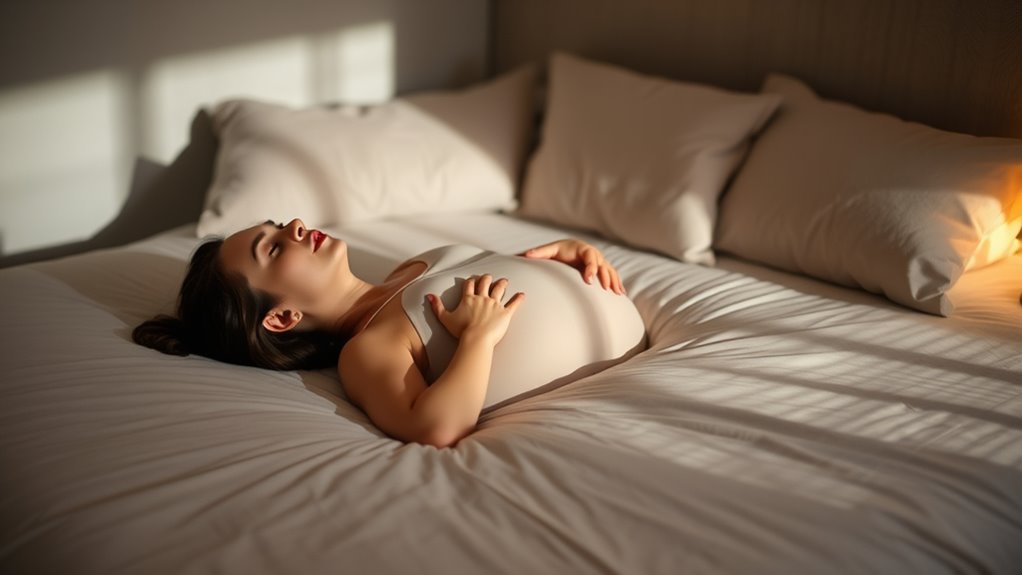

To fall asleep faster, try simple breathing exercises like deep belly breathing, which engages your diaphragm and calms your nervous system. The 4-7-8 technique, where you inhale for 4 seconds, hold for 4, then exhale for 4, can soothe your mind. Box breathing, pursed-lip breathing, and diaphragmatic breathing all promote relaxation and reduce stress. Keep practicing these methods, and you’ll discover how to create a peaceful bedtime routine. If you’re curious about each technique, stay tuned for more details.
Key Takeaways
- Deep belly breathing activates relaxation by engaging the diaphragm, increasing oxygen flow, and calming the nervous system.
- The 4-7-8 technique slows breathing and promotes sleep by reducing stress and anxiety before bedtime.
- Box breathing creates a rhythmic pattern that calms the mind and helps ease the transition into sleep.
- Pursed-lip breathing extends exhalations, lowering tension and calming nerves to facilitate falling asleep.
- Combining diaphragmatic and mindful breathing practices enhances relaxation and improves sleep quality.
Deep Belly Breathing

Deep belly breathing is a simple yet effective technique to help calm your mind and prepare your body for sleep. When you practice this breathing method, you engage your diaphragm, allowing your lungs to fill more completely. This increases oxygen flow and triggers your relaxation response. As you breathe deeply into your belly, you reduce stress, which often interferes with sleep. Lower stress levels improve your sleep quality by calming racing thoughts and easing physical tension. Deep belly breathing also helps slow your heart rate and relax your muscles, making it easier to switch into restful sleep. Additionally, incorporating relaxation techniques like this into your nightly routine can further enhance your sleep quality and overall stress reduction. Using smart home devices, such as sleep trackers or calming sound machines, can also support your efforts to relax and improve sleep quality. Practicing this technique regularly can strengthen your stress reduction skills, making it more effective over time. Developing consistent sleep hygiene habits can further optimize your sleep environment and outcomes.
4-7-8 Breathing Technique

The 8 Breathing Technique is a simple, effective method to calm your mind and prepare your body for restful sleep. By focusing on slow, controlled breaths, you can reduce stress and quiet racing thoughts. To do this, breathe in deeply through your nose for a count of four, hold your breath for a count of four, then exhale slowly through your mouth for a count of four. Repeat this cycle, maintaining a steady rhythm. This technique encourages relaxation by activating your parasympathetic nervous system, which helps lower stress levels. As stress decreases, your sleep quality improves, making it easier to fall asleep naturally. Practicing the 8 Breathing Technique nightly can create a calming bedtime routine that promotes restful, uninterrupted sleep. Using step-by-step guidance can help you master this technique more effectively. Incorporating relaxation techniques like this into your nightly routine can further enhance your sleep quality. Additionally, consistent practice can strengthen your sleep hygiene, leading to better overall rest. Developing a consistent bedtime routine can reinforce these calming practices and improve your sleep over time. Regularly practicing controlled breathing can also help reduce anxiety that might interfere with falling asleep.
Box Breathing Method

Building on the calming effects of controlled breathing techniques, the Box Breathing Method offers a structured way to enhance relaxation before sleep. This technique involves inhaling slowly through your nose for a count of four, holding your breath for four, exhaling steadily for four, and then pausing for another four counts before repeating. By focusing on this rhythmic pattern, you actively reduce stress and quiet your mind. As you practice, your nervous system calms, making it easier to shift into restful sleep. Regular use of box breathing can improve sleep quality by decreasing anxiety and promoting a sense of control. It’s simple, effective, and easy to incorporate into your nightly routine for a more peaceful transition to sleep. Additionally, understanding the role of contrast ratio in visual clarity can help you create a calming environment conducive to relaxation. Incorporating mindful breathing techniques like this can further enhance your ability to reach a restful state, especially when combined with a mindful approach to your overall relaxation techniques.
Pursed-Lip Breathing

Have you ever noticed how slowing down your exhale can promote relaxation? Pursed-lip breathing is a simple technique that helps you do just that. By inhaling slowly through your nose and then exhaling gently through pursed lips, you extend your exhale, which encourages stress reduction. This controlled breathing calms your nervous system, making it easier to unwind before sleep. As you focus on your breath, your mind shifts away from worries, improving your sleep quality. Pursed-lip breathing is especially effective when you feel tense or anxious at bedtime. It’s easy to practice and can be incorporated into your nightly routine to promote a sense of calm, helping you drift off faster and enjoy more restful sleep. Incorporating proper breathing techniques into your routine ensures you build reliable habits that support better sleep quality. Additionally, practicing mindful breathing can enhance your overall relaxation response, further aiding your transition into sleep. Practicing these relaxation techniques regularly can also strengthen your body’s ability to handle stress in daily life.
Diaphragmatic Breathing

After practicing pursed-lip breathing to slow your exhale and promote relaxation, you can deepen this calming effect with diaphragmatic breathing. By focusing on engaging your diaphragm, you activate the body’s relaxation response, which reduces stress and promotes better sleep quality. To do this, breathe deeply through your nose, allowing your belly to rise with each inhale, then gently exhale fully. This technique encourages deeper, more efficient breaths, calming your nervous system and lowering cortisol levels. Regular practice helps your body associate diaphragmatic breathing with relaxation, making it easier to unwind at bedtime. Incorporating this simple exercise into your nightly routine can markedly improve your stress reduction and overall sleep quality. Additionally, exploring the art and community of fan trailers can inspire creativity and mindfulness, further supporting your relaxation efforts before sleep. Developing a consistent breathing practice can reinforce these calming effects and enhance your sleep routine over time. Engaging in mindfulness techniques, such as focused breathing, can amplify the benefits of diaphragmatic breathing and promote a more restful sleep.
Frequently Asked Questions
Can Breathing Exercises Replace Medication for Sleep Issues?
Breathing exercises can be effective natural remedies and might serve as good medication alternatives for mild sleep issues. While they won’t replace medication for severe conditions, they help calm your mind and reduce stress, making it easier to fall asleep. You should consider incorporating these techniques into your nightly routine, but consult a healthcare professional if your sleep problems persist or worsen.
How Long Should I Practice Each Breathing Technique?
You should practice each breathing technique for about 5 to 10 minutes, which is enough to calm your mind and body. The most suitable timing is just before bed or when you start feeling restless. Focus on consistency, and gradually increase practice duration if it helps you relax more. Remember, the key is regularity, so make it a part of your nightly routine for better sleep.
Are These Exercises Suitable for Children or Only Adults?
These breathing exercises are generally suitable for children and are considered family-friendly techniques. You can adapt them to suit your child’s age and comfort level, making relaxation time a calming family activity. Children benefit from simple, slow breaths that promote relaxation and reduce anxiety. Always supervise and guarantee exercises are gentle, fun, and engaging to help your little ones develop healthy relaxation habits early on.
Can Breathing Exercises Help With Stress or Anxiety Unrelated to Sleep?
Yes, breathing exercises can definitely help with stress management and anxiety relief, even outside of sleep. When you practice deep, mindful breathing, you activate your body’s relaxation response, reducing tension and calming your mind. This simple technique helps you gain control over stress and anxious feelings, making it easier to handle daily challenges. Incorporate breathing exercises into your routine whenever you need a quick way to feel more centered and at ease.
Are There Any Risks or Contraindications for These Breathing Methods?
Breathing exercises are generally safe, but you should always do a risks assessment and stay aware of contraindications. While rare, some people might experience dizziness, shortness of breath, or discomfort if they overdo it or have underlying health conditions. You must listen to your body and consult a healthcare professional if you have concerns or health issues. Being mindful helps prevent any adverse effects and keeps your practice beneficial.
Conclusion
By gently embracing these breathing techniques, you create a calm oasis amidst life’s chaos. With each mindful inhale and exhale, you’re guiding yourself toward a peaceful night’s rest, as if sinking into a soft, tranquil sea. Let your breath be the gentle tide that carries away worries, leaving you drifting into restful slumber. Embrace these simple practices, and watch as your nights become a serene sanctuary, welcoming you into peaceful dreams.