To improve your sleep with a smart home setup, use Alexa to automate your environment. Set a smart alarm, adjust your lights to warm tones, and control your thermostat for the perfect temperature. Play calming sounds or white noise with voice commands, and create routines that include dimming lights and reducing blue light exposure. These adjustments help you relax faster and sleep better. Keep exploring to discover how each device can optimize your nightly rest.
Key Takeaways
- Use Alexa to automate lighting, temperature, and sound for a calming sleep environment.
- Sync sleep trackers with Alexa to personalize bedtime routines based on sleep quality.
- Play relaxing sounds or white noise via voice commands to enhance sleep onset.
- Set smart alarms with Alexa that wake you at optimal sleep cycle times.
- Automate environmental adjustments like dimming lights and adjusting thermostats for better rest.
Setting the Perfect Sleep Environment With Alexa
Creating the ideal sleep environment with Alexa is easier than ever. You can set a smart alarm that gently wakes you at the perfect time, based on your sleep cycle, helping you feel refreshed. Alexa can also sync with sleep tracking devices, giving you insights into your sleep patterns and quality. By integrating these features, you can automate your bedroom climate—adjusting the thermostat or turning off lights—so your space is perfectly prepared for rest. The smart alarm ensures you wake up gradually, reducing grogginess, while sleep tracking provides data to improve your nightly routine. With Alexa managing your environment, you focus solely on unwinding, knowing everything is calibrated for a better night’s sleep. Plus, understanding your sleep data can help you make informed adjustments to your bedtime habits for even better rest. Incorporating home automation into your sleep routine can further enhance comfort and convenience, ensuring your bedroom environment is optimized for restful sleep. Additionally, many smart devices are designed with navigation and mapping features to seamlessly integrate with your existing smart home setup, making automation more intuitive and reliable. Properly calibrated projector settings, such as contrast ratio and color accuracy, can also contribute to a more relaxing environment for winding down before bed. Furthermore, optimizing your grocery savings strategies may help you stock up on healthy foods that support better sleep, like magnesium-rich snacks or herbal teas.
Using Smart Lighting to Ease Into Sleep

Adjusting your lighting as part of your bedtime routine can make falling asleep easier and more natural. Smart lighting allows you to create a calming environment by gradually dimming or shifting to warmer tones as you prepare for sleep. This setup promotes sleep induction, signaling to your body that it’s time to wind down. With voice commands or a scheduled routine, you can automate these lighting changes, eliminating the need to manually adjust switches. Using smart lighting not only enhances relaxation but also helps establish a consistent sleep pattern. By reducing blue light exposure and fostering a cozy atmosphere, you set the stage for better rest. Incorporating smart lighting into your nightly ritual makes falling asleep smoother and more effortless. Additionally, integrating smart lighting with other home automation devices can optimize your entire sleep environment for maximum comfort. Employing dimming technology can further customize your lighting levels to suit your preferences and enhance relaxation. Engaging in a mindful bedtime routine that includes smart lighting can further reinforce your body’s natural sleep signals. Moreover, leveraging European cloud solutions can ensure your smart home devices operate securely and reliably, supporting a seamless sleep environment. Implementing a backup power system can also ensure your smart devices remain functional during power outages, maintaining your sleep-enhancing routines uninterrupted.
Controlling Temperature and Humidity for Restful Nights
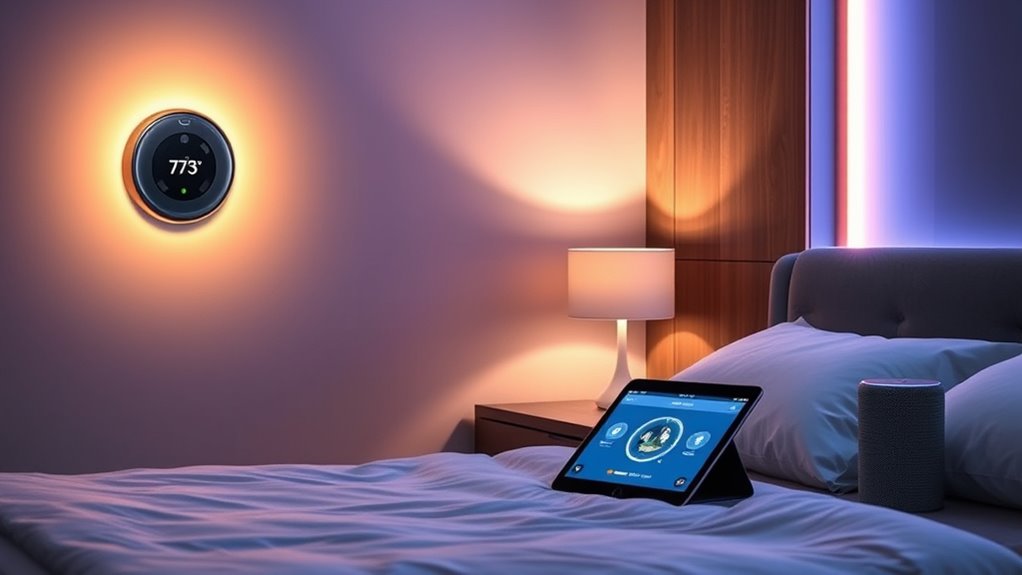
Maintaining the right temperature and humidity levels is essential for a restful night’s sleep, as your body functions best within a specific environment. A smart thermostat allows you to set and adjust your home’s temperature automatically, ensuring comfort throughout the night. Humidity control helps prevent dry skin, congestion, and mold growth, creating an ideal sleep environment. You can automate humidity levels with smart devices that respond to real-time readings, maintaining perfect conditions effortlessly. By integrating these tools into your sleep routine, you avoid disruptive temperature swings and humidity fluctuations. Additionally, understanding environmental controls used in advanced systems can help optimize your sleep setting even further. Incorporating whole-house water filtration can also improve overall air quality by reducing airborne pollutants and allergens that may interfere with restful sleep. Considering smart sensors can enhance the accuracy of environmental adjustments, providing a more consistent and comfortable sleep environment. Exploring HVAC system integration can further fine-tune your indoor climate for maximum comfort.
Playing Relaxing Sounds and White Noise Through Voice Assistants

Playing relaxing sounds and white noise through voice assistants offers an effortless way to enhance your sleep environment. With a simple voice command, you can fill your room with calming sounds or steady white noise that masks disruptive noises. White noise creates a consistent background that helps lull your mind into relaxation, making it easier to fall asleep and stay asleep. Relaxing sounds like gentle rain, ocean waves, or soft melodies can soothe your senses after a busy day. Using your smart device, you can customize the volume and duration, ensuring the sounds suit your preferences. This easy integration helps establish a peaceful sleep setting, so you wake feeling more rested and refreshed, all with just a quick voice command.
Creating Customized Sleep Routines for Better Rest
Building on the calming sounds you’ve already set with your voice assistant, creating customized sleep routines allows you to maximize your nightly wind-down. By designing personalized sleep schedules, you can align your bedtime with your natural rhythms and improve overall rest. Use sleep tracking integration to monitor your sleep patterns and adjust routines for better results. Automated routines can include dimming lights, adjusting room temperature, or playing relaxing sounds, all triggered at your preferred bedtime. These routines help signal to your body that it’s time to wind down, making it easier to fall asleep faster and stay asleep longer. Incorporating sleep optimization guided by evidence‑informed guidance can further enhance your sleep quality by providing insights to refine your nightly habits. Additionally, leveraging personalized routines tailored to individual sleep needs can lead to more consistent and restorative sleep. Understanding your sleep environment can help you make adjustments that support better sleep quality. Tailoring your sleep routine ensures a consistent, restful night, boosting your overall well-being.
Frequently Asked Questions
How Do I Troubleshoot Connectivity Issues With My Smart Sleep Devices?
To troubleshoot connectivity issues with your smart sleep devices, first check your Wi-Fi stability and restart your router if needed. Make certain your device firmware is up to date, as outdated firmware can cause connectivity problems. Try resetting the device and reconnecting it to your network. Keep your Wi-Fi signal strong near your sleep devices, and if issues persist, consider repositioning your router or using a Wi-Fi extender for better coverage.
Can I Integrate Alexa With Non-Smart Sleep Products?
Yes, you can often integrate Alexa with non-smart sleep products through third-party integrations or compatible devices. Check if your product supports Alexa skills or works with smart home hubs that connect to Alexa. You might need to use apps or devices like Bluetooth bridges or smart plugs for control. Just make certain your non-smart sleep products are compatible with Alexa or can connect via third-party platforms for seamless integration.
What Privacy Measures Are in Place When Using Voice-Controlled Sleep Devices?
You should know that voice data security is a priority, with encryption protecting your recordings. Device access controls limit who can use or modify your sleep devices, ensuring only authorized users can manage them. Additionally, you can review and delete voice recordings through your app, giving you control over your privacy. Regular updates also help fix vulnerabilities, so your sleep device remains secure while you enjoy restful nights.
How Do I Set up Multi-Room Audio for Sleep Sounds?
To establish multi-room audio for sleep sounds, start by opening your Alexa app and selecting Devices. Tap the “+” icon to create a multi-room setup, then choose the speakers you want to include. Make certain all devices are connected to the same Wi-Fi network. Once set up, ask Alexa to play sleep sounds, and enjoy seamless audio synchronization across all your rooms, creating a relaxing environment.
Are There Safety Concerns Using Smart Devices in the Bedroom?
You should be aware of safety concerns when using smart devices in your bedroom, especially related to device hacking and data privacy. Always update your device software regularly, use strong, unique passwords, and enable two-factor authentication. Be cautious about sharing sensitive information through voice commands, and review privacy settings. These steps help protect your personal data and reduce risks of unauthorized access, ensuring a safer smart home experience.
Conclusion
With Alexa as your sleep conductor, you’re orchestrating a symphony of comfort and calm that guides you into restful nights. By blending soothing sounds, gentle lights, and perfect temperatures, you create a peaceful sanctuary—your personal haven of tranquility. As each night falls, your smart home transforms into a calming oasis, wrapping you in a cozy embrace. Embrace these smart devices, and let your sleep environment become a gentle lullaby that lulls you into a deep, restorative slumber.