
Sleep trackers can give you helpful insights into your sleep patterns and quality, but their accuracy varies. They use sensors to monitor movement and physiological signals, which help identify sleep stages and duration. However, factors like device placement, calibration, and environmental conditions can affect their reliability. While they’re useful for tracking trends and habits, they shouldn’t replace professional assessments. Keep exploring to discover how to get the most accurate results from your wearable.
Play games included with Prime
Start a Prime free trial and play with Amazon Luna on your devices.
As an affiliate, we earn on qualifying purchases.
Key Takeaways
- Sleep trackers use sensors to estimate sleep stages based on movement and physiological signals, but their accuracy varies.
- Proper device calibration and consistent wear are essential for reliable sleep data collection.
- External factors like environment and sleep habits can influence sensor readings and data quality.
- They are useful for tracking sleep patterns over time but are not a substitute for clinical sleep assessments.
- Combining wearable data with other methods and professional advice provides the most comprehensive sleep insights.
As an affiliate, we earn on qualifying purchases.
How Sleep Trackers Measure Sleep Stages and Duration

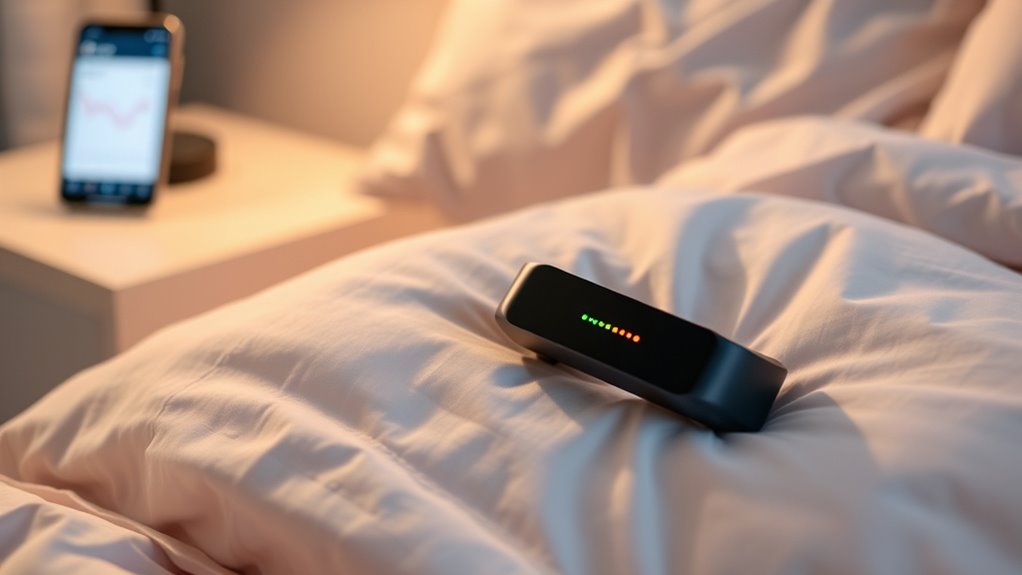
Sleep trackers typically measure sleep stages and duration by monitoring your movement and physiological signals throughout the night. They analyze your sleep cycle, which includes light, deep, and REM sleep, based on patterns detected by sensors. Heart rate plays an essential role, as it fluctuates with different sleep stages, helping the device identify when you transition between them. When your heart rate drops, the tracker recognizes deeper sleep phases; when it rises, it signals lighter sleep or wakefulness. Movement data also contributes, as less movement generally indicates deeper sleep. Combining these signals, sleep trackers create a detailed picture of your sleep cycle and estimate how long you sleep each night. While not perfect, this method offers a useful overview of your sleep patterns. Additionally, advances in sensor technology are supporting the development of more advanced and reliable sleep monitoring technologies. Sensor accuracy has improved over time, leading to more precise sleep measurements and better user insights. As a result, ongoing improvements in physiological signal detection are helping to further enhance the reliability of sleep tracking data. Moreover, the integration of multiple physiological signals enhances overall data reliability, making sleep trackers more effective at providing meaningful insights.
sleep tracker with heart rate monitoring
As an affiliate, we earn on qualifying purchases.
As an affiliate, we earn on qualifying purchases.
Factors That Affect the Accuracy of Wearable Sleep Data
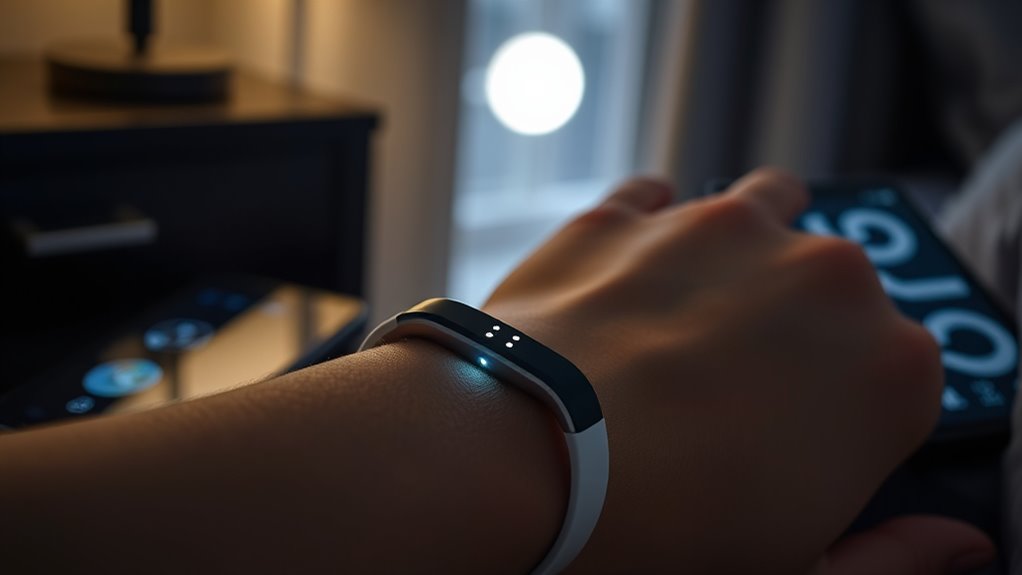
Various factors can influence the accuracy of data collected by wearable sleep trackers, making it important to interpret their readings with caution. One key factor is sensor calibration; if the device isn’t properly calibrated, it may misinterpret movements or signals, leading to inaccurate sleep data. User compliance also plays a significant role—if you don’t wear the tracker consistently or position it correctly, the data collected may not reflect your true sleep patterns. Additionally, factors like movement during sleep, ambient temperature, and skin contact can affect sensor performance. Remember, even small deviations in how you wear or maintain your device can impact accuracy. Staying mindful of these factors helps you better understand the limitations of your sleep tracker and avoid misinterpretations. Understanding modern kitchen technology can also inspire innovative ways to optimize your sleep environment, enhancing overall sleep quality. Being aware of sensor limitations further emphasizes the importance of combining sleep tracker data with other sleep assessment methods for a comprehensive view. Recognizing how external environmental factors influence sensor readings can help you interpret data more accurately.
accurate sleep monitoring device
As an affiliate, we earn on qualifying purchases.
As an affiliate, we earn on qualifying purchases.
What Sleep Trackers Can Safely Be Used For and Their Limitations
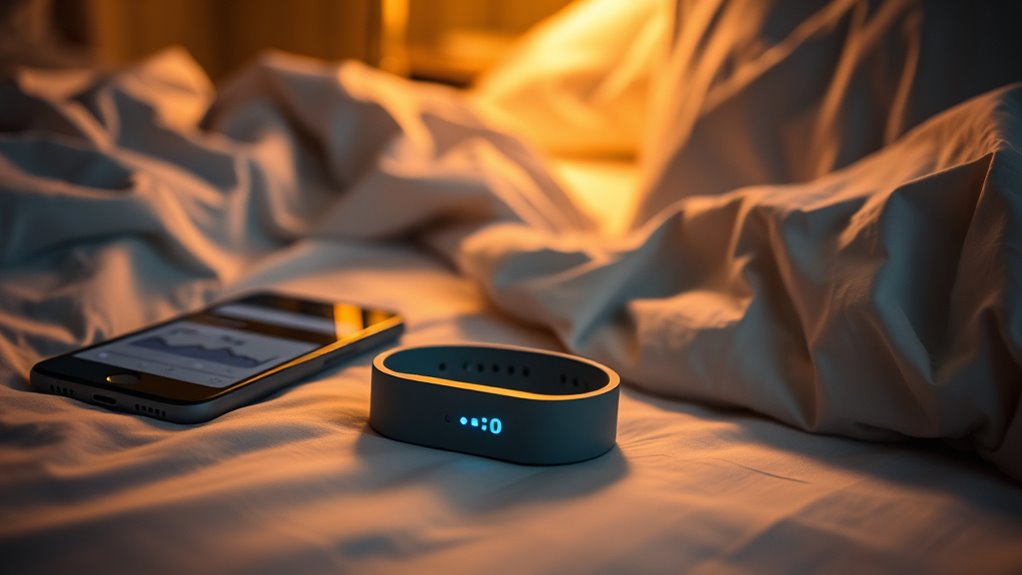
While wearable sleep trackers have limitations in measuring every aspect of your sleep, they can still provide valuable insights into general sleep patterns and habits. They are useful for monitoring sleep quality over time, helping you identify trends like sleep duration and consistency. However, their accuracy depends heavily on proper device calibration and placement. You shouldn’t rely solely on them for detailed clinical assessments, but they can motivate healthier sleep habits and highlight areas needing improvement. Keep in mind that sleep trackers are best used as a supplement, not a replacement, for professional advice. Understanding their limitations assures you don’t overinterpret data. Overall, these devices are helpful tools for tracking broad sleep trends, but their insights should be considered alongside other health indicators. Device calibration and correct placement are essential for obtaining more reliable data from your sleep tracker.
As an affiliate, we earn on qualifying purchases.
Frequently Asked Questions
Can Sleep Trackers Predict Future Sleep Problems or Disorders?
Sleep trackers can’t reliably predict future sleep problems or disorders due to their predictive limitations. They mainly monitor current sleep patterns but often generate false alarms or miss subtle signs of issues. While they can alert you to potential concerns, you shouldn’t rely solely on them for diagnosis or predicting future problems. Always consult a healthcare professional for accurate assessments and personalized advice regarding sleep health.
How Do Different Brands Compare in Sleep Tracking Accuracy?
You’ll find that brand reliability varies, with Fitbit and Garmin generally offering more accurate sleep tracking due to advanced device features like heart rate monitoring and motion sensors. Apple’s sleep features are improving, but may not be as precise. Consider your needs and check reviews to guarantee the brand you choose provides reliable data. Ultimately, investing in reputable brands with proven device features helps you get the most accurate sleep insights.
Are Sleep Trackers Effective for Children or Elderly Users?
Sleep trackers can be helpful for children and elderly users, with studies showing up to 85% accuracy in detecting sleep patterns for these groups. They enhance child safety and support elderly monitoring by providing real-time insights into sleep quality and duration. However, you should remember they aren’t perfect; they can miss subtle issues. Use them as a complementary tool, not a sole solution, to ensure proper care and peace of mind.
Do Sleep Trackers Monitor Mental Health or Stress Levels?
Sleep trackers can monitor mental health and detect stress levels to some extent. They track physiological signals like heart rate variability and sleep patterns, providing insights into your stress and overall well-being. However, they don’t diagnose mental health conditions. Use these devices as a helpful tool for mental health monitoring and stress level detection, but remember they complement, not replace, professional assessments.
Can Sleep Trackers Replace Professional Sleep Studies Entirely?
Sleep trackers can’t replace professional sleep studies entirely. While wearable accuracy has improved, they mainly monitor your sleep pattern and provide helpful insights, but they lack the detailed analysis of a sleep lab. If you’re experiencing persistent sleep issues, you should see a healthcare professional. Use your wearable as a helpful tool, but remember it’s not a substitute for thorough medical evaluation.
Conclusion
While sleep trackers offer helpful glimpses into your nightly rest, they’re not perfect crystal balls. Think of them as friendly guides rather than absolute authorities—they can highlight trends but might miss some details. By understanding their limits, you can use them to support better habits without relying solely on their insights. Embrace the knowledge they provide, but remember, a good night’s sleep often requires a bit more than just data.
Fall yard work Picks
leaf blowers
As an affiliate, we earn on qualifying purchases.