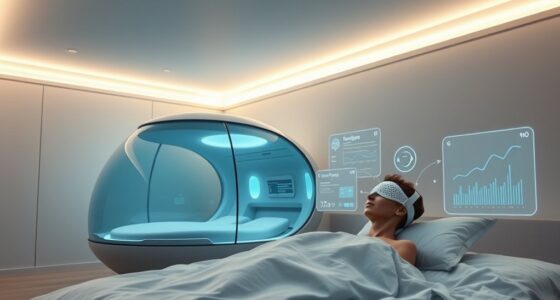
Gadgets determine your sleep stages by analyzing signals like brainwaves, heart rate variability, and movement. They use sensors to detect electrical activity patterns indicating REM or deep sleep. Faster, irregular brainwaves suggest REM, while slow delta waves point to deep sleep. Combining these signals with heart and movement data improves accuracy. If you’re curious about how these technologies work together, you’ll discover more about sleep science and device capabilities.
Key Takeaways
- Gadgets analyze brainwave patterns using EEG or similar sensors to differentiate between REM and deep sleep stages.
- They incorporate heart rate variability and breathing data to improve accuracy in identifying sleep stages.
- Movement and restlessness are monitored via accelerometers to help distinguish light, deep, and REM sleep.
- Machine learning algorithms process multisignal data to classify sleep phases more reliably.
- Environmental factors and sensor calibration enhance the precision of sleep stage detection in wearable devices.
The Basics of Sleep Stages and Why They Matter

Have you ever wondered what happens when you sleep? Sleep involves different stages, each serving a unique purpose. Understanding these stages helps improve your overall sleep hygiene and can even assist in dream analysis, revealing insights about your emotional health. During light sleep, your body begins to relax, shifting into deep sleep, where physical restoration occurs. Sleep architecture is a crucial aspect of understanding how these stages fit together and impact your health. Recognizing these stages helps you see why quality sleep matters—each phase plays a crucial role in memory, learning, and physical health. Tracking your sleep stages with gadgets gives you a clearer picture of your sleep patterns, making it easier to identify disruptions and optimize your nightly rest for better wellbeing. Accurate sleep tracking allows you to better understand your sleep architecture and make informed adjustments to improve your overall health. Additionally, understanding sleep cycles can help you time your sleep more effectively and wake up feeling refreshed. Being aware of how different brain activity patterns correspond to each stage enables more precise monitoring and better insights into your sleep quality. Moreover, advances in neuroscience have improved how devices interpret brain activity to distinguish between various sleep stages more accurately.
How Wearable Devices Detect Movement and Restlessness
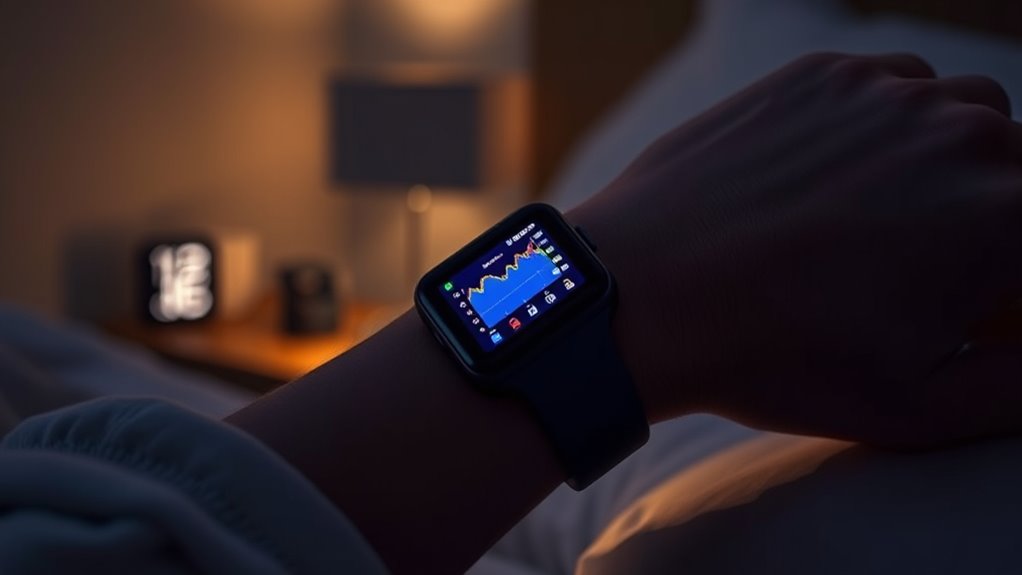
Wearable devices use accelerometers to track your movements during sleep, giving insight into your rest patterns. This data helps identify periods of restlessness or stillness. By analyzing these motion signals, they can identify periods of restlessness or stillness. This pattern analysis helps determine how deeply you’re sleeping and if your sleep quality is affected. Additionally, some devices incorporate artificial intelligence to enhance the interpretation of sleep data, allowing for more personalized insights and recommendations. The integration of biometric data further improves accuracy by combining movement with heart rate and other physiological signals. Incorporating sleep cycle analysis enables devices to more precisely distinguish between different sleep stages, such as REM and deep sleep. Furthermore, advancements in sensor technology continue to improve the reliability of sleep tracking measurements.
Accelerometers and Motion
Accelerometers are key components in wearable devices, enabling them to detect movement and restlessness during sleep. Proper sensor calibration guarantees accurate readings, helping distinguish between subtle movements and true restlessness. When calibrated correctly, these sensors can reliably track how much you move, providing insights into your sleep quality. Accurate sensor calibration is essential for generating meaningful data and improving sleep stage detection. Additionally, advancements in sensor technology continue to improve the precision of sleep stage detection. It’s also important to consider data privacy, as your movement data is sensitive and should be securely stored and shared only with trusted apps. Wearables use accelerometer data to identify periods of stillness versus activity, which helps determine sleep stages. By analyzing the intensity and frequency of movements, these devices can differentiate between restful sleep and lighter, restless phases. This motion data forms a crucial part of understanding your overall sleep patterns.
Restlessness Pattern Analysis
By analyzing the patterns of movement detected through sensors, wearable devices can identify moments of restlessness during sleep. When you move frequently or shift positions, these devices recognize the activity as signs of disrupted sleep, which may be linked to discomfort or environmental factors like noise or temperature. Restlessness can also be a sign of underlying issues, so some gadgets incorporate dream journaling prompts to help you track emotional or physical factors affecting your sleep quality. Environmental factors such as light, sound, or room conditions influence your movement patterns, making it easier for devices to detect restlessness. By combining movement data with sleep tracking algorithms, wearables provide a clearer picture of your sleep stability, helping you understand what may be causing frequent awakenings or tossing and turning. Additionally, understanding Gold IRA Markets can inform broader financial planning strategies that include securing retirement investments amid various economic conditions. Incorporating sensor technology enhances the device’s ability to distinguish between different types of movement and restlessness, leading to more accurate sleep stage detection. These advanced sensors utilize motion sensors that improve the precision of restlessness detection, ensuring that your sleep data is as accurate as possible.
Monitoring Heart Rate Variability During Sleep
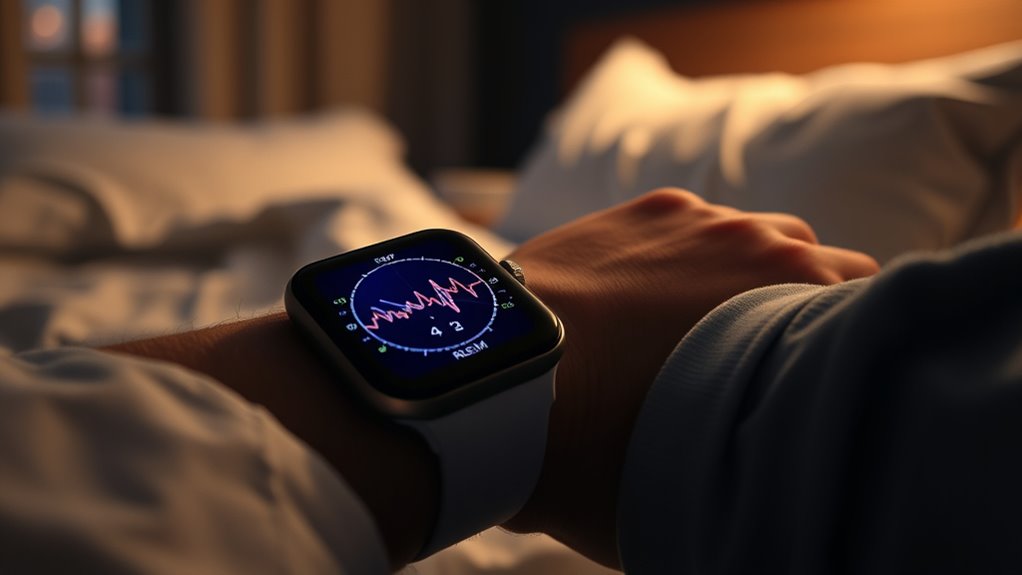
Have you ever wondered how your heart’s subtle fluctuations can reveal your sleep quality? Heart rate variability (HRV) measures these tiny changes in the time between your heartbeats, offering insights into your autonomic nervous system’s activity during sleep. A higher HRV indicates a flexible, well-functioning autonomic system, often associated with restorative sleep phases. Gadgets equipped with sensors track HRV continuously, helping you understand how your body responds to different sleep stages. During deep sleep, HRV tends to increase, reflecting parasympathetic dominance, while during REM sleep, fluctuations can be more erratic. Monitoring HRV provides a non-invasive way to assess sleep health, enabling you to recognize patterns that could signal stress or imbalance affecting your sleep quality. Autonomic nervous system plays a crucial role in regulating these fluctuations and overall sleep quality. Additionally, understanding the impact of sleep architecture can help optimize your nightly rest. A growing body of research shows that sleep tracking devices can accurately measure HRV, offering valuable insights into your sleep patterns.
The Role of Brainwave Monitoring in Differentiating Sleep Phases
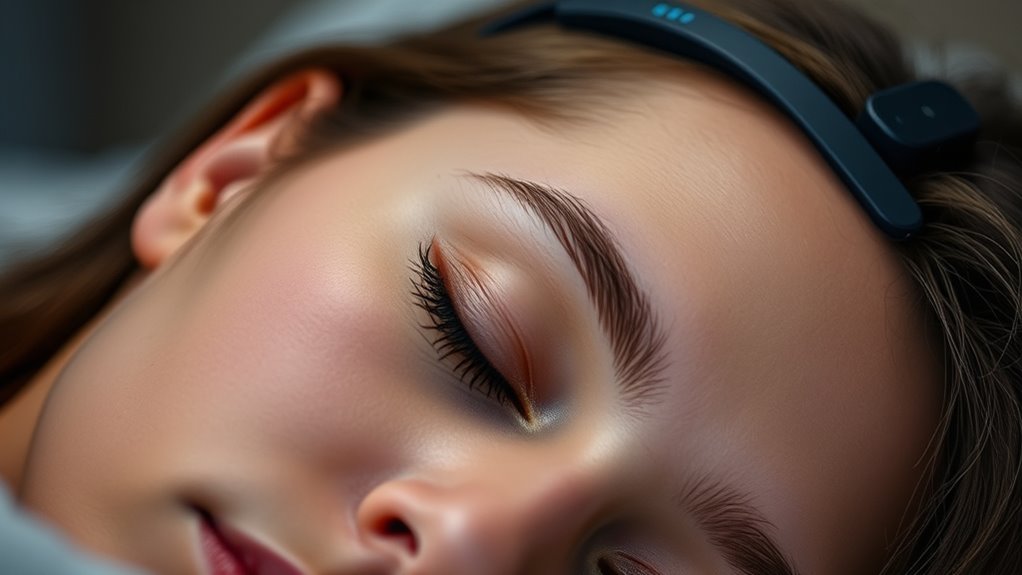
Brainwave monitoring plays a crucial role in distinguishing between different sleep stages because each phase exhibits unique electrical activity patterns. Through brainwave analysis, you can see distinct waveforms that identify REM, deep sleep, and lighter stages. EEG monitoring captures these electrical signals from your brain, providing real-time insights into your sleep cycle. For example, slow delta waves are characteristic of deep sleep, while faster, irregular waves signify REM sleep. This differentiation allows gadgets to accurately track your sleep stages, offering detailed data about your rest quality. By analyzing brainwaves, these devices can pinpoint shifts between sleep phases, ensuring precise sleep stage classification. Ultimately, EEG monitoring and brainwave analysis are essential tools for understanding the complex electrical patterns that define different sleep states.
Combining Multiple Signals for Accurate Sleep Stage Classification

While brainwave analysis provides detailed insights into sleep stages, relying on a single signal source can sometimes lead to inaccuracies. To improve precision, many devices use multisignal integration, combining data like heart rate, movement, and breathing patterns alongside brainwaves. This multisignal integration captures a more complete picture of your sleep. Additionally, the use of advanced sensor technologies enhances the accuracy of data collection, ensuring that subtle variations are detected. Modern wearable devices employ these sensors to continuously monitor multiple physiological signals throughout the night. The integration of multiple physiological signals helps in cross-validating data, leading to more reliable sleep stage detection. Machine learning algorithms analyze these combined signals, identifying patterns that distinguish REM from deep sleep more reliably than any single source. By integrating multiple data streams, these systems reduce errors caused by noise or artifacts. The result is a more accurate classification of sleep stages, helping you understand your sleep quality better. This multisignal integration, powered by machine learning, represents a significant advancement in sleep tracking technology.
The Technology Behind Sleep Tracking Sensors

Advancements in sensor technology have revolutionized sleep tracking by enabling devices to monitor multiple physiological signals simultaneously. Modern sensors analyze heart rate, breathing patterns, movement, and even biometric authentication data to determine sleep stages accurately. These sensors often incorporate accelerometers and photoplethysmography (PPG) to assess movement and blood flow, providing insights into REM and deep sleep phases. Additionally, sleep environment factors like temperature, humidity, and ambient noise are integrated to refine data accuracy. This combination helps guarantee reliable sleep analysis without intrusive measures. By leveraging these sophisticated sensors, you get a detailed picture of your sleep patterns, making it easier to identify disruptions or improvements. Ultimately, this technology brings more precision and personalization to your sleep tracking experience.
Challenges and Limitations of Consumer Sleep Monitors

Have you ever wondered if consumer sleep monitors truly provide accurate insights? While these gadgets offer convenient sleep tracking, they come with challenges. One major concern is data accuracy; many devices rely on sensors that can misinterpret movements or physiological signals, leading to incorrect sleep stage estimates like REM or deep sleep. Additionally, privacy concerns are significant—your personal sleep data is often stored on company servers, raising questions about how securely it’s protected and who has access. These limitations mean you shouldn’t rely solely on consumer monitors for precise health insights. Instead, view them as helpful tools for general awareness rather than definitive measurements. Understanding these challenges helps you set realistic expectations and make better decisions about your sleep health.
Interpreting Sleep Data to Improve Your Rest and Health
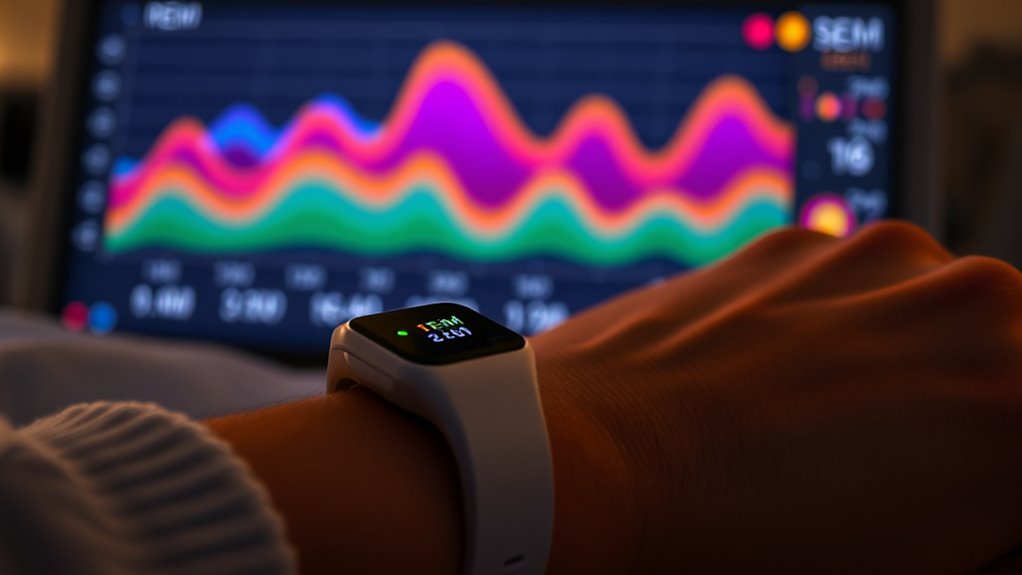
By analyzing your sleep stage patterns, you can identify trends that affect your rest and overall health. Use this data to make informed adjustments to your habits, like changing bedtime routines or reducing screen time before bed. Small changes based on your sleep insights can lead to significant improvements in how rested and energized you feel.
Analyzing Sleep Stage Patterns
Understanding your sleep stage patterns is essential for making meaningful improvements to your rest and overall health. By analyzing this data, you can see how your circadian rhythms influence sleep quality and duration. For instance, disruptions in your internal clock may lead to less REM or deep sleep, affecting recovery and mood. Hormonal influences, like melatonin and cortisol, also play a key role in shaping your sleep cycles. Recognizing these patterns helps you identify irregularities, such as frequent awakenings or imbalanced sleep stages. With this insight, you can better understand how external factors—such as light exposure or stress—impact your sleep. Ultimately, interpreting your sleep data empowers you to make targeted adjustments that promote deeper, more restorative rest and support your long-term health.
Adjusting Habits Based on Data
Once you start interpreting your sleep data, you can identify specific habits that may be disrupting your rest. For example, if your data shows frequent awakenings or poor REM sleep, consider adjusting your sleep environment. Confirm your room is dark, quiet, and cool to promote better sleep quality. You might also need to refine your bedtime routines—limiting screen time before bed or establishing a relaxing ritual can help signal your body it’s time to wind down. Tracking your sleep patterns provides insight into how these habits affect your rest. By making small changes based on your data, you can improve your overall sleep quality, wake feeling more refreshed, and support your health. Adjusting habits becomes a targeted approach to better sleep.
Future Innovations in Sleep Stage Detection
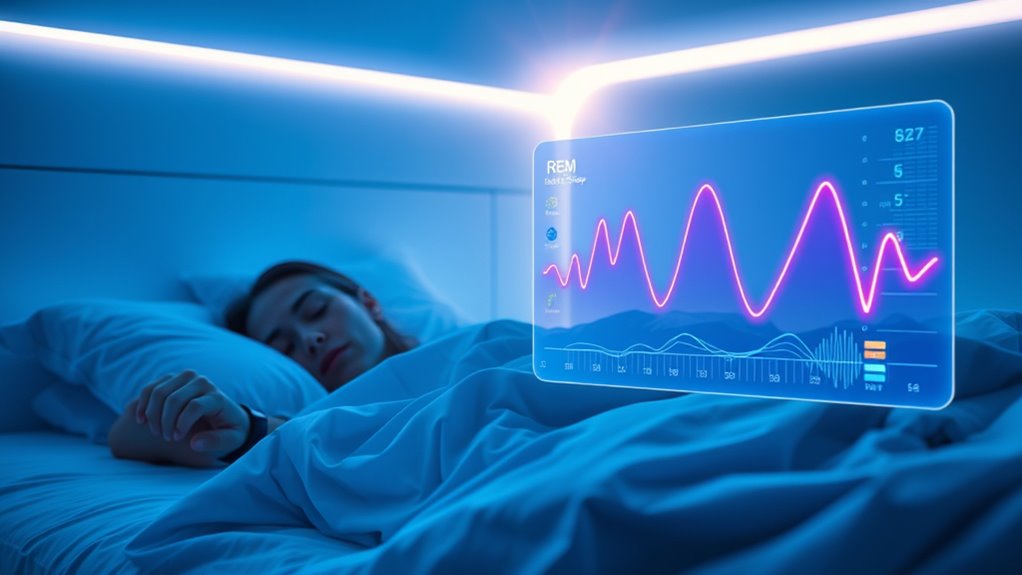
As technology advances, sleep stage detection is poised to become more accurate, non-invasive, and accessible. Neural networks will play a key role, analyzing complex brainwave patterns to distinguish REM from deep sleep with greater precision. Future devices might incorporate quantum sensors, which can detect subtle physiological signals at the atomic level, enhancing real-time monitoring without discomfort. These innovations could enable continuous, detailed sleep tracking at home, eliminating the need for expensive lab setups. You might soon wear lightweight gadgets that utilize AI-driven algorithms and quantum sensing to provide instant insights into your sleep quality. Overall, these advancements promise a future where understanding your sleep stages becomes seamless, empowering you to optimize your rest and overall well-being effortlessly.
Frequently Asked Questions
Can Sleep Gadgets Accurately Detect Night-Time Breathing Issues?
Sleep gadgets can often detect night-time breathing issues, but their accuracy varies. They monitor your breathing pattern and use snoring detection to identify irregularities. While some devices offer reliable insights, they might miss subtle problems or give false alarms. Keep in mind, for serious concerns, consulting a healthcare professional is best. These gadgets provide helpful clues but shouldn’t replace medical diagnosis.
Do Sleep Trackers Differentiate Between Light and Deep Sleep Phases?
Yes, your sleep tracker differentiates between light and deep sleep phases by analyzing your sleep cycle and brain activity. It monitors changes in brain waves, such as shifts from alpha to delta waves, indicating deeper sleep stages. As you move through your sleep cycle, the device detects these brain activity patterns to identify when you’re in light or deep sleep, helping you understand your overall sleep quality.
How Do Environmental Factors Affect Sleep Stage Measurements?
Environmental factors like ambient interference can disrupt your sleep stage measurements, causing inaccuracies. For example, noise or light might interfere with sensors or your sleep quality, skewing data. To get reliable results, make sure your device is properly calibrated and placed correctly. Minimizing ambient interference by reducing noise, light, and other disturbances helps your gadget accurately detect REM and deep sleep stages, giving you better insights into your sleep health.
Are There Privacy Concerns With Continuous Sleep Monitoring?
Privacy concerns with continuous sleep monitoring are like shadows lurking at the edge of your night. You might worry about data security and how your personal sleep patterns are stored or shared. Rest assured, many devices prioritize user privacy by encrypting data and allowing you control over what’s shared. Still, it’s essential to stay informed and choose reputable brands that respect your privacy and safeguard your sleep secrets.
Can These Devices Predict Sleep Disorders Before Symptoms Appear?
Yes, these devices can help with early diagnosis by using predictive analytics to identify patterns linked to sleep disorders before symptoms show up. You benefit by gaining insights into your sleep health early on, which can prompt you to seek professional help sooner. While they aren’t definitive, the data they provide allows for proactive measures, giving you a better chance to address potential issues early and improve overall sleep quality.
Conclusion
Understanding how gadgets detect REM versus deep sleep is like piecing together a complex puzzle. By combining movement, heart rate, and brainwave data, these devices give you a clearer picture of your nightly rest. While they’re not perfect, they’re improving constantly. Think of your sleep tracker as a helpful guide—like a compass pointing you toward better sleep habits. Embrace the insights they offer, and watch your overall health and energy levels flourish.