
Smart mattresses use embedded sensors and wireless tech to monitor your sleep patterns, movements, heart rate, and temperature. They automatically adjust support and temperature for personalized comfort, while syncing with apps to provide insights and suggestions for better sleep. Although they can improve sleep quality and hygiene, they’re more expensive and require ongoing maintenance. If you’re curious about how these high-tech beds could fit your needs, there’s more to discover below.
Key Takeaways
- Smart mattresses use embedded sensors and electronics to monitor sleep patterns, including movement, heart rate, and breathing.
- They can automatically adjust support and temperature to optimize comfort and sleep quality.
- Data collected is synced with smartphone apps for personalized sleep insights and recommendations.
- They are more expensive than traditional mattresses but offer advanced features like real-time adjustments.
- Consider your sleep needs and preferences to determine if a smart mattress provides meaningful benefits for you.
The Technology Behind Smart Mattresses

Smart mattresses incorporate advanced sensors and embedded electronics that monitor your sleep patterns in real-time. These sensors track your sleep cycle, detecting when you’re in light, deep, or REM sleep. The mattress material plays a vital role, as it must be responsive and comfortable enough to support accurate data collection without disrupting your rest. Typically, smart mattresses use a combination of memory foam, gel-infused foam, or hybrid materials that adapt to your body and provide ideal comfort. Additionally, sustainable materials can enhance the environmental friendliness of the mattress while maintaining performance. The embedded technology analyzes your sleep quality, temperature, and movements, syncing this data with a smartphone app or smart home system. By understanding your sleep cycle and how your mattress material interacts with your body, the system can suggest personalized adjustments to improve your sleep efficiency. Incorporating advanced materials with specific properties can further optimize comfort and durability, enhancing the overall sleep experience. Moreover, sensor integration allows for even more precise monitoring and better customization of your sleep environment. Recent innovations also include adaptive technology that adjusts firmness and support throughout the night based on your position and needs. Additionally, integrating AI-driven insights can help identify patterns over time, enabling more personalized sleep coaching and health monitoring.
Key Features and How They Enhance Sleep
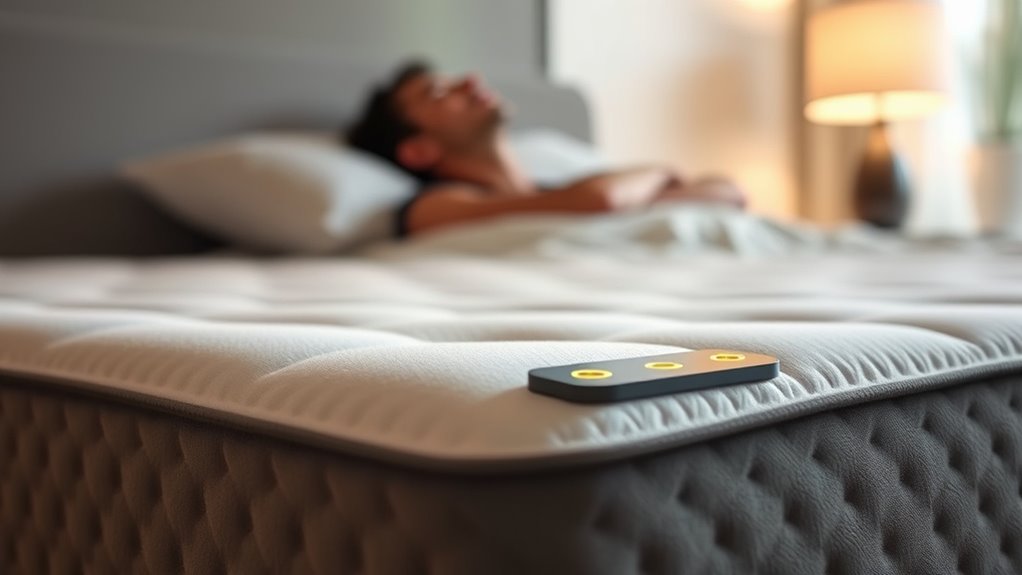
Key features of smart mattresses are designed to optimize your sleep experience by providing personalized comfort and real-time insights. Sleep tracking monitors your sleep patterns, including duration, quality, and movement, so you can identify habits that affect your rest. This data helps you understand your sleep cycles and make adjustments for better sleep hygiene. Temperature regulation is another essential feature, allowing the mattress to adjust its heat levels throughout the night. By maintaining an ideal temperature, it prevents overheating or feeling too cold, ensuring you stay comfortable all night. These features work together to enhance your sleep quality, making your rest more restorative. Sleep hygiene is crucial for overall health, and smart mattresses can contribute significantly to improving it. With smart mattresses, you gain a more tailored sleeping environment that adapts to your needs effortlessly. Additionally, advanced sensor technology enables real-time adjustments, further personalizing your sleep experience to maximize comfort and health benefits.
Benefits and Drawbacks of Investing in a Smart Bed

Investing in a smart bed can considerably improve your sleep experience, but it also comes with certain considerations. It may boost your sleep hygiene by providing personalized comfort and monitoring, helping you develop healthier habits. However, smart beds often require regular mattress maintenance, such as software updates and cleaning, which might be inconvenient. Additionally, the cost can be higher than traditional beds, and some features may not justify the expense. Consider these aspects before investing:
| Benefit | Drawback | Impact on Sleep Hygiene |
|---|---|---|
| Personalized comfort | Higher initial cost | Promotes better habits |
| Sleep tracking | Maintenance needs | Enables improvement |
| Convenience features | Privacy concerns | Encourages consistency |
Furthermore, incorporating air purifiers into your sleeping environment can enhance overall sleep quality by reducing allergens and pollutants that might disrupt rest. Regularly updating mattress firmware can also help ensure your smart bed functions optimally and securely, especially as technology evolves and security updates become necessary. Additionally, understanding the importance of self-sufficiency in maintaining your health and comfort can guide you in choosing the right features for your smart bed. An understanding of technological integration is crucial for maximizing the benefits of your smart mattress.
Comparing Smart Mattresses to Traditional Options
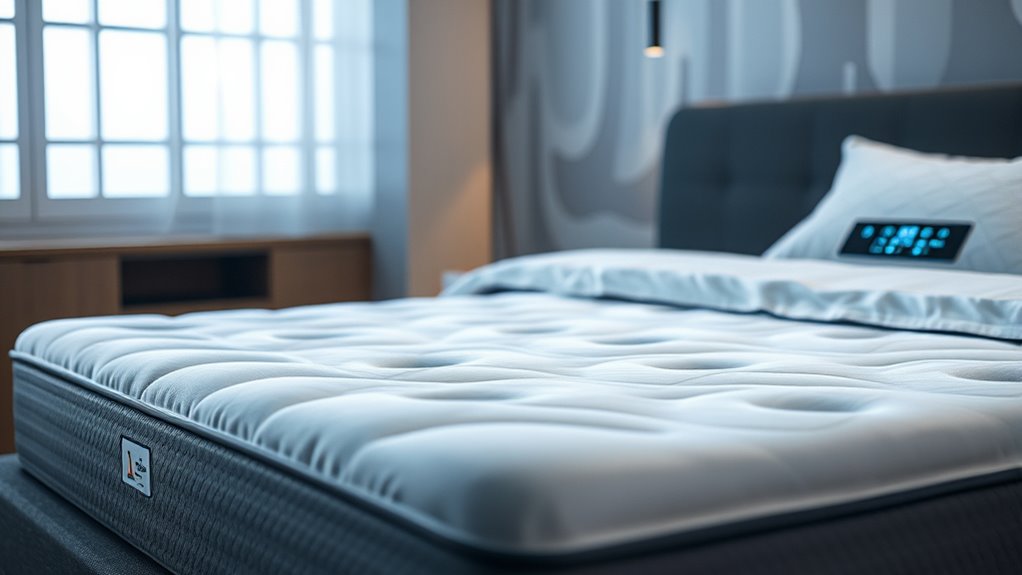
While smart mattresses offer advanced features and personalized comfort, traditional mattresses continue to be popular choices for many sleepers. Traditional options often rely on familiar mattress materials like memory foam, innerspring, or latex, which have proven durability and comfort over time. They don’t track your sleep cycle or adjust automatically, but they provide reliable support and comfort based on your preferences. Smart mattresses, however, use sensors and technology to monitor your sleep patterns, potentially improving your sleep quality. Additionally, connected equipment in smart mattresses can integrate with other home fitness devices to create a comprehensive wellness environment. This integration can be especially useful for outdoor enthusiasts who want to maintain their wellness routines even while away from home. When comparing the two, consider whether you prefer the straightforward feel of a traditional mattress or the tech-enabled benefits of a smart bed. Your choice depends on your priorities: simple comfort versus personalized, data-driven sleep insights. For those interested in body health, some smart mattresses can even monitor body temperature and movement, adding another layer of customization.
Tips for Choosing the Right Smart Mattress for You
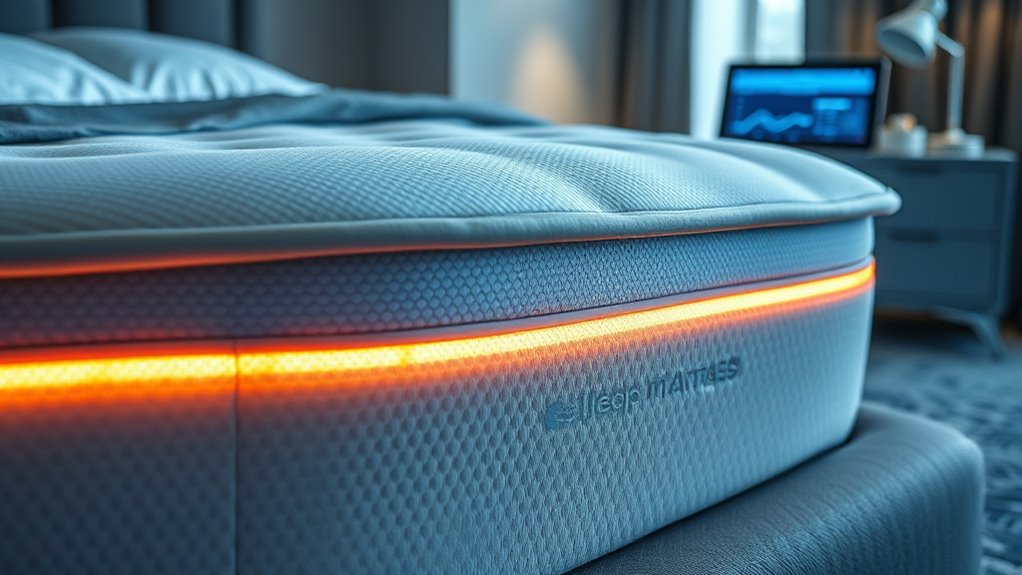
Choosing the right smart mattress starts with understanding your specific sleep needs and preferences. Consider your sleep hygiene—do you tend to overheat or stay cool? Look for mattress materials that support your comfort, such as breathable fabrics or cooling gels. Think about your preferred firmness level and whether you want features like adjustable firmness or zone support. Pay attention to compatibility with your sleep environment and existing bedding. Smart mattresses often include sensors and connectivity options; ensure these features align with your tech comfort. Reading reviews and testing different models can help you find the best fit. Additionally, luggage & bags considerations like ease of movement and setup can influence your overall satisfaction. Incorporating safety considerations, such as secure connectivity and data privacy, can also enhance your confidence in using these advanced sleep solutions. Being aware of repair and maintenance aspects, such as firmware updates or troubleshooting, can help prolong your mattress’s lifespan and performance. To further optimize your sleep experience, exploring essential oils for better sleep might be beneficial in creating a calming environment. For example, some smart mattresses have automatic temperature regulation features that respond to your body heat, making it easier to fall asleep and stay comfortable throughout the night. Ultimately, selecting a smart mattress tailored to your sleep habits and material preferences will improve your sleep quality and overall well-being.
Frequently Asked Questions
How Long Do Smart Mattresses Typically Last Before Needing Replacement?
Smart mattresses typically last about 7 to 10 years, depending on their durability lifespan and how well you uphold them. To extend their life, you should follow regular maintenance requirements like cleaning and rotating the mattress. Keep an eye on comfort and support changes, and replace it when you notice significant wear or technology issues. Proper care ensures you get the most out of your smart mattress for years to come.
Are Smart Mattresses Suitable for People With Allergies or Sensitivities?
Your smart mattress could be your allergy hero, transforming sleepless nights into peaceful slumber. These mattresses often use hypoallergenic materials and allergy-friendly features, making them ideal for sensitive individuals. They resist dust mites and mold, reducing allergy triggers markedly. If you suffer from allergies or sensitivities, a smart mattress might be the best investment you make for your health and comfort, giving you relief and better sleep every night.
Do Smart Mattresses Require a Dedicated App or Subscription Service?
Smart mattresses usually require app integration to access their features, but not all need a subscription service. Some models let you control settings and monitor sleep without extra costs, while others may charge subscription fees for advanced features like personalized sleep coaching or data storage. Check the specific mattress’s details to understand any ongoing subscription costs, so you can decide if it fits your budget and needs.
Can Smart Mattresses Be Used With Existing Bedroom Smart Devices?
Imagine you’re syncing your smart mattress with your smart lights and thermostat for a seamless bedtime routine. Yes, smart mattresses can often be used with existing bedroom smart devices through device integration. Just check the bed’s compatibility and verify it supports common platforms like Alexa or Google Assistant. This way, you can control your sleep environment effortlessly, creating a cozy, automated space that works perfectly with your current smart home setup.
What Are the Privacy Concerns Related to Data Collection From Smart Beds?
You should be aware that smart beds collect data on your sleep patterns, which raises privacy concerns. Data security is vital to prevent unauthorized access, so choose brands that encrypt your information. Be mindful of user privacy policies, ensuring they don’t share your data without consent. Stay informed about how your sleep data is used and stored to protect your personal information and maintain control over your privacy.
Conclusion
Wondering if a smart mattress is worth it? While some say they can truly improve your sleep quality, remember that not all tech guarantees better rest—sometimes, simpler options do the trick. It’s tempting to believe that gadgets hold the secret to perfect sleep, but ultimately, your comfort and habits matter most. Before investing, consider your needs carefully. Technology can help, but don’t forget to listen to your body and prioritize what truly works for you.