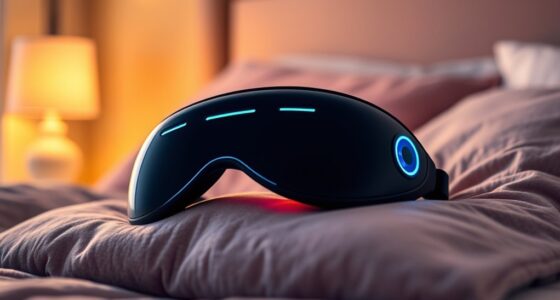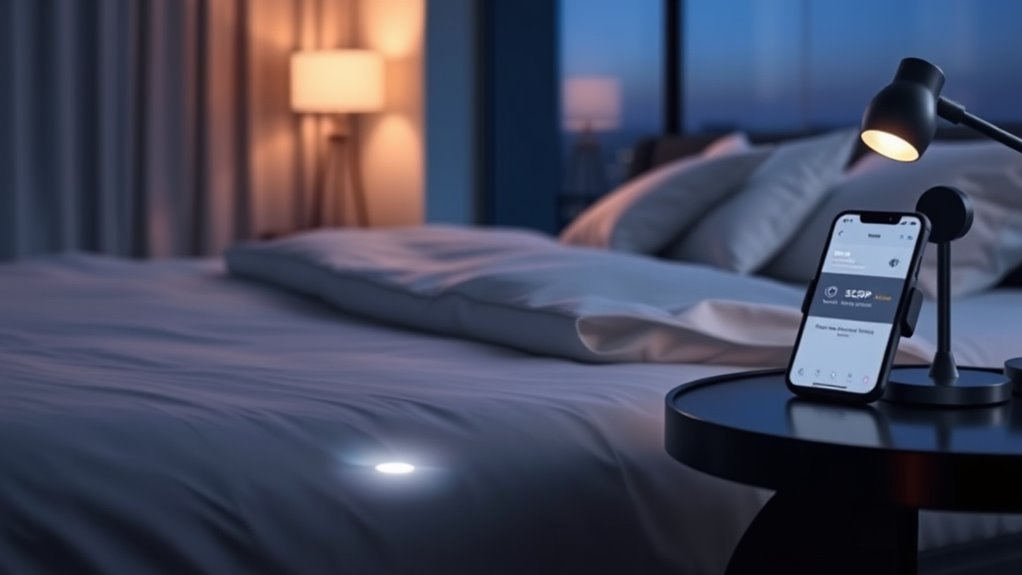

Contactless sleep trackers use sensors and advanced technologies like radar, under-mattress monitors, and environment sensors to monitor your sleep without wearing devices. They detect body movements, breathing, and environmental factors to analyze sleep cycles, quality, and disruptions. These systems are discreet, secure, and integrate with smart home setups to optimize your environment. If you’re curious about how these innovative methods work to improve your sleep, you’ll find plenty of insights ahead.
Key Takeaways
- Contactless sleep trackers use non-intrusive sensors embedded in furniture or placed nearby to monitor movements, breathing, and environmental factors.
- Radar-based systems and under-mattress monitors detect physiological signals through radio waves or mattress materials without physical contact.
- Ambient sensors track room conditions like temperature, humidity, and light to optimize sleep environments passively.
- These devices integrate with smart home systems for automated environmental adjustments based on sleep patterns.
- Ensuring data privacy and security is crucial, with encryption and user control over personal sleep data.
How Contactless Sleep Tracking Works
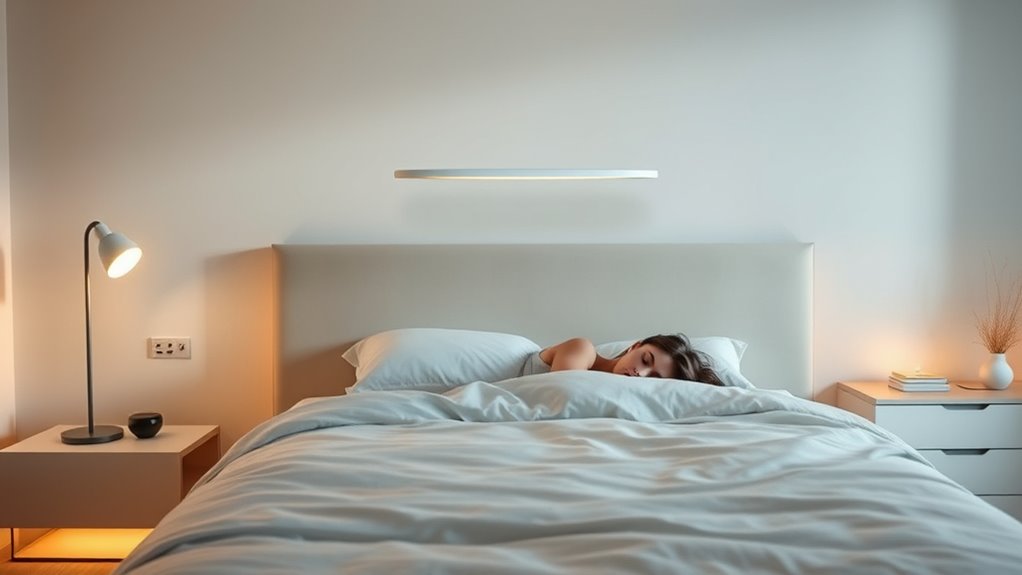
Contactless sleep tracking works by using sensors that monitor your body’s movements and physiological signals without needing to touch or wear any devices. These sensors analyze subtle shifts in your position, which reflect your sleep cycle stages, helping determine when you’re in light, deep, or REM sleep. They also track your breathing patterns by detecting minute chest movements or airflow changes, providing insights into your respiratory health during sleep. The technology captures data continuously throughout the night, creating a detailed picture of your sleep quality. Because it’s contactless, you don’t have to worry about wearing uncomfortable gadgets or disrupting your sleep. Instead, the sensors work seamlessly in the background, giving you accurate, real-time information about your sleep patterns and breathing without any inconvenience. Additionally, sensor accuracy ensures reliable data collection, making these devices a valuable tool for health monitoring. The integration of advanced sensor technology also allows for more comprehensive monitoring of your overall sleep health. Modern contactless trackers often incorporate non-intrusive sensors that seamlessly blend into your sleeping environment, which improves user comfort, and data reliability. Furthermore, the use of innovative sensor designs enhances their ability to capture detailed physiological signals without discomfort.
Types of Contactless Sleep Monitoring Technologies
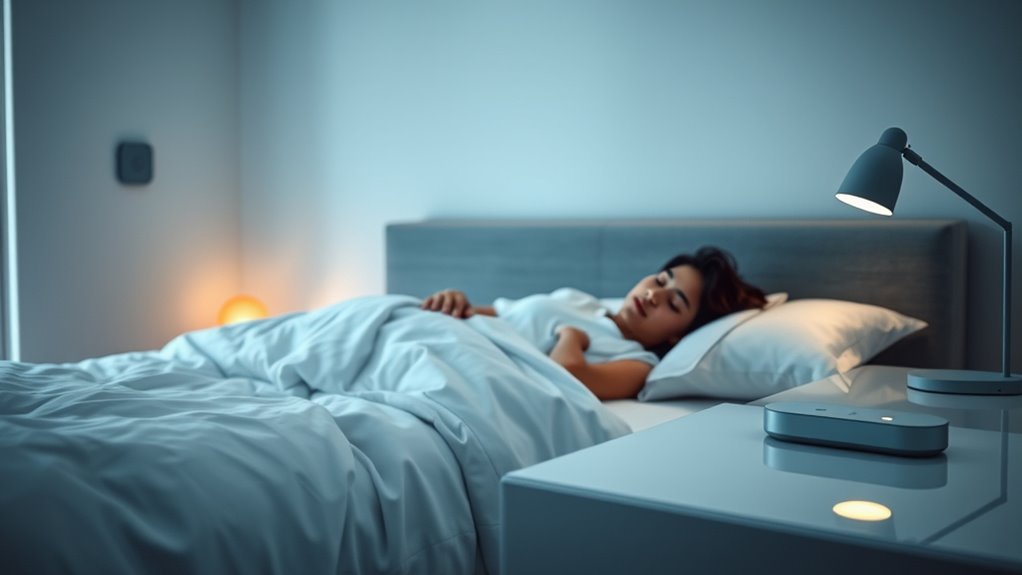
Various technologies enable contactless sleep monitoring, each utilizing different sensors and methods to gather data without physical contact. For example, some devices analyze sound patterns, such as breathing and snoring, to assess sleep quality and promote better sleep hygiene. Others monitor your sleep environment by detecting temperature, humidity, and light levels to create ideal conditions for restful sleep. These sensors can be embedded in furniture, placed nearby, or integrated into smart home systems, providing continuous insights without disturbing your routine. By understanding your sleep environment, you can make adjustments that support healthier sleep habits. Additionally, air quality sensors can help identify environmental factors that may affect sleep quality, such as indoor pollutants or allergens. Incorporating advanced sensor technology can significantly improve the accuracy and effectiveness of sleep tracking. Unlike wearables, these contactless options focus on non-intrusive data collection, helping you optimize your sleep hygiene while keeping the process comfortable and unobtrusive. Moreover, European cloud servers can securely store and analyze the collected data, ensuring privacy and enabling seamless integration with other smart home devices. Utilizing sensor integration techniques can further enhance the comprehensiveness of sleep monitoring systems. Some systems also utilize motion detection to track restlessness and movement during sleep, providing a more complete picture of sleep quality.
Radar-Based Sleep Sensors
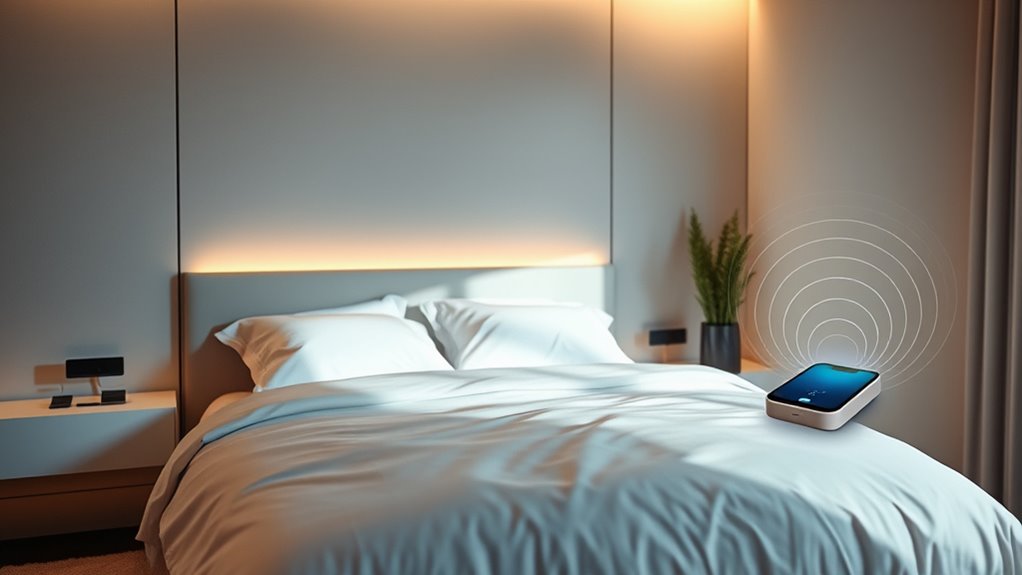
Radar-based sleep sensors use radio waves to monitor your movements and breathing patterns throughout the night without any physical contact. They track your sleep cycle by detecting subtle changes in your respiratory rate and body movements, providing insights into your sleep quality. These sensors are sensitive enough to distinguish between different sleep stages, giving you a detailed picture of your rest. Additionally, they can account for environmental factors that influence your sleep, such as room temperature or light levels, by integrating data from other sources. Because they operate wirelessly, radar sensors eliminate the need for wearable devices or contact points, making them discreet and non-intrusive. This technology offers a seamless way to understand your sleep patterns while minimizing disruptions. Incorporating seasonal maintenance checks can help optimize your sleep environment and improve overall sleep quality. Regularly updating your connected home environment ensures that environmental influences are accurately monitored and managed, especially when using advanced sensors and monitoring devices like radar sleep sensors. Moreover, integrating smart home automation can enhance your sleep quality by adjusting environmental factors automatically based on sensor data. Maintaining a clean and clutter-free bedroom can further support optimal sleep conditions and ensure sensor accuracy.
Under-Mattress and Bed Frame Monitors
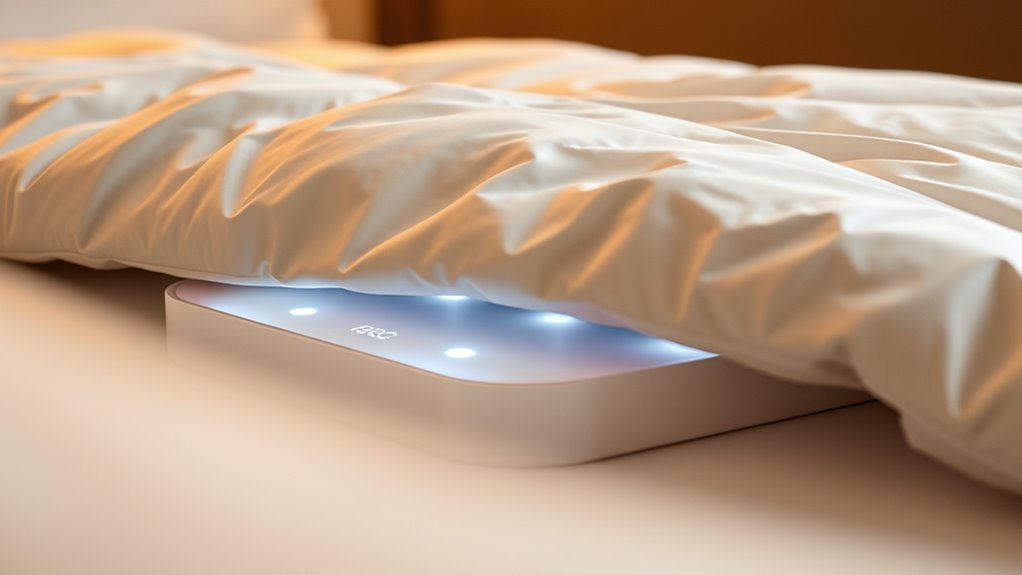
Under-mattress and bed frame monitors offer a discreet way to track your sleep without any direct contact. These devices analyze your sleep environment by detecting subtle movements and heart rate changes through your mattress materials. Because they sit beneath your mattress or within your bed frame, they avoid interference caused by external factors like clothing or skin contact. This non-contact monitoring method makes them ideal for capturing accurate sleep data, especially if you prefer a no-wear approach. The monitors can adapt to different mattress materials, whether foam, spring, or hybrid, ensuring consistent performance across various sleep setups. They utilize sensor technology to monitor your sleep environment directly from beneath, providing insights into sleep stages, movement, and rest quality without disrupting your nightly routine. Additionally, understanding how these devices operate can help you recognize potential manipulation tactics in sleep data interpretation. These non-contact monitors often include features like data security to protect your sensitive sleep information from unauthorized access. Furthermore, some models may incorporate machine learning algorithms to improve accuracy over time and personalize your sleep analysis.
Ambient and Room Sensors for Sleep Analysis
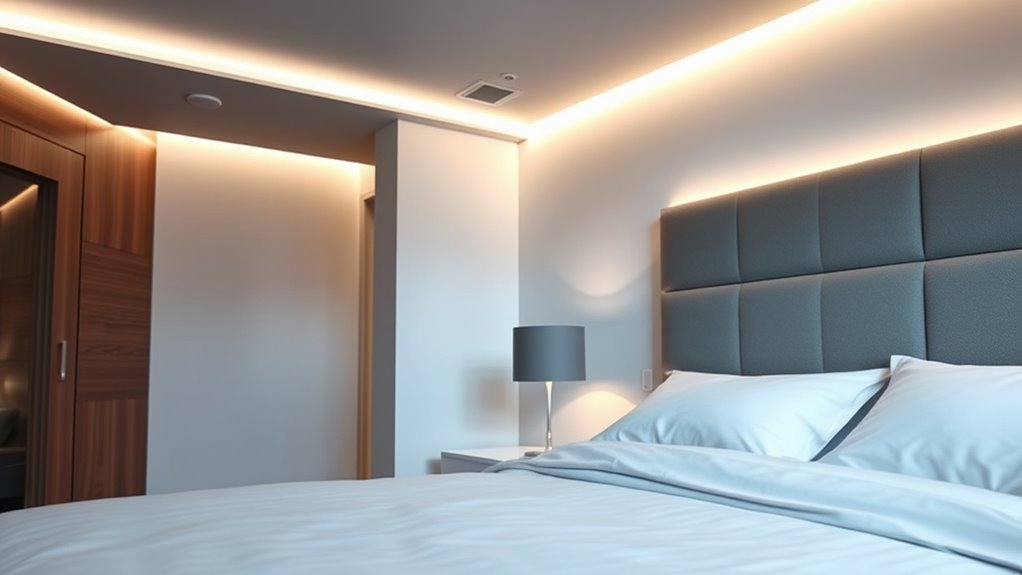
Ambient and room sensors play a crucial role in sleep analysis by monitoring environmental factors that influence your rest. These sensors track your sleep environment, providing insights into conditions like temperature, humidity, and noise levels. By evaluating these elements, they help identify how your surroundings impact your sleep quality. Ambient lighting is also a key factor; sensors detect light levels that can disrupt your sleep cycles, allowing adjustments to create a more conducive environment. Unlike wearable devices, these sensors operate passively, requiring no direct contact. They offer continuous, unobtrusive monitoring, giving you an in-depth view of how your room’s conditions affect your sleep. Understanding sleep environment factors is essential for developing effective sleep strategies. Optimizing your sleep environment based on this data can lead to more restorative rest and better overall health. environmental factors are essential to consider for improving sleep quality and understanding your sleep patterns more comprehensively. Incorporating ambient sensor data can help you fine-tune your sleeping conditions for improved rest, especially when combined with sleep environment optimization techniques.
Benefits of Going Contactless Over Traditional Wearables

Going contactless offers a significant advantage by eliminating the need to wear devices during sleep, which can often cause discomfort or disruptions. With contactless options, you avoid issues like wearable discomfort that disturb your rest. Plus, you reduce your device dependency, making it easier to enjoy natural sleep patterns. Here are some key benefits:
- No more wearing uncomfortable gadgets that can interfere with your sleep quality.
- Less reliance on batteries or charging, simplifying your nightly routine.
- Improved comfort and freedom, leading to more accurate sleep data without interruptions.
Data Privacy and Security Considerations

As contactless sleep trackers gather sensitive personal data, safeguarding your privacy and security becomes essential. These devices collect detailed information about your sleep patterns, which makes data encryption indispensable to protect your data from unauthorized access. Always review the privacy policies of the devices and apps you use, and make sure they explicitly state how your data is stored and shared. Your user consent is critical; you should have control over what data is collected and how it’s used. Be cautious about granting permissions and sharing your sleep data with third parties. Regularly update your device’s software to benefit from security patches. By staying informed and vigilant, you can enjoy the benefits of contactless sleep tracking while protecting your personal information.
Integrating Contactless Sleep Data Into Wellness Routines
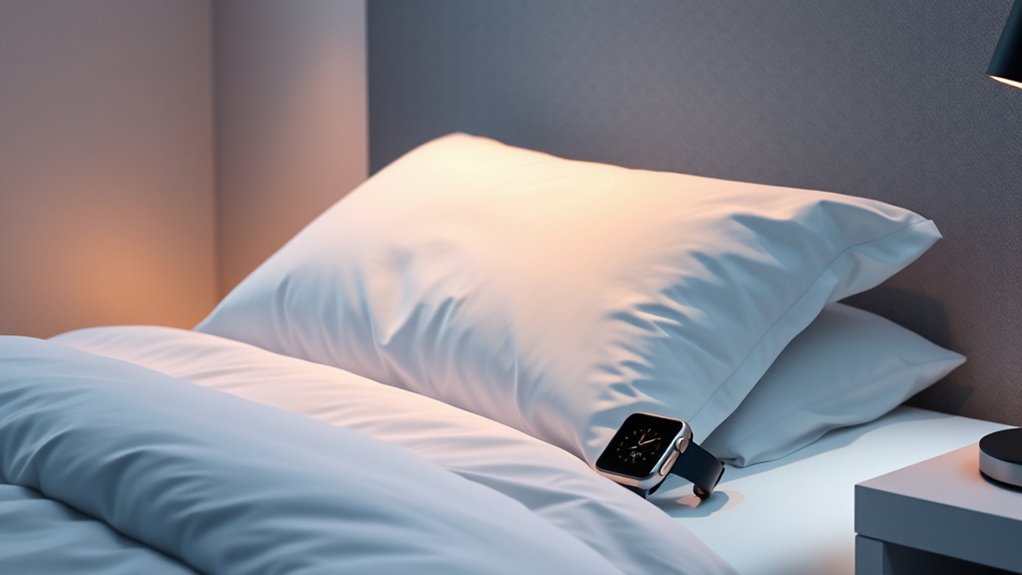
Integrating contactless sleep data into your wellness routines can substantially enhance your overall health and daily performance. By using this data, you can improve your sleep hygiene and adopt effective relaxation techniques. Here’s how to get started:
- Analyze your sleep patterns to identify inconsistencies or disruptions, then adjust your bedtime or environment accordingly.
- Use insights from your sleep data to refine relaxation techniques, like meditation or breathing exercises, enhancing their effectiveness before sleep.
- Incorporate consistent sleep schedules based on your data, ensuring you get enough restorative rest each night.
These steps help you make informed decisions, foster healthier habits, and optimize your sleep quality, ultimately supporting your physical and mental well-being.
Future Trends in Contactless Sleep Monitoring
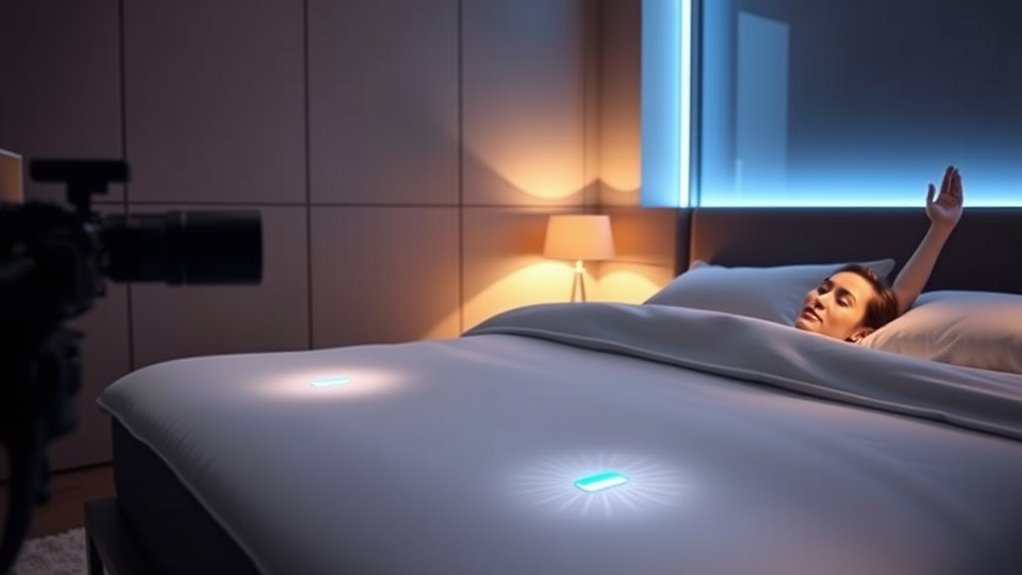
Advancements in sensor technology will make contactless sleep monitoring more accurate and seamless for you. As these systems improve, they’ll better understand your sleep patterns without invasive devices. Additionally, integration with smart home systems will create a more personalized and automated sleep environment that adapts to your needs.
Advancements in Sensor Technology
Emerging sensor technologies are set to revolutionize contactless sleep monitoring by offering greater accuracy and comfort. Advances focus on three key areas:
- Sensor miniaturization, making devices less intrusive and more discreet.
- False alarm reduction, ensuring more reliable sleep data without unnecessary disruptions.
- Enhanced sensitivity, capturing subtle physiological signals for precise insights.
These innovations enable sensors to detect even minute movements and vital signs without contact, improving overall performance. As sensors become smaller, they blend seamlessly into your environment, increasing convenience. Reduced false alarms minimize false positives, giving you more trustworthy sleep analysis. Meanwhile, improved sensitivity allows for detailed monitoring of sleep stages and breathing patterns. Together, these trends promise a future where contactless sleep trackers are more accurate, comfortable, and seamlessly integrated into your nightly routine.
Integration With Smart Homes
As smart home technology becomes increasingly sophisticated, contactless sleep trackers are poised to seamlessly connect with various devices and systems in your environment. With smart home integration, your sleep data can automatically sync with lights, thermostats, and security systems, creating a cohesive living space tailored to your sleep patterns. This enhances device interoperability, allowing your home to adjust lighting or temperature based on your sleep stages or wake-up time. You’ll benefit from real-time adjustments that optimize your sleep environment without manual input. Future trends point to more intuitive connectivity, where contactless sleep trackers communicate effortlessly with multiple devices, making your sleep monitoring more convenient and personalized. This convergence promises a smarter, more responsive home that actively supports your health and well-being around the clock.
Frequently Asked Questions
How Accurate Are Contactless Sleep Trackers Compared to Traditional Devices?
Contactless sleep trackers are generally quite accurate, but their precision depends on proper device calibration and sensor placement. When you position the device correctly and ensure it’s calibrated, it can monitor your sleep stages and movements effectively. However, they may not be as precise as traditional devices like polysomnography, especially if sensors aren’t placed properly or if calibration drifts. Still, they provide a convenient, non-intrusive way to track your sleep trends.
Can Contactless Sleep Monitoring Detect Sleep Disorders Effectively?
Yes, contactless sleep monitoring can assist with sleep disorder detection, but it shouldn’t replace medical diagnosis. These devices track sleep patterns and identify irregularities that may suggest issues like sleep apnea or insomnia. However, for accurate diagnosis and effective treatment, you should consult a healthcare professional. Think of contactless tools as helpful screening options that complement, but don’t replace, traditional sleep studies and medical assessments.
Are Contactless Sleep Trackers Suitable for All Sleep Environments?
Think of contactless sleep trackers like a gentle breeze—they work well in most bedrooms, but environment sensitivity varies. You might find they’re suitable for a quiet, stable space, but in a noisy or cluttered environment, their accuracy can dip. Your bedroom compatibility depends on factors like light, temperature, and movement. So, if your environment stays consistent, these devices can reliably monitor your sleep, but if it’s unpredictable, results may vary.
How Do Contactless Sensors Differentiate Between Multiple Sleepers?
Contactless sensors use advanced sensor differentiation and multi-user detection technology to tell apart multiple sleepers. They analyze signals like movement patterns, breathing rates, and body heat, assigning data to each person. When you share a bed, these sensors identify subtle differences between sleepers, ensuring accurate tracking for everyone. This way, the device can monitor each person’s sleep stages separately, providing personalized insights without confusion.
What Are the Common Limitations of Current Contactless Sleep Monitoring Technologies?
You might find that current contactless sleep monitoring technologies face limitations like privacy concerns, as they often collect sensitive data that users worry about sharing. Device compatibility can also be an issue, since these systems may not work seamlessly with all smartphones or smart home setups. Additionally, they may struggle with accuracy in noisy environments or when multiple sleepers are nearby, affecting their reliability and your trust in the data.
Conclusion
As you explore contactless sleep trackers, remember that “what gets measured gets managed.” These innovative devices offer a gentle, non-intrusive way to understand and improve your sleep quality. Embracing this technology can transform your nights and boost your overall well-being. Stay curious and open-minded—your best rest might just be a sensor away. By prioritizing your sleep, you take a crucial step toward a healthier, more energized life.