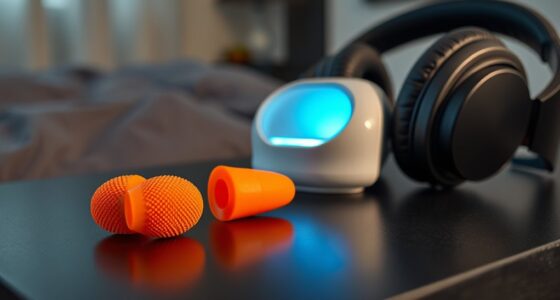
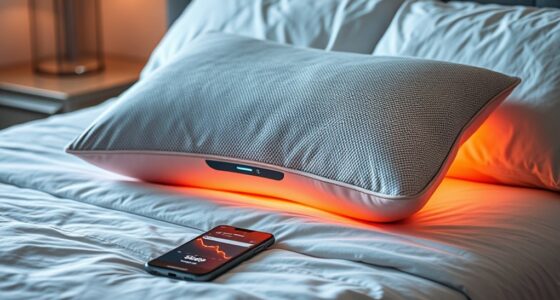
A sleep robot is a device designed to help you fall asleep and improve sleep quality by providing environmental cues like calming sounds, gentle vibrations, or light control, based on monitoring your sleep patterns. It subtly adjusts your surroundings to promote relaxation and restful rest. While they can be effective, dependency is a risk if overused. To discover how these devices work and how to use them wisely, explore more about their features and benefits.
Key Takeaways
- Sleep robots are devices designed to improve sleep quality through environmental stimuli like sound, light, or temperature adjustments.
- They monitor sleep patterns using sensors and adapt their interventions to promote restful sleep.
- Sleep robots can help users fall asleep faster and achieve deeper sleep by creating calming environments.
- Overreliance on sleep robots may lead to dependency, potentially affecting natural sleep patterns.
- Combining sleep robots with good sleep habits enhances effectiveness and supports healthy, sustainable sleep.
Understanding Sleep Robots and Their Purpose

Sleep robots are designed to improve your sleep quality by providing gentle stimuli or environmental adjustments that help you fall asleep faster and stay asleep longer. They monitor your sleep patterns to identify how you rest each night, enabling personalized interventions. These devices can subtly influence your environment, such as adjusting light, sound, or temperature, to promote better sleep. Some advanced sleep robots incorporate dream analysis, tracking your REM cycles and dream activity to offer insights into your subconscious. By understanding your sleep patterns and dream states, these robots aim to optimize your overall sleep experience. Their purpose is to support restorative sleep, helping you wake up refreshed and alert, all while tailoring their approach based on your unique sleep behaviors. Sleep hygiene practices can further enhance the effectiveness of these devices in achieving restful sleep. Additionally, these robots often utilize sleep monitoring technology to gather detailed data about your sleep quality and patterns, allowing for more precise adjustments tailored to your needs. Incorporating personalized interventions based on your sleep data can further improve results and help establish healthier sleep habits, especially when combined with environmental adjustments that promote relaxation. Understanding how these devices use sleep data analysis to refine their interventions can lead to more effective sleep improvement strategies.
How Do Sleep Robots Function?

Sleep robots operate by combining advanced sensors and algorithms to monitor your biological signals throughout the night. They accurately track heart rate, breathing, and movement to assess your sleep stages. The robot design balances comfort with functionality, ensuring seamless integration into your sleep environment. The user interface is intuitive, allowing you to easily customize settings and receive feedback. These robots process data in real-time to deliver personalized interventions, such as gentle vibrations or sound cues, to promote relaxation and smoother progressions into sleep. Smart technology enables these devices to adapt interventions based on your unique sleep patterns, ensuring more effective results. Additionally, the integration of biometric data helps enhance the precision of sleep assessments and interventions. Incorporating sleep environment optimization strategies can further improve overall sleep quality. The use of adaptive algorithms allows the robot to refine its responses over time, providing increasingly tailored assistance. Key features include:
Sleep robots use sensors and smart algorithms to monitor and enhance your sleep seamlessly.
- Sophisticated sensors embedded in the robot design for precise monitoring
- User-friendly interface for seamless control and personalization
- Smart algorithms that adapt interventions based on your sleep patterns.
Furthermore, connected devices in the ecosystem can synchronize data to provide a comprehensive view of your sleep health, empowering you to make informed lifestyle adjustments. Together, these elements work to optimize your sleep quality effortlessly.
Types of Sleep Robots Available on the Market
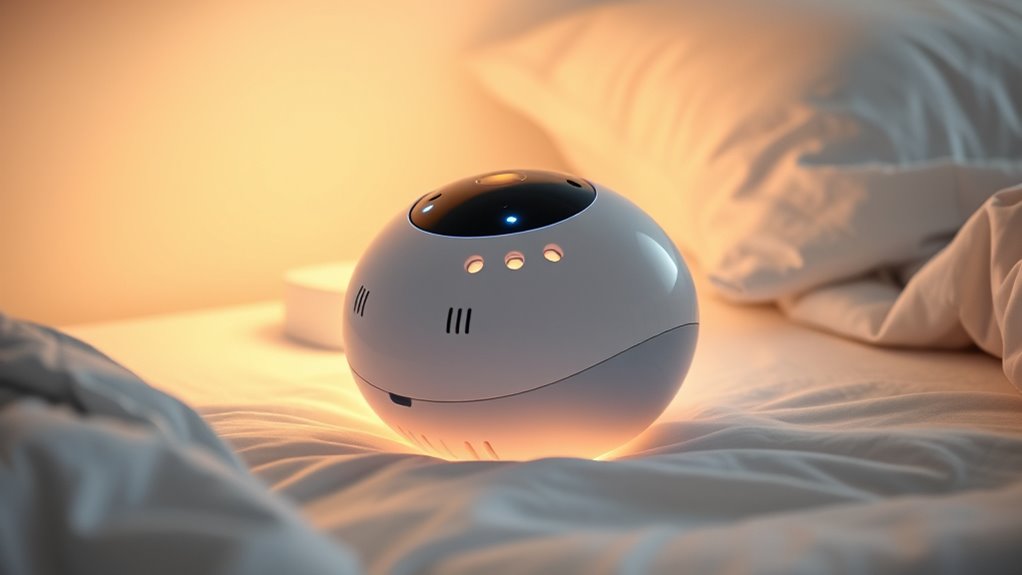
Have you ever wondered about the different types of sleep robots available to help improve your nightly rest? There’s a variety designed for sleep therapy, each with unique features and robot designs. Some robots focus on calming soundscapes or gentle vibrations to promote relaxation, while others incorporate light therapy or temperature regulation. Many are designed with user comfort in mind, offering ergonomic shapes or sleek, unobtrusive forms that blend into your bedroom environment. Some models use biofeedback to monitor your sleep patterns and adjust their functions accordingly. Whether you’re looking for a device that provides ambient sounds or one that actively guides your breathing, there’s a sleep robot tailored to your needs. These options make sleep therapy accessible and customizable. Additionally, understanding cutting-edge gadgets can help you select the most effective device for your sleep improvement goals. As innovations in European cloud solutions continue, integrating smart technology into sleep devices could further enhance their capabilities and personalization. Recognizing how passive voice detection improves the clarity of instructions can also be beneficial when setting up and using your sleep robot. Furthermore, advancements in recovery devices are paving the way for more sophisticated and personalized sleep solutions. Incorporating network infrastructure knowledge can enhance the connectivity and functionality of smart sleep devices, ensuring seamless operation.
Benefits and Potential Drawbacks of Using Sleep Robots

Using sleep robots can improve your sleep quality and help you fall asleep faster. However, you should be aware of the potential for developing dependency on the device. Weighing these benefits and drawbacks can help you decide if a sleep robot is right for you. Incorporating evidence‑informed guidance into your routine can further enhance your sleep health. Additionally, understanding the home environment and how it affects sleep can optimize the effectiveness of sleep robots. Creating a comfortable and sleep-friendly environment can also support better sleep outcomes alongside the use of technology. Being mindful of your sleep routines can ensure that technology complements your natural sleep patterns rather than disrupting them. Considering optimal projector placement in your room can help create a more relaxing atmosphere that promotes sleep.
Enhanced Sleep Quality
While sleep robots can enhance sleep quality by creating a calming environment and supporting consistent bedtime routines, they also present potential drawbacks you should consider. Using these devices might improve sleep hygiene, but overreliance can interfere with natural sleep patterns. To maximize benefits, make certain your sleep environment remains comfortable and free from distractions. Here are some key points:
- They can reinforce relaxing routines, making it easier to wind down each night.
- They may reduce anxiety related to sleep, promoting deeper rest.
- However, dependence on robots could weaken your ability to fall asleep without assistance, impacting long-term sleep quality.
- Proper sleep environment management ensures the effectiveness of sleep robots and supports overall sleep health.
- Incorporating sleep hygiene practices alongside device use can help maintain healthy sleep habits.
- Understanding the role of healthy sleep patterns can help you use sleep robots more effectively and avoid dependency.
- Recognizing how sleep aids can influence your natural sleep cycle is crucial for balanced sleep management.
Balancing the use of sleep robots with natural sleep habits is essential for truly enhanced sleep quality.
Possible Dependency Risks
Although sleep robots can improve your bedtime routine and reduce sleep-related anxiety, they also pose the risk of creating dependency. Dependency concerns arise when you start relying on the robot to fall asleep, making it harder to sleep naturally without it. Over time, your brain may become conditioned to associate the robot’s presence with sleep, diminishing your ability to relax independently. This increased reliance on technology can lead to a cycle where you feel unable to sleep without the robot’s assistance. While these devices offer benefits, it’s important to recognize the potential drawbacks of technology reliance. To avoid dependency, it’s wise to use sleep robots as a supplementary tool rather than a sole sleep solution, maintaining healthy sleep habits alongside their use.
Scientific Evidence Supporting Sleep Robots

Scientific studies have begun to explore how sleep robots can influence sleep quality, providing some promising evidence. Research indicates that sleep robots may improve sleep patterns by promoting relaxation and reducing stress. Additionally, noise reduction features offered by many devices help create a calmer environment, making it easier to fall asleep and stay asleep. Some key findings include:
- Enhanced sleep efficiency through consistent use of sleep robots.
- Better noise mitigation, which minimizes disruptions caused by environmental sounds.
- Improved overall sleep quality, leading to quicker sleep onset and deeper rest. Although research is still emerging, early results suggest that sleep robots could be a valuable tool for those struggling with sleep disturbances, especially when noise or irregular sleep patterns are contributing factors.
Tips for Choosing and Using a Sleep Robot Effectively

Choosing and using a sleep robot effectively requires careful consideration of your specific sleep needs and environment. First, assess your sleep environment to guarantee it’s conducive to relaxation; a quiet, dark, and comfortable space enhances the robot’s effectiveness. Incorporate mindfulness techniques, such as deep breathing or meditation, alongside the robot’s features to calm your mind. Set realistic expectations about what the robot can do, and start with short, consistent sessions to build a routine. Adjust the robot’s settings gradually to find what works best for you. Keep track of your sleep patterns to evaluate progress and make necessary tweaks. Remember, consistency and creating a calming sleep environment are key to maximizing the benefits of a sleep robot.
Frequently Asked Questions
Are Sleep Robots Safe for Children or Pregnant Women?
Sleep robots aren’t recommended for children or pregnant women, as their safety isn’t fully established for these groups. You should prioritize child safety and pregnancy considerations by consulting healthcare professionals before using such devices. They may have features or effects that aren’t suitable for young or expecting individuals. Always err on the side of caution and choose proven, safe sleep solutions tailored to your specific needs.
How Much Do Sleep Robots Typically Cost?
Sleep robots usually cost between $150 and $400, depending on features and brand. Notably, a cost comparison shows that investing in a sleep robot could be comparable to a few therapy sessions or premium sleep aids. You’ll find a wide pricing range, with basic models on the lower end and more advanced options offering soothing sounds, light therapy, or biometric feedback on the higher end. Choose one that fits your budget and sleep needs.
Can Sleep Robots Replace Traditional Sleep Aids?
Sleep robots can’t fully replace traditional sleep aids, but they can complement your sleep improvement efforts. Using advanced robot technology, these devices help relax your mind and body, easing you into sleep more naturally. While they offer benefits like reducing anxiety and promoting calmness, you might still need other aids for deeper sleep issues. Combining sleep robots with healthy habits can optimize your overall sleep quality.
Do Sleep Robots Work for People With Sleep Disorders?
Sleep robots can improve sleep quality for some people with sleep disorders by offering sleep customization tailored to your needs. They use calming sounds, gentle movements, or light therapy to promote relaxation and help you fall asleep faster. However, they might not replace medical treatments if your sleep issues stem from underlying health conditions. Always consult a healthcare professional to determine if a sleep robot suits your specific sleep disorder.
How Long Do Sleep Robots Usually Last Before Needing Replacement?
Sleep robots typically last between 1 to 3 years before needing replacement, depending on their robot battery life and usage. You should monitor the device’s performance and replace it when you notice reduced functionality or battery issues. Regular maintenance can extend its lifespan, but eventually, replacement intervals become necessary to guarantee consistent sleep support. Keep an eye on manufacturer recommendations for maximum longevity.
Conclusion
In the end, sleep robots could be your modern-day lullaby, helping you drift off like a gentle bard of old. While they may not replace a cozy night by the fire, they offer a tech-savvy way to improve your sleep. Just remember, even in the age of robots, a good mattress and calming bedtime routine still hold their timeless charm. Embrace the future of sleep, and who knows—maybe you’ll be snoozing like a medieval knight in no time.