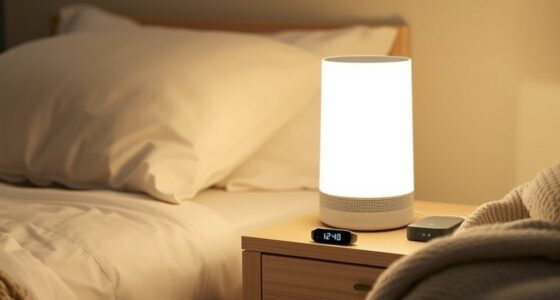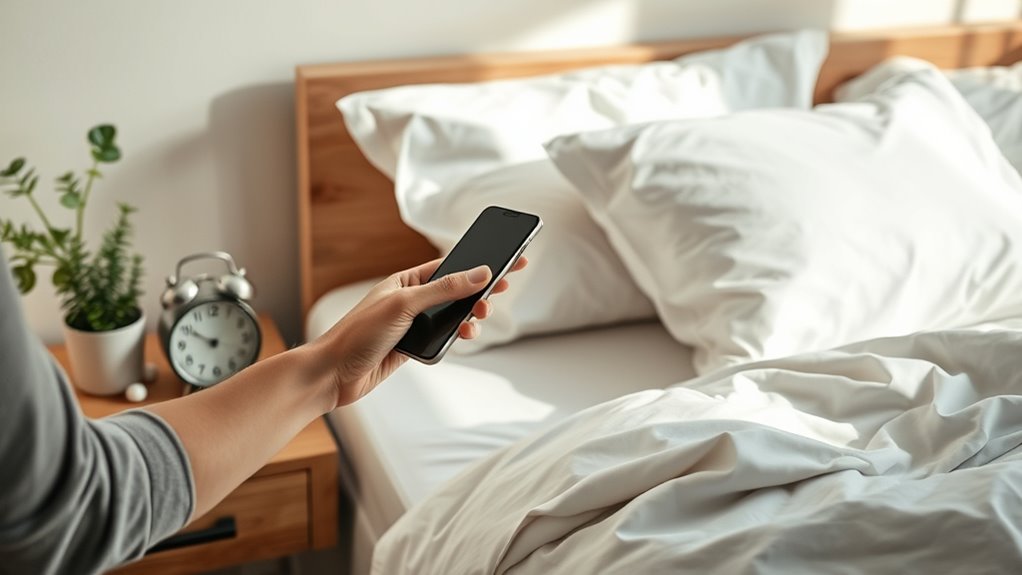

Limiting your gadget use before bed can greatly improve your sleep quality. Blue light from devices suppresses melatonin, making it harder to fall asleep and reducing sleep deepness. By reducing screen time an hour before bed, you allow your body’s natural melatonin production to work better, helping you relax and drift off faster. If you keep this up, you’ll enjoy more restful sleep. Keep going to discover simple strategies that can make a real difference for your rest.
Key Takeaways
- Limiting screen time before bed reduces blue light exposure, allowing melatonin production to promote better sleep.
- Avoiding gadgets an hour before sleep helps synchronize your circadian rhythm for more restful rest.
- Reducing device use before bed decreases sleep onset delay and improves sleep quality.
- Replacing screens with relaxing activities supports mental calmness and prepares the body for sleep.
- Consistent tech detox at night enhances overall sleep health and daytime functioning.

In today’s digital age, our screens often interfere with a good night’s sleep, making it harder to rest and recharge. Whether it’s scrolling through social media, binge-watching shows, or replying to work emails late at night, your screen time can considerably disrupt your sleep cycle. One of the main culprits is blue light, a type of high-energy visible light emitted by smartphones, tablets, computers, and even some LED lights. When you’re exposed to blue light in the evening, it tricks your brain into thinking it’s still daytime, suppressing melatonin production—the hormone responsible for signaling that it’s time to sleep. This delay in melatonin release can make it tougher for you to fall asleep and can even reduce sleep quality once you’re asleep.
Reducing your screen time before bed is a straightforward way to combat this problem. When you spend hours gazing at screens, especially in the hour or two before bed, you’re exposing yourself to a high dose of blue light. This not only prolongs the time it takes for you to fall asleep but can also lead to more fragmented, less restorative sleep. The more you delay your bedtime or skimp on sleep because of screen exposure, the more you accumulate sleep debt, which impacts your overall health and daytime functioning.
Limiting screen time before bed helps improve sleep quality and overall health.
To mitigate these effects, consider establishing a tech-free zone an hour before bed. Instead of scrolling through your phone or binge-watching on your tablet, try reading a physical book, practicing relaxation techniques, or listening to calming music. If you must use screens, activate blue light filters or night mode settings on your devices, which reduce blue light emissions and make it easier for your brain to wind down. Wearing blue light blocking glasses is another effective option, especially if you find it difficult to avoid screens altogether. Additionally, the use of smart lighting systems that adjust color temperature in the evening can help support your body’s natural circadian rhythm.
Creating a consistent sleep routine that minimizes screen exposure in the evening can make a noticeable difference. This small change allows your body’s natural circadian rhythm to synchronize properly, promoting quicker sleep onset and deeper rest. Remember, the goal isn’t just about turning off your devices; it’s about giving your mind and body the time they need to relax and prepare for sleep. By cutting back on blue light exposure and managing your screen time, you’re taking an essential step toward better sleep and improved overall well-being.
Frequently Asked Questions
How Long Should I Limit Screen Time Before Bed?
You should limit your screen time at least 30 to 60 minutes before bed. Following screen time guidelines helps create effective bedtime routines, reducing blue light exposure that can interfere with melatonin production. During this time, avoid gadgets and instead focus on relaxing activities like reading or gentle stretches. This habit promotes better sleep quality and helps your body wind down naturally for a restful night.
Can Blue Light Glasses Help Improve Sleep Quality?
Ever wonder if blue light glasses can truly boost your sleep quality? They can help by blocking blue light from screens, reducing its interference with melatonin production. When you wear these glasses, you’re giving your body a better chance to wind down naturally, leading to more restful sleep. So, if you struggle with sleep, blue light glasses might be a simple, effective step to improve your sleep quality tonight.
Are There Specific Apps to Reduce Gadget Use at Night?
Yes, there are apps designed to boost your digital wellbeing by helping you reduce gadget use at night. You can set app restrictions or scheduled downtime to limit screen time, encouraging healthier habits before bed. Popular options include Screen Time, Moment, and Freedom. These apps actively remind you to disconnect, helping you establish a tech detox routine that improves your sleep quality and overall rest.
Does Removing Gadgets From the Bedroom Enhance Sleep?
Removing gadgets from your bedroom can substantially improve your sleep by creating a better bedroom environment. Without screens, you reduce exposure to blue light, which disrupts your circadian rhythm and hampers sleep hygiene. A gadget-free space promotes relaxation, making it easier to fall asleep and stay asleep throughout the night. Prioritizing a calm, tech-free bedroom helps establish healthy sleep habits and enhances overall rest quality.
What Are Alternative Relaxing Activities to Screen Time Before Bed?
Imagine winding down like a gentle tide—it’s possible with relaxing activities. You can try meditation techniques to calm your mind or sip on calming herbal teas to soothe your body. These activities help you disconnect from screens and ease into restful sleep naturally. Instead of scrolling, focus on slow breathing or enjoying a warm beverage, creating a peaceful shift that signals your body it’s time to rest.
Conclusion
Putting down your gadgets before bed is like giving your mind a gentle lullaby, allowing it to drift into peaceful slumber. When you limit screen time, you’re turning off the noisy chatter of notifications and bright screens, making way for restful dreams to bloom. Think of it as planting seeds of calm in your mind’s garden—soon, you’ll wake up feeling refreshed, ready to embrace the day with a clear, energized mind. Sweet dreams start with a simple tech goodbye.