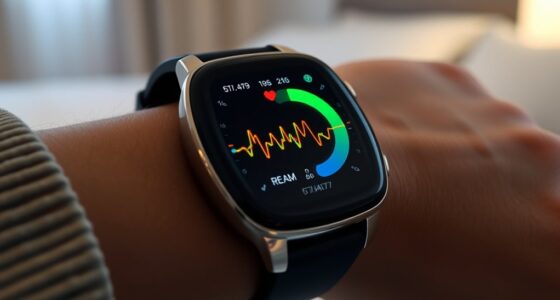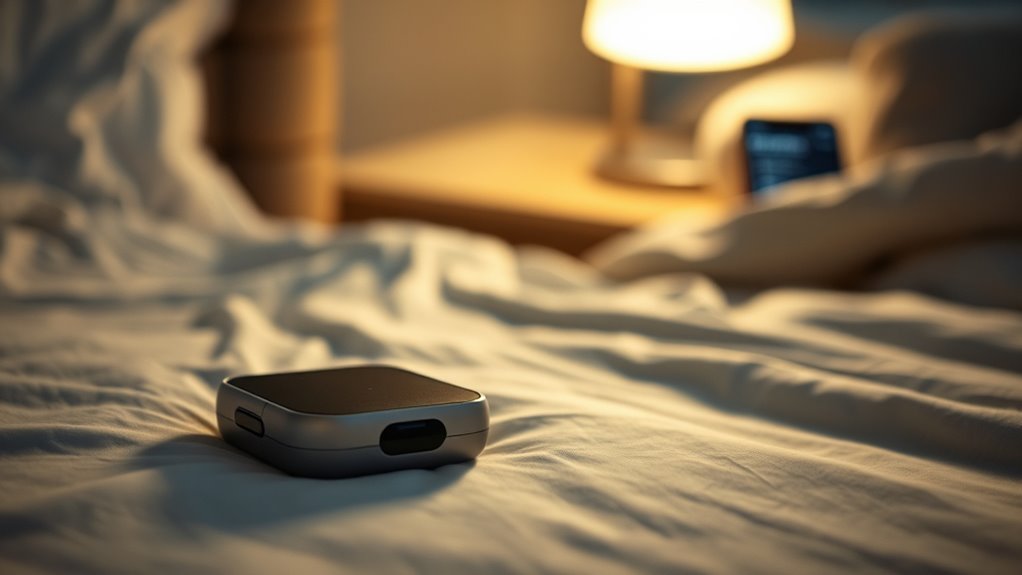
Sleep trackers are generally safe, emitting low levels of electromagnetic radiation similar to Wi-Fi or cell phones, which regulatory agencies consider safe. Privacy concerns are also manageable, as reputable brands use encryption and clear policies to protect your data. If you’re worried about radiation or privacy, there are devices with minimal wireless communication or options to disable wireless functions. To learn more about how to stay safe, keep exploring the details.
Key Takeaways
- Sleep trackers emit low levels of non-ionizing radiation similar to Wi-Fi, generally considered safe under regulatory standards.
- Current scientific evidence shows minimal health risks from prolonged exposure to sleep tracker radiation.
- Users concerned about radiation can choose passive or wired sleep monitoring options with reduced electromagnetic emissions.
- Sleep trackers collect sensitive personal data, so selecting reputable brands with strong security measures is essential.
- Practicing good data security, such as updating software and using strong passwords, helps protect your privacy when using sleep trackers.

Have you ever wondered if sleep tracking devices are truly safe to use? As you consider these gadgets, it’s natural to question potential health risks. One concern many people have is radiation exposure. Sleep trackers often use Bluetooth or Wi-Fi signals to communicate with your smartphone or cloud servers, and some worry about continuous exposure to low levels of electromagnetic radiation. While these devices emit non-ionizing radiation—similar to what your Wi-Fi router or cell phone produces—the scientific consensus suggests that the exposure levels are minimal and unlikely to cause harm. Regulatory agencies, like the FCC and FDA, have set safety standards to limit radiation emissions from consumer electronics, and most sleep trackers are designed to stay within these safe limits. Still, if you’re particularly sensitive or worried about radiation, you might prefer devices that use less wireless communication or opt for models that rely on passive data collection rather than constant transmission.
Beyond physical safety, data security is a vital aspect to consider. When you use a sleep tracker, you’re sharing intimate health data—your sleep patterns, heart rate, and sometimes even more personal information—with manufacturers and third-party servers. This raises questions about how securely your data is stored and whether it might be vulnerable to hacking or unauthorized access. Many brands implement encryption and security protocols to protect your information, but no system is completely invulnerable. You should always read the privacy policies of the device or app you choose, ensuring they’re transparent about data collection, storage, and sharing practices. Opting for reputable brands that prioritize user privacy can reduce risks. Additionally, changing default passwords and keeping your app updated can help safeguard your data.
It’s important to acknowledge that while the physical risks—like radiation—are generally low, privacy concerns should not be overlooked. Data breaches are a real threat, and sensitive health information can potentially be misused if it falls into the wrong hands. Being proactive by understanding the security measures in place and limiting the amount of data you share can help you feel more confident using sleep tracking devices. It’s also helpful to understand radiofrequency radiation and how it relates to consumer electronics, so you can make informed choices. Overall, many people find that the benefits of tracking their sleep patterns outweigh the minimal physical risks, especially when they choose reputable products and stay informed about data security practices. Rest assured, with proper precautions, sleep trackers can be a safe tool in your wellness routine, helping you improve your sleep without compromising your health or privacy.
Frequently Asked Questions
Do Sleep Trackers Emit Harmful Electromagnetic Radiation?
Sleep trackers emit very low levels of electromagnetic radiation, which generally aren’t harmful. Your electromagnetic exposure remains minimal, similar to everyday electronics like smartphones and Wi-Fi devices. To protect your data security, verify your device and app use strong encryption and update regularly. While concerns about radiation are understandable, current evidence suggests sleep trackers are safe when used properly. Focus on securing your data and using trusted devices for peace of mind.
Can Sleep Data Be Hacked or Leaked?
Yes, sleep data can be hacked or leaked if security measures aren’t strong. You should guarantee your device uses data encryption and that the app maintains user anonymity. Always update your software regularly, use strong passwords, and review privacy settings. By staying vigilant, you protect your sleep insights from unauthorized access and ensure your personal information stays secure.
Are There Long-Term Health Effects From Using Sleep Trackers?
Long-term health effects from using sleep trackers are minimal, especially if you choose accurate devices. These gadgets help improve your sleep quality by providing insights that can motivate healthier habits. While concerns about radiation and privacy exist, current evidence shows no significant risks from prolonged use. By monitoring your sleep regularly, you may enhance overall well-being without worrying about adverse health impacts, as long as you select reliable, privacy-conscious devices.
How Secure Are the Privacy Policies of Sleep Tracking Companies?
You can trust sleep tracking companies to keep your privacy secure if they prioritize data encryption and obtain your informed user consent. Always review their privacy policies to understand how your data is stored, shared, and protected. Companies that use strong encryption methods and clearly communicate their data practices demonstrate a commitment to safeguarding your information, giving you peace of mind while tracking your sleep patterns.
Do Sleep Trackers Interfere With Medical Devices?
Sleep trackers generally don’t interfere with medical devices because they’re designed with device compatibility in mind. However, you should always check your tracker’s specifications and consult your healthcare provider if you use sensitive medical equipment. Remember, you own your user data, so review privacy policies to understand how your information is shared. Staying informed guarantees you use sleep trackers safely without risking interference or privacy breaches.
Conclusion
While concerns about radiation and privacy might seem intimidating, sleep tracking devices are generally safe when used responsibly. Think of these gadgets as tiny guardians quietly watching over your nights, with safeguards in place to protect your data. As long as you stay informed and choose reputable brands, you can rest assured that your sleep journey remains secure. Embrace the technology, knowing you’re in control, and let peaceful, worry-free sleep become your nightly reality.