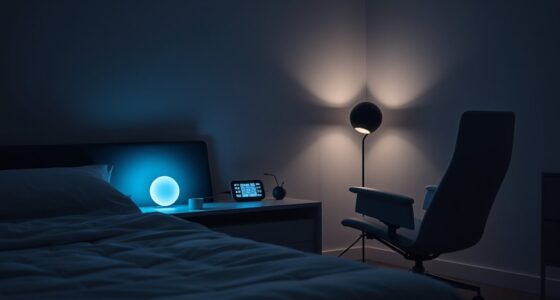
To create the perfect sleep environment with technology, you can customize smart lighting to match natural rhythms, use sleep trackers to monitor your sleep quality, control room temperature with smart thermostats, and automate blackout curtains or blinds to block light and noise. Incorporate calming sounds or guided meditation apps to relax before bed. Exploring these options can help you establish a consistent, soothing sleep space—if you continue, you’ll discover more ways to optimize your nights.
Key Takeaways
- Utilize smart lighting to adjust color temperature, brightness, and mimic natural sunrise and sunset for sleep cycle alignment.
- Implement sleep tracking devices and apps to monitor sleep stages and optimize environment settings accordingly.
- Use smart thermostats and climate control systems to maintain ideal bedroom temperature and reduce disruptions.
- Automate window coverings like blinds and blackout curtains to regulate light exposure and enhance privacy.
- Incorporate relaxation tools such as guided meditations, calming sounds, and routines to signal bedtime and promote relaxation.
Choosing the Right Smart Lighting for Better Sleep

Choosing the right smart lighting can considerably improve your sleep quality, especially as your body responds to light cues. You should focus on adjusting the color temperature to match natural light patterns—warm tones in the evening promote relaxation, while cooler tones in the morning boost alertness. Brightness levels are equally important; dimming lights gradually before bed signals your body to prepare for sleep, helping you wind down more easily. Look for smart lighting systems that allow you to customize both color temperature and brightness levels seamlessly. This flexibility guarantees your environment aligns with your sleep schedule, reducing disruptions and promoting a more restful night. Proper lighting setup creates a calming atmosphere, making it easier to fall asleep and stay asleep longer. Incorporating Free Floating lighting options can further enhance the ambiance without cluttering your space. Additionally, understanding how light cues influence circadian rhythms can help you optimize your lighting choices for better sleep quality. Being aware of the light spectrum emitted by your devices can also prevent exposure to disruptive blue light during the evening hours. Using adaptive lighting technology can further tailor your environment throughout the night for optimal comfort. For example, integrating electric bikes with your smart home system can promote outdoor activity during the day, supporting overall health and sleep patterns.
Using Sleep-Tracking Devices to Understand Your Sleep Patterns

To improve your sleep quality, using sleep-tracking devices can provide valuable insights into your sleep patterns. These devices monitor your sleep cycle, showing when you’re in light, deep, or REM sleep. By understanding these stages, you can identify disruptions or irregularities that affect your overall sleep quality. Many smartwatches, fitness bands, or dedicated sleep trackers record data such as movement, heart rate, and breathing patterns. With this information, you can recognize trends, such as frequent awakenings or insufficient deep sleep, and adjust your habits accordingly. Tracking your sleep also helps you see how factors like bedtime, stress, or environment impact your rest. Additionally, sleep stage data can reveal patterns that highlight underlying issues or habits to address. This understanding of sleep architecture allows for more targeted improvements to your sleep environment. Incorporating insights from automotive repair concepts like regular inspection and preventive measures can help you maintain better sleep hygiene over time. Regularly reviewing your sleep data and making adjustments is similar to performing preventive maintenance, which ensures ongoing optimal performance. Moreover, ensuring your sleep environment is optimized, such as controlling noise and light levels, complements the use of tracking devices. Ultimately, this knowledge empowers you to make targeted changes that improve sleep quality and promote healthier sleep patterns.
Creating a Calm Environment With White Noise and Ambient Sounds

Creating a calm environment for sleep often involves incorporating white noise or ambient sounds that mask disruptive background noises. Sound masking and acoustic enrichment help create a peaceful atmosphere, making it easier to fall asleep and stay asleep. Using a white noise machine or a calming app, you can introduce consistent sounds that drown out sudden noises like traffic or voices. Consider these options:
Creating a peaceful sleep space with white noise or ambient sounds masks disturbances and promotes restful sleep.
- Looping white noise or nature sounds for continuous acoustic enrichment
- Adjusting volume to guarantee sounds are soothing but not overwhelming
- Using earbuds or speakers positioned correctly for ideal sound masking
- Understanding how heat distribution in sound equipment impacts sound quality and effectiveness. Proper sound dispersion ensures even sound coverage, enhancing the overall calming effect of your sleep environment. Additionally, choosing equipment with optimal audio fidelity can improve the clarity and comfort of the sounds you hear during sleep. To maximize effectiveness, consider the placement of speakers to ensure uniform sound spread throughout the space.
These tools and techniques help establish a tranquil space, promoting deeper rest. By leveraging technology effectively, you can craft a sleep environment that’s consistently calm and free from disturbances.
Optimizing Your Bedroom Temperature With Smart Thermostats

Smart thermostats give you precise control over your bedroom temperature, making it easier to find that perfect sleeping range. With adaptive scheduling, your thermostat automatically adjusts based on your bedtime routine, saving energy and enhancing comfort. Plus, you can easily change the temperature remotely, so your room is always just right before you even get in bed. Additionally, understanding load calculations ensures your smart thermostat is properly integrated with your home’s electrical system for safe and efficient operation. Incorporating local automation can further optimize temperature adjustments based on occupancy patterns, enhancing both comfort and energy savings. Leveraging European cloud servers can improve the reliability and security of your smart home data, ensuring your settings are always protected and accessible. Utilizing energy management systems can also help you monitor and reduce your overall energy consumption, leading to long-term savings and sustainability. Proper system integration ensures all components work seamlessly together, maximizing your smart thermostat’s effectiveness.
Precise Temperature Control
When it comes to getting a good night’s sleep, maintaining the right bedroom temperature is essential, and smart thermostats make this easier than ever. With precise climate control, you can set your ideal sleeping temperature and trust your smart thermostat to adjust it automatically. This ensures your bedroom stays consistently comfortable throughout the night. Features like geofencing, voice commands, and remote access give you full control over your environment.
Additionally, understanding thermal behavior can help you optimize your heating and cooling setup for better sleep quality. To enhance your sleep, consider:
- Setting the temperature 1-2 degrees lower than daytime levels
- Using schedules to pre-cool or warm your room before bed
- Monitoring and adjusting based on ambient conditions for peak comfort
- Learning about heat retention to better manage your room’s temperature fluctuations overnight. Recognizing how insulation impacts your room’s ability to maintain steady temperatures can further improve your sleep environment. Improving thermal efficiency can help you save energy and maintain consistent comfort levels.
Smart thermostats help create a tailored environment that promotes restful sleep every night.
Adaptive Scheduling Features
Adaptive scheduling features take your personalized climate control a step further by automatically adjusting your bedroom temperature based on your sleep schedule and routines. This means your smart thermostat learns your preferred sleeping temperatures and pre-adjusts accordingly, guaranteeing ideal comfort. Device compatibility is key; make sure your thermostat integrates smoothly with your existing smart home system for seamless operation. By aligning temperature changes with your sleep patterns, you can fall asleep faster and wake refreshed. Here’s a quick overview:
| Feature | Benefit |
|---|---|
| Sleep schedule detection | Automates temperature adjustments for better sleep |
| Routine learning | Adapts to your habits for personalized comfort |
| Compatibility | Ensures smooth integration with devices |
| Pre-conditioning | Prepares your room before bedtime |
| Wake-up optimization | Gradually adjusts temperature for a gentle wake |
Additionally, understanding ventilation considerations can further enhance your sleeping environment by maintaining optimal air quality and temperature stability.
Remote Adjustment Convenience
Having the ability to adjust your bedroom temperature remotely offers unmatched convenience and control. With smart thermostats, you can fine-tune your sleep environment from anywhere, ensuring ideal comfort before you even step into bed. This seamless smart home integration allows you to customize your sleep environment effortlessly, adapting the temperature to your preferences.
You can:
- Use your smartphone to change settings on the go
- Automate temperature adjustments based on your sleep schedule
- Sync with other smart devices for a cohesive sleep environment
This level of sleep environment customization helps create the perfect atmosphere, promoting better rest and overall well-being. Remote adjustment puts you in control, making your bedroom a haven tailored precisely to your needs.
Reducing Disruptions With Automated Blinds and Blackout Curtains

Automated blinds and blackout curtains can control the amount of light entering your room, helping you sleep undisturbed. They also enhance your privacy, preventing outside noise and visual disruptions. By using these smart features, you create a more consistent and restful sleeping environment.
Automated Light Control
Ever find yourself waking up too early because of unwanted light? Automated light control can help you maintain your sleep patterns by adjusting your environment seamlessly. With smart lighting, you can set schedules that dim or turn off lights at bedtime and gradually brighten in the morning. This minimizes disruptions and supports your natural sleep cycle. Consider these options:
- Programmable smart lights that mimic sunrise and sunset
- Automated blinds synced with your lighting for consistent darkness
- Sensors that detect ambient light and adjust accordingly
Enhanced Sleep Privacy
Managing light exposure is key to maintaining a restful sleep environment, and automated blinds or blackout curtains play an essential role in this. They help block out unwanted light, ensuring privacy protection and reducing disruptions. By automating these features, you can control when curtains open or close, even if you’re not home, preserving your sleep privacy. To keep your data secure, choose systems with strong security measures and encryption, preventing unauthorized access. Automated blackout solutions not only improve sleep quality but also safeguard your personal space. With the right setup, you gain peace of mind knowing your privacy is protected, and your sleep environment remains undisturbed. This seamless integration of technology ensures a more restful and secure night’s sleep.
Implementing Relaxation Apps and Guided Meditation Tools

Implementing relaxation apps and guided meditation tools can be a highly effective way to create a calming bedtime routine. These apps often feature mindfulness exercises that help you focus on your breathing and release stress. Many include calming background music designed to soothe your mind and body. To maximize their benefits, consider:
- Using guided meditation sessions tailored for sleep
- Exploring mindfulness exercises to reduce anxiety
- Playing calming background music during your wind-down period
These features can help shift your focus from daily worries to relaxation, making it easier to drift off. Incorporating these digital tools into your nightly routine creates a peaceful environment that signals your body it’s time to sleep, promoting more restful nights.
Setting Up a Tech-Driven Bedtime Routine for Consistent Sleep Habits

Establishing a tech-driven bedtime routine can considerably improve your sleep consistency by signaling to your body that it’s time to wind down. Use apps that promote good sleep hygiene, such as setting a consistent alarm or reminder to start your routine. Incorporate gentle activities like dimming smart lights or playing calming music to prepare your mind and body for sleep. Avoid screens at least 30 minutes before bed, but if you must use devices, enable blue light filters. Establishing these routines helps regulate your internal clock and creates predictable cues for sleep. By integrating technology thoughtfully into your bedtime habits, you reinforce healthy sleep hygiene, making it easier to fall asleep quickly and wake refreshed. Consistency is key to developing long-term, restful sleep habits.
Frequently Asked Questions
How Does Smart Lighting Influence Melatonin Production?
Smart lighting influences your melatonin production by adjusting light exposure to support your circadian regulation. When the lights are dim or emit warm tones in the evening, they align with your light sensitivity, signaling your body it’s time to wind down. This helps suppress melatonin production less, promoting better sleep. By customizing lighting based on your circadian rhythm, you can improve sleep quality and overall restfulness.
Can Sleep Trackers Improve Overall Sleep Quality?
Imagine unfastening better sleep every night—sleep trackers can help you do just that. They monitor your sleep patterns, revealing insights that improve your sleep hygiene and bedtime routines. By understanding your sleep cycles, you can make targeted changes, ensuring you wake up refreshed. Don’t underestimate their power; these devices hold the key to transforming your nights and elevating your overall sleep quality.
What Are the Best Ambient Sounds for Deeper Sleep?
You should try white noise or nature sounds for deeper sleep. White noise creates a consistent background that blocks out disruptive noises, helping you stay asleep longer. Nature sounds, like gentle rain or ocean waves, promote relaxation and calm your mind. Both options can be easily accessed through sleep apps or smart devices, making it simple to customize your environment for the most restful, restorative sleep possible.
How Do Smart Thermostats Save Energy While Maintaining Comfort?
Imagine your home as a well-orchestrated symphony, where smart thermostats are the conductors. They use energy-efficient heating and programmable temperature zones to keep your space cozy without wasting power. As the day unfolds, they adjust temperatures seamlessly, saving energy while you enjoy comfort. You stay warm or cool precisely when needed, transforming your home into an efficient haven that balances savings and comfort effortlessly.
Are Relaxation Apps Effective Without Professional Guidance?
Relaxation apps can be effective even without professional guidance, especially if they incorporate mindfulness meditation techniques and aromatherapy benefits. These apps guide you through breathing exercises and calming visualizations, helping reduce stress and promote better sleep. While professional guidance can enhance results, many users find that consistent use of these apps boosts relaxation, improves sleep quality, and creates a peaceful bedtime routine.
Conclusion
By using smart technology, you can transform your bedroom into the perfect sleep haven. Studies show that 67% of people who optimize their sleep environment report better rest and improved mood. Incorporate smart lighting, sleep trackers, and calming sounds to create a consistent routine that signals your body it’s time to unwind. With just a few tech-savvy changes, you’ll enjoy deeper, more restorative sleep and wake up feeling refreshed every morning.