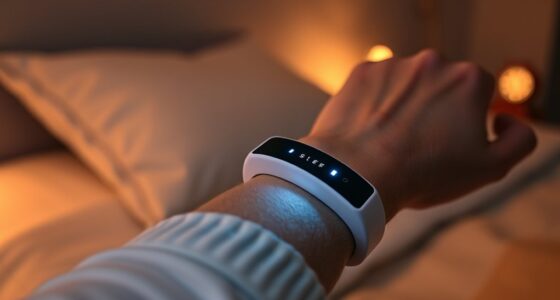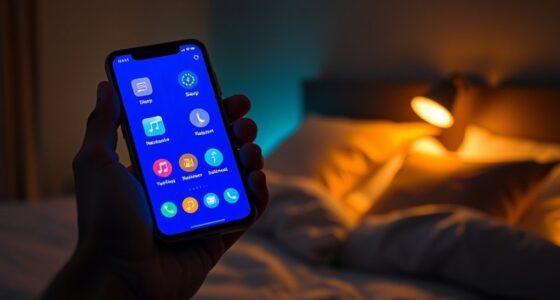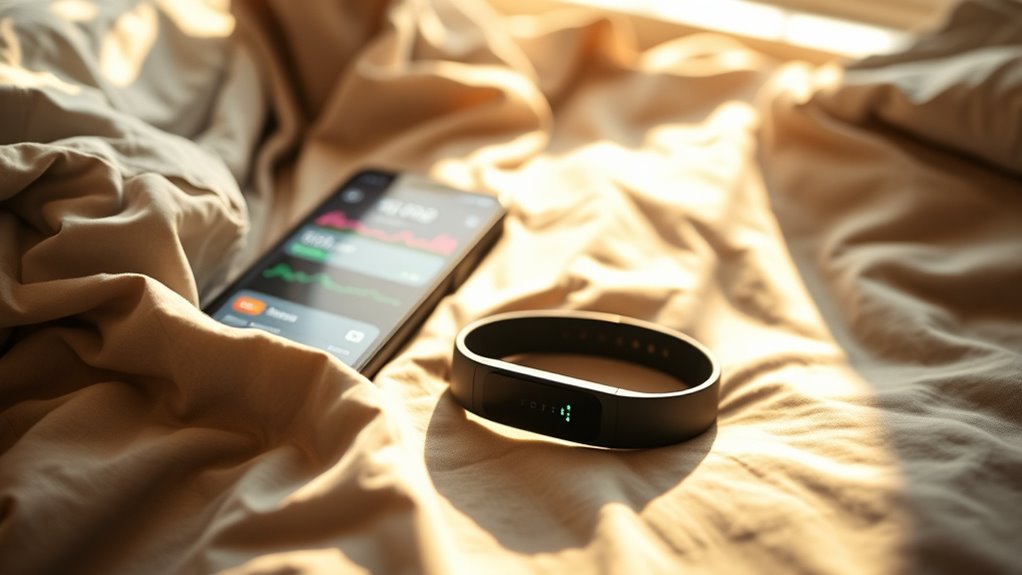

Sleep trackers use sensors like accelerometers and heart rate monitors to track your movements and physiological signals during sleep. They analyze data on your activity, heart rate variability, and sometimes brain activity to identify sleep stages such as deep, REM, and light sleep. Advanced algorithms process this information to give you detailed patterns and insights. If you’re curious about how they provide such precise details, there’s more to discover below.
Key Takeaways
- Sleep trackers use accelerometers to monitor movement and infer sleep stages based on activity levels.
- Heart rate sensors track physiological signals like pulse and variability for sleep quality assessment.
- Data is processed using machine learning algorithms to identify sleep stages such as REM, deep, and light sleep.
- Sensors are calibrated regularly to ensure accurate and reliable measurement of movement and physiological data.
- Environmental factors like noise or light are considered to improve the interpretation of sleep data.
Types of Sensors Used in Sleep Trackers
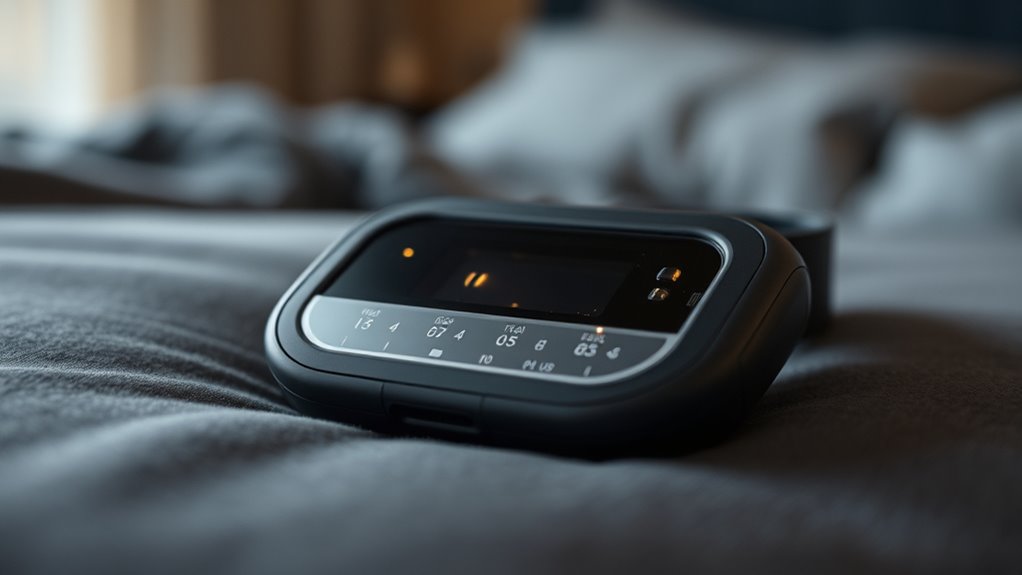
Sleep trackers use a variety of sensors to monitor your sleep patterns accurately. These sensors often require precise sensor calibration to guarantee data accuracy over time. Common sensors include accelerometers that detect movement, helping determine sleep stages based on activity levels. Some devices incorporate heart rate sensors, providing insights into your sleep quality through pulse monitoring. The user interface design plays a vital role in how seamlessly you interact with these sensors, allowing you to view data clearly and understand your sleep patterns. Well-designed interfaces make it easier to interpret complex sensor data without confusion. Additionally, sensor calibration is essential to maintain the reliability of sleep data over prolonged use. Proper calibration techniques can also account for sensor drift, ensuring consistent accuracy in measurements. Incorporating regular calibration routines can further improve the data reliability, making your sleep insights more trustworthy. By combining effective sensor calibration with intuitive user interface design, sleep trackers can deliver reliable, easy-to-understand sleep insights, helping you make informed decisions about your sleep health.
How Movement Data Is Collected and Analyzed
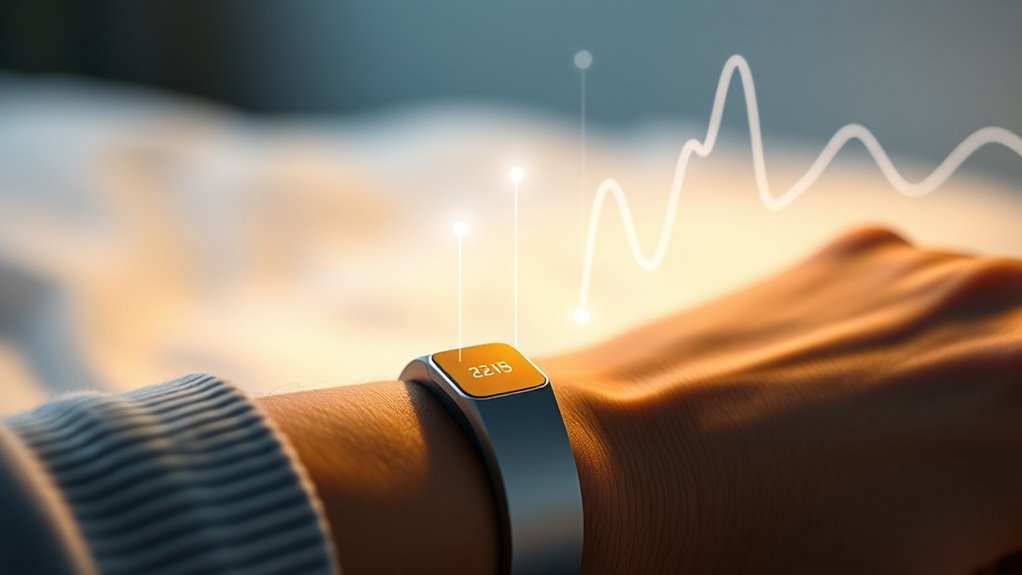
Motion sensors, especially accelerometers, play a central role in tracking your movement during sleep. They record subtle shifts, giving insight into your sleep cycle patterns and how restless or peaceful your nights are. This data helps identify when you’re in deep sleep, REM, or light sleep stages. Factors like your sleep environment—noise, temperature, or light—can influence movement and are reflected in the data. The collected information is analyzed to detect patterns, providing a clearer picture of your sleep quality. Sleep stages are inferred from movement data, offering valuable insights into your rest. Understanding how wearable technology captures and interprets this data can help you better understand your sleep patterns. Here’s how movement relates to your sleep:
| Movement Level | Sleep Stage Indicator | Environment Impact |
|---|---|---|
| Stillness | Deep Sleep | Quiet, dark room |
| Restlessness | Light Sleep | Noise, light exposure |
| Tossing & Turning | REM | Temperature fluctuations |
This analysis helps you understand your sleep better and improve your habits. Additionally, the presence of movement patterns can sometimes indicate underlying health issues, making this data even more valuable for comprehensive sleep analysis. Incorporating awareness of sleep environment factors can further enhance the accuracy of your sleep data.
Physiological Signals Monitored During Sleep
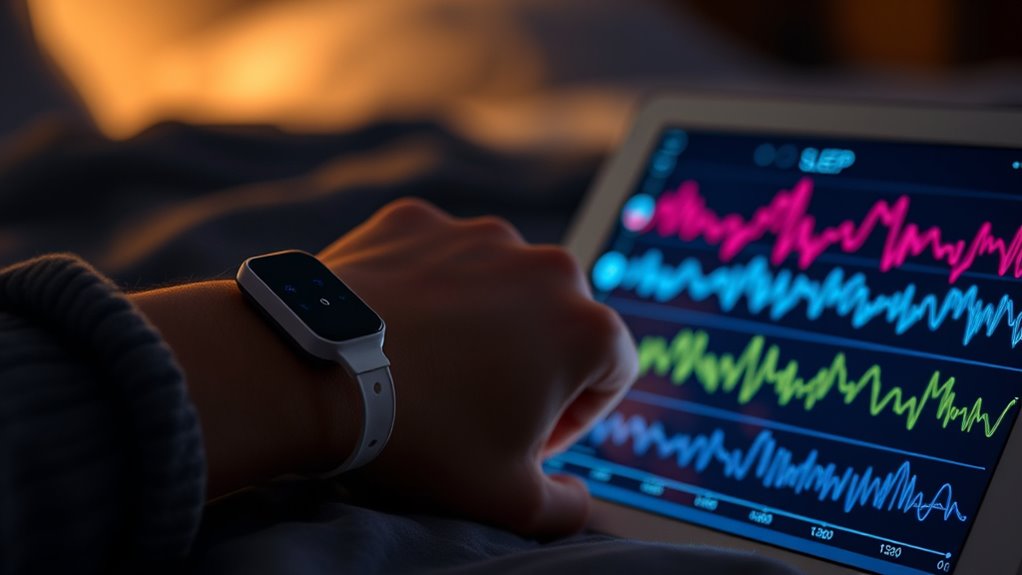
While movement data provides valuable insights, physiological signals offer a deeper understanding of your sleep quality. Sleep trackers monitor various signals to assess your sleep stages and overall health. These include heart rate variability, brain activity, and breathing patterns, which are essential for accurate dream analysis and understanding sleep cycles. Tracking these signals helps identify disruptions that might be caused by environmental factors, such as noise or light, and their impact on your sleep. By analyzing physiological data, sleep trackers can detect how factors like stress or health conditions influence your sleep quality, aiding you in making improvements. This focus on physiological signals provides a thorough view of your rest, going beyond simple movement detection to better understand your sleep environment and its effects. Reliable measurement techniques ensure the accuracy of these physiological signals, making the data meaningful for improving sleep quality. Additionally, advanced sensors are employed to enhance the precision of data collection, further supporting the reliability of the insights gained. Furthermore, sensor calibration techniques are crucial for maintaining data accuracy over time, ensuring consistent and dependable measurements. Moreover, data validation processes are implemented to verify the integrity of collected data and enhance overall measurement reliability. Incorporating real-time monitoring can further improve the responsiveness of sleep trackers, allowing for immediate adjustments and insights.
Algorithms and Data Processing Techniques

To accurately interpret physiological signals, sleep trackers rely on sophisticated algorithms and data processing techniques that analyze large amounts of raw data in real time. These algorithms use machine learning models to identify patterns and distinguish sleep states from wakefulness, ensuring accurate tracking. Data visualization plays a vital role by presenting complex data in clear graphs and charts, making it easier for you to understand your sleep patterns. Machine learning continuously improves as it processes more data, enhancing accuracy over time. The algorithms filter noise, detect subtle changes, and categorize different sleep stages based on the signals collected. Additionally, integrating machine learning models can further improve the precision of sleep stage detection and anomaly identification. By applying these advanced techniques, sleep trackers deliver reliable insights into your sleep quality, helping you make informed decisions to improve your rest. Incorporating smart home technology can further optimize your sleep environment through adaptive lighting and climate control. Moreover, real-time data analysis allows for immediate feedback and personalized recommendations to enhance your sleep health.
Interpreting Sleep Data and Sleep Stage Estimation

Once sleep trackers process raw physiological signals using advanced algorithms, they interpret this data to identify different sleep stages. This helps you understand your sleep quality and how well your body follows its circadian rhythms. The device analyzes patterns like movement, heart rate, and breathing to estimate whether you’re in light sleep, deep sleep, or REM sleep. Accurate sleep stage estimation offers insights into your overall sleep health and highlights potential disruptions. By tracking these stages over time, you can spot trends and improve your sleep habits. Additionally, understanding the physiological signals involved can help you better interpret your sleep data and make informed adjustments to your routine. Recognizing how sleep architecture varies during the night can also provide deeper insights into your sleep patterns. Furthermore, advancements in sleep stage estimation algorithms continue to enhance the accuracy of these devices, giving you more reliable information. Modern devices also incorporate machine learning techniques that adapt to individual patterns, improving their precision over time, and leveraging personalized data analysis to refine their insights.
Frequently Asked Questions
How Accurate Are Sleep Trackers Compared to Polysomnography?
Sleep trackers are generally less accurate than polysomnography, especially in data accuracy for detailed sleep stages. Your device’s calibration and sensor quality influence results, but they still can’t match clinical precision. While trackers give useful trends and insights, don’t rely solely on them for medical diagnoses. Use them as a helpful guide, but consult a specialist for extensive sleep assessments and more precise data.
Can Sleep Trackers Detect Sleep Disorders or Abnormalities?
Sleep trackers can help with sleep disorder detection by identifying abnormal sleep patterns, but they’re not as reliable as medical assessments. They monitor your movements and heart rate to flag irregularities, yet only a healthcare professional can diagnose sleep disorders accurately. If your tracker shows persistent abnormal sleep patterns, consider consulting a specialist for thorough testing. Remember, sleep trackers are useful tools, but they don’t replace professional diagnosis.
Do Sleep Trackers Work Effectively for All Age Groups?
You might find that sleep trackers work differently across age groups, and they’re not one-size-fits-all. While they’re generally effective, age-related accuracy can vary, especially with children or older adults. Make sure your device is compatible with your age and health needs for better results. Don’t put all your eggs in one basket—use sleep trackers as a helpful guide, but consult professionals for serious concerns.
How Do Environmental Factors Affect Sleep Tracker Readings?
Environmental influence can considerably impact your sleep tracker readings, as factors like room temperature, light, and noise affect your sleep quality. These conditions may cause the sensor sensitivity to misinterpret movements or heart rate, leading to less accurate data. To improve accuracy, make sure your sleeping environment is consistent, quiet, and dark. Minimizing environmental disturbances helps your sleep tracker provide more reliable insights into your sleep patterns.
Are There Privacy Concerns With Data Collected by Sleep Trackers?
Your sleep tracker’s data security and user privacy are vital, but it’s wise to stay cautious—these devices can sometimes be a hacker’s dream. While companies often encrypt data and follow strict privacy policies, vulnerabilities exist. Always review privacy settings, avoid sharing sensitive info, and choose brands with strong reputations. Protecting your sleep data is essential, so don’t assume it’s automatically safe—be proactive in safeguarding your personal info.
Conclusion
Understanding how sleep trackers work is like unveiling a secret code to better rest. With sensors gathering movement and physiological signals, these devices paint a detailed picture of your sleep patterns. The algorithms act as skilled detectives, piecing together data to estimate your sleep stages. By deciphering this digital map of your sleep, you gain valuable insights—turning your nightly rest into a treasure chest of health benefits. Sleep trackers truly turn data into dreams come true.