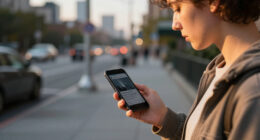
Using screens in the evening can disrupt your sleep beyond blue light effects by suppressing melatonin, which signals your body to wind down, making it harder to fall asleep. It also heightens your alertness and mental engagement, keeping your brain active when it should be winding down. This interference with your circadian rhythm can lead to less restful nights and irregular sleep patterns. Keep going, and you’ll discover more ways your screen habits could be affecting your sleep health.
Key Takeaways
- Bright screens suppress melatonin production, delaying sleep readiness and disrupting circadian rhythms.
- Screen content increases alertness and mental engagement, making it harder to wind down.
- Stimulating activities on screens elevate heart rate and brain activity, hindering natural sleep onset.
- Irregular screen use patterns negatively impact sleep consistency and overall sleep quality.
- Creating a calming environment and limiting screen time promotes better sleep hygiene and rest.
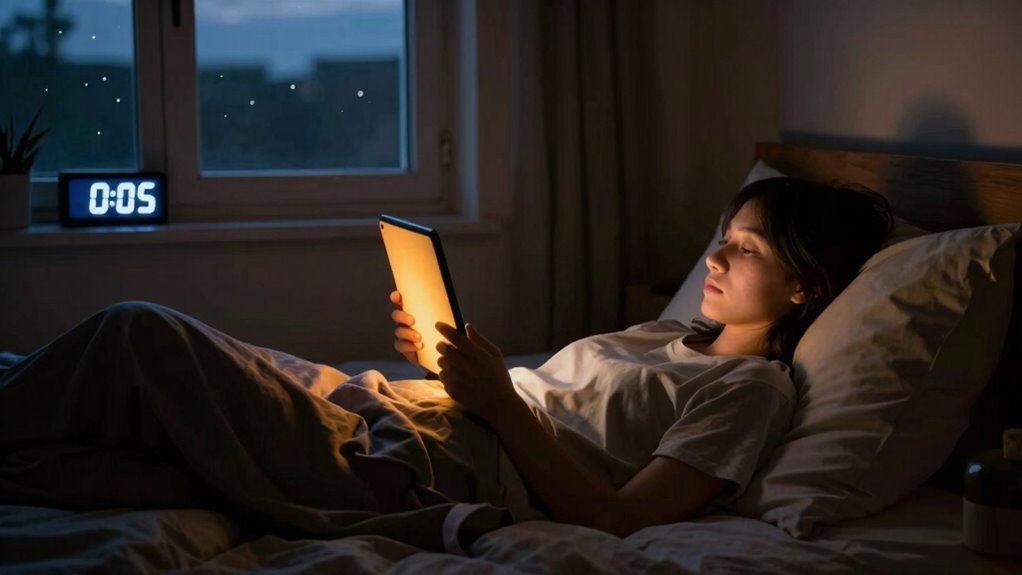
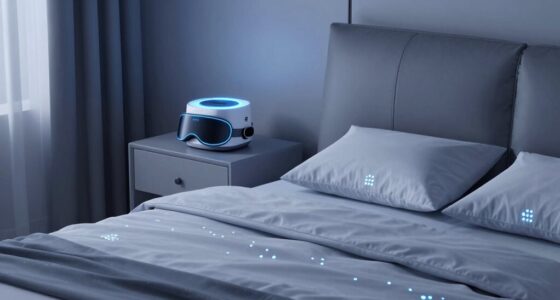
While many people focus on blue light as the main culprit, evening screens affect sleep through several other mechanisms that often go unnoticed. One significant factor is melatonin suppression. Melatonin is your body’s natural sleep hormone, signaling that it’s time to wind down. When you’re exposed to screens late at night, the bright light—regardless of color—can interfere with melatonin production. This suppression delays your body’s readiness for sleep, making it harder to fall asleep quickly and reducing overall sleep quality. Even if you’re not consciously aware, your internal clock gets disrupted, and your sleep cycle shifts later, leading to less restful nights.
Evening screen exposure suppresses melatonin, delaying sleep and reducing sleep quality without us realizing.
Beyond melatonin, screens influence your alertness levels in ways that can sabotage your sleep. Engaging with stimulating content—like social media, videos, or work emails—triggers an increase in alertness. This increase makes it difficult to transition into a relaxed, sleep-ready state. Your brain remains active and alert, thinking that it’s still daytime or work hours, which delays the natural feeling of sleepiness. This heightened alertness can linger even after you put your device down, causing you to stay awake longer than intended. Additionally, the disruption of circadian rhythms caused by irregular screen use can further impair your sleep quality and overall health. Research shows that irregular exposure to screens can also negatively affect sleep patterns, making it even harder to maintain a consistent sleep schedule.
Another mechanism at play involves the cognitive stimulation from screen content. When you scroll through social media or consume intense news, your brain remains in a heightened state of activity. This mental stimulation elevates your heart rate and keeps your mind engaged, making it harder to relax and drift off. Even if your eyes are closed, your brain is still processing information, which can interfere with the natural wind-down process. Properly managing your screen time and creating a calming sleep environment can significantly improve your overall sleep quality. Additionally, limiting screen exposure at least an hour before bed can help reduce cognitive stimulation and promote better relaxation. Recognizing the importance of sleep hygiene can be a crucial step toward improving your sleep health.

Sleep ZM Blue Light Blocking Glasses for Women + Men – Better Sleep + Anti Eye Strain Protection – Computer Screens & Gaming – Black Wayfarer – 99% Night-time Amber Lens
- Blue Light Blocking: Filters up to 99.9% of blue light
As an affiliate, we earn on qualifying purchases.
As an affiliate, we earn on qualifying purchases.
Frequently Asked Questions
Can Screen Brightness Impact Sleep Quality?
Yes, screen brightness can impact your sleep quality. When screens are too bright, they cause screen flicker that strains your eyes and disrupts your circadian rhythm. Larger screens increase exposure, making it harder to wind down. Lowering brightness, especially in the evening, helps reduce eye strain and minimizes the impact of flicker and large screen size, promoting better sleep. Adjust your screen settings to create a more sleep-friendly environment.
Do Certain Apps or Content Types Affect Sleep Differently?
Certain apps and content types act like sirens, pulling your focus and stirring your mind. High-engagement apps, like social media, and intense content, such as action videos, heighten your mental activity, making it harder to drift into sleep. Their immersive nature keeps your brain racing, turning your evening screen time into a turbulent sea rather than a peaceful harbor. To sleep better, choose calming content and limit app engagement before bed.
How Does Screen Use Before Bedtime Influence Sleep Onset?
Using screens before bedtime can delay your sleep onset because it causes circadian disruption and melatonin suppression. The bright light from screens tricks your brain into thinking it’s still daytime, making it harder for you to feel sleepy. As a result, you might stay awake longer and experience poorer sleep quality. To improve your sleep, try limiting screen time at least an hour before bed and consider relaxing activities instead.
Are There Individual Differences in Sensitivity to Screen Effects?
Yes, you vary in sensitivity to screen effects due to genetic factors and circadian variability. Your genes influence how your body processes light and melatonin, making some people more prone to sleep disruption. Additionally, your circadian rhythm fluctuates, affecting how screens impact your sleep timing. Recognizing these differences helps you tailor your evening habits, possibly reducing screen time if you’re more sensitive to improve your sleep quality.
What Are the Long-Term Health Effects of Evening Screen Use?
Imagine your body’s natural rhythm as a delicate clock, disrupted by nightly screens. Long-term, this circadian disruption leads to melatonin suppression, leaving you vulnerable to chronic health issues like weakened immunity, mood disorders, and metabolic problems. As screens continue to flicker into your evening, they silently erode your health, disrupting your body’s harmony—turning vibrant health into a shadow of its potential. Protect your internal clock; your future self will thank you.
melatonin supplements for better sleep
As an affiliate, we earn on qualifying purchases.
As an affiliate, we earn on qualifying purchases.
Conclusion
As you unwind with your screens each evening, remember they’re not just blue light troubadours—they’re also whispering distractions and stirring your mind’s calm. Think of your sleep as a delicate garden, easily disturbed by the storm of overstimulation. To truly harvest restful nights, turn off those screens and let your mind settle like a quiet pond at dusk. Only then can your dreams bloom in the peaceful darkness, unburdened and free.
sleep environment calming lights
As an affiliate, we earn on qualifying purchases.
As an affiliate, we earn on qualifying purchases.
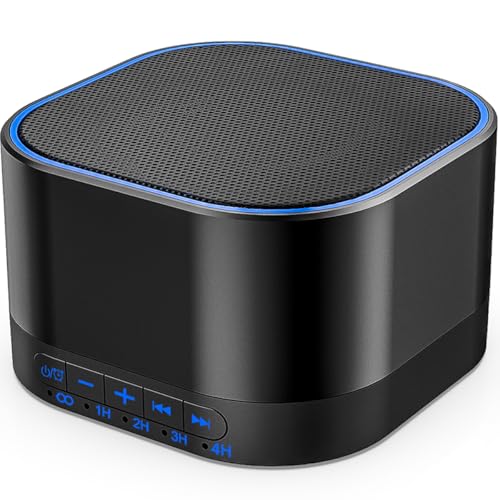
Magicteam Sound White Noise Machine with 20 Non Looping Natural Soothing Sounds and Memory Function 32 Levels of Volume Powered by AC or USB and Sleep Sound Timer Therapy for Baby Kids Adults
- 20 Non-Looping Soothing Sounds: Includes white, brown, pink, blue noise, and nature sounds
- Adjustable Volume & Timer: 32 volume levels and multiple timer options
- Portable & Compact Design: Small size for home, office, or travel use
As an affiliate, we earn on qualifying purchases.
As an affiliate, we earn on qualifying purchases.