
TL;DR

Get health and wellness essentials delivered free — and shop member deals
- Fast, free delivery on millions of items
- Access to Prime Big Deal Days deals on October 6–7
- Prime Video, Amazon Music and more included
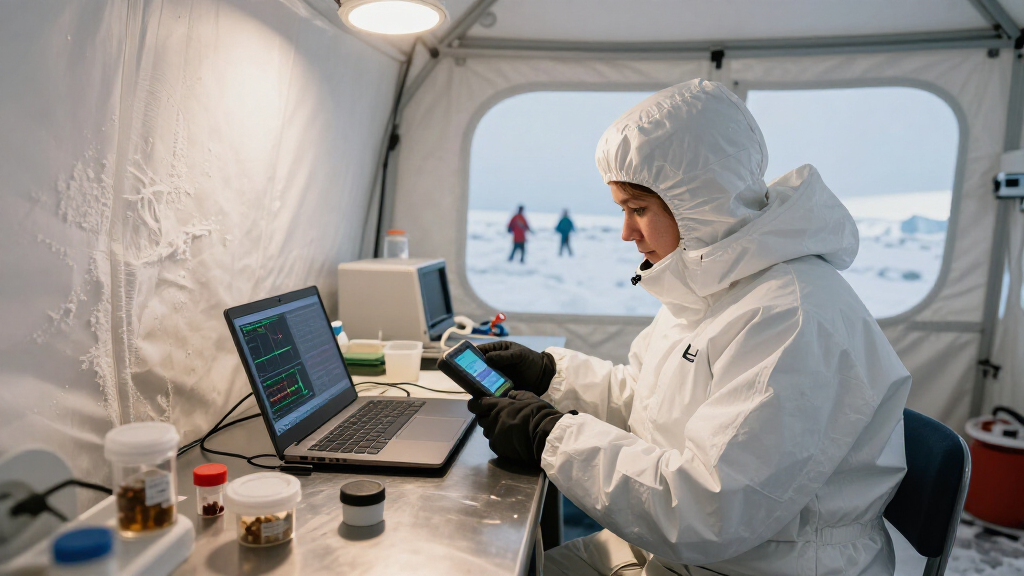
Scientists monitored 12 volunteers in Antarctica for 10 months to study human adaptation to extreme conditions. The findings could impact planning for future Mars missions, though many details remain unclear.
Scientists have completed a 10-month study tracking 12 volunteers living in Antarctica, aiming to understand human adaptation to extreme environments. This research is significant because it could inform future Mars missions by providing data on physical and psychological resilience in isolated, harsh conditions.
The study involved 12 participants who spent nearly a year in Antarctica’s McMurdo Station, one of the most remote research outposts on Earth. Researchers collected data on their physical health, mental well-being, sleep patterns, and physiological responses to the extreme environment. According to the research team, preliminary results indicate that humans can maintain health and cognitive function under prolonged isolation and cold temperatures, but some participants experienced significant psychological stress.While the full dataset is still being analyzed, early observations suggest that adaptations in circadian rhythms and stress management strategies could be crucial for long-duration space missions. The study was led by a consortium of space agencies and universities aiming to simulate conditions similar to those on Mars, where crew members would face extended periods of isolation and environmental stress.
Implications for Long-Duration Space Missions
This research provides vital insights into how humans cope with extreme, isolated environments, which is directly relevant to future Mars expeditions. Understanding physiological and psychological resilience can help in designing better life support, health monitoring, and mental health strategies for astronauts. The findings could influence mission planning, crew selection, and support systems, potentially making Mars exploration safer and more feasible.As an affiliate, we earn on qualifying purchases.
Antarctica as a Proxy for Space Conditions
Antarctica has long been used as an analog for space environments because of its extreme cold, isolation, and limited resources. Previous studies have examined psychological effects of long stays, but this 10-month tracking of 12 individuals is among the most comprehensive efforts to date. The research coincides with renewed interest in crewed Mars missions, with NASA and other space agencies seeking to understand human limits in space.Past experiments, such as the Mars500 project, provided valuable data but were shorter in duration. This new study aims to extend understanding by simulating the prolonged isolation and environmental stressors astronauts would face on Mars, which could last for months or years.
“Our preliminary findings suggest that while humans are remarkably adaptable, psychological support and environmental management are critical for long-term missions.”
— Dr. Lisa Carter, lead scientist
As an affiliate, we earn on qualifying purchases.
Unconfirmed Aspects of Psychological and Physiological Data
It is not yet clear how representative these findings are of actual long-duration Mars missions, as the sample size is limited and the environment, while extreme, is not identical to space. Full data analysis is ongoing, and some effects observed may vary in different populations or under different conditions.long-term space mission health monitoring devices
As an affiliate, we earn on qualifying purchases.
As an affiliate, we earn on qualifying purchases.
Further Data Analysis and Application to Space Missions
Researchers will publish detailed results in upcoming scientific journals, focusing on physiological and psychological adaptation mechanisms. Space agencies will evaluate the findings to refine crew health protocols, environmental controls, and support systems for upcoming Mars missions. Additional studies are planned to test specific interventions based on this research.As an affiliate, we earn on qualifying purchases.
Key Questions
What was the main goal of this Antarctic study?
The primary goal was to understand how humans adapt physically and psychologically to prolonged isolation and extreme cold, simulating conditions similar to those on Mars.
How could this research influence future Mars missions?
The findings could help improve crew selection, health monitoring, and mental health support, making long-duration space travel safer and more sustainable.
Are the results conclusive yet?
No, the full dataset is still being analyzed, and initial findings are preliminary. More detailed results are expected in upcoming scientific publications.
Why is Antarctica used as a space analog?
Because of its extreme cold, isolation, and limited resources, Antarctica offers conditions similar to those faced during space missions, particularly on Mars.
What are the limitations of this study?
The small sample size and environmental differences mean results may not fully replicate space conditions. Further research is needed to confirm applicability.
Source: rss
Fall Picks
fall essentials
As an affiliate, we earn on qualifying purchases.