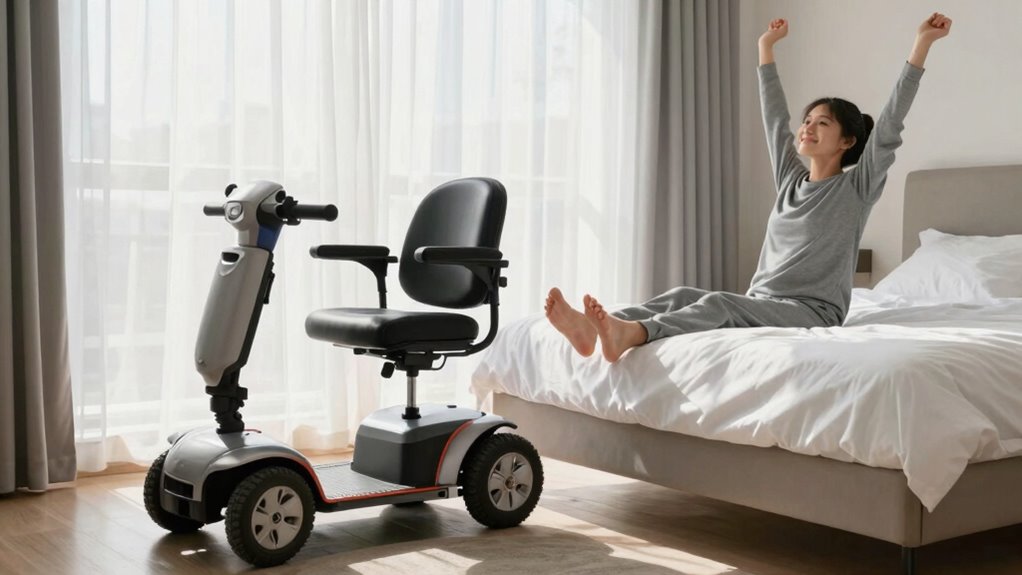

Supporting your mobility through ergonomic tools, gentle movement routines, and a calming environment can substantially improve your sleep and recovery. When you maintain good posture and stay active, you reduce muscle tension and stiffness, making it easier to fall asleep and stay asleep longer. Lower stress hormones from movement also promote mental relaxation. By exploring these strategies further, you’ll discover how they work together to help you rest better and recover faster.

Get health and wellness essentials delivered free — and shop member deals
- Fast, free delivery on millions of items
- Access to Prime Big Deal Days deals on October 6–7
- Prime Video, Amazon Music and more included
Key Takeaways
- Improved posture and reduced discomfort from ergonomic support facilitate easier transition into restful sleep.
- Gentle movement routines enhance circulation, decrease muscle stiffness, and promote faster recovery.
- Stress reduction through mindful mobility lowers cortisol levels, supporting mental relaxation for better sleep.
- Natural environment elements and holistic practices boost overall well-being, positively impacting rest quality.
- Consistent mobility practices prevent soreness and tension, enabling deeper, restorative sleep cycles.

Have you ever wondered how improving your mobility can lead to better rest? It might seem unrelated at first, but the connection is clear when you understand how movement affects your body’s ability to recover. When you invest in mobility support, you’re not just enhancing your flexibility—you’re also setting the stage for more restful sleep. One key way to do this is by using ergonomic equipment, which encourages proper posture and reduces strain during your daily activities. Whether it’s an ergonomic chair, a supportive mattress, or adjustable standing desks, these tools help keep your body in proper alignment, minimizing discomfort that can interfere with sleep. When your body isn’t working overtime to compensate for poor posture or misalignment, you naturally experience less pain and tension, making it easier to settle into restful sleep.
Using ergonomic equipment promotes proper posture and reduces discomfort, helping you achieve more restful sleep.
Alongside ergonomic equipment, incorporating movement routines into your daily schedule plays an essential role. Consistent, gentle movement helps maintain joint health, improve circulation, and reduce stiffness—all of which are necessary for quality rest. When you stick to simple routines like stretching, yoga, or controlled mobility exercises, you promote blood flow and release tension accumulated from sedentary or repetitive activities. These routines also boost your body’s capacity to recover from daily stress, so your muscles aren’t overly tight or fatigued when you hit the pillow. The more regularly you engage in these routines, the more your body adapts, leading to increased flexibility, enhanced circulation, and a greater sense of overall well-being that carries over into your sleep quality. Additionally, understanding the importance of biodiversity in natural environments can inspire holistic approaches to health and recovery, emphasizing the interconnectedness of physical and mental well-being. Incorporating natural elements into your environment, such as plants or natural light, can further support your overall health and relaxation.
Furthermore, good mobility support influences your nervous system. When your movements are smooth and pain-free, your body’s stress levels decrease, which can cut down on cortisol—the stress hormone that disrupts sleep. This calming effect helps your mind relax and prepares your body for rest. You may also find that practicing mindfulness techniques during movement routines can enhance this calming effect and further promote restful sleep. Incorporating body awareness into your routines can further enhance the benefits of mobility support by helping you recognize and address areas of tension before they cause discomfort. Recognizing the role of muscle balance in maintaining proper posture can also prevent imbalances that lead to discomfort and sleep disturbances. You start to notice that when your movement routines are consistent and your ergonomic setup is optimized, you fall asleep faster and stay asleep longer, experiencing deeper, more restorative sleep cycles. Over time, improved mobility also reduces the likelihood of waking up with aches or stiffness, common culprits that disturb restful sleep.
In short, supporting your mobility through ergonomic equipment and movement routines creates a positive feedback loop. Better movement reduces physical discomfort, calms your nervous system, and sets the stage for more restful, rejuvenating sleep. When you prioritize these aspects, you’re actively investing in your body’s recovery and overall well-being, making each night’s rest more restorative and each day more energized.
ergonomic office chair for posture support
As an affiliate, we earn on qualifying purchases.
As an affiliate, we earn on qualifying purchases.
Frequently Asked Questions
How Quickly Can Mobility Support Improve Sleep Quality?
Mobility support can improve your sleep quality within days, especially if you’re experiencing sleep deprivation or stress. By enhancing flexibility and reducing muscle tension, it helps your body relax and manage stress more effectively. Consistent mobility routines can lead to quicker, deeper sleep, making it easier to recover and wake up refreshed. Over time, you’ll notice better sleep patterns, improved stress management, and overall enhanced rest quality.
Are There Specific Mobility Exercises That Enhance Recovery?
Think of your body as a well-oiled machine that needs regular tuning. Specific mobility exercises like stretching routines and flexibility drills help enhance recovery by loosening tight muscles and improving circulation. These exercises target key areas, reduce stiffness, and promote better movement. Incorporating them into your daily routine can accelerate healing, decrease soreness, and support your body’s natural recovery process, making you feel more agile and ready for what’s next.
Can Mobility Support Prevent Sleep-Related Injuries?
Yes, mobility support can help prevent sleep-related injuries by improving posture correction and increasing joint flexibility. When you maintain proper posture, you reduce strain on muscles and joints, lowering injury risks. Regular mobility exercises help keep your joints flexible, making it easier to find comfortable sleeping positions. This combination promotes better rest and reduces the likelihood of waking up with aches or injuries related to poor sleep posture.
What Role Does Mobility Play in Reducing Nighttime Discomfort?
Think of your body as a well-tuned instrument; when muscle flexibility and joint stability are in harmony, nighttime discomfort diminishes. You’ll find it easier to settle into restful sleep, free from tension and soreness. Proper mobility acts as the gentle wind that smooths out rough patches, easing aches that disturb your rest. By supporting your body’s flexibility and stability, you create a peaceful environment for deep, restorative sleep.
Is Mobility Support Effective for All Age Groups?
Mobility support can be effective across all age groups when you apply age-specific approaches and mobility adaptation. Younger individuals might benefit from exercises and ergonomic adjustments, while older adults may need gentle stretches and assistive devices. Tailoring mobility strategies ensures comfort, reduces injury risk, and promotes better rest. You should evaluate individual needs, adapt support tools accordingly, and consult healthcare professionals to optimize effectiveness for every age group.
adjustable standing desk for ergonomic work
As an affiliate, we earn on qualifying purchases.
As an affiliate, we earn on qualifying purchases.
Conclusion
By supporting your mobility, you support your rest; by enhancing your rest, you enhance your recovery. When you move freely, you breathe easier; when you breathe easier, your sleep deepens. When your body is active, your mind relaxes; when your mind relaxes, your recovery accelerates. Embracing mobility fosters better rest, which fuels better recovery. Together, these elements form a cycle—each one strengthening the next—creating a healthier, more energized you.
gentle yoga stretch for mobility and relaxation
As an affiliate, we earn on qualifying purchases.
As an affiliate, we earn on qualifying purchases.
natural light therapy lamp for mood and sleep
As an affiliate, we earn on qualifying purchases.
As an affiliate, we earn on qualifying purchases.
Fall Picks
fall essentials
As an affiliate, we earn on qualifying purchases.