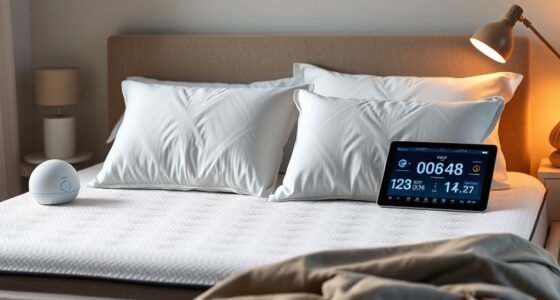
If you wake up too early, it could be due to stress, anxiety, hormonal imbalances, or environmental factors like noise and light. Poor sleep habits and underlying health conditions such as sleep apnea may also play a role. Technology, like sleep trackers and apps, can help pinpoint disruptions and guide you to improve your sleep environment and habits. Keep exploring to discover how combining lifestyle changes with tech tools can help you sleep longer and better.
Key Takeaways
- Disrupted sleep cycles from health issues, stress, or poor sleep hygiene can cause early waking.
- Elevated stress hormones and racing thoughts increase alertness, preventing deep sleep and leading to early awakening.
- An optimal sleep environment, including temperature, light, and noise control, supports longer sleep and reduces early rises.
- Underlying health conditions like sleep apnea or hormonal imbalances often cause fragmented sleep and early waking.
- Sleep tracking technology and relaxation apps can identify issues and promote habits to extend sleep duration.
Common Physical and Mental Factors Behind Early Awakening

Many physical and mental factors can cause you to wake up too early, often disrupting your sleep cycle. When your sleep cycle is interrupted, you may find yourself waking before your body has had enough rest, leading to fatigue. Stress, depression, or hormonal imbalances can also increase your likelihood of early awakening. Additionally, changes in your environment, like noise or light, can disturb your sleep pattern. These factors may affect dream recall, causing you to remember fragmented or abrupt dreams, which can make waking up feel more sudden. Understanding what influences your sleep cycle helps you identify potential causes of early awakening. Addressing these issues can improve your overall sleep quality, making it easier to stay asleep longer and wake feeling refreshed. Exploring techniques like sleep hygiene and considering supportive tools such as sleep-tracking devices may also aid in extending your sleep duration and improving sleep continuity. For example, managing environmental factors with modern smart bedroom technology can create a more conducive sleep environment. Additionally, optimizing your sleep environment by controlling temperature and minimizing disturbances can further promote longer, more restful sleep. Creating a consistent sleep schedule can also help regulate your internal clock, reducing early awakenings.
How Stress and Anxiety Disrupt Sleep Cycles

When you’re stressed or anxious, your body releases cortisol, which keeps you alert and makes falling back asleep harder. Racing thoughts can flood your mind, preventing you from relaxing enough to stay asleep through the night. These physical effects of anxiety disrupt your sleep cycles, causing you to wake up too early. Incorporating connected sleep technology can help monitor and improve your sleep patterns, potentially reducing early awakenings. Additionally, managing stress through relaxation techniques can help regulate your cortisol levels and improve sleep continuity. Understanding Free Floating anxiety can also inform strategies to address persistent sleep disturbances related to underlying stress. Recognizing the importance of automotive repair basics can also help you maintain your vehicle, reducing stress related to car troubles that might disrupt your routine and sleep schedule. Being aware of sleep environment optimization can further contribute to better sleep quality and fewer early awakenings.
Cortisol and Wakefulness
Stress and anxiety can cause your body to produce excess cortisol, the hormone responsible for alertness and energy. Normally, cortisol follows a natural rhythm, peaking in the morning to help you wake and gradually decreasing throughout the day. However, when stress levels are high, cortisol rhythms can become disrupted, leading to heightened wakefulness during the night. These wakefulness triggers—such as elevated cortisol levels—make it harder to stay asleep or fall back asleep if you wake early. This increase in cortisol not only promotes alertness but also signals your body that it’s time to be awake, disrupting your sleep cycle. Over time, this imbalance can cause you to wake prematurely, feeling unrested despite enough hours of sleep. Additionally, the contrast ratio of your environment and the levels of light exposure can influence cortisol production, further affecting sleep quality.
Racing Thoughts Impact Sleep
Racing thoughts often keep you awake by flooding your mind with worries, plans, or endless to-do lists, making it difficult to relax enough to fall asleep. When your mind races, it becomes hard to quiet the chatter that keeps you alert instead of calm. Stress and anxiety fuel this cycle, causing racing thoughts that interrupt your sleep cycle and prevent deep, restorative rest. Your brain stays active, replaying concerns or imagining worst-case scenarios, which increases arousal and makes it harder to drift off. This heightened mental activity can lead to early awakenings, as your mind refuses to settle down. Recognizing how racing thoughts impact your sleep is the first step toward breaking the cycle and creating a more peaceful, uninterrupted sleep experience. Incorporating smart home technology, such as adaptive lighting or sound machines, can help create a calming environment that signals your brain to relax and wind down. Implementing sleep environment optimization strategies can further support your efforts to enhance sleep quality.
Anxiety’s Physical Effects
Anxiety doesn’t just occupy your thoughts; it triggers physical responses that can seriously disrupt your sleep cycle. When you’re anxious, your body releases stress hormones like adrenaline and cortisol, leading to physical symptoms such as rapid heartbeat, tense muscles, and shallow breathing. These physical symptoms make it harder to relax and fall asleep, often causing you to wake up early. Emotional responses like worry or fear intensify this cycle, keeping your mind active even when your body is tired. The heightened alertness prevents you from reaching deeper sleep stages, resulting in fragmented sleep and early awakenings. Recognizing how anxiety’s physical effects interfere with sleep can help you develop strategies to calm your body and improve your sleep quality. Using tools like estheticians’ magnifying lamps can also aid in relaxing routines before bedtime by enhancing clarity and focus. Incorporating relaxation techniques, such as deep breathing or progressive muscle relaxation, can further help reduce these physical symptoms and promote longer, more restorative sleep. Additionally, understanding the role of stress hormones can guide you in managing their impact through lifestyle changes and relaxation practices. Techniques such as mindfulness meditation can help lower cortisol levels and reduce overall stress, making it easier to fall asleep and stay asleep.
The Impact of Lifestyle Choices on Sleep Quality

Your lifestyle choices directly influence the quality of your sleep, affecting how easily you fall asleep and how restorative your rest is. Poor sleep hygiene and inconsistent daytime routines can lead to fragmented sleep and early awakening. To improve your sleep, consider these key factors:
Your daily habits impact sleep quality and overall restfulness.
- Maintain a consistent sleep schedule, even on weekends, to regulate your internal clock.
- Incorporate relaxing bedtime routines that signal your body it’s time to wind down.
- Limit caffeine, alcohol, and heavy meals close to bedtime to prevent disruptions.
- Prioritize sleep hygiene practices that promote a more restful and uninterrupted sleep cycle. Additionally, optimizing your ventilation can help create a comfortable sleeping environment that supports your circadian rhythm. Ensuring proper air quality in your bedroom can also significantly impact your sleep quality and duration. Good air circulation is essential for maintaining a fresh and healthy sleep environment, which can help prevent waking up too early. Adjusting your room temperature to suit your comfort preferences can further support better sleep patterns and reduce early awakenings. Focusing on good sleep hygiene and establishing steady daytime routines helps you fall asleep faster and stay asleep longer. These habits support your body’s natural sleep cycles, reducing the chances of waking up too early and improving overall sleep quality.
Sleep Environment and Its Role in Restorative Sleep

A comfortable and quiet sleep environment is essential for achieving restorative rest. Your sleep environment directly impacts your ability to stay asleep and wake refreshed. Keep your bedroom cool, ideally between 60-67°F (15-19°C), as a proper bedroom temperature helps regulate your body temperature and promotes deeper sleep. Minimize noise and light, using blackout curtains or white noise machines to create a peaceful space. A clutter-free, comfortable bed with supportive pillows also enhances sleep quality. Avoid screens before bed, as blue light can interfere with melatonin production. Incorporating sound design into your sleep space, such as calming ambient noises, can further improve sleep quality. Additionally, choosing the right mattress and pillows can significantly impact your comfort and sleep continuity. By optimizing your sleep environment, you set the stage for longer, more restorative sleep cycles, reducing the likelihood of waking too early. Small adjustments can make a significant difference in how well you rest.
Underlying Health Conditions That Cause Early Waking

While optimizing your sleep environment can improve sleep quality, underlying health conditions often play a crucial role in causing early waking. These issues may disrupt your sleep cycle and make it hard to stay asleep through the night. Some common conditions include:
- Hormonal imbalances, like thyroid problems, can cause early waking by affecting your body’s regulation.
- Sleep medication or certain medications for other health issues may interfere with your natural sleep patterns.
- Chronic conditions such as sleep apnea or restless leg syndrome can cause frequent awakenings, leading to early rising.
Addressing these underlying health issues often requires medical evaluation and tailored treatment. Managing hormonal imbalances or adjusting medication can considerably improve your ability to stay asleep longer.
The Influence of Diet and Caffeine on Sleep Patterns

Your diet and caffeine intake can considerably affect your sleep patterns. Consuming caffeine too late or eating certain foods may lead to waking up early or having restless sleep. Understanding these impacts helps you make better choices to improve your sleep quality.
Caffeine’s Impact on Sleep
Caffeine’s stimulating effects can considerably disrupt sleep patterns, especially when consumed later in the day. Your caffeine metabolism varies, meaning some people process it slower, prolonging its wakefulness effects. This can lead to sleep disruption, making it harder to fall asleep or causing early awakenings. To understand its impact better, consider these points:
- Caffeine’s half-life can range from 3 to 7 hours, influencing how long it stays active in your system.
- Consuming caffeine late in the afternoon or evening increases the risk of sleep disruption.
- Individuals with slower caffeine metabolism experience more prolonged effects, leading to disrupted sleep cycles.
Being mindful of caffeine intake helps prevent early waking and supports better sleep quality.
Diet Choices and Sleep Quality
What you eat considerably influences your sleep quality, as certain foods and dietary habits can either promote restful sleep or contribute to disturbances. Meal timing plays a vital role—eating heavy or spicy meals close to bedtime can cause discomfort and disrupt sleep cycles. Opt for lighter, balanced dinners to help your body wind down. Hydration habits also matter; drinking too much liquid before bed may lead to frequent awakenings, while staying well-hydrated throughout the day supports overall sleep health. Caffeine intake, especially later in the day, can interfere with falling asleep, so be mindful of your consumption. By adjusting your meal timing and hydration habits, you can foster better sleep patterns and reduce early waking episodes.
Can Technology Really Help You Sleep Longer?

Can technology genuinely help you sleep longer, or is it just a modern myth? While some tools claim to extend your sleep, their effectiveness depends on your habits. Good sleep hygiene remains essential, and tech can support this by tracking habits and providing insights. However, technology alone isn’t a magic fix. Here are three ways tech can help:
- Sleep trackers identify disruptions, prompting better sleep hygiene practices.
- Apps offer guided cognitive therapy exercises to reduce anxiety that causes early waking.
- Smart devices can adjust your environment—like lighting and temperature—to promote longer rest.
Exploring Sleep Trackers and Apps for Better Rest

Sleep trackers and apps can help you understand your sleep patterns and identify issues you might not notice. They analyze your sleep quality and give you insights to improve your rest. By setting clear sleep goals, you can work towards waking up refreshed instead of too early.
Tracking Sleep Patterns
Tracking your sleep patterns has become easier and more accurate thanks to a variety of advanced sleep trackers and smartphone apps. These tools help you identify patterns, including wake times and sleep cycles. For example, some devices monitor your movement and heart rate to gauge sleep quality, while others sync with your phone to log sleep data. To get the most out of these tools, try:
- Using sleep trackers that analyze your sleep environment and detect disruptions.
- Incorporating dream journaling to note recurring themes or disturbances upon waking.
- Adjusting your sleep environment based on app insights to promote more restful sleep.
Analyzing Sleep Quality
To better understand your sleep quality, exploring the latest sleep trackers and apps can provide valuable insights. These tools analyze your sleep architecture by monitoring movement, heart rate, and breathing patterns throughout the night. Many apps now include dream analysis features, helping you identify patterns or disruptions that may impact your rest. By examining sleep stages, such as REM and deep sleep, you can pinpoint areas where your sleep may be fragmented or shallow. This detailed data allows you to recognize habits or environmental factors affecting your sleep quality. With real-time feedback and detailed reports, you can make informed adjustments to improve your overall sleep health, ultimately reducing early waking and promoting more restorative rest.
Setting Sleep Goals
Setting clear sleep goals is essential for making meaningful improvements to your rest, and using sleep trackers and apps can help you achieve this. These tools provide insights into your sleep hygiene and help you refine your bedtime routines. To get started, consider these steps:
- Track your sleep patterns regularly to identify issues like early awakening or poor sleep quality.
- Set realistic goals, such as increasing total sleep time or maintaining consistent bedtimes.
- Use app prompts to establish calming bedtime routines that promote better sleep hygiene, like limiting screen time before bed or practicing relaxation techniques.
Tips for Using Tech Devices to Improve Sleep Duration

Using technology thoughtfully can considerably enhance your sleep duration. Start by choosing apps that promote good sleep hygiene, such as those that track your sleep patterns and provide personalized tips. These tools can help you identify habits that disrupt your rest and suggest adjustments. Some devices also offer guided relaxation exercises or white noise features to create a calming environment. For dream analysis, consider sleep trackers that monitor REM cycles and help you understand your dreams better, which can improve overall sleep quality. Avoid screens before bed, or use blue light filters, to prevent interference with melatonin production. By integrating these tech solutions consciously, you can develop healthier sleep habits and extend your sleep duration naturally.
Balancing Lifestyle Changes With Tech Solutions for Better Sleep

Balancing lifestyle changes with tech solutions is essential for achieving consistent, restful sleep. Improving sleep hygiene and establishing effective bedtime routines can help prevent early awakening. Tech tools like sleep trackers and smart alarms support these efforts by providing insights and gentle wake-up cues. To optimize your sleep, consider these strategies:
- Use sleep apps to monitor your sleep patterns and identify disruptions.
- Set a consistent bedtime and wake-up time, aided by smart alarms that wake you during light sleep.
- Limit screen time before bed and create a calming routine to signal your body it’s time to unwind.
Combining these lifestyle adjustments with technology ensures you’re taking an all-encompassing approach to better sleep, making it easier to wake up refreshed and on time.
Frequently Asked Questions
Can Early Waking Be a Sign of Underlying Mental Health Issues?
Yes, waking up early can be a sign of underlying mental health issues. Disruptions in sleep patterns often reflect conditions like anxiety or depression. If you notice persistent early awakenings, it’s important to contemplate how your mental health might be affecting your sleep. Addressing these issues through professional support and healthy sleep habits can help restore your sleep patterns and improve overall well-being.
How Do Hormonal Changes Affect Early Morning Awakening?
Hormonal fluctuations, especially changes in cortisol levels, can cause you to wake up early. Elevated cortisol in the early morning signals your body to wake, disrupting sleep patterns. During stressful periods or hormonal shifts like menopause, these fluctuations become more pronounced, making early awakening more common. To manage this, consider relaxation techniques or consult a healthcare provider to address underlying hormonal imbalances that affect your sleep cycle.
Are There Specific Sleep Disorders Linked to Waking up Too Early?
You might be surprised to find that certain sleep disorders, like insomnia or advanced sleep phase syndrome, directly disrupt your sleep cycle and circadian rhythm, causing early awakening. These conditions mess with your natural sleep timing, making you wake up too early and struggle to get back to sleep. Recognizing these disorders helps you understand why your mornings feel so abrupt, and seeking treatment can restore your rhythm and give you longer, restful nights.
What Are the Long-Term Effects of Disrupted Sleep Due to Early Waking?
Long-term disrupted sleep from early waking can lead to sleep fragmentation, which hampers your overall rest quality. You might experience persistent daytime fatigue, making it harder to concentrate and stay alert. Over time, this can weaken your immune system, increase stress levels, and raise your risk for chronic conditions like heart disease and diabetes. Addressing these issues early helps protect your health and improves your daily functioning.
How Can Sleep Hygiene Practices Complement Technological Solutions?
Sure, tech can help, but don’t forget your sleep environment and bedtime routines—those old tricks still matter. Ironically, upgrading your sleep app can’t fix a noisy room or inconsistent bedtime. Keep your environment cool, dark, and quiet, and stick to a routine. Combining good sleep hygiene with tech solutions creates a powerful duo that naturally enhances your sleep, making early mornings less of a surprise.
Conclusion
If you don’t tackle these causes and embrace tech solutions, you might find yourself trapped in an endless cycle of 4 a.m. wake-ups, missing out on the deep, restorative sleep your body desperately needs. Imagine waking up feeling more exhausted than when you went to bed, with your mornings ruined and your health hanging by a thread. Take charge now—use these tips and tech tools before your sleep defeats you completely!