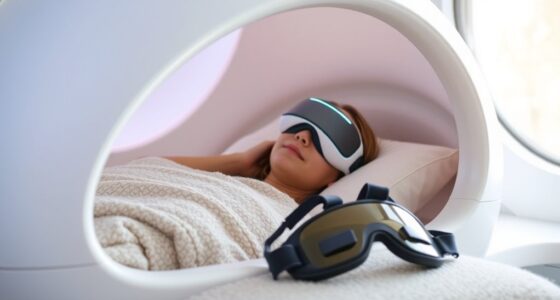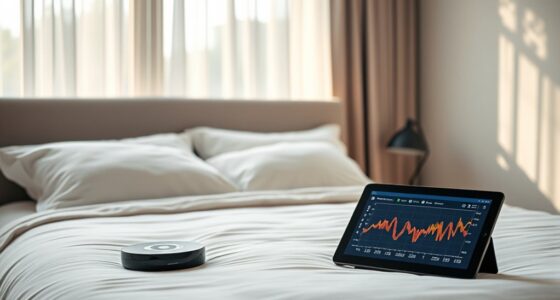
If you have chronic pain, selecting a supportive mattress like memory foam can help ease pressure points and improve comfort. Incorporating tech aids such as sleep trackers, noise machines, or adjustable beds can monitor your sleep, reduce disturbances, and promote better rest. Creating a calming, clutter-free environment and adopting good sleep habits further support restful nights. Staying aware of these options can make a real difference, and exploring them more can lead to even better sleep solutions.
Key Takeaways
- Choose supportive, pressure-relieving mattresses like memory foam to reduce pain points and promote spinal alignment.
- Use adjustable beds to customize firmness and positioning for personalized pain management.
- Incorporate sleep tracking devices to monitor patterns and identify disruptions affecting comfort.
- Utilize noise-canceling devices and blackout curtains to create a peaceful, sleep-friendly environment.
- Combine mattress selection with relaxation tech aids like guided meditation apps to enhance overall sleep quality.
Understanding the Impact of Chronic Pain on Sleep Quality

Chronic pain often disrupts sleep patterns, making it difficult to fall asleep or stay asleep throughout the night. This ongoing discomfort leads to frequent awakenings, preventing deep, restorative sleep. As a result, you may experience sleep deprivation, which worsens your pain and impacts your overall health. Managing pain effectively becomes essential to improving sleep quality, as poor sleep can heighten your perception of pain. Without proper pain management strategies, you might find yourself trapped in a cycle of pain and exhaustion. Recognizing how pain interferes with sleep allows you to address the issue proactively. Developing routines that reduce discomfort at night can help break this cycle, leading to better rest and improved well-being. Understanding safe electrical solutions for sleep aids and comfort devices can also support better sleep quality, especially when integrated with specialized mattresses designed to alleviate pressure points and support proper spinal alignment. Additionally, selecting reliable backup power options for essential devices ensures continuous support during power outages, contributing to a more consistent sleep environment. Incorporating pressure-relief technology into your sleep setup can further reduce discomfort and promote restful sleep. Using smart sleep trackers can help monitor your sleep patterns and identify disruptions caused by pain, enabling more tailored solutions.
Choosing the Right Mattress for Pain Relief
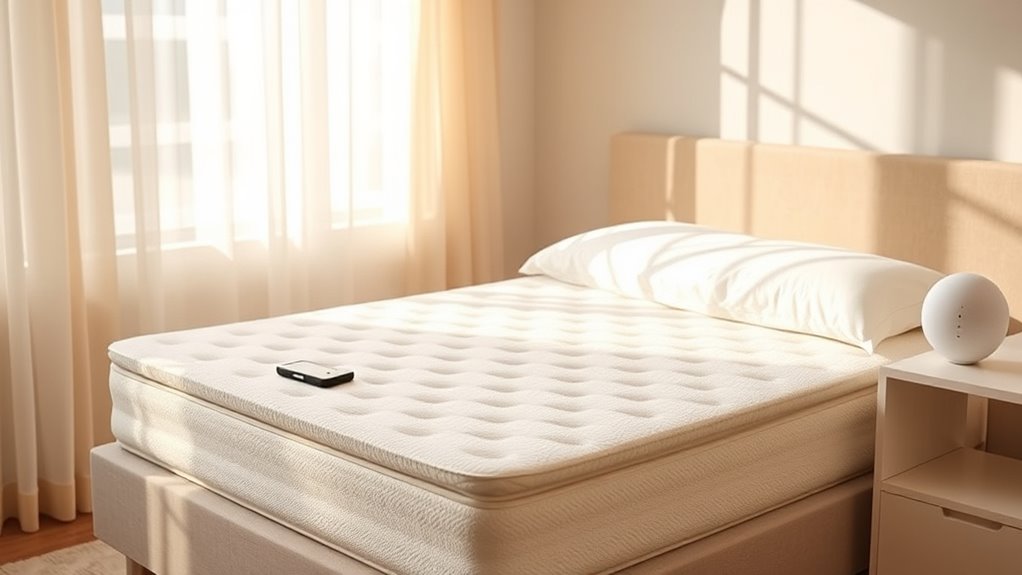
Since pain often disrupts sleep, choosing the right mattress can make a significant difference in your comfort and rest quality. Look for options that provide adequate support and pressure relief. Memory foam mattresses are popular because they contour to your body, reducing pain points. When selecting a mattress, consider these factors:
- Firmness level suited to your specific pain areas
- Adequate support for spinal alignment
- Breathability to prevent overheating
- Compatibility with meditative techniques to relax your muscles before sleep. Incorporating body positioning strategies can further enhance comfort and alleviate pressure points. A supportive mattress combined with relaxation methods can ease discomfort. Incorporating innovative cloud technology into your sleep routine may also improve temperature regulation and overall comfort. Additionally, meditative techniques can help calm your mind and muscles, enhancing your sleep quality. Exploring advanced sleep technology can provide tailored solutions to optimize your sleep environment and reduce pain. Finding the right mattress is a vital step toward restful, pain-free nights, especially when considering sleep environment factors that influence overall comfort.
Innovative Mattress Technologies for Enhanced Comfort
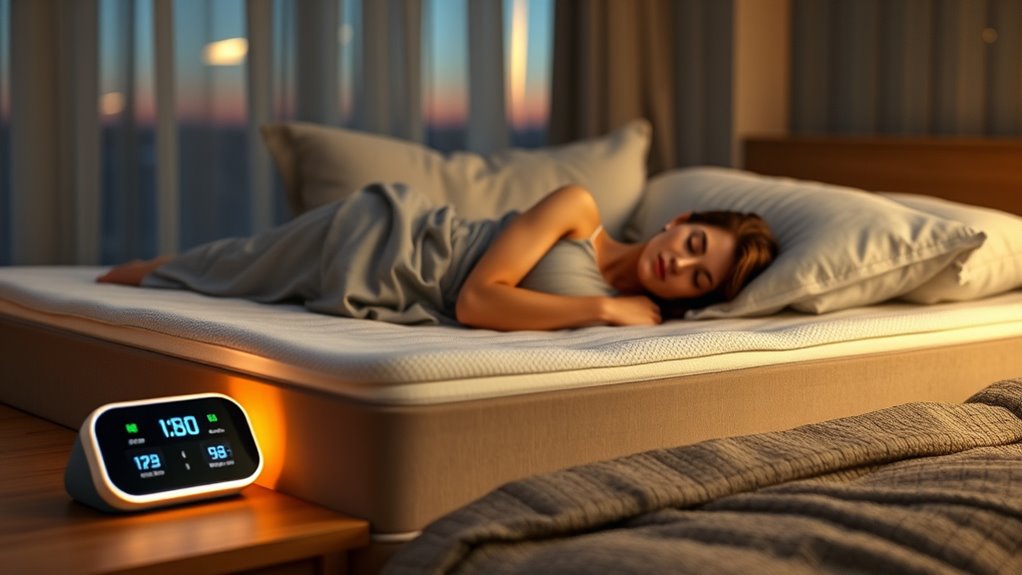
Have you explored the latest mattress technologies designed to boost comfort and reduce pain? Modern innovations like memory foam mattresses contour to your body, providing targeted support that alleviates pressure points. These mattresses respond to your movements, maintaining proper spinal alignment and minimizing discomfort. Adjustable firmness features let you customize your sleep surface to your preferred level of support, which is especially helpful if your pain varies or you share the bed with a partner. Some mattresses even come with dual-zone firmness options, allowing each side to be tailored individually. These advancements ensure you get personalized comfort, helping you fall asleep faster and stay asleep longer. Proper spinal alignment is a key factor in reducing discomfort and enhancing restful sleep. Additionally, incorporating evidence-based tools can further support pain management and improve sleep outcomes. Understanding the importance of sleep ergonomics can also contribute significantly to alleviating chronic pain and promoting restorative rest, especially when combined with adaptive mattress technology. For optimal results, selecting a mattress with pressure relief features can further enhance comfort and reduce pain during sleep.
Sleep Aids and Devices to Monitor and Improve Rest

Modern sleep aids and monitoring devices play an essential role in enhancing rest and managing pain. Sleep tracking devices help you understand your sleep patterns, identify disruptions, and adjust habits for better rest. Noise canceling devices create a peaceful environment by blocking out external sounds, reducing sleep disturbances. These tools offer benefits such as:
- Real-time data on sleep quality and duration
- Personalized insights to improve sleep routines
- Reduced noise interference for more restful sleep
- Increased awareness of factors affecting your sleep health
Additionally, some devices incorporate biofeedback techniques to help regulate stress and improve sleep quality. Understanding how sleep science informs device design can lead to more effective solutions. Using sleep tracking and noise canceling devices, you can identify issues and make informed adjustments, leading to a more restorative sleep experience. These tech aids empower you to take control of your sleep, ultimately reducing pain and improving overall well-being. For instance, integrating sleep science principles can optimize device effectiveness and support healthier sleep habits. Incorporating home automation features can further customize your sleep environment for optimal comfort and relaxation.
Tips for Creating a Sleep-Friendly Environment

Creating a sleep-friendly environment builds on the benefits of sleep tracking and noise canceling devices by setting the stage for better rest. Start with comfortable pillows and bedding that support your body and reduce pain. Choose materials that feel soothing and help regulate temperature. Keep your room at a cool, consistent temperature—around 60-67°F (15-19°C)—to promote deeper sleep and prevent discomfort. Minimize clutter and eliminate bright lights or screens that can disrupt your circadian rhythm. Use blackout curtains if necessary. A calm, clean space signals to your brain that it’s time to rest. Prioritize a quiet environment, reinforced by noise-canceling devices, to help you fall asleep faster and stay asleep longer. Incorporating air purifiers can also improve air quality, reducing allergens and irritants that may disturb sleep. Paying attention to sleep environment factors can lead to significant improvements in sleep quality. Additionally, understanding sleep environment design can help you optimize your space for restorative rest. Small adjustments, like choosing the right mattresses, can markedly improve your sleep quality.
Integrating Lifestyle Changes to Support Better Sleep

Implementing lasting lifestyle changes can considerably enhance your sleep quality, especially when managing chronic pain. Incorporate relaxation techniques and mindful stretching into your daily routine to reduce tension and promote relaxation before bed. Here are four effective strategies:
- Practice mindful stretching to gently loosen muscles and improve flexibility.
- Use relaxation techniques like deep breathing or meditation to calm your mind.
- Maintain consistent sleep and wake times to regulate your body’s internal clock.
- Limit caffeine and screen time in the evening to reduce stimulation.
Additionally, understanding the importance of inner wisdom can empower you to listen to your body’s signals and adapt your routines for better rest.
Frequently Asked Questions
How Do Different Sleep Positions Affect Chronic Pain Management?
Your sleep position greatly impacts chronic pain management. Sleeping on your back with an ergonomic pillow supports spinal alignment, reducing pressure points. Side sleeping with a pillow between your knees also promotes proper spinal alignment and eases hip or lower back pain. Avoid stomach sleeping, which can strain your neck and spine. Adjust your position and use ergonomic pillows to find the most comfortable, pain-relieving posture for restful sleep.
Can Specific Mattress Materials Reduce Pressure Points Effectively?
You might think all mattresses are the same, but specific materials like memory foam and latex foam can really reduce pressure points. Memory foam contours to your body, providing targeted support, while latex foam offers resilience and breathability. These materials help distribute weight evenly, easing pain and preventing pressure buildup. Choosing the right mattress with these materials can make a significant difference in your sleep quality and pain management.
What Are the Long-Term Effects of Sleep Tracking Devices?
Sleep tracking devices can improve sleep quality over time by providing insights into your sleep patterns and encouraging healthier habits. However, prolonged use may lead to dependence on technology, potentially causing anxiety or disrupted sleep if you obsess over data. The key is to integrate this technology mindfully, using the insights to enhance your sleep without letting it dominate your routine. Balance is essential for long-term benefits.
Are There Natural Remedies to Complement Mattress Technology for Pain Relief?
You can hit two birds with one stone by exploring natural remedies alongside your mattress tech. Herbal supplements like valerian root or melatonin may help ease pain and improve sleep quality. Acupuncture therapy is another option that promotes relaxation and reduces discomfort. Incorporating these remedies into your routine offers a holistic approach, supporting your body’s natural healing while enhancing your rest. Always consult a healthcare professional before starting new treatments.
How Do Age and Weight Influence Mattress Selection for Pain Sufferers?
Your age and weight considerably influence your mattress choice for pain relief. As you age, you might need more support to prevent discomfort, so consider firmer or specialized mattresses. Your weight impacts how well a mattress supports your body; heavier individuals often benefit from high-density foam or hybrid options that offer durability and proper spinal alignment. Always test mattresses for comfort and support to find the best fit for your specific needs.
Conclusion
Just as a lighthouse guides ships safely home through dark and stormy seas, the right mattress and tech tools can steer you toward restful nights despite chronic pain. By choosing comfort, embracing innovative solutions, and creating a soothing environment, you set a course for better sleep. Remember, each small change is like a beacon shining through the night, helping you navigate toward peaceful, restorative rest and brighter mornings ahead.