
Consumer sleep trackers can offer helpful insights into your sleep patterns, but they often fall short in accurately detecting complex issues like sleep apnea. While these devices monitor variables like movement and heart rate, they aren’t designed to diagnose breathing interruptions or oxygen drops. If you suspect sleep apnea due to loud snoring, choking, or daytime fatigue, seeing a healthcare professional is essential. To learn which approach best suits your needs, keep exploring the options available.
Key Takeaways
- Consumer sleep devices can track sleep patterns but may not accurately detect sleep apnea events.
- Proper calibration and consistent use improve data reliability, but device limitations still exist.
- Significant symptoms like loud snoring, choking, or daytime fatigue warrant professional medical evaluation.
- Sleep studies and medical assessments remain the gold standard for diagnosing sleep apnea.
- Consulting a healthcare provider helps determine appropriate treatment and clarifies device limitations.
Understanding Sleep Apnea and Its Health Impacts
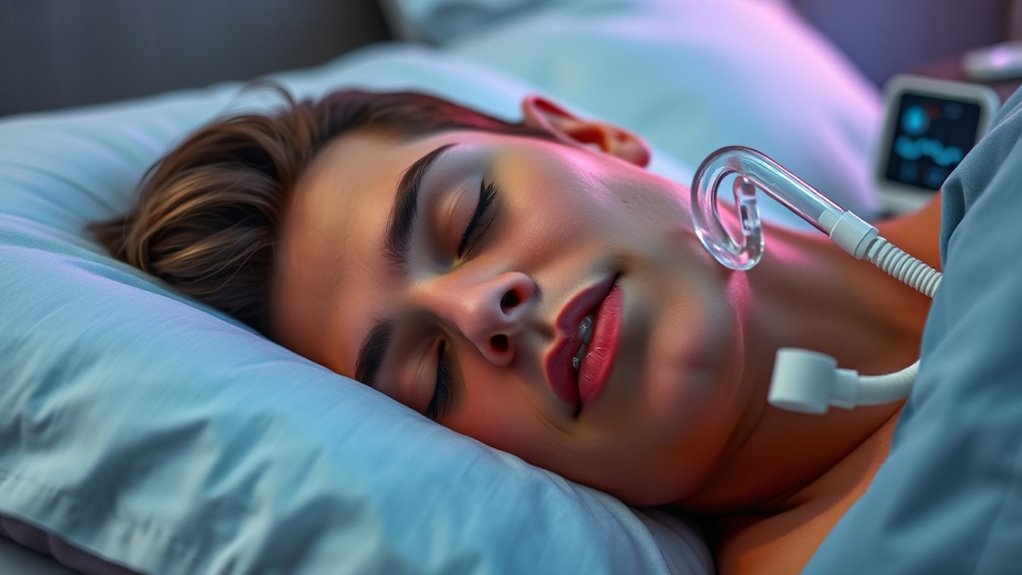
Sleep apnea is a common sleep disorder where your breathing repeatedly pauses and starts during sleep. These interruptions can lead to fragmented sleep and lower oxygen levels, impacting your overall health. Poor sleep hygiene, such as irregular sleep schedules or consuming alcohol before bed, can worsen sleep apnea symptoms. To better manage the condition, focus on lifestyle modifications like maintaining a consistent sleep routine, losing excess weight, and avoiding sedatives. Improving your sleep hygiene helps reduce airway obstructions and promotes restful sleep. Recognizing these habits and making small adjustments can considerably decrease health risks associated with sleep apnea, such as high blood pressure, heart disease, and daytime fatigue. Taking control of your sleep environment is an essential step toward better health. Incorporating free floating strategies, such as positional therapy and nasal airflow devices, can also be beneficial in managing mild cases of sleep apnea. Additionally, understanding the airway obstructions that contribute to sleep apnea can help you identify targeted solutions and improve your sleep quality. Regular airway assessment by a healthcare professional can further help in tailoring effective treatment options. Monitoring your oxygen levels during sleep with specialized devices can provide additional insights into your condition. Implementing sleep tracking technology can provide valuable insights into your sleep patterns and help monitor progress over time.
How Consumer Wearables Attempt to Detect Sleep Issues

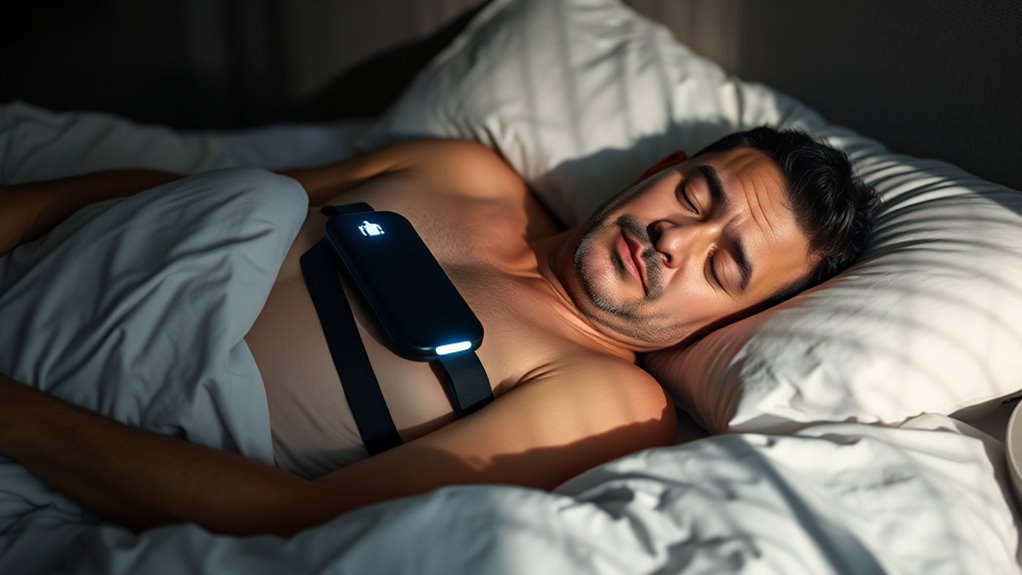
Many consumer wearables use sensors like accelerometers and heart rate monitors to track your sleep patterns. While these tools can offer useful insights, their detection accuracy can vary, especially for complex issues like sleep apnea. Understanding these limitations helps you better interpret the data your device provides. In some cases, wearables may misinterpret breathing irregularities, highlighting the importance of consulting healthcare professionals for accurate diagnosis. Additionally, these devices often lack the medical-grade precision required to diagnose sleep disorders definitively.
Sensor Technologies Employed
Consumer wearables use a variety of sensors to monitor sleep patterns and detect potential issues like sleep apnea. These devices typically incorporate accelerometers to track movement and detect sleep stages, while some include pulse oximeters to measure blood oxygen levels. Sensor calibration is essential to guarantee accurate readings, so manufacturers often optimize their sensors for consistent performance. Proper calibration can also help minimize sensor drift, ensuring sustained accuracy over time. Additionally, advances in sensor technology contribute to more precise and reliable sleep assessments, but consistent calibration remains key to maintaining data quality. Understanding heat distribution within these devices can help improve sensor accuracy and reliability. Furthermore, innovations in sensor placement can enhance the detection of subtle physiological changes associated with sleep disorders. Remember, consumer devices offer a preliminary overview but aren’t substitutes for professional medical evaluation. Data privacy is also a concern; since sleep data can reveal sensitive health information, reputable devices encrypt data and follow privacy regulations to protect user information.
Detection Accuracy Challenges
Detecting sleep issues accurately with consumer wearables remains a significant challenge because these devices rely on indirect indicators like movement and blood oxygen levels, which can be influenced by numerous factors. Sensor calibration is essential; if sensors aren’t properly calibrated, data accuracy drops. Additionally, user compliance impacts results—incorrect placement or inconsistent wearing can lead to misleading readings. To improve detection, manufacturers focus on refining algorithms, but limitations persist. Key issues include:
- Variability in sensor calibration across devices
- Motion artifacts affecting data quality
- Differences in individual sleep patterns
- Inconsistent user compliance impacting data reliability
Understanding sensor calibration is crucial for interpreting wearable sleep data accurately. Moreover, sensor calibration can vary significantly between devices and over time, which adds another layer of complexity to data interpretation. Proper device maintenance and understanding of their limitations are essential for users seeking reliable insights. Ensuring consistent wearable usage is also vital for collecting dependable sleep data. Additionally, individual sleep variability can further complicate the assessment, making it harder to distinguish between normal and problematic sleep patterns.
The Science Behind Sleep Monitoring Devices
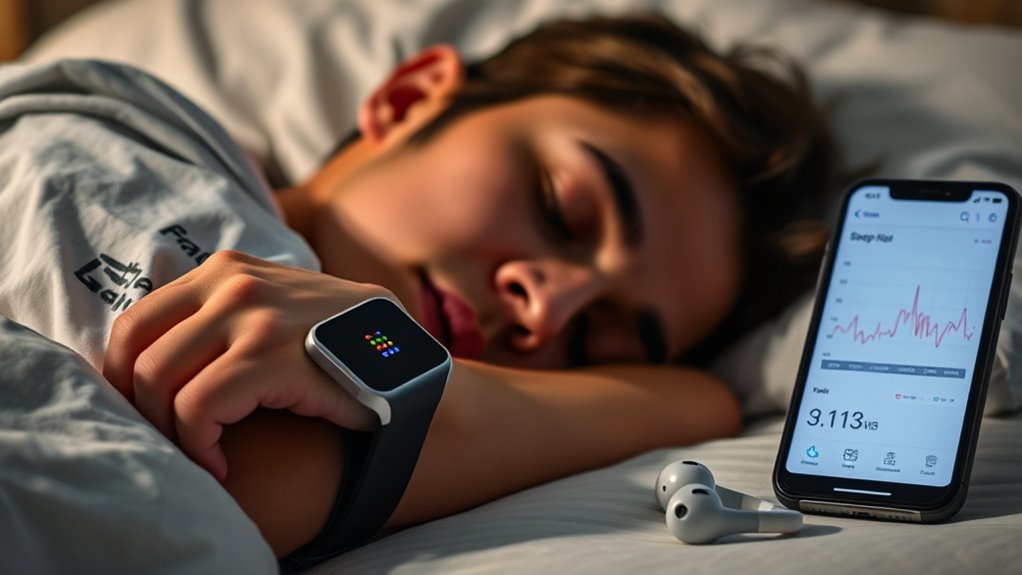
You might wonder how sleep monitoring devices measure your sleep patterns accurately. These devices use advanced sensors and algorithms to interpret data, but their precision can vary. Understanding their limitations helps you better assess their reliability for detecting sleep issues like sleep apnea. Additionally, it’s important to recognize the scientific principles behind these devices to gauge their effectiveness accurately. Many of these devices rely on wave and wind patterns to estimate sleep stages, but external factors can influence their readings.
Sensor Technology Accuracy
Sensor technology accuracy is crucial for reliable sleep monitoring, as it determines how precisely devices can track breathing patterns, heart rate, and other vital signs. Proper sensor calibration ensures that measurements stay consistent over time, reducing errors. Signal interference from external sources like movement or electronic devices can compromise data quality. To ensure accuracy, consider these points: 1. Regularly calibrate sensors according to manufacturer instructions. 2. Minimize movement during measurements to reduce signal interference. 3. Choose devices with proven sensor reliability and validated accuracy. 4. Be aware that environmental factors can affect sensor performance. Additionally, understanding the sensor calibration process can significantly improve measurement consistency. Being aware of sensor drift over time can help in maintaining measurement accuracy and identifying when recalibration might be necessary. Regular monitoring of sensor performance can also help catch issues early and ensure ongoing reliability.
Data Interpretation Methods
Understanding how sleep monitoring devices interpret raw data is essential for accurate sleep analysis. These devices process signals like movements, breathing patterns, and heart rate, converting them into meaningful sleep stages and potential issues. Proper device calibration ensures that sensors are functioning correctly, providing reliable data. Without calibration, readings can be skewed, leading to misinterpretation. User compliance also plays a critical role; if you don’t wear the device correctly or consistently, the data collected may be incomplete or inaccurate. Many devices use algorithms that analyze the raw data, applying statistical models to identify sleep patterns or disruptions. These interpretation methods aim to provide insights into your sleep quality, but their accuracy heavily depends on correct device setup and consistent use.
Limitations and Reliability
While sleep monitoring devices have advanced considerably, their reliability still faces notable limitations. Device accuracy varies depending on the technology used, and data reliability can be inconsistent. You should be cautious when interpreting results, as these devices may not detect all sleep disturbances accurately. Here are some key points to consider:
- Consumer devices often use algorithms that can misinterpret movement or breathing patterns.
- They may underestimate or overestimate sleep stages and apnea events.
- External factors like room environment or device placement can impact data quality.
- The lack of clinical validation means device accuracy isn’t guaranteed for diagnosing conditions like sleep apnea.
Ultimately, while helpful for general insights, these devices shouldn’t replace professional medical assessments for reliable diagnosis.
Limitations of Consumer-Grade Sleep Tracking Technology

Although consumer-grade sleep trackers have become popular for monitoring sleep habits, they often fall short of providing accurate and reliable data. These devices may misinterpret sleep stages or miss episodes of disrupted breathing, making their readings less trustworthy for serious health concerns like sleep apnea. Additionally, data privacy is a concern, as many devices transmit your sleep data to third parties, risking exposure of personal health information. While these devices are generally affordable, their limitations mean they shouldn’t replace professional diagnosis or treatment. Relying solely on consumer sleep trackers can give a false sense of security or overlook underlying issues. Recognizing the limitations of flushing mechanisms in these devices underscores the importance of seeking medical expertise for medical conditions. Moreover, understanding the accuracy of sleep data can help you make more informed health decisions and avoid unnecessary worries.
Signs That Indicate You Should See a Healthcare Professional
If you notice persistent loud snoring, choking, or gasping during sleep, it’s a clear sign you should see a healthcare professional. These symptoms often indicate disrupted sleep and can worsen if ignored. Pay attention to your sleep environment and bedtime routines, as they can influence sleep quality but may not resolve underlying issues. Consider seeking medical advice if:
- You experience frequent awakenings or restless nights.
- You feel excessively tired during the day, even after enough sleep.
- Your partner reports loud snoring or breathing interruptions.
- You have episodes of choking or gasping that wake you up.
Addressing these signs early can improve your sleep health and prevent more serious problems. Don’t rely solely on consumer devices—consult a healthcare professional for proper diagnosis and treatment.
Diagnosing Sleep Apnea: What Does the Medical Process Involve?
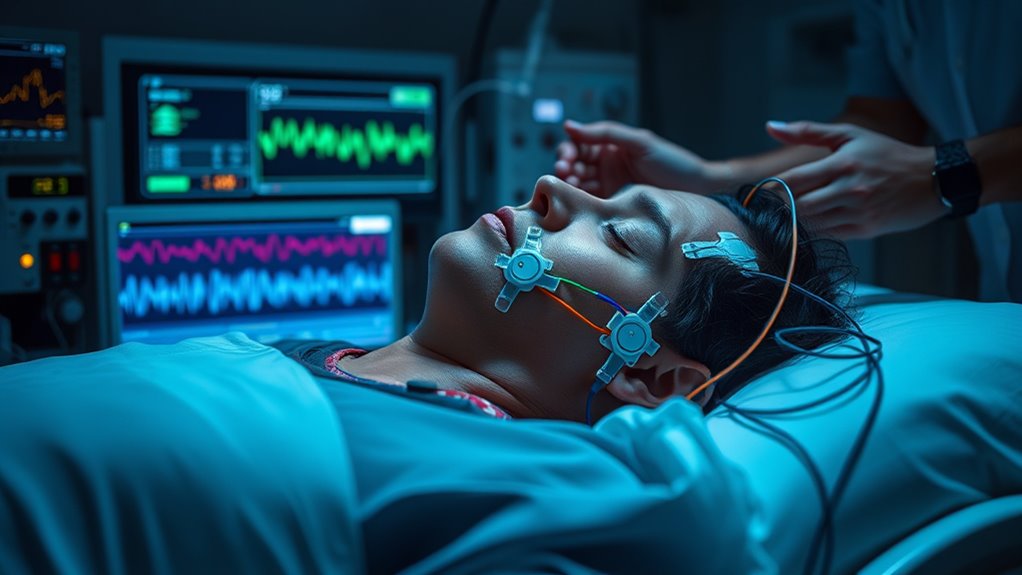
When you notice signs like loud snoring, choking, or daytime fatigue, it’s important to seek a proper diagnosis rather than relying solely on home observations or devices. Your doctor will likely start with a medical history and ask you to keep a sleep diary, tracking your sleep patterns and symptoms over several nights. To confirm sleep apnea, they may recommend a sleep study, which can be conducted in a sleep lab or at home through home testing devices. These tests monitor your breathing, oxygen levels, and sleep stages. Home testing offers convenience, but a sleep diary helps provide context for your symptoms. Together, they give your healthcare provider a extensive view to accurately diagnose your condition.
Treatment Options and Their Effectiveness

There are several effective treatment options for sleep apnea, and choosing the right one depends on the severity of your condition and your personal preferences. Improving sleep hygiene can make a difference, such as maintaining a consistent sleep schedule and avoiding alcohol before bed. Lifestyle modifications can also help reduce symptoms:
Effective sleep apnea treatments include lifestyle changes and medical devices tailored to your needs.
- Losing weight if you’re overweight
- Quitting smoking
- Sleeping on your side instead of your back
- Using a continuous positive airway pressure (CPAP) device if prescribed
These changes can markedly improve your sleep quality and overall health. However, for moderate to severe cases, medical intervention is often necessary. Always discuss your symptoms with a healthcare professional to determine the best approach for your specific needs.
Choosing the Right Approach: When to Trust Devices and When to Seek Help
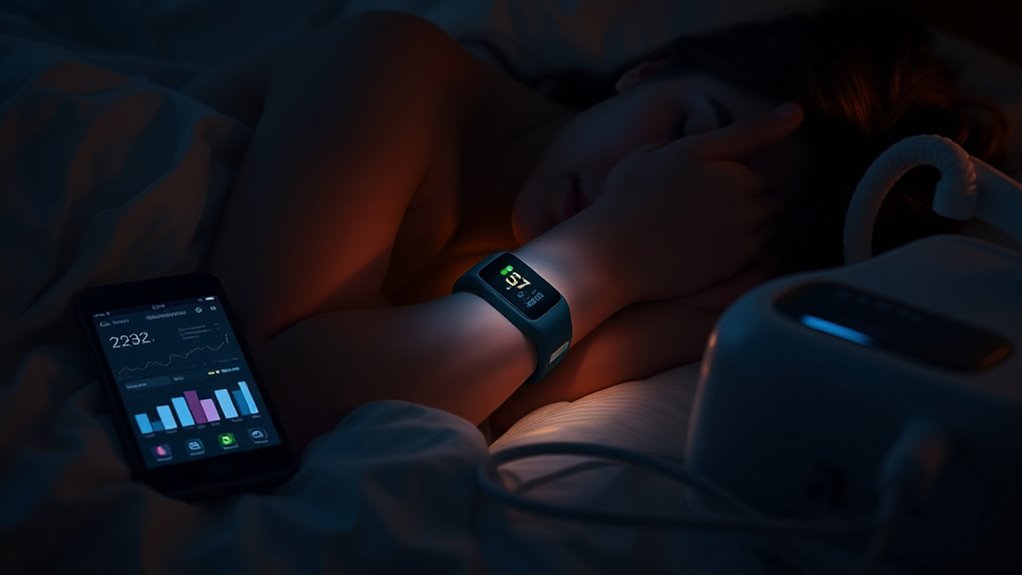
Deciding whether to rely on devices or seek medical help depends on how severe your sleep apnea symptoms are and how well lifestyle changes have worked for you. Wrist wearables accuracy varies, and while many consumer device reliability has improved, they may not detect all cases accurately. If your symptoms are mild or sporadic, a consumer device can offer useful insight and prompt you to consult a healthcare professional if needed. However, if you experience loud snoring, choking, or daytime fatigue that disrupts your life, trusting devices alone isn’t enough. In those cases, you should see a doctor for a thorough sleep study. Professional diagnosis and treatment ensure proper management and help prevent serious health risks associated with untreated sleep apnea.
Tips for Improving Sleep Quality and Addressing Sleep Disorders

Improving sleep quality often starts with understanding and addressing common sleep disorders and habits that disrupt rest. To enhance your sleep, focus on good sleep hygiene, such as maintaining a consistent sleep schedule, creating a relaxing bedtime routine, and avoiding screens before bed. Prioritize comfortable sleep environments that are dark, cool, and quiet. Incorporate techniques like dream analysis to understand recurring themes or anxieties influencing your rest. Here are four tips to help you address sleep issues:
- Establish a regular sleep schedule
- Limit caffeine and alcohol intake late in the day
- Practice relaxation techniques, such as deep breathing
- Keep a sleep journal to track patterns and dreams
These steps can improve sleep quality and help identify underlying sleep disorders.
Frequently Asked Questions
Can Consumer Devices Accurately Diagnose Sleep Apnea at Home?
Consumer devices can’t accurately diagnose sleep apnea at home because their device accuracy varies and they lack the extensive data a doctor’s sleep study provides. While home testing can give you clues, it’s not a substitute for professional evaluation. If you suspect sleep apnea, see a healthcare provider for proper diagnosis. They can conduct thorough testing to ensure you get the right treatment and improve your sleep quality.
What Are the Risks of Relying Solely on Wearable Sleep Trackers?
Relying solely on wearable sleep trackers is like walking a tightrope without a safety net. They might seem helpful, but device accuracy varies, risking false reassurance or overlooked issues. Privacy concerns also loom, as your sensitive data could be exposed or misused. You could miss serious health problems, so don’t let these gadgets be your only guide. Always consult a healthcare professional for an accurate diagnosis and personalized advice.
How Do Sleep Apnea Symptoms Vary Across Different Age Groups?
Age-related symptoms of sleep apnea differ between pediatric and adult populations. In children, you might notice hyperactivity, bedwetting, or difficulty concentrating, while adults often experience loud snoring, daytime fatigue, or morning headaches. As you age, symptoms can become subtler or change entirely. Recognizing these differences helps you understand that early detection and tailored treatment are essential, regardless of age. If you suspect sleep apnea, consult a healthcare professional for proper diagnosis.
Are There Any New Emerging Technologies for Sleep Disorder Detection?
You might think emerging diagnostic tools are just hype, but recent advancements show they’re improving sleep tracking accuracy notably. New technologies like wearable sensors and AI-powered analysis can detect sleep disorders more precisely than before, making early detection easier. While these tools are promising, it’s still wise to consult a healthcare professional for a confirmed diagnosis. These innovations could complement traditional methods, but they shouldn’t replace professional medical advice just yet.
How Do Insurance Policies Cover Sleep Studies and Treatments?
Your insurance coverage varies, but many plans include sleep studies and treatment reimbursement for diagnosed sleep apnea. Check your policy to see what’s covered, as some insurers require prior authorization. Treatment costs like CPAP machines or oral appliances may be partially reimbursed. Contact your provider to understand your benefits, and keep records of all expenses to guarantee you maximize your insurance coverage and streamline treatment reimbursement processes.
Conclusion
While consumer devices can offer helpful insights, they’re no substitute for a visit to the doctor—think of it as your own personal “flying machine” of diagnosis. If you notice signs of sleep apnea, don’t delay seeking professional help. Proper diagnosis and treatment are key to better sleep and health. Remember, even the most advanced gadgets can’t replace expert advice—so don your armor and take action for a good night’s sleep.