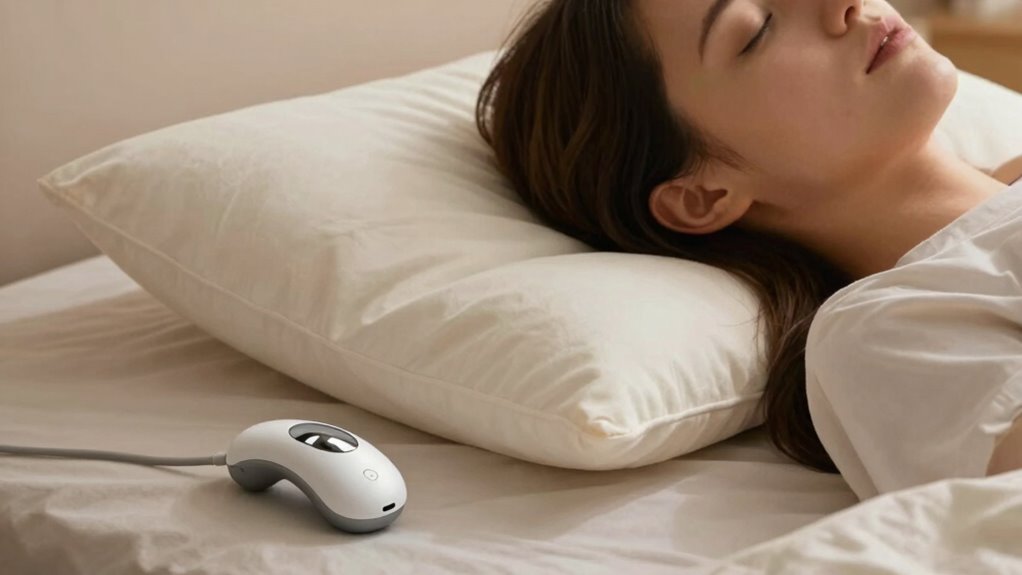
Starting with positioning is the simplest and most effective way to reduce snoring because it directly affects your airway openness during sleep. When you sleep on your back, gravity pulls tissues into your throat, causing blockages and vibrations that lead to snoring. Switching to a side position keeps your airway clearer and helps create smoother airflow. If you want to discover more ways to improve your sleep quality, keep exploring how other adjustments can make a difference.
Key Takeaways
- Positioning directly influences airway openness, reducing tissue collapse and snoring caused by gravity.
- Side sleeping prevents airway narrowing associated with back sleeping, effectively decreasing snoring.
- Positioning modifications are non-invasive, cost-effective, and easy to implement as initial snoring interventions.
- Proper sleep posture supports better breathing techniques, enhancing airflow and reducing airway obstruction.
- Early focus on positioning helps identify effective, personalized solutions before considering advanced treatments.

Ever wondered how to reduce or eliminate snoring effectively? The answer often begins with something as simple as your sleep position. Your sleep posture plays a crucial role in whether you snore or not. When you sleep on your back, gravity pulls your tongue and soft tissues toward the back of your throat, narrowing the airway. This can cause vibrations that produce snoring sounds. Switching to a side sleep position can help keep your airway open, reducing or even stopping snoring altogether. Using pillows or specialized sleep devices to encourage side sleeping can make a noticeable difference.
Sleeping on your side keeps your airway open and reduces snoring effectively.
Beyond adjusting your sleep posture, incorporating proper breathing techniques can also improve your breathing during sleep. Breathing techniques focus on controlling airflow, strengthening your respiratory muscles, and promoting nasal breathing. When you breathe through your nose rather than your mouth, you create a more open and stable airway, which lessens the chances of vibrations that lead to snoring. Techniques like nasal breathing exercises or practicing slow, diaphragmatic breathing before bed can help train your body to favor nasal airflow naturally. Improving your breathing habits can often reduce the likelihood of airway collapse or obstruction during sleep.
Addressing sleep posture and breathing techniques together creates a foundation for effective anti-snoring setups. For example, if you tend to sleep on your back, using a body pillow or a specially designed sleep wedge can help you stay on your side throughout the night. These tools can make maintaining a side position more comfortable and less likely to shift during sleep. Additionally, understanding how your airway anatomy influences snoring can help tailor personalized solutions. Recognizing the impact of airway obstruction on snoring can guide you toward more targeted interventions. Incorporating sleep position awareness can further enhance the effectiveness of these modifications. Moreover, being aware of your airway clearance habits can support better airflow during sleep.
It’s essential to recognize that each person’s anatomy and habits are unique. For some, simple modifications like adjusting sleep posture and practicing breathing techniques may be enough to markedly reduce snoring. For others, these measures serve as a foundation before exploring additional anti-snoring devices or medical interventions. Starting with positioning is often the least invasive yet highly effective approach because it addresses the root causes of airflow obstruction. In fact, understanding how airway structure impacts snoring can help identify the most suitable remedies. When combined with conscious breathing practices, your chances of achieving restful, snore-free sleep increase dramatically.
In the end, the key lies in understanding how your sleep posture influences airflow and how controlled breathing can support a clearer airway. Small changes in how you position yourself and breathe can lead to big improvements in sleep quality, making anti-snoring setups a straightforward yet powerful first step.
anti-snoring side sleeping pillow
As an affiliate, we earn on qualifying purchases.
As an affiliate, we earn on qualifying purchases.
Frequently Asked Questions
Can Positioning Completely Eliminate Snoring?
Positioning can considerably reduce snoring, but it might not eliminate it entirely. By improving your sleep posture, you keep your airways open, which helps with breathing patterns. Sleeping on your side, for example, can prevent airway blockages that cause snoring. However, if snoring persists despite good positioning, underlying issues like nasal obstructions or sleep apnea may be involved, requiring additional treatment or medical advice.
Are There Any Risks With Positional Therapy?
Yes, there are risks with positional therapy—think of it as walking a tightrope over a canyon! Poor sleep posture can cause discomfort, back pain, or even worsen breathing patterns over time. If you stay in one position too long or use uncomfortable devices, you might disturb your sleep quality. Be cautious, listen to your body, and consult a healthcare professional to confirm your sleep posture supports healthy breathing and doesn’t cause new issues.
How Long Does It Take to See Results?
You can usually notice improvements in your snoring within a few nights to a week after making adjustments. Your sleep environment and comfort adjustments play a big role, so make sure your bed and positioning tools are comfortable. Consistently sleeping on your side and maintaining a relaxing sleep environment can speed up results. Be patient, and if you don’t see progress after a couple of weeks, consider consulting a specialist.
Is Positioning Effective for All Types of Snoring?
Positioning can be a game-changer for many types of snoring, but it’s not a miracle cure for all. Your sleep posture and nasal alignment play vital roles; adjusting your sleep position often reduces airway blockage. However, some snoring issues stem from nasal or throat anatomy that positioning alone can’t fix. So, while effective for mild cases, it’s best to combine it with other treatments for persistent snoring.
What Other Treatments Complement Positional Therapy?
You can enhance positional therapy by improving your sleep environment and making lifestyle changes. For instance, creating a comfortable, quiet, and dark sleep space helps reduce snoring triggers. Additionally, losing weight, avoiding alcohol before bed, and quitting smoking can substantially decrease snoring. Combining these strategies with positional therapy addresses multiple causes, offering a more thorough approach to managing snoring effectively.
sleep position wedge for snoring
As an affiliate, we earn on qualifying purchases.
As an affiliate, we earn on qualifying purchases.
Conclusion
By focusing on positioning first, you’re taking a vital step toward quieter nights. Just like a well-placed piece in a puzzle, proper positioning aligns your airways and reduces snoring. It’s simple, effective, and can be the foundation for more advanced solutions if needed. Remember, small adjustments can make a big difference—like tuning a fine instrument. So start with your position, and enjoy the peaceful sleep you deserve.
nasal breathing exercises for sleep
As an affiliate, we earn on qualifying purchases.
As an affiliate, we earn on qualifying purchases.
As an affiliate, we earn on qualifying purchases.