
Deep meditation cannot replace the essential restorative functions of sleep, which involve complex biological processes crucial for your physical and mental health. While meditation helps improve mental clarity and reduce stress, it doesn’t fulfill the body’s need for sleep cycles like REM, necessary for memory, emotional regulation, and immune health. Relying solely on meditation risks neglecting these critical biological needs. Keep exploring to understand how balancing both practices benefits your overall well-being.
Key Takeaways
- Deep meditation cannot replicate the physiological restorative processes of sleep, such as REM cycles.
- Sleep is essential for physical health, immune function, and hormone regulation, which meditation cannot replace.
- Lack of sleep leads to health issues; meditation mainly supports mental and emotional well-being.
- Meditation can help manage stress caused by sleep deprivation but does not eliminate the need for sleep.
- A balanced routine combines sufficient sleep with meditation for optimal mental and physical health benefits.
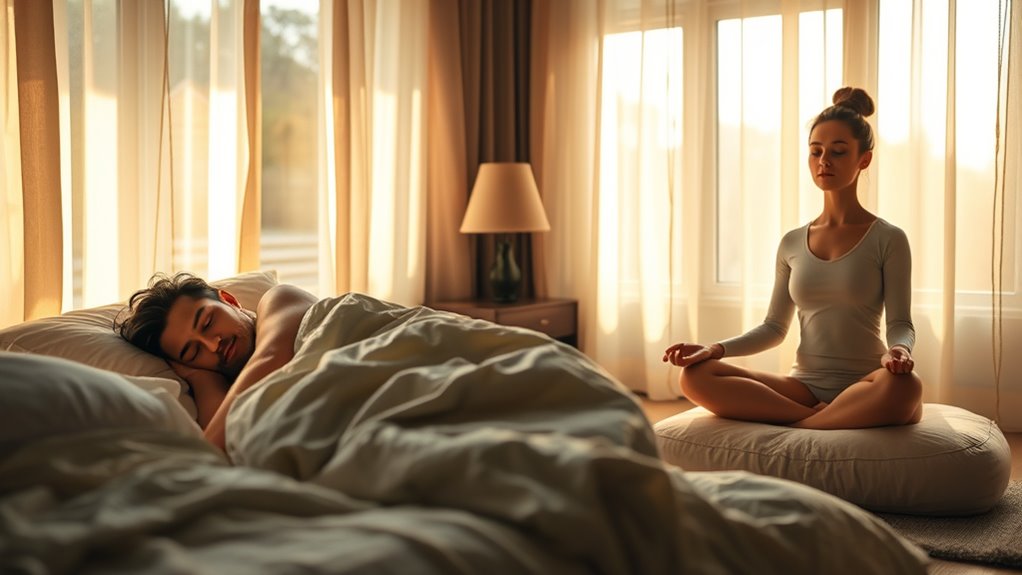
When it comes to achieving mental clarity and overall well-being, many people turn to sleep or meditation, but understanding their differences can help you choose the right practice for your needs. Sleep is a biological necessity, allowing your body and brain to rest, repair, and process information. Meditation, on the other hand, is a mental practice aimed at cultivating awareness, reducing stress, and enhancing focus. While both can improve your mental state, they serve distinct purposes. A common question is whether deep meditation can replace sleep hours, especially considering the concept of dream deprivation. Dream deprivation occurs when you go without REM sleep, which is essential for emotional regulation, memory consolidation, and cognitive function. Without adequate REM sleep, you may experience irritability, difficulty concentrating, and emotional instability. Meditation benefits, however, are primarily related to mental clarity, stress reduction, and emotional balance, but they don’t provide the restorative functions of sleep. Even the most profound meditation sessions can’t replicate the biological processes that occur during sleep, especially REM cycles.
You might wonder if practicing meditation can compensate for lack of sleep or if it can somehow reduce the need for sleep altogether. The truth is, no matter how deep or frequent your meditation sessions are, they can’t fully substitute for sleep. Sleep involves complex physiological processes that meditation simply can’t emulate. When you’re sleep-deprived, your body accumulates a sleep debt that affects your immune system, hormone regulation, and overall health. Meditation benefits are substantial for mental health, but they are supplementary rather than a replacement. It’s safe to say that meditation can help alleviate some of the cognitive and emotional stress caused by sleep deprivation, but it doesn’t eliminate the need for restorative sleep cycles.
If you’re considering skipping sleep for meditation, think twice. While meditation can enhance your mental resilience and help manage stress, it doesn’t address the physical needs of your body. To optimize your mental and physical health, aim for a healthy balance—prioritize enough sleep and incorporate meditation as a complementary practice. Both are valuable, but they work best when used together, not as substitutes. Remember, sleep restores your body and brain at a fundamental level, while meditation hones your mental focus and emotional stability. Understanding this distinction helps you create a wellness routine that truly supports your overall well-being, rather than risking the dangers of dream deprivation or neglecting essential sleep hours.
Frequently Asked Questions
Can Meditation Improve Sleep Quality?
Yes, meditation can improve your sleep quality by reducing sleep deprivation and calming your mind. When you practice meditation regularly, it enhances your relaxation response, making it easier to fall asleep and stay asleep. While it may not fully replace sleep hours, meditation boosts your overall sleep effectiveness. Consistent practice helps lower stress levels, relaxes your body, and creates a peaceful mental state, leading to more restorative sleep every night.
Is It Possible to Meditate Instead of Sleeping Regularly?
You can’t replace sleep with meditation, even if you’re a beginner. Studies show sleep deprivation effects include impaired cognition and immune function, which meditation can’t fully prevent. While meditation for beginners can boost relaxation, it doesn’t provide the restorative functions of sleep. Deep meditation may complement your rest, but it shouldn’t substitute your regular sleep hours, as your body needs the full cycle to recover and function most effectively.
What Are the Health Risks of Reducing Sleep for Meditation?
Reducing sleep for meditation can lead to serious health risks. Sleep deprivation affects your immune system, cognitive function, and mood, increasing your risk for heart disease and mental health issues. While meditation offers benefits, skipping sleep regularly harms your body and mind. You need adequate sleep to recover and stay healthy, so it’s essential to balance meditation with proper rest rather than replacing sleep entirely.
How Long Should One Meditate to Replace Sleep?
You can’t realistically replace sleep with meditation, as it’s like trying to outshine the night with a candle. Meditation duration needed for sleep replacement simply isn’t feasible; most experts recommend 20-30 minutes daily for benefits, but it won’t meet your body’s need for restorative sleep. Sleep replacement feasibility remains low, so prioritize good sleep hygiene and use meditation as a supplement, not a substitute.
Does Meditation Impact REM Sleep Cycles?
Meditation can influence REM sleep by promoting brainwave modulation, which may enhance dream quality. While it doesn’t replace REM cycles entirely, regular meditation can improve your overall sleep pattern, leading to more vivid dreams and better rest. You might notice that deep meditation helps regulate your sleep architecture, supporting dream enhancement and mental clarity. However, it’s essential to maintain a balanced sleep schedule alongside meditation for ideal health benefits.
Conclusion
While deep meditation can refresh your mind like a cool breeze, it can’t fully replace the essential role of sleep. Sleep is the anchor that keeps your body and brain functioning smoothly, like a well-oiled machine. Meditation offers clarity and calm, but it’s only part of the puzzle. Think of it as a side dish—delicious and beneficial, yet not a substitute for the main course. Prioritize both to keep your mind sharp and your body healthy.