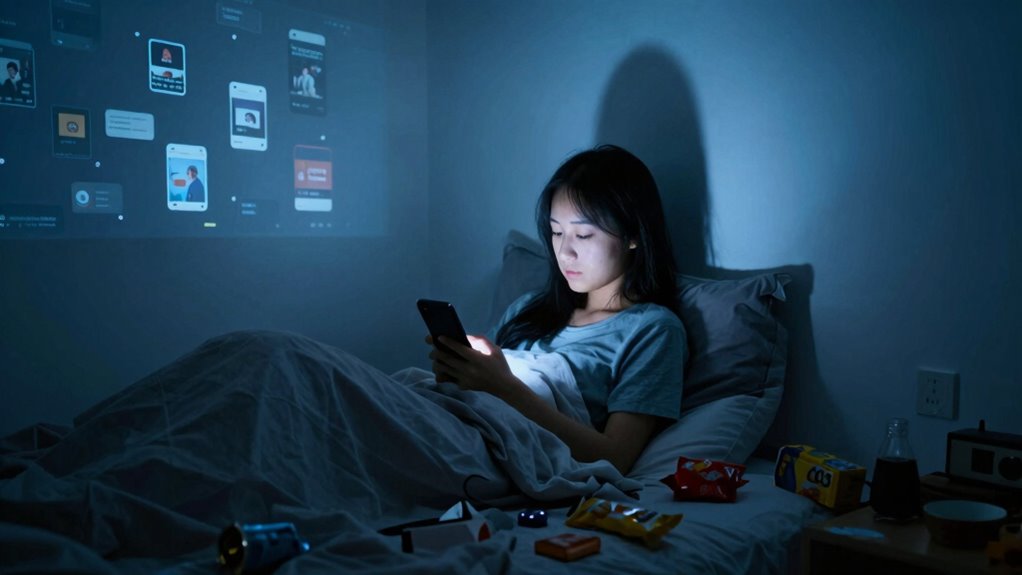

Evening doomscrolling feels impossible to quit because your brain craves quick dopamine hits from social media and distressing news, especially when you’re relaxed and vulnerable at night. Checking your phone for a few minutes can easily turn into hours as your brain seeks that reward, reinforcing the habit. Over time, it becomes harder to break because your mind associates nighttime with stress relief. If you keep exploring, you’ll discover how these habits form and ways to overcome them.

Get health and wellness essentials delivered free — and shop member deals
- Fast, free delivery on millions of items
- Access to Prime Big Deal Days deals on October 6–7
- Prime Video, Amazon Music and more included
Key Takeaways
- Nighttime reduces self-control, making it harder to resist the addictive dopamine rush from social media notifications.
- The brain seeks quick rewards, reinforcing habitual scrolling as a coping mechanism for underlying worries.
- Distressing news exposure increases anxiety, making digital distraction a tempting way to avoid emotional discomfort.
- Over time, digital habits become deeply ingrained, creating a dependency that feels difficult to break at night.
- The cycle of stress and relief reinforces nighttime doomscrolling as an automatic, hard-to-quit behavior.
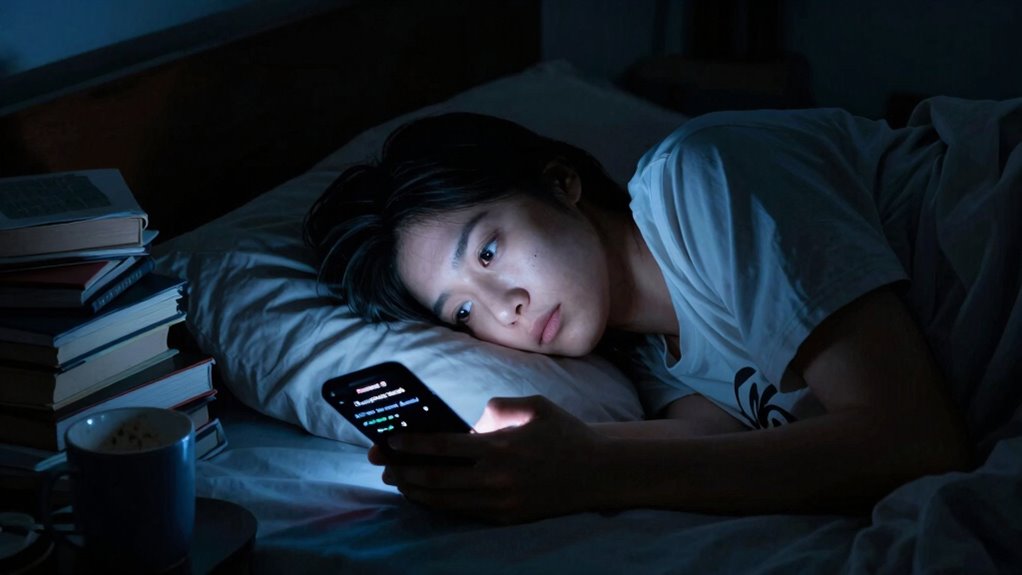
As night falls, many of us find ourselves caught in the cycle of evening doomscrolling, scrolling through endless streams of unsettling news and social media updates. It’s a habit that sneaks up on you, often feeling impossible to break, even when your mind is begging for a break. You might tell yourself you’ll just check for a few minutes, but before you know it, hours have slipped away. This pattern feeds into your digital habits, making it harder to disconnect, especially when your brain craves the immediate dopamine hit that comes with new notifications or shocking headlines. Over time, this creates a reliance on digital habits that become harder to break, especially at night when your guard is down and your mind is more vulnerable. Recognizing the addictive nature of social media can help motivate you to establish healthier boundaries. Additionally, understanding how your brain responds to these stimuli can empower you to develop strategies that reduce your reliance on these digital distractions, particularly by understanding the brain’s natural response to uncertainty and fear.
Your mental health takes a hit as you fall into this pattern. Constant exposure to distressing news can heighten feelings of anxiety and helplessness, making it difficult to unwind or get quality sleep. The more you scroll, the more your brain associates nighttime with stress, reinforcing the cycle. It becomes a way of avoiding deeper worries or feelings, but it only intensifies the emotional toll. Trying to quit feels overwhelming because your brain has wired itself to seek out these quick hits of distraction as a way of coping. Additionally, these habits can contribute to a diminished awareness of how our digital environment impacts our overall well-being. Recognizing the addictive tendencies behind this behavior is key to making lasting changes and protecting your mental health over time.
blue light blocking glasses for sleep
As an affiliate, we earn on qualifying purchases.
As an affiliate, we earn on qualifying purchases.
Frequently Asked Questions
How Does Doomscrolling Affect Mental Health Long-Term?
Doomscrolling can harm your mental health long-term by increasing emotional exhaustion and cognitive overload. As you constantly consume negative news, you may feel drained, anxious, and overwhelmed, making it harder to focus or relax. Over time, this cycle can lead to depression or burnout. By limiting your exposure and practicing mindfulness, you can protect your mental well-being and reduce the adverse effects of persistent doomscrolling.
What Are Some Quick Strategies to Break the Habit?
You’re caught in a cycle, but quick wins can break it. Start by taking mindful breaks—pause, breathe, and notice your surroundings. Replace scrolling with distraction techniques like stretching or listening to music. Set a timer for your phone to limit usage, and create a calming evening routine. These simple steps can interrupt the urge, helping you regain control and make evening doomscrolling a thing of the past.
Why Do People Feel More Compelled to Doomscroll at Night?
You feel more compelled to doomscroll at night because your nighttime habits include seeking distraction and comfort after a long day. The quiet, darkness, and lack of distractions make it easier to keep scrolling, even when it disrupts your sleep. This sleep disruption increases fatigue, reinforcing the cycle. Plus, your brain craves the dopamine hit from new information, making it harder to put your phone down and break the habit.
Can Technology Detox Programs Help Reduce Evening Doomscrolling?
Technology detox programs can definitely help reduce evening doomscrolling if you embrace them fully. They encourage a digital detox, breaking your mindless scrolling cycle. By practicing mindful browsing, you’ll regain control over your screen time and reduce the feeling of being pulled into an endless vortex. These programs set boundaries and promote healthier habits, making it easier to resist the urge to endlessly scroll at night, like escaping a never-ending maze.
Are There Specific Personality Traits Linked to Frequent Doomscrolling?
You might notice that certain personality traits, like high neuroticism or impulsivity, make you more prone to compulsive behaviors such as doomscrolling. These traits heighten your emotional sensitivity and reduce your impulse control, making it harder to break the cycle. If you recognize these traits in yourself, understanding them can help you develop strategies to manage your habits better and reduce your evening screen time.
As an affiliate, we earn on qualifying purchases.
Conclusion
Evening doomscrolling can feel like a tempting lullaby, gently pulling you into its quiet embrace. But remember, sometimes stepping away offers a brighter horizon, just beyond the flicker of your screen. By choosing to pause, you give yourself a refreshing gust of fresh air—a chance to reset and find peace. So, the next time it beckons, consider a softer path forward; your mind and heart will thank you for it.
nighttime meditation app subscription
As an affiliate, we earn on qualifying purchases.
As an affiliate, we earn on qualifying purchases.
distracting news blocker for smartphones
As an affiliate, we earn on qualifying purchases.
As an affiliate, we earn on qualifying purchases.
Halloween Picks
halloween
As an affiliate, we earn on qualifying purchases.