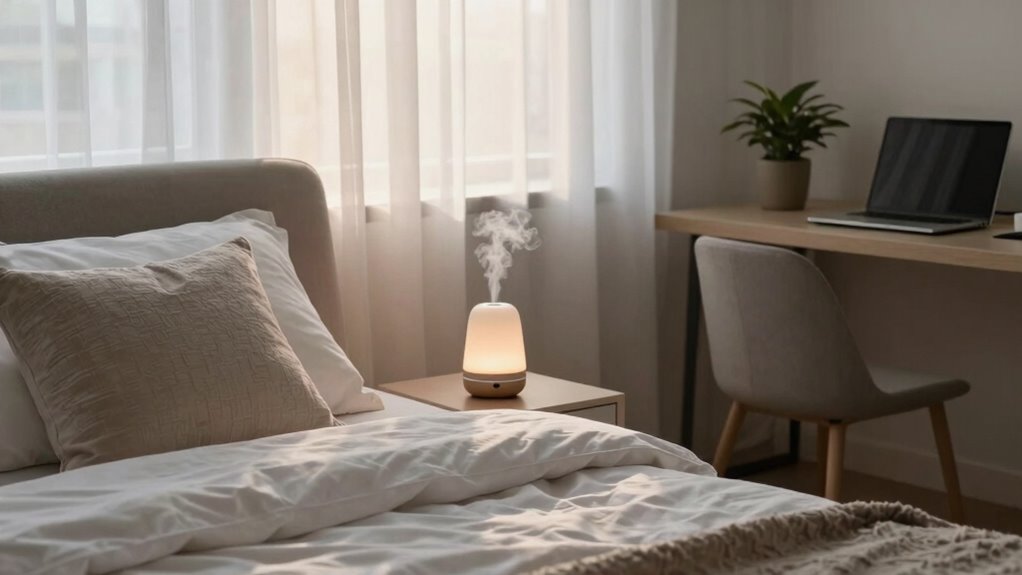

Better sleep for high-stress professionals means sticking to a consistent schedule and creating a calming bedroom environment—cool, dark, and quiet. Avoid screens, caffeine, and heavy meals before bed. Practice relaxation techniques like deep breathing or journaling to clear your mind. Regular exercise and managing stress also help improve sleep quality. Prioritizing these habits supports restorative rest and boosts resilience. If you keep exploring, you’ll discover more ways to optimize your sleep and reduce stress effectively.

Get health and wellness essentials delivered free — and shop member deals
- Fast, free delivery on millions of items
- Access to Prime Big Deal Days deals on October 6–7
- Prime Video, Amazon Music and more included
Key Takeaways
- Consistent sleep schedules and a calming, distraction-free environment promote restorative rest and improve sleep quality.
- Incorporating relaxation techniques and stress management practices reduces mental clutter and eases transition into sleep.
- Limiting screen time and avoiding heavy meals or caffeine before bed support healthy sleep-wake cycles.
- Prioritizing sleep as essential for resilience enhances overall well-being and stress management.
- Developing a calming pre-sleep routine signals the body to wind down and fosters more restful sleep.

High-stress professionals often struggle to get restful sleep, yet quality rest is essential for maintaining their performance and well-being. When your mind races after a long day, it’s easy to toss and turn, feeling frustrated that sleep remains elusive. To experience better sleep, focusing on sleep hygiene becomes indispensable. Sleep hygiene involves creating habits and an environment that promote consistent, restorative rest. This means establishing a regular sleep schedule—going to bed and waking up at the same times each day helps regulate your internal clock. It also involves making your bedroom conducive to sleep: keep it cool, dark, and quiet, and remove distractions like screens. Avoid caffeine or heavy meals close to bedtime, as these can interfere with falling asleep or cause disruptions during the night.
Establish a consistent sleep schedule and create a calming, distraction-free bedroom environment for better rest.
Stress management plays an equally essential role in improving sleep quality. When stress levels stay high, your body remains in a heightened state of alertness, making it difficult to unwind and relax. Incorporate relaxation techniques into your routine, such as deep breathing exercises, meditation, or progressive muscle relaxation, to help calm your mind before bed. Regular physical activity during the day can also reduce stress and improve sleep, but avoid vigorous exercise close to bedtime, as it may energize you instead. Limiting exposure to screens an hour before sleep helps reduce blue light, which can suppress melatonin production—the hormone that signals your body it’s time to sleep. Additionally, understanding how sleep disorders impact high-stress professionals can motivate targeted treatment if sleep issues persist despite good sleep hygiene. Recognizing the importance of sleep in overall biodiversity and sustainability can further reinforce the need to prioritize restorative rest amidst busy schedules. Good sleep practices can also help mitigate the effects of sleep disturbances, which are common among those under high stress. Developing awareness about sleep-wake cycles and how they influence alertness and fatigue can empower you to make better choices for your sleep health.
You also need to be mindful of your mental state. High-stress professionals often carry worries or racing thoughts into the night. Journaling for a few minutes before bed can help clear your mind, putting worries aside and easing your shift into sleep. Establishing a pre-sleep routine signals to your brain that it’s time to wind down. This might include reading a book, taking a warm bath, or listening to calming music. These habits reinforce sleep hygiene and can reduce the mental clutter that keeps you awake. Incorporating relaxation techniques into your evening routine can significantly enhance your ability to transition into restful sleep more easily. Being aware of your mental health and managing it effectively can also improve sleep quality and overall resilience. Consistently practicing these habits can gradually re-establish healthier sleep patterns, especially important for those managing high stress levels daily.
As an affiliate, we earn on qualifying purchases.
Frequently Asked Questions
How Long Should High-Stress Professionals Aim to Sleep Each Night?
You should aim for 7 to 9 hours of sleep each night. Prioritize good sleep hygiene by sticking to a consistent sleep schedule, even on weekends, to support your circadian rhythm. Avoid screens before bed, limit caffeine intake, and create a relaxing environment. By maintaining these habits, you’ll improve your sleep quality, reduce stress, and wake up refreshed and ready to tackle your high-stress professional demands.
Can Specific Foods Improve Sleep Quality for Stressed Individuals?
Did you know that including foods rich in magnesium, like almonds or spinach, can boost your sleep quality? Specific foods can indeed improve sleep for stressed individuals. By making diet modifications and employing nutritional strategies—such as eating complex carbs or magnesium-rich snacks—you help calm your nervous system. These choices promote relaxation, making it easier to drift off and enjoy restful sleep, even during high-stress days.
How Does Exercise Impact Sleep for High-Stress Workers?
Exercise boosts your sleep by reducing stress levels and promoting relaxation. Regular workout routines help clear your mind and release built-up tension, making it easier to fall asleep and stay asleep. High-stress workers often find that even moderate activity, like brisk walking or yoga, can improve sleep quality considerably. Prioritize consistent exercise, especially earlier in the day, to maximize stress reduction and enjoy more restorative sleep at night.
Are Sleep Aids Effective for Managing Stress-Related Sleep Issues?
Sleep aids might seem like a quick fix, but they often lead to pharmaceutical dependence, making your sleep issues worse long-term. Ironically, many high-stress pros find relief through natural remedies like meditation or herbal teas, which promote genuine rest without dependency. While sleep aids can be tempting, exploring sustainable options helps you break the cycle, ensuring better, healthier sleep that truly resets your stress levels.
What Are Quick Relaxation Techniques Before Bedtime?
You can quickly relax before bed with simple techniques like breathing exercises and progressive relaxation. Focus on deep, slow breaths to calm your nervous system, inhaling through your nose and exhaling through your mouth. Then, practice progressive relaxation by tensing and releasing muscle groups, starting from your toes and moving up. These methods reduce stress, ease your mind, and help you fall asleep faster.
As an affiliate, we earn on qualifying purchases.
Conclusion
Achieving better sleep isn’t just a small change; it’s a game-changer that can transform your entire life. When you prioritize winding down, establish routines, and create a peaceful sleep environment, you’ll discover the secret to feeling energized and unstoppable every day. Don’t settle for exhaustion—embrace these habits and watch your stress melt away faster than snow in July. Remember, you hold the power to turn restless nights into nights of restorative bliss.
weighted blanket for stress relief
As an affiliate, we earn on qualifying purchases.
As an affiliate, we earn on qualifying purchases.
sleep journal for high-stress professionals
As an affiliate, we earn on qualifying purchases.
As an affiliate, we earn on qualifying purchases.
Fall Picks
fall essentials
As an affiliate, we earn on qualifying purchases.