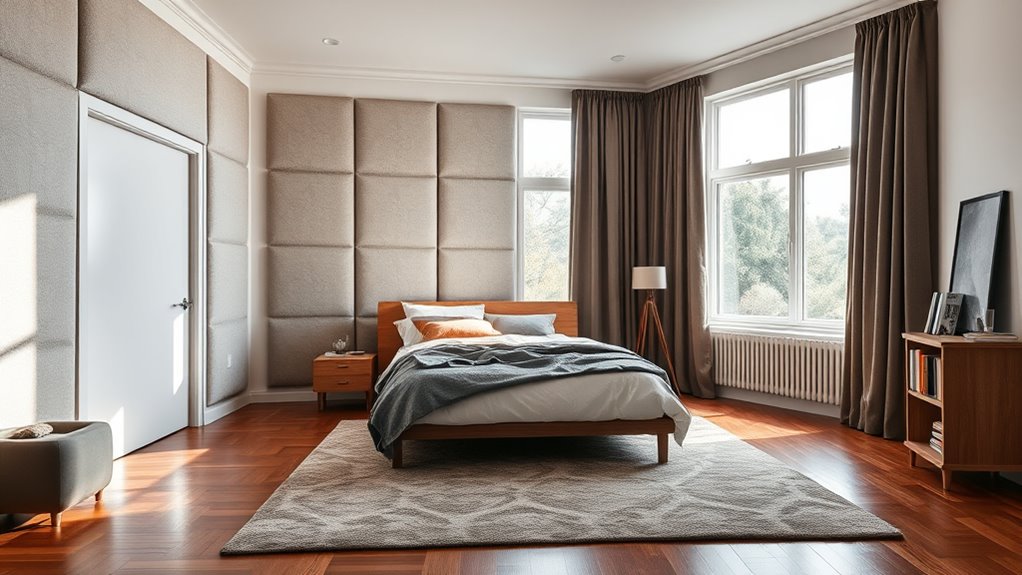

To soundproof your bedroom, start by identifying the main noise sources and using simple solutions like sealing gaps around windows and doors, adding rugs or heavy curtains, and rearranging furniture to block noise paths. You can also install acoustic panels or soundproof curtains for better results. If noise persists, professional options are available. Keep exploring to discover tips and strategies that match your needs and budget for a quieter sleep space.
Key Takeaways
- Assess external noise sources and determine if they significantly disrupt sleep or concentration before investing in soundproofing.
- Use simple DIY solutions like sealing gaps, adding rugs, heavy curtains, and repositioning furniture to reduce noise infiltration.
- Enhance noise absorption with acoustic panels, foam, and soft materials that dampen sound waves and echoes effectively.
- Consider professional soundproofing if noise persists, especially from traffic or neighbors, for long-lasting and comprehensive results.
- Balance your budget, effort, and noise reduction needs to decide whether basic DIY fixes suffice or if advanced solutions are necessary.
Understanding the Basics of Soundproofing

Have you ever wondered how soundproofing really works? Many soundproofing myths suggest that blocking all noise is impossible, but understanding noise frequency helps clarify what’s achievable. Noise frequency refers to the pitch or tone of sound; low frequencies like bass are harder to block than high frequencies like chatter. Effective soundproofing involves absorbing or blocking specific sound waves, not just adding mass. Materials like acoustic panels, insulation, or dense drywall target different noise frequencies. Keep in mind, not all noise is equal, and some sounds are easier to reduce than others. By understanding these basics, you can choose the right approach for your bedroom. This knowledge dispels myths and sets realistic expectations about what soundproofing can accomplish. Additionally, selecting the proper soundproofing materials can significantly improve your results. Understanding sound wave behavior and soundproofing techniques allows for more targeted and efficient noise reduction strategies. Recognizing the importance of material density can help in choosing effective barriers to block unwanted sounds. Incorporating sound absorption methods can further enhance noise control by reducing echo and reverberation.
Identifying When Soundproofing Is Necessary
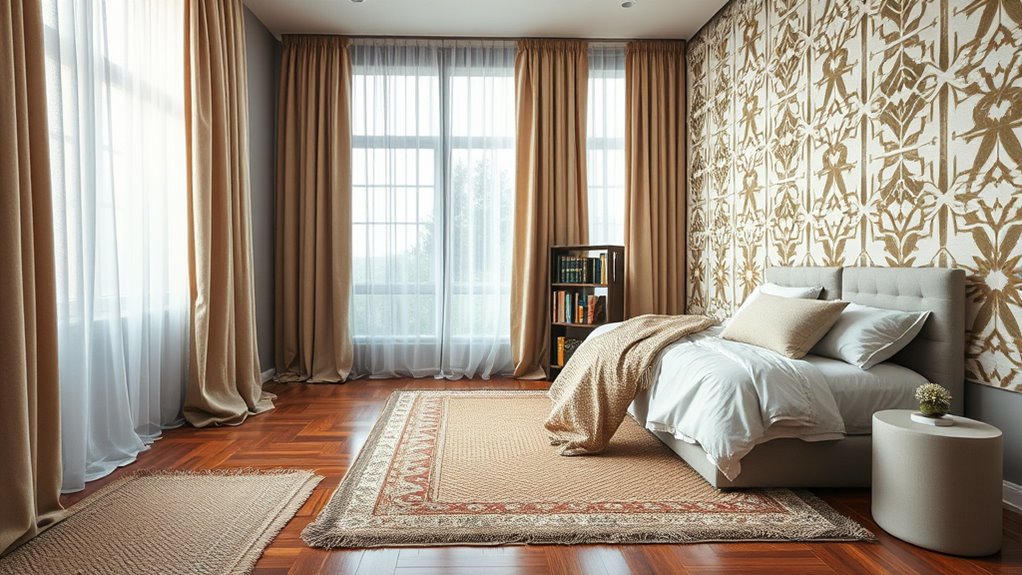
Recognizing when soundproofing is necessary helps you determine if the effort and cost are justified. If noise pollution from outside sources or neighboring rooms causes frequent sleep disturbance, then soundproofing can considerably improve your quality of life. Pay attention to how often noise disrupts your rest or concentration. If you find yourself waking up or feeling fatigued due to persistent sounds, it’s a clear sign that soundproofing could help. Additionally, consider if external noise intrudes during quiet times, making it hard to relax or work. Not every bedroom needs extensive soundproofing—only when noise pollution impacts your sleep, focus, or overall comfort. Understanding the Power of Imagination can also inspire creative solutions to noise issues, such as innovative soundproofing techniques or reimagining your space for better tranquility. Developing a noise management strategy tailored to your environment can help you address persistent disturbances effectively. Sometimes, landscape design elements like strategic planting can also serve as natural sound barriers, enhancing the effectiveness of your soundproofing efforts. For instance, adding dense foliage or shrubs can act as a natural noise barrier, reducing sound transmission from outside sources. Identifying these issues ensures you invest wisely in solutions that truly make a difference.
Common Sources of Noise in Bedrooms

Several common sources of noise can disturb your sleep and comfort in the bedroom. Noise pollution from traffic, neighbors, or household appliances often disrupts your sleeping habits, making it harder to fall asleep or stay asleep. Even faint sounds, like late-night footsteps or conversations, can be distracting if your room isn’t well-insulated. Pets, HVAC systems, and electronic devices also contribute to ambient noise levels, affecting your overall sleep quality. Understanding these sources helps you identify the main culprits interfering with your rest. When noise enters your space regularly, it impacts not only your sleep but also your daily functioning. Recognizing where noise comes from is the first step toward creating a quieter, more restful environment. Additionally, incorporating smart home solutions like noise sensors or automated sound masking devices can further help minimize disturbances. Proper soundproofing techniques, such as adding insulation or sealing gaps, can significantly reduce unwanted noise infiltration, especially in homes with poor insulation. Knowing about the materials and construction of your home can guide more effective soundproofing strategies. Furthermore, understanding the acoustic properties of different materials can help you choose the best options for reducing noise transfer.
Simple Strategies for Reducing Noise Without Major Renovations
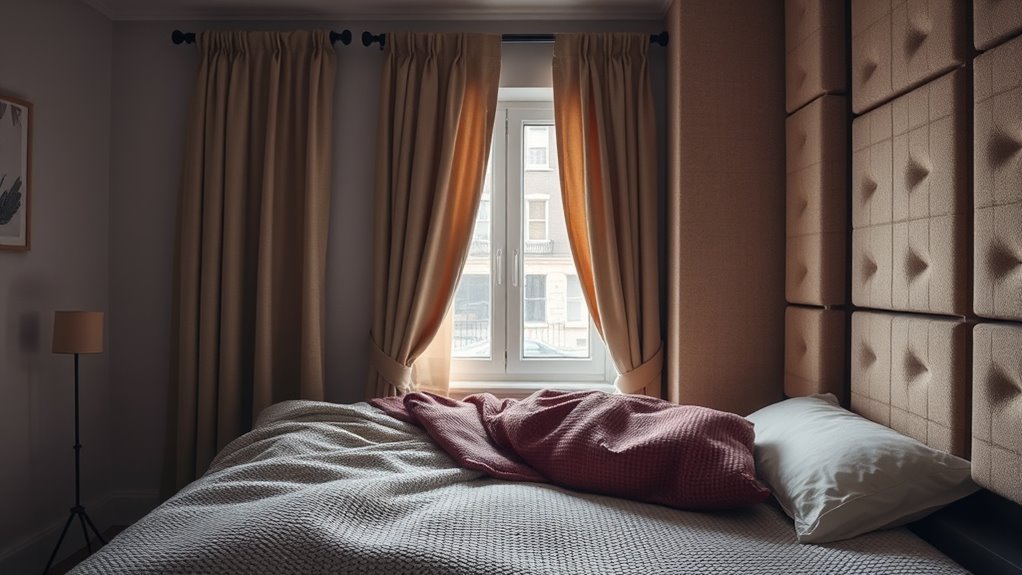
You don’t need to tear down walls or hire contractors to make your bedroom quieter. Simple strategies can markedly reduce noise levels. Start by rearranging furniture to block sound paths; for example, placing a bookshelf against shared walls adds mass and absorbs sound. Incorporate decorative wall art—such as fabric tapestries or padded panels—to help dampen noise without sacrificing style. Consider feng shui considerations by positioning your bed away from noise sources and ensuring a balanced, calming environment. Use rugs or carpets on the floor to absorb sound vibrations. Heavy curtains or window covers also help reduce outside noise. Additionally, investing in soundproofing techniques can further improve your bedroom environment by filtering out airborne pollutants and allergens. Incorporating sound vibrations through the use of certain musical instruments or sound therapy practices can enhance relaxation and contribute to a quieter space. Applying sound absorption materials, like acoustic panels or foam, can significantly diminish echo and unwanted noise, making your bedroom more peaceful. Utilizing smart home automation devices such as noise sensors or automated window coverings can help monitor and control noise levels more effectively. These small changes won’t require major renovations but can make a noticeable difference, creating a more peaceful, restful space.
Effective Materials and Products for Soundproofing
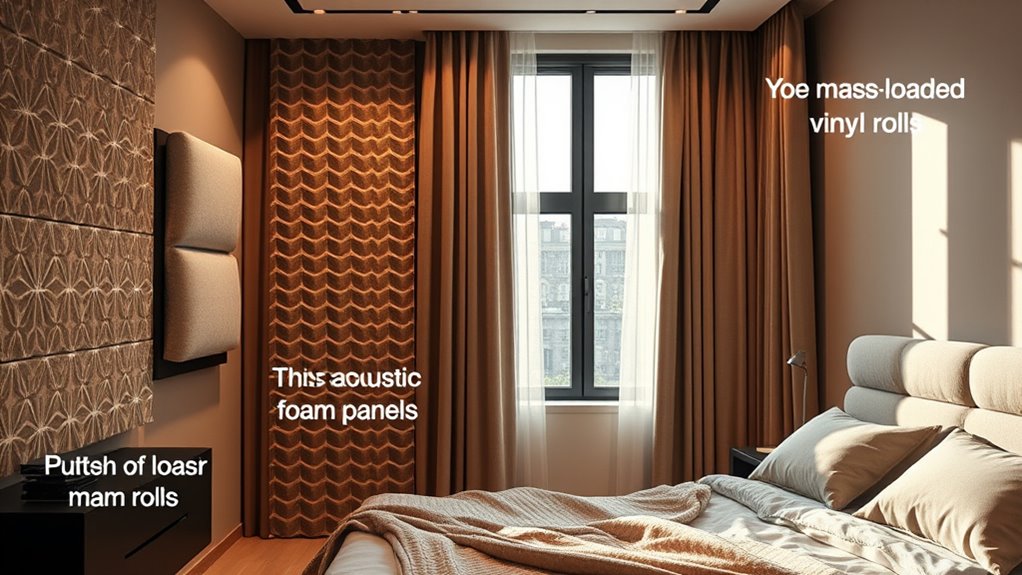
To effectively soundproof your bedroom, consider using materials like acoustic foam panels that absorb sound waves. Soundproofing curtains can also block noise coming through windows and add an extra layer of insulation. These products are easy to install and make a noticeable difference in reducing unwanted noise. Incorporating vintage-inspired acoustic treatments can enhance both the aesthetic and acoustic performance of your space.
Acoustic Foam Panels
Acoustic foam panels are a popular choice for soundproofing because they effectively absorb sound waves and reduce echoes in your bedroom. Made from specialized materials, these panels improve sound absorption by trapping sound energy and preventing it from bouncing around the room. They come in various shapes, sizes, and thicknesses to suit different needs and aesthetic preferences. When installed correctly on your walls, acoustic foam panels can markedly dampen unwanted noise, such as street sounds or voices. They are especially useful for creating a more controlled acoustic environment, whether you’re working, relaxing, or recording. Additionally, understanding the sound absorption process can help you optimize your setup for better noise control. Using the correct soundproofing materials enhances the overall effectiveness of your soundproofing efforts. Keep in mind that while acoustic foam enhances sound absorption, it’s best combined with other soundproofing methods for thorough noise reduction. Understanding soundproofing materials can help you choose the most effective setup for your space. Incorporating soundproofing techniques tailored to your specific needs can maximize noise reduction and comfort in your bedroom.
Soundproofing Curtains
Soundproofing curtains offer an effective way to block out noise and improve your bedroom’s acoustics. They’re a practical window treatment that can considerably reduce sound transmission from outside. When choosing these curtains, look for thick, dense fabrics like velvet or specially designed soundproof materials. To maximize their effectiveness, consider furniture rearrangement to minimize gaps and ensure curtains are close-fitting. Hanging them properly, from ceiling to floor, creates a barrier that absorbs sound waves. While they won’t eliminate all noise, they’re a cost-effective addition that enhances privacy and tranquility. Pairing soundproof curtains with other strategies, like sealing gaps or adding furniture, can lead to a noticeably quieter, more comfortable bedroom environment.
DIY Soundproofing Techniques You Can Try
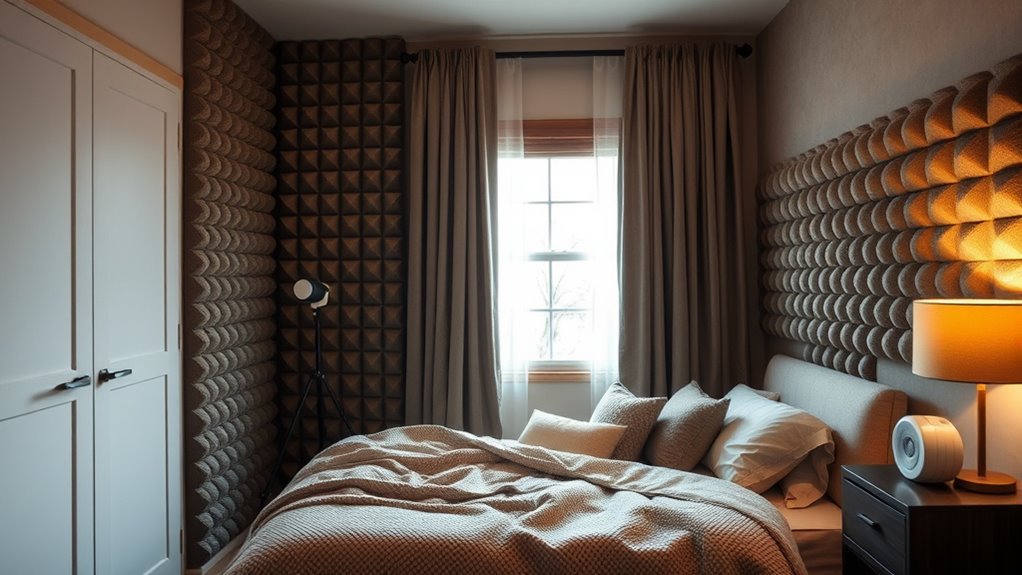
Start by sealing any gaps or cracks around windows and doors to block sound leaks. Next, add soft materials like rugs, curtains, or foam panels to absorb noise within your room. These simple DIY steps can make a noticeable difference in reducing unwanted sound.
Sealing Gaps and Cracks
Even the smallest gaps and cracks can let noise seep into your bedroom, undermining your efforts to create a quiet space. To block sound from entering, start by sealing door gaps with door seals, which create a tight barrier and prevent sound leaks. For windows, consider using window plugs—fabric or foam inserts that fit snugly into the frame—to reduce noise transmission. Check for cracks around window frames and seal them with acoustic caulk or weatherstripping. Don’t forget to inspect the edges of your door and window frames regularly; sealing these areas is vital for effective soundproofing. These quick fixes are inexpensive and simple to implement, making a noticeable difference in reducing unwanted noise and enhancing your bedroom’s tranquility.
Adding Soft Materials
Have you considered adding soft materials to your bedroom to dampen noise? Soft materials are an effective way to improve bedroom acoustics by absorbing sound waves and reducing echo. You can start by placing thick rugs or carpets on the floor to minimize footstep noise and airborne sounds. Hang heavy curtains or drapes over windows to block external noise and prevent sound leakage. Adding upholstered furniture or oversized cushions can further absorb sound within the room. Wall hangings, such as tapestries or fabric art, also help diffuse sound waves. By incorporating these soft materials, you create a more acoustically friendly environment, making your bedroom quieter and more peaceful. These simple DIY steps can markedly enhance your soundproofing efforts without major renovations.
Professional Soundproofing Solutions and When to Consider Them
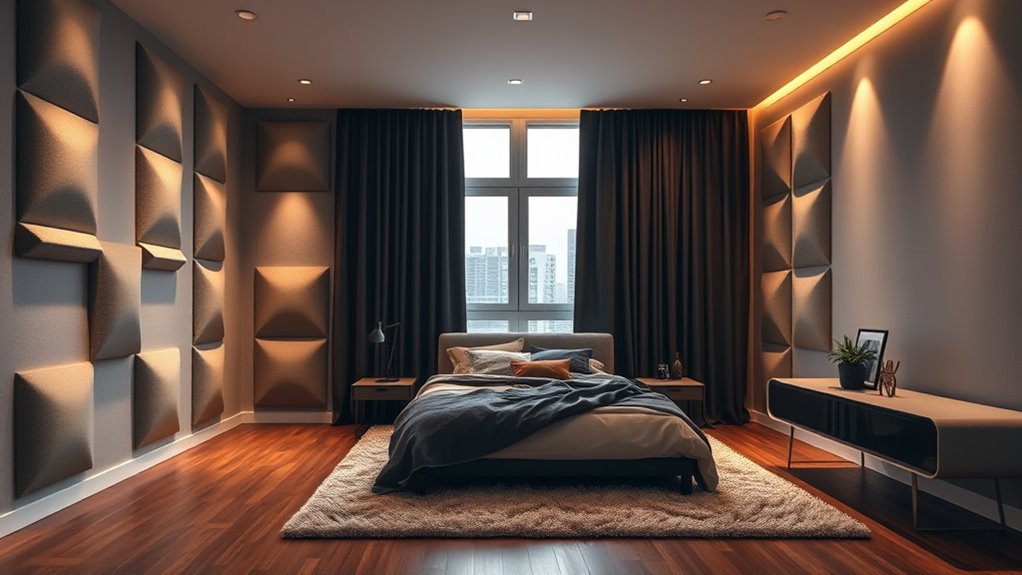
When DIY methods fall short of your noise reduction goals, professional soundproofing can provide a more effective and lasting solution. Hiring a soundproofing contractor ensures expert assessment of your space and tailored strategies that address specific noise issues. These professionals use high-quality materials and perform professional installation, which guarantees the best results. If you’re dealing with persistent noise from neighbors, traffic, or other sources, investing in professional solutions can save you time and effort in the long run. While DIY methods can help with minor problems, a professional approach tackles larger issues more reliably. Consider professional soundproofing when you need a significant reduction in noise, and want a durable, seamless finish that improves your bedroom’s comfort and privacy.
Balancing Cost, Effort, and Results for a Quieter Bedroom
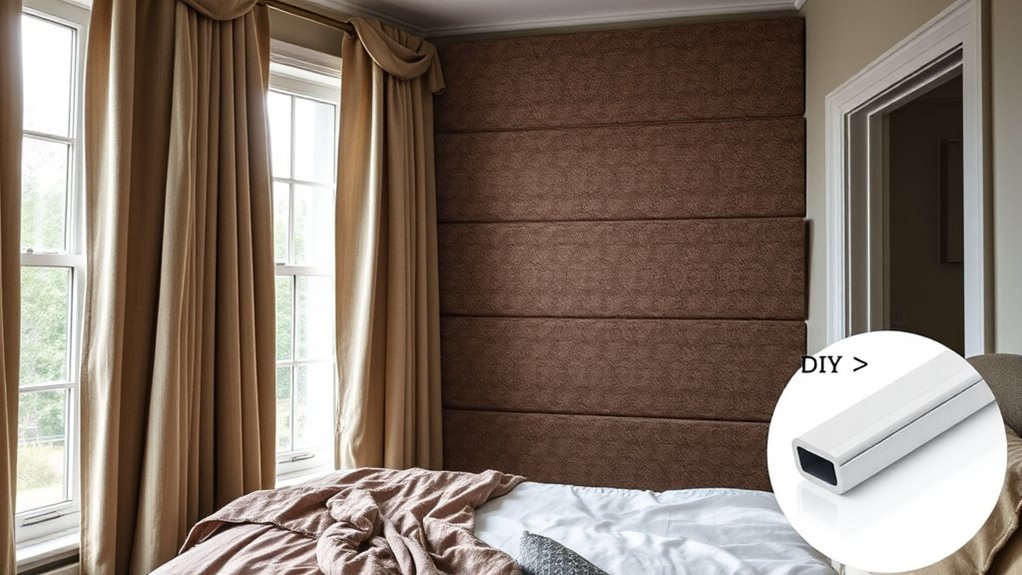
Balancing cost, effort, and results is essential when improving your bedroom’s soundproofing, especially since budget and time constraints vary from person to person. You need to weigh cost considerations against the effectiveness of each solution. For example, investing in high-end materials might bring better results but can be costly and labor-intensive. On the other hand, simple DIY fixes like sealing gaps or adding rugs are inexpensive and easy but may offer limited noise reduction. Consider your priorities: if you’re seeking significant soundproofing, you might accept higher effort and expense. For minor improvements, focus on quick, affordable tweaks. Striking the right equilibrium ensures you get the best results without overspending or wasting effort on ineffective methods.
Frequently Asked Questions
How Long Does It Take to See Results From Soundproofing?
You’ll notice some improvements in soundproofing effectiveness within a few days, but the full results often take 2 to 4 weeks, depending on your soundproofing timeline and methods used. Factors like insulation, sealing gaps, and adding mass can speed up the process. Be patient, as consistent application of soundproofing measures gradually reduces noise. Keep monitoring, and you’ll see the effectiveness of soundproofing increase over time.
Can Soundproofing Improve Room Acoustics Besides Noise Reduction?
Yes, soundproofing can improve your room’s acoustics beyond noise reduction. By adding decorative acoustics like textured panels or diffusers, you enhance sound diffusion, creating a more balanced and pleasant environment. These elements break up sound waves, reducing echoes and dead spots. You’ll notice clearer speech and richer audio, making your space more comfortable for listening, working, or relaxing without the harshness or muddiness often caused by poor acoustics.
Is Soundproofing Effective Against Low-Frequency Noises?
Low-frequency noises are tough, but with the right soundproofing, you’ll block them out like a fortress. Sound masking and noise barriers are especially effective, as they target these deep sounds directly. While no solution is perfect, combining these methods can markedly reduce bass rumbles and other low-end disturbances. You’ll feel like you’re in a bubble, safe from even the loudest, deepest noises outside your sanctuary.
How Does Insulation Impact Soundproofing in Bedrooms?
Insulation plays a essential role in soundproofing your bedroom by reducing sound transmission. Different insulation types, like fiberglass, mineral wool, and foam, absorb sound waves effectively. When you install quality insulation in walls and ceilings, you create a barrier that dampens noise from outside and between rooms. This not only enhances privacy but also makes your space quieter and more comfortable, ensuring sounds don’t easily pass through your bedroom walls.
Are There Eco-Friendly Soundproofing Options Available?
Yes, eco-friendly soundproofing options are available. You can use sustainable solutions like recycled cotton or wool insulation, cork panels, or reclaimed wood for acoustic treatment. These materials help reduce noise while minimizing environmental impact. By choosing eco-friendly materials, you support sustainability and improve your bedroom’s soundproofing. Just guarantee you select products that are non-toxic and sustainably sourced to get the best balance of effectiveness and environmental consciousness.
Conclusion
Think of your bedroom as a sanctuary, where silence can soothe your soul like a gentle lake’s surface. By understanding soundproofing basics and choosing the right strategies, you can turn your space into a peaceful retreat. Whether you opt for simple DIY fixes or professional solutions, remember that creating quiet is within your reach. Like a lighthouse guiding ships safely ashore, your efforts will lead you to tranquility amid the noise.