If your mattress is over 7 to 10 years old, it may be worn out even if it looks fine. Signs include discomfort, sagging, or feeling uneven when you lie down. A mattress’s support weakens over time, affecting sleep quality and causing aches. Infested or damaged mattresses can also harm your health. Understanding your mattress’s age and condition helps you decide if it’s time to replace it. Continue exploring to learn how to tell if yours needs switching.
Key Takeaways
- Mattresses generally last 7 to 10 years; beyond that, support and comfort decline.
- Signs of wear include sagging, lumps, and persistent discomfort affecting sleep quality.
- Internal breakdown can cause sleep disturbances, aches, and decreased support, even if the surface looks fine.
- Older mattresses may harbor allergens and pests like dust mites and bed bugs, impacting health.
- Regularly evaluate your mattress after 7 years to determine if replacement is necessary for better rest.
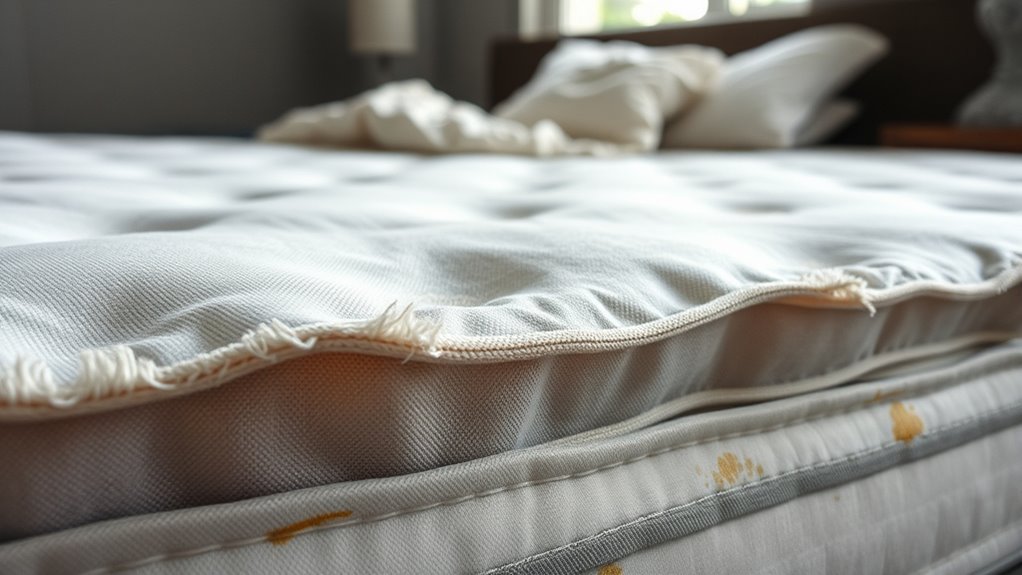
A worn-out mattress can substantially impact your sleep quality, and knowing when to replace it is vital for your health and comfort. Over time, mattresses naturally deteriorate, losing their ability to support your body properly. This decline can lead to restless nights, aches, and even long-term health issues. One clear sign it’s time for a new mattress is if you notice persistent discomfort or if the mattress feels lumpy and uneven. These signs indicate the internal materials have broken down, reducing comfort and support.
Another important factor to think about is the age of your mattress. Most mattresses are designed to last around 7 to 10 years, depending on quality and usage. If your mattress is within this range or older, it’s worth evaluating its condition. Even if it looks fine on the surface, the internal structure might have weakened. An aging mattress can also harbor allergens, dust mites, and bed bug infestations, which thrive in worn fabrics and crevices. Bed bug infestations are especially problematic because they can cause discomfort, skin irritation, and even sleep disturbances. If you suspect bed bugs, it’s vital to address the issue promptly—either through professional treatment or by replacing the mattress altogether. Attempting to salvage an infested mattress isn’t advisable, as it’s nearly impossible to fully eradicate these pests without disposal.
When you decide to replace your old mattress, consider mattress recycling options. Recycling helps reduce environmental waste and ensures that materials like metal springs and foam are reused responsibly. Many communities or retailers offer mattress recycling programs, making it easier to dispose of your mattress sustainably. Recycling also prevents the spread of bed bugs to new furniture or other parts of your home, which can happen if you try to move or discard an infested mattress improperly.
If you’re unsure whether your mattress needs replacing, perform a simple test: press down on different areas and see if it springs back or leaves indentations. If it doesn’t recover quickly or feels saggy, it’s time for a change. Remember, investing in a new mattress not only improves your sleep but also promotes better health, especially when you think about the potential issues from prolonged use, like allergens and pests. Replacing an old mattress might seem like a hassle, but it’s a vital step toward healthier sleep habits and a more comfortable living space.
Frequently Asked Questions
How Often Should I Replace My Mattress for Optimal Sleep?
You should replace your mattress every 7 to 10 years based on typical mattress lifespan and replacement guidelines. Over time, mattresses lose support and comfort, leading to disrupted sleep. Regularly assess your mattress’s condition—if you wake up feeling stiff or notice sagging, it’s time for a new one. Following these guidelines guarantees you maintain ideal sleep quality and wake up refreshed. Don’t wait too long to upgrade your sleep environment.
Can a Worn-Out Mattress Cause Back Pain?
A worn-out mattress can be a silent culprit behind your back pain, like a crooked foundation causing a building to wobble. Mattress deterioration often leads to uneven support, putting strain on your spine and muscles. Over time, sagging or lumpy spots prevent proper alignment, making back pain worse. If your mattress shows signs of wear, it’s time to replace it to give your back the support it deserves and prevent ongoing discomfort.
Are There Signs Beyond Age Indicating a Mattress Needs Replacing?
Yes, signs beyond age suggest you should replace your mattress. If you notice firmness changes, your mattress may no longer support you properly. Allergens and dust mites can accumulate over time, causing allergies or respiratory issues. Additionally, if you wake up feeling unrested or experience persistent aches, these are signs your mattress isn’t providing adequate comfort anymore. Paying attention to these indicators ensures better sleep and overall health.
Does Mattress Material Affect Its Lifespan?
Think of your mattress as a trusted shield; its durability depends on the material it’s made from. Natural latex and high-density foams often symbolize resilience, offering longer material longevity. Conversely, cheaper materials may wear down quickly, leaving you vulnerable to restless nights. Choosing a mattress with durable materials guarantees it withstands the test of time, maintaining comfort and support for years to come.
How Do I Choose a New Mattress Based on My Sleep Needs?
To choose a new mattress based on your sleep needs, consider your preferred firmness level—whether you like soft, medium, or firm support. If you like contouring comfort, opt for memory foam, which molds to your body. Think about your sleep position and any health concerns like back pain. Test different options in stores, and prioritize a mattress that offers the right balance of support and comfort for restful sleep.
Conclusion
Think of your mattress as a trusted voyage companion. Over time, its support erodes, much like a ship battered by relentless waves, gradually losing its buoyancy. When your bed wears out, you’re sailing through rough waters every night, tossing and turning instead of drifting peacefully. So, just as you’d replace a weathered sail, don’t cling to an aging mattress. Refresh your sleep, and set sail toward nights of calm, restful dreams once again.