
If you want to stay cooler all night, a mattress pad offers full-bed temperature regulation by dispersing heat across the entire sleeping surface. Conversely, a cooling pillow targets heat buildup around your head and neck, providing localized relief. The best choice depends on whether you prefer overall or spot cooling. To discover which option suits your sleep needs best and how each works, keep exploring for detailed insights.

Get health and wellness essentials delivered free — and shop member deals
- Fast, free delivery on millions of items
- Access to Prime Big Deal Days deals on October 6–7
- Prime Video, Amazon Music and more included
Key Takeaways
- Mattress pads offer full-surface cooling for consistent temperature regulation throughout the night.
- Cooling pillows target head and neck areas for rapid heat dissipation and localized comfort.
- Mattress pads typically use gel-infused memory foam or cooling fabrics for overall cooling; pillows use ventilated foam or moisture-wicking covers.
- Pillows provide quicker relief from heat buildup at the head, while mattress pads maintain a steady cool environment.
- The best choice depends on whether you need whole-bed cooling or targeted head and neck heat management.
When it comes to improving your sleep comfort, choosing between a cooling mattress pad and a cooling pillow can make a vital difference. Both options aim to regulate your sleep temperature, but they do so in different ways. Your body’s ability to stay cool at night largely depends on how well these sleep accessories manage heat and moisture. A key factor in this process is material breathability, which allows heat to escape and air to circulate around your skin. When selecting between the two, consider how each product handles heat transfer and moisture wicking, because these elements directly impact your comfort and quality of sleep.
Choosing breathable, moisture-wicking sleep accessories enhances comfort and regulates temperature all night.
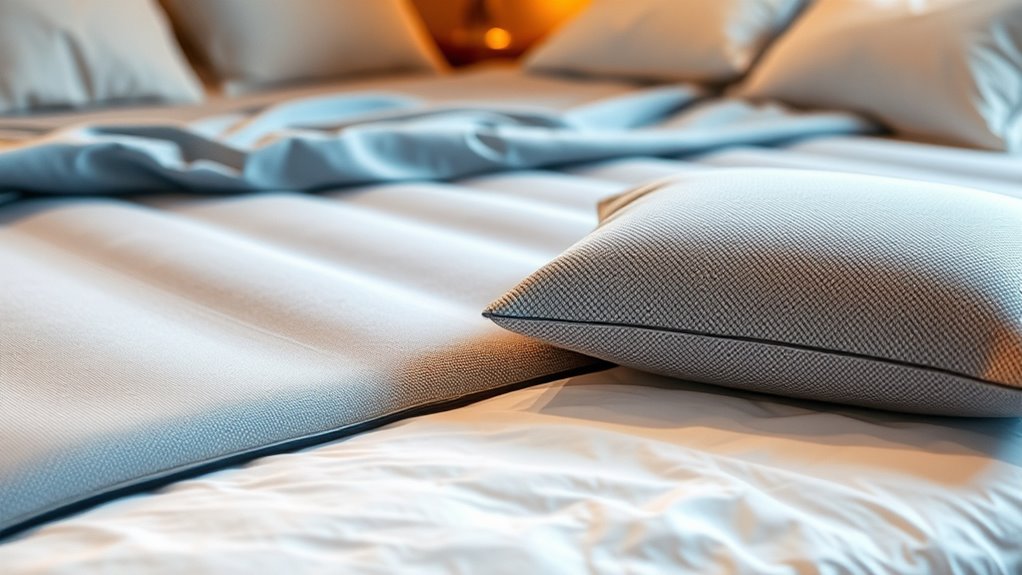
A cooling mattress pad generally covers the entire sleeping surface, offering uniform temperature regulation. It’s designed with breathable materials like gel-infused memory foam, bamboo, or specialized cooling fabrics that facilitate better airflow. These materials help dissipate heat from your body and prevent heat buildup, ensuring your sleep temperature stays closer to a comfortable level throughout the night. Because a mattress pad covers a large area, it creates a more consistent cooling effect, which can be especially helpful if you tend to overheat or sweat during sleep. When choosing a mattress pad, look for those made from materials that promote breathability, as this ensures moisture and heat don’t get trapped, helping you stay cool and dry.
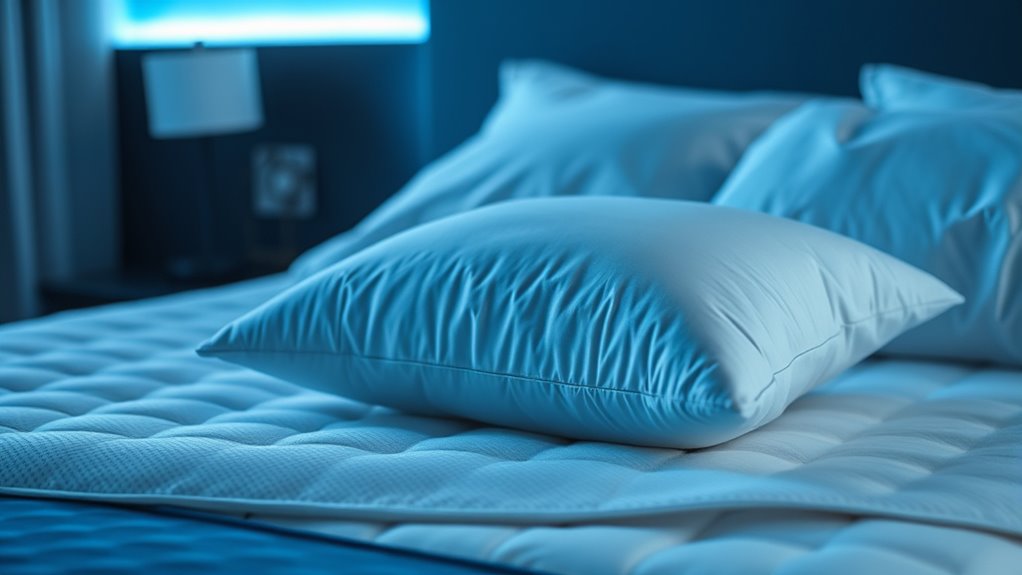
On the other hand, a cooling pillow focuses specifically on your head and neck area, which are critical zones for heat dissipation. Many cooling pillows incorporate materials like ventilated shredded foam, cooling gel layers, or moisture-wicking covers made from bamboo or Tencel. These materials are designed to draw heat away from your head, which can greatly influence your overall sleep temperature. Since your head is a major source of heat buildup, a well-designed cooling pillow can help lower your core temperature faster, making it easier to fall asleep and stay asleep. The breathability of the pillow’s cover and filling also plays a vital role; breathable covers allow heat to escape and air to circulate, preventing heat retention and uncomfortable sweating. Additionally, choosing products with proper ventilation can enhance airflow and further improve cooling performance.
Ultimately, your choice depends on your specific needs. If you’re looking for a thorough solution that maintains a cooler sleep environment all night long, a cooling mattress pad may be the better option. If your main concern is heat buildup around your head and neck, then a cooling pillow could provide quicker relief. Both products work best when made from breathable materials that facilitate airflow and moisture wicking. By focusing on material breathability and how each product impacts your sleep temperature, you can find the right cooling solution to enhance your sleep quality and wake up feeling refreshed.
cooling mattress pad gel-infused memory foam
As an affiliate, we earn on qualifying purchases.
As an affiliate, we earn on qualifying purchases.
Frequently Asked Questions
How Long Do Cooling Effects Typically Last During Sleep?
The thermal duration of cooling effects usually lasts between 2 to 8 hours, depending on the product and your body heat. When you use cooling pillows or mattress pads, you’ll notice the cooling longevity diminishes gradually as your body warms the material. To maximize comfort, consider products with advanced cooling technology designed for longer thermal duration, helping you stay cooler throughout the night.
Are Cooling Mattress Pads Suitable for All Mattress Types?
Think of your mattress as a loyal ship sailing through warm waters. Cooling mattress pads are generally versatile, but their suitability depends on material compatibility and installation considerations. Most pads work well with memory foam, innerspring, or hybrid mattresses, but some may require specific setup steps. Always check the product details to guarantee the pad aligns with your mattress type, so you enjoy a cool, restful night without any leaks or slips.
Can Cooling Pillows Cause Allergies or Skin Irritation?
Cooling pillows made from hypoallergenic materials are unlikely to cause allergies or skin irritation, especially if you have chemical sensitivities. However, some models contain synthetic fabrics or chemicals that could trigger reactions. To stay safe, check labels for hypoallergenic options and avoid pillows with strong odors or chemical treatments. If you have sensitive skin, test a small area first, and choose pillows designed specifically for allergy sufferers.
Do Cooling Mattress Pads Require Special Maintenance or Washing?
Cooling mattress pads do require some special maintenance, mainly mattress pad cleaning to keep them fresh and effective. You should check the manufacturer’s instructions for washing, as many are machine washable but might need gentle cycles or specific detergents. Regular cooling pillow maintenance also helps prevent allergens buildup. By following these steps, you guarantee your cooling mattress pad stays effective and prolongs its lifespan, providing you with a cooler, more comfortable night.
Are There Any Health Risks Associated With Using Cooling Sleep Products?
Using cooling sleep products is generally safe, but you should do a benefit analysis to spot any safety concerns. While rare, some materials might trigger allergies or skin irritation, especially if you have sensitive skin. Always check product labels for non-toxic, hypoallergenic options, and follow usage instructions closely. If you notice any discomfort or adverse reactions, stop use immediately. Your safety and comfort should always come first when choosing sleep aids.
breathable cooling pillow with gel layers
As an affiliate, we earn on qualifying purchases.
As an affiliate, we earn on qualifying purchases.
Conclusion
So, if you’re wondering whether a cooling mattress pad or a cooling pillow keeps you cooler at night, the truth is both can help, but it depends on your sleep habits. notably, some studies suggest that cooling pillows directly target head and neck warmth, which are key to comfort. Ultimately, trying both might reveal that combining them offers the best chance for a cooler, more restful sleep—proving that sometimes, layering solutions really do work.
moisture-wicking cooling pillow cover
As an affiliate, we earn on qualifying purchases.
As an affiliate, we earn on qualifying purchases.
full bed cooling mattress topper
As an affiliate, we earn on qualifying purchases.
As an affiliate, we earn on qualifying purchases.
Fall Picks
fall essentials
As an affiliate, we earn on qualifying purchases.