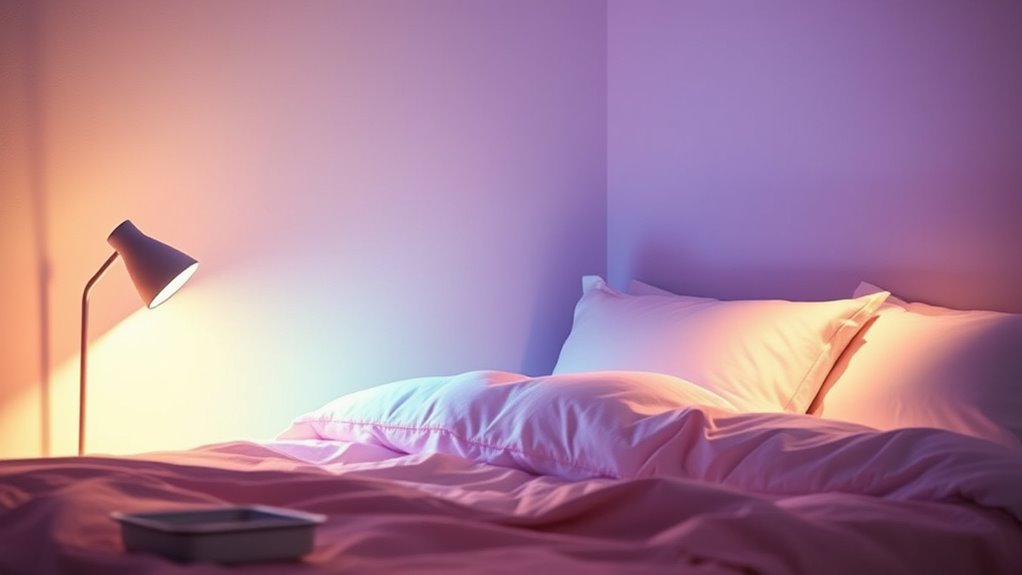

Using the right light colors in your sleep space can definitely help you relax. Warm hues like red, orange, and amber mimic sunsets and signal your brain to wind down, easing stress and creating a cozy atmosphere. Dim, calming lighting supports your natural circadian rhythm and melatonin production, making it easier to fall asleep. Keep exploring to discover how combining color choices with other sleep-friendly tips can transform your bedtime routine.
Key Takeaways
- Warm, dim lighting with red, orange, or amber hues mimics sunset to promote relaxation before sleep.
- Soft, calming light colors signal the brain to unwind, reducing stress and easing the transition to sleep.
- Adjustable lighting allows gradual shift to warmer tones, supporting circadian rhythm and melatonin production.
- Using colored night lights or filters enhances a soothing environment, encouraging natural winding down.
- Incorporating calming colors in bedroom decor reinforces a tranquil space conducive to restful sleep.
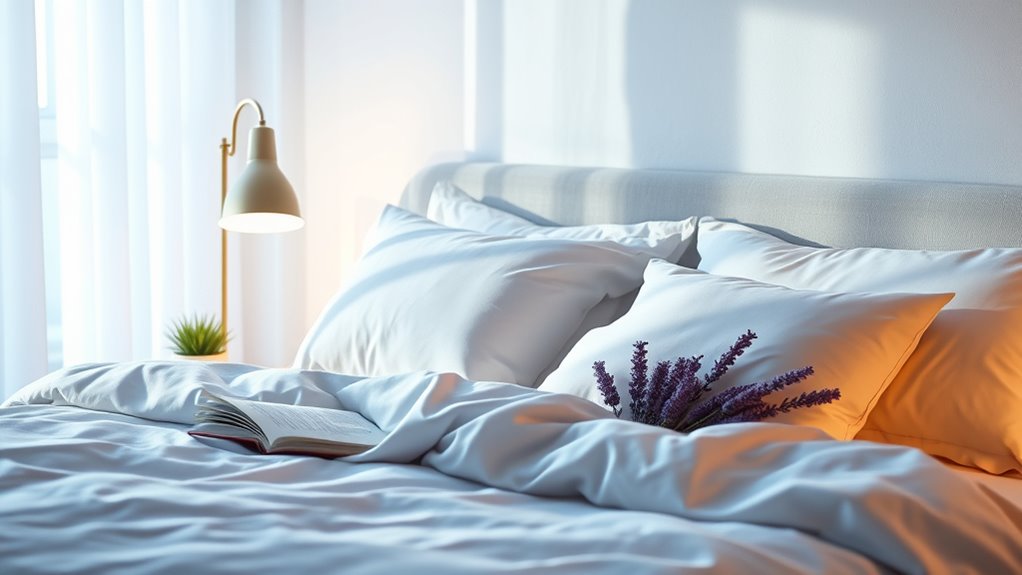
Getting a good night’s sleep can sometimes feel elusive, but color therapy offers a natural and simple way to improve your sleep environment. By adjusting the lighting in your space, you can create a calming atmosphere that promotes relaxation and prepares your body for rest. Beneficial lighting plays an essential role in shaping your sleep environment, influencing how easily you wind down at night. When you choose the right colors for your lighting, you’re not just enhancing the look of your room—you’re actively supporting your body’s natural sleep processes.
Certain light colors have been shown to relax the mind and body more effectively than others. For example, soft, warm hues like gentle reds, oranges, and amber tones mimic the natural sunset, signaling to your brain that it’s time to unwind. These colors can reduce stress and create a cozy atmosphere, making it easier for you to shift into sleep. Conversely, bright, cool colors like blue or white light tend to be more stimulating and can interfere with your ability to fall asleep, especially if used close to bedtime. To optimize your sleep environment, you should aim for lighting options that emit beneficial lighting—those that are dim, warm, and subdued in hue.
Soft, warm hues like reds and oranges promote relaxation and signal your brain to unwind.
Implementing this in your daily routine is straightforward. You can use dimmable lamps or adjustable LED lights to gradually lower the brightness and shift to warmer tones as bedtime approaches. Avoid harsh, fluorescent lighting in the evening, which can disrupt your circadian rhythm by suppressing melatonin production. Instead, opt for lamps with warm-colored bulbs or even consider using colored filters or light covers designed to emit calming hues. These small changes can make a significant difference in how your sleep environment feels, helping your mind relax and your body prepare for restful sleep.
In addition, consider incorporating color therapy into your sleep space with accessories like colored night lights, cozy blankets, or even wall paints in soothing shades. These elements further reinforce the calming effect of beneficial lighting, creating a consistent sleep environment that signals rest. Creating a comfortable and soothing atmosphere with calming colors and appropriate lighting can significantly improve your sleep quality. The goal is to craft a space that feels tranquil and inviting, encouraging your body to wind down naturally. By consciously choosing lighting that promotes relaxation, you support your body’s natural sleep-wake cycle and make falling asleep easier, waking refreshed and energized. Ultimately, leveraging the power of beneficial lighting through color therapy can transform your sleep environment into a sanctuary of calm, making restful nights more attainable.
Frequently Asked Questions
Are There Any Risks Associated With Specific Light Colors Before Sleep?
Yes, certain light colors can pose risks if you’re sensitive. For example, blue or bright lights may increase light sensitivity, making it harder to fall asleep. Some colors, like red, are generally safer but could cause skin irritation if the light is intense or prolonged. Always use gentle, dim lighting before bed and be mindful of your skin’s reactions to avoid discomfort and promote better sleep.
How Long Should I Expose Myself to a Particular Color for Effective Results?
For ideal exposure, you should aim for about 15 to 30 minutes of a specific color light before sleep. Follow duration guidelines based on how your body responds, and pay attention to any changes in relaxation or sleep quality. Consistent, moderate exposure tends to work best, so avoid overdoing it. Adjust your session length if needed, and always listen to your body’s signals for the most effective relaxation.
Can Color Therapy Replace Traditional Sleep Aids or Medications?
Color therapy isn’t a complete replacement for traditional sleep aids or medications. While it can enhance your sleep environment and promote relaxation, it’s best used alongside natural light exposure and good sleep habits. Relying solely on color therapy might not address underlying issues like insomnia or anxiety. For ideal results, combine it with other proven methods, and consult a healthcare professional if sleep problems persist.
Does Individual Color Preference Influence the Effectiveness of Color Therapy?
Your personal preferences and cultural influences can definitely impact how effective color therapy is for you. If you naturally favor calming colors like blue or green, you’re more likely to experience relaxation. Conversely, cultural associations with certain colors might enhance or hinder your response. So, choosing colors that resonate with you personally and culturally can make your relaxation routine more effective and enjoyable.
Are There Scientific Studies Supporting Color Therapy for Improving Sleep Quality?
Scientific evidence on color therapy’s effect on sleep quality is limited, but some clinical research suggests certain light colors, like warm hues, may promote relaxation and better sleep. You might find that dim, blue-toned lighting helps reduce alertness, supporting your sleep cycle. While more studies are needed, trying different colors based on existing research could help you discover what promotes your relaxation and improves your sleep quality.
Conclusion
Imagine your bedroom as a calm harbor, where the right light colors act as gentle waves lulling you into restful sleep. Color therapy can be your guiding star, helping you relax and unwind each night. By choosing soothing hues, you create a peaceful sanctuary that eases your mind and invites sleep to settle in. Remember, just like a lighthouse signals safety, the right colors can illuminate your path to a better night’s rest.