
For a cool, comfortable night’s sleep, choose bedding made from breathable natural fibers like cotton, linen, bamboo, or silk. These fabrics promote airflow, wick away moisture, and help regulate your body temperature. Opt for percale or sateen weaves based on your preferred feel—percale is crisp and cool, while sateen is silky and soft. Advanced fabrics with cooling technology and blended materials further enhance comfort. Keep exploring to find the perfect essentials for a restful, temperature-controlled night.
Key Takeaways
- Opt for natural fibers like cotton, linen, bamboo, or silk, which promote airflow and help keep you cool.
- Choose breathable fabric weaves such as percale for better ventilation and a crisp, cool touch.
- Consider advanced cooling textiles with moisture-wicking and UV protection features for enhanced temperature regulation.
- Blended fabrics like cotton-polyester or bamboo-linen balance breathability, durability, and softness for hot sleepers.
- Prioritize temperature-regulating and moisture-wicking materials to maintain a dry, comfortable sleep environment.
Cotton: The Classic Breathable Choice

Cotton has long been the go-to material for bedding because of its exceptional breathability and softness. When choosing cotton sheets, you’ll find a variety of fabric patterns that suit your style, from classic plaids to subtle stripes and intricate weaves. These patterns not only add visual interest but also help you personalize your space. Additionally, cotton offers a broad spectrum of color options, making it easy to match your bedroom decor or express your personality. Whether you prefer crisp whites, calming pastels, or bold hues, cotton bedding allows you to create a cozy and inviting atmosphere. Its versatility guarantees you’ll find options that fit both your aesthetic preferences and comfort needs, making cotton a reliable choice for a restful, cool night. For optimal ventilation considerations, selecting the right bedding materials can further enhance airflow and comfort during sleep.
Linen: Natural Coolness and Durability

If you’re looking for bedding that stays cool throughout the night, linen is an excellent choice. Known for its natural coolness, linen helps regulate your body temperature, making it ideal for hot sleepers. Linen care is straightforward; it becomes softer with each wash and requires minimal effort to maintain. You should wash linen bedding in cold water and avoid harsh detergents to keep it in top shape. Linen styling offers versatility, from crisp, minimalist looks to relaxed, bohemian vibes. Its durability means you’ll enjoy your bedding for years without worry. Plus, linen’s breathable fibers promote airflow, ensuring you stay comfortable all night long. Investing in linen bedding means combining natural coolness with long-lasting, stylish comfort. Additionally, choosing breathable fabrics like linen can significantly improve sleep quality, especially in warmer climates.
Tencel and Lyocell: Eco-Friendly Moisture Wicking
Are you searching for bedding that keeps you cool and dry all night? Tencel and Lyocell are excellent choices, known for their moisture-wicking properties. Made from sustainably sourced eucalyptus, these fabrics feature eco-friendly production processes that reduce environmental impact. Their natural breathability helps regulate temperature, preventing overheating. To help you compare, here’s a quick overview:
| Feature | Benefit | Sustainability Aspect |
|---|---|---|
| Moisture Wicking | Keeps you dry and comfortable | Derived from sustainable sourcing |
| Breathability | Enhances airflow | Eco friendly production methods |
| Softness | Luxuriously smooth | Renewable plant-based fibers |
| Durability | Long-lasting wear | Environmentally conscious process |
Additionally, their biodegradable nature ensures they break down more easily in the environment, highlighting their eco-friendly benefits. Incorporating sustainable fabrics like Tencel and Lyocell into your bedding not only enhances comfort but also supports eco-friendly practices. The eco-friendly production methods of these fabrics contribute to reducing carbon footprint and promoting sustainable living. Moreover, their biodegradability aligns with principles of environmental sustainability, making them a responsible choice for eco-conscious consumers.
Bamboo Fabric: Softness and Temperature Regulation
Bamboo fabric naturally feels incredibly soft, often rivaling the plushness of high-end silk or cotton. Its smooth texture creates a luxurious feel against your skin, making your bed more inviting. Beyond softness, bamboo fabric excels at temperature regulation, helping you stay cool throughout the night. It wicks moisture away from your body, preventing overheating and discomfort. This breathable material allows air to circulate, keeping you refreshed even on warm nights. Plus, bamboo’s natural properties resist odors and bacteria, promoting a cleaner sleeping environment. Bamboo fabric is also a sustainable choice, as it grows quickly and requires minimal water and pesticides. Incorporating moisture-wicking qualities, bamboo fabric helps manage sweat more effectively than many traditional materials. Whether you prefer sheets, pillowcases, or duvet covers, bamboo fabric offers a perfect combination of softness and temperature control. It’s an excellent choice if you want bedding that feels good and helps you maintain a comfortable, cool sleep all night long.
Silk: Luxurious Comfort With Temperature Control
Silk feels incredibly soft and gentle against your skin, offering a touch of luxury every night. Its natural temperature regulation helps keep you cool in summer and warm in winter, so you sleep comfortably year-round. With silk, you get both indulgence and practical comfort in one elegant package. Additionally, silk’s moisture-wicking properties help maintain a dry and comfortable sleep environment. Its breathability also supports airflow, reducing the chances of overheating during warm nights, especially when paired with appropriate bedding choices. Furthermore, silk’s insulating qualities aid in maintaining a consistent body temperature for restful sleep. Using the right bedding materials can enhance these temperature-regulating benefits even further.
Natural Temperature Regulation
Thanks to its natural properties, silk expertly regulates temperature, ensuring you stay comfortable throughout the night. Its breathable fibers respond to your body’s needs, minimizing temperature fluctuation and helping you maintain a steady sleep cycle. Unlike synthetic materials, silk absorbs excess moisture and releases it, keeping you dry and cool. This balance prevents overheating or feeling too cold, which can disrupt your sleep. As your body naturally cools down and warms up during the night, silk adapts to these changes, promoting restful sleep. By stabilizing temperature, silk supports your sleep cycle’s consistency, so you wake feeling refreshed. Its ability to manage heat and moisture makes silk an ideal choice for those seeking a bedding material that enhances comfort and quality sleep.
Gentle and Soft Feel
Because of its natural fibers, silk offers an incredibly gentle and soft feel that elevates your sleeping experience. Its smooth surface provides a luxurious touch that leaves you feeling pampered. The fabric’s elasticity allows it to move with your body, ensuring comfort without feeling restrictive. Silk also maintains dye longevity, so its vibrant color remains intact wash after wash, enhancing its visual appeal over time. This combination of softness, elasticity, and color durability creates a bedding material that’s both indulgent and practical. You’ll notice how silk’s delicate texture promotes a calming sleep environment, especially for sensitive skin. Plus, its natural properties help it stay cool and breathable, making it a perfect choice for a restful, comfortable night. Additionally, silk’s energy-efficient production methods align with sustainable practices, making it an environmentally conscious bedding option. Its breathability also helps regulate body temperature throughout the night, further contributing to a comfortable sleep.
Percale and Sateen Weaves: Enhancing Breathability and Feel
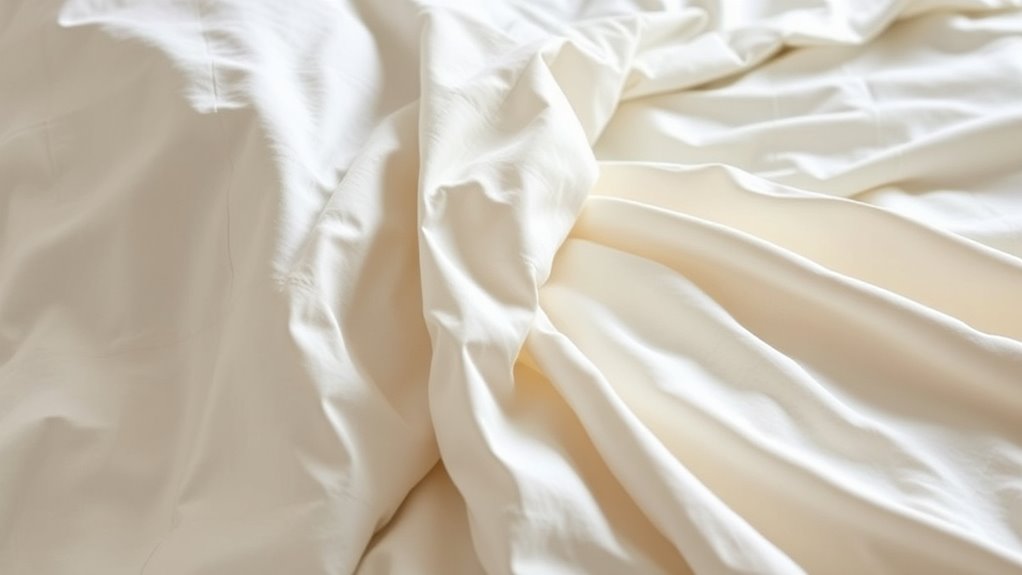
Percale and sateen weaves differ in how they feel and breathe, impacting your sleep comfort. You’ll notice that percale offers a crisp, cool touch and better airflow, while sateen feels softer and has a subtle sheen. Both require proper care to stay durable, so understanding their maintenance helps you enjoy their benefits longer.
Breathability Differences
While both percale and sateen weaves offer luxurious textures, they differ markedly in breathability, impacting how cool and comfortable your sleep feels. Percale’s tight, plain weave promotes airflow, making it more breathable and ideal for hot sleepers. Sateen’s lustrous finish results from a satin weave, which traps heat and reduces airflow, potentially causing you to sleep warmer. This difference affects your sleep cycle, as better breathability can prevent overheating and night sweats. Additionally, fabric durability varies: percale tends to be more durable and resistant to pilling, supporting longer-lasting freshness. Understanding fabric weave structures can help you choose the best material for your sleep needs. For example, the weaving techniques influence both breathability and durability, enabling you to select a fabric that aligns with your comfort preferences. Here’s a quick comparison:
| Feature | Percale | Sateen |
|---|---|---|
| Breathability | High | Moderate |
| Fabric Durability | Superior | Good |
| Sleep Cycle Effects | Cooler, less overheating | Warmer, potential night sweats |
| Feel | Crisp and cool | Silky and smooth |
| Maintenance | Easier to care for | More delicate |
Texture and Feel
The texture and feel of bedding markedly influence your sleep experience, and the choice between percale and sateen weaves offers distinct sensations. Percale fabric softness tends to be crisp and cool to the touch, providing a matte finish with a light, breathable feel. Its tactile sensation is smooth yet slightly textured, making it ideal if you prefer a fresh, clean feel that improves with each wash. Sateen, on the other hand, features a silkier, more luxurious surface with a subtle sheen. Its fabric softness is plush and smooth, offering a silky tactile sensation that feels warmer and more indulgent. Both weaves enhance breathability, but their differing textures cater to personal preferences—whether you crave the crisp coolness of percale or the smooth comfort of sateen. Understanding the fiber composition of the fabric can further influence its breathability and feel, helping you select the best material for a cool and comfortable night.
Durability and Care
Choosing bedding that lasts and stays soft requires understanding how percale and sateen withstand washing and daily use. Percale, with its tight, uniform fabric pattern, is durable and resistant to pilling, making it easy to care for over time. Sateen, with its glossy surface and smooth fabric pattern, can be more delicate but still holds up well with proper care. Both weaves respond well to gentle washing, and using mild detergents helps preserve their softness and color options. Bright or muted hues stay vibrant longer when washed correctly. Regularly following care instructions, like avoiding harsh chemicals and high heat, extends their lifespan. Proper laundering techniques help maintain the integrity of both fabrics, ensuring your bedding remains comfortable, maintains its appearance, and provides reliable durability night after night.
Performance and Technical Fabrics: Advanced Cooling Technologies
Advances in performance and technical fabrics have revolutionized how bedding materials manage temperature and moisture. These fabrics are engineered with advanced cooling technologies that help regulate your body heat throughout the night. Many incorporate UV protection, shielding you from harmful rays while you sleep, especially if you sleep near windows. Moisture wicking properties are also key, pulling sweat away from your skin to keep you dry and comfortable. This helps prevent overheating and reduces night sweats, ensuring a cooler sleep environment. These fabrics are often lightweight and breathable, promoting airflow and dissipating heat more efficiently than traditional materials. Utilizing auditory processing strategies in fabric design can enhance sensory comfort and support relaxation. Incorporating breathability features further improves airflow and moisture management, contributing to a cooler sleep. By choosing bedding made with these innovations, you can enjoy a cooler, more comfortable night’s sleep, even on warm summer nights.
Blended Materials: Combining Benefits for Optimal Comfort
Blended materials bring together the best features of different fabrics to enhance your sleeping experience. By combining fibers like cotton and polyester or bamboo and linen, these blends create bedding that’s breathable, durable, and easy to care for. This versatility allows you to tailor your sleep environment for ideal comfort, balancing moisture-wicking and temperature regulation. Plus, blended fabrics often resist wrinkles and shrinking, ensuring your bedding stays looking fresh, regardless of your bedding size. They also provide a softer feel compared to pure synthetic or natural fabrics, making your sleep surface more inviting. Whether you prefer a lightweight sheet set or a cozy duvet cover, blending materials offers a practical way to enjoy the benefits of multiple fabrics in one piece, improving your overall sleep quality. Blended fabrics often combine the benefits of natural and synthetic fibers for an optimal sleep environment.
Tips for Choosing the Right Bedding for Hot Sleepers

If you tend to overheat at night, selecting the right bedding can make a significant difference in your sleep quality. Focus on materials that promote good sleep hygiene, like breathable fabrics that wick away moisture and allow air circulation. Keep your bedroom temperature in check, aiming for a cool environment to help your body maintain a comfortable temperature. Choose lightweight, natural fabrics such as cotton or linen, which are known for their breathability and cooling properties. Avoid heavy, synthetic materials that trap heat and moisture. Additionally, consider bedding with moisture-wicking or cooling technology. These choices can prevent overheating, improve sleep quality, and help you wake feeling refreshed and rested. Proper bedding and a cool bedroom are key to restful sleep for hot sleepers, and utilizing aroma oil diffusers can help create a calming atmosphere conducive to better sleep.
Frequently Asked Questions
How Do Different Bedding Materials Impact Allergy Symptoms?
Different bedding materials can considerably impact your allergy symptoms. Hypoallergenic bedding helps reduce exposure to allergens like dust mites and pet dander, easing allergy flare-ups. Breathable fabrics, such as cotton or bamboo, promote airflow and keep you cool, which also minimizes allergic reactions caused by heat and moisture buildup. Choosing these materials guarantees you sleep comfortably while minimizing allergy symptoms, so you wake up refreshed and ready for the day.
Are There Specific Bedding Fabrics Suitable for Sensitive Skin?
Yes, you should look for bedding made from hypoallergenic fabrics and skin-friendly textiles. These materials, like organic cotton, bamboo, and silk, minimize irritation and reduce allergy risks. They’re naturally breathable and gentle on sensitive skin, helping you sleep comfortably without discomfort. By choosing these fabrics, you create a restful sleep environment that’s both safe and soothing, ensuring you wake up refreshed and free from skin irritation.
How Does Bedding Care Affect Its Cooling Properties Over Time?
Proper bed maintenance is key to preserving your bedding’s cooling properties over time. Regular washing and gentle drying prevent fabric breakdown, which can reduce breathability and moisture-wicking abilities. Avoid harsh detergents and high heat, as they accelerate fabric aging and diminish longevity. By caring for your bedding properly, you make sure it remains breathable, comfortable, and effective at keeping you cool night after night.
Can Layering Different Fabrics Improve Overall Sleep Comfort?
Layering different fabrics can definitely improve your sleep comfort by enhancing fabric breathability and temperature regulation. Use lightweight, breathable materials like cotton or linen for the top layer, and add a moisture-wicking or insulating layer underneath if needed. Layering techniques allow you to adjust your bedding based on your comfort level and room temperature, helping you stay cool and comfortable all night long.
What Environmental Factors Should Influence Bedding Material Choices?
Think of your bedroom as a chameleon, adapting to its environment. You should choose bedding materials based on climate adaptation and bedroom temperature. If it’s hot, opt for breathable fabrics like cotton or linen that wick away sweat. In cooler settings, layer with warmer materials like flannel or fleece. Pay attention to humidity and airflow, so your bedding works with the environment rather than against it, ensuring restful nights.
Conclusion
So, now you’re armed with all the secrets to stay cool and cozy. Whether you pick breathable cotton or indulge in luxurious silk, just remember—your bedding choices are basically your personal air conditioner, minus the noise. So go ahead, splurge a little, and sleep like royalty—because who needs a cool breeze when your sheets have got you covered? Sweet dreams, and may your nights be forever invigoratingly chill!