

Your limbs won’t settle at night because of Restless Legs Syndrome, a condition caused by irregular dopamine pathways that send abnormal signals to your brain, creating uncomfortable sensations and a strong urge to move. Factors like genetics, nerve issues, and lifestyle choices can worsen symptoms. Sleep disruptions from RLS can also impact your overall health, mood, and energy. To understand how to manage this not-so-simple problem better, stay tuned for more helpful information.
Key Takeaways
- RLS causes abnormal dopamine signaling, leading to uncomfortable sensations and uncontrollable limb movements at night.
- Symptoms worsen during periods of inactivity and are relieved by movement, disrupting sleep.
- Genetic factors and iron deficiency can increase the likelihood of RLS symptoms at night.
- Sleep disruptions from RLS weaken immune function and impair mental clarity, making limbs restless.
- Proper diagnosis and treatment, including lifestyle changes and medication, can help reduce nighttime limb restlessness.
Understanding Restless Legs Syndrome

Restless Legs Syndrome (RLS) is a neurological condition that causes an irresistible urge to move your legs, often accompanied by uncomfortable sensations. The neurological mechanisms behind RLS involve irregularities in dopamine pathways, which play a key role in controlling movement and sensation. These disruptions can send abnormal signals to your brain, prompting the uncontrollable urge to move your limbs. Research also suggests that genetic factors markedly contribute to RLS, as it often runs in families. Specific gene variations may increase your susceptibility by affecting how your nervous system processes sensory information and regulates movement. Understanding these underlying neurological and genetic influences helps clarify why RLS occurs and guides ongoing research into effective treatments. Additionally, studies on high contrast ratios in visual displays demonstrate how proper neural signaling is essential for clear perception, paralleling how balanced dopamine function is crucial for normal movement. Recent advances in genetic research are shedding light on potential biomarkers that could lead to more targeted therapies for RLS. Furthermore, exploring neurotransmitter imbalances offers promising avenues for developing novel treatments aimed at restoring normal nerve function. For example, investigating neural communication pathways can lead to better understanding and management of the disorder, as evidenced by studies on synaptic transmission and its role in neurological conditions.
Common Symptoms and Signs to Recognize

Recognizing the symptoms of Restless Legs Syndrome is key to getting an accurate diagnosis and effective treatment. Common signs include frequent leg twitching that occurs when you’re at rest, especially in the evening or nighttime. You might notice an irresistible urge to move your legs to relieve uncomfortable sensations. Nighttime discomfort can feel like crawling, tingling, or aching, often worsening during periods of inactivity. These symptoms typically improve with movement but return when you sit or lie down again. You may also experience difficulty falling asleep or staying asleep due to these sensations. Being aware of these signs can help you identify RLS early and seek appropriate medical advice to manage your symptoms effectively. Additionally, understanding sleep hygiene practices can contribute to overall symptom relief and better sleep quality. Managing underlying factors such as iron deficiency or other health conditions can also play a role in alleviating symptoms, emphasizing the importance of comprehensive health assessment. Proper diagnosis often involves evaluating your symptom patterns and medical history to distinguish RLS from other sleep disorders. Incorporating lifestyle adjustments, such as gentle stretching or relaxation techniques, may also help reduce symptoms and improve sleep quality. Recognizing these signs early can also prompt discussions about potential underlying causes that may be contributing to your condition.
The Possible Causes Behind RLS

While the exact cause of Restless Legs Syndrome remains unknown, researchers believe it results from a combination of genetic, neurological, and environmental factors. You might have a genetic predisposition that makes you more susceptible, as RLS often runs in families. Iron deficiency also plays a significant role; low iron levels can impair dopamine production, contributing to symptoms. Other potential causes include:
Genetic, neurological, and environmental factors may contribute to Restless Legs Syndrome.
- Nervous system abnormalities affecting sensory signals, which may disrupt normal nerve communication and lead to the characteristic sensations.
- Chronic diseases like kidney failure or diabetes.
- Certain medications that interfere with nerve function.
- Lifestyle factors such as stress or lack of physical activity.
- Advances in AI-driven medical research are providing new insights into underlying mechanisms of RLS, potentially leading to more targeted therapies. Additionally, emerging research suggests that brain chemistry may influence RLS symptoms, highlighting the importance of ongoing studies.
Understanding these factors can help you identify possible triggers and seek appropriate treatment, even if the exact cause remains elusive.
How Sleep Disruptions Affect Overall Health

When your sleep is disrupted, your immune system can weaken, making it harder to fight off illnesses. You might also notice your mental clarity suffers, leading to difficulty concentrating and memory lapses. Additionally, ongoing sleep issues can raise your risk of heart problems over time. Understanding home charging options and safe practices can help minimize sleep-related stress for EV owners facing irregular schedules. Incorporating smart appliances into your routine can also improve sleep quality by automating tasks and creating a more comfortable environment.
Impacts on Immune Function
Restless Legs Syndrome (RLS) often disrupts sleep patterns, and this lack of restful sleep can weaken your immune system’s ability to defend against infections. Chronic sleep disturbances can lead to immune suppression, making you more vulnerable to illness. Additionally, RLS may cause a cytokine imbalance, disrupting your body’s inflammatory response. Specifically:
- Sleep deprivation reduces the production of protective antibodies.
- It hampers the activity of immune cells like T-cells and natural killer cells.
- Cytokine imbalance can promote chronic inflammation, impairing healing.
- Overall, these effects compromise your ability to fight off pathogens effectively.
- Incorporating Free Floating elements in your sleep environment can help improve sleep quality and support immune health.
- Maintaining proper sleep hygiene and managing RLS symptoms can enhance immune resilience, supporting your body’s defense mechanisms and overall health.
- Recognizing the immune system’s role in recovery emphasizes the importance of addressing sleep issues like RLS promptly. Additionally, proper maintenance of your equipment can help prevent issues that may indirectly impact sleep quality by reducing stress and discomfort. To further support immune health, engaging in regular physical activity can also bolster your body’s defenses.
Effects on Mental Clarity
Sleep disruptions caused by Restless Legs Syndrome directly impair your mental clarity, making it harder to concentrate, solve problems, and make decisions. As your sleep quality declines, you may notice persistent mind fog that clouds your thinking and dulls your focus. These interruptions prevent you from reaching restorative sleep stages, leaving you feeling exhausted and mentally drained during the day. Concentration struggles become common, and simple tasks may seem overwhelming. Over time, this mental fatigue can affect your productivity, mood, and overall well-being. You might find yourself forgetful or unable to think clearly, which further hampers daily functioning. Prioritizing sleep quality and addressing your sleep issues is essential to clear the mind fog and regain mental sharpness, so you can perform at your best. Understanding the connection between sleep disruptions and overall health highlights the importance of finding effective management strategies. Recognizing how disrupted sleep cycles interfere with restorative sleep can motivate proactive solutions. Additionally, mental fatigue resulting from poor sleep can contribute to increased stress levels, further impacting your health and sleep patterns.
Increased Heart Risks
The interruptions caused by Restless Legs Syndrome don’t just affect your mental clarity—they also pose serious risks to your heart health. Sleep disruptions can lead to elevated blood pressure and increased stress on your cardiovascular system. Over time, this strain can heighten your risk of heart disease. Here’s how restless nights impact your heart health:
- Elevated blood pressure during sleep can persist into the day.
- Chronic sleep deprivation increases sympathetic nervous system activity.
- Heightened stress hormones cause blood vessels to constrict.
- Consistent disruptions may lead to inflammation, damaging arterial walls.
These effects underscore the importance of managing RLS to protect your heart. Prioritizing quality sleep helps stabilize blood pressure and reduces the risk of cardiovascular complications.
Diagnosing Restless Legs Syndrome

Diagnosing Restless Legs Syndrome (RLS) involves a careful evaluation of your symptoms and medical history. Your doctor will look for key features that match established diagnostic criteria, such as an irresistible urge to move your legs, worsening during rest, and relief with movement. They may also consider genetic markers, as RLS often runs in families. To clarify, here’s a quick comparison:
| Diagnostic Aspect | Explanation |
|---|---|
| Diagnostic criteria | Specific symptoms and timing of discomfort |
| Genetic markers | Family history increases likelihood |
While no definitive test exists, your doctor may rule out other conditions and rely on your symptom pattern to confirm RLS. Accurate diagnosis is essential for effective management and relief.
Lifestyle Changes to Ease Symptoms

Making simple lifestyle adjustments can substantially reduce the discomfort caused by Restless Legs Syndrome. Incorporate these changes to help ease symptoms:
- Establish regular exercise routines, like walking or stretching, to improve circulation and reduce leg discomfort.
- Make dietary adjustments by limiting caffeine, alcohol, and nicotine, which can worsen symptoms.
- Maintain a consistent sleep schedule to help your body adapt and minimize night-time urges.
- Incorporate iron-rich foods or supplements if your levels are low, as deficiencies can exacerbate RLS.
These small changes can make a big difference in managing your symptoms, helping you relax and sleep better at night without relying solely on medication.
Medical Treatments and When to Seek Help

When lifestyle changes don’t sufficiently relieve Restless Legs Syndrome symptoms, medical treatments can provide considerable relief. You might consider medication options like dopaminergic agents, anticonvulsants, or opioids, depending on your severity and response. Your healthcare provider may also suggest therapy approaches such as iron supplements if iron deficiency is involved or other personalized strategies. It’s important to seek help when symptoms disrupt your daily life or sleep quality markedly. A healthcare professional can diagnose RLS accurately and develop a tailored treatment plan. Don’t hesitate to reach out if your symptoms worsen or if over-the-counter remedies aren’t effective. Early intervention can improve your sleep and overall well-being, helping you regain control over your nights.
Coping Strategies for Better Sleep
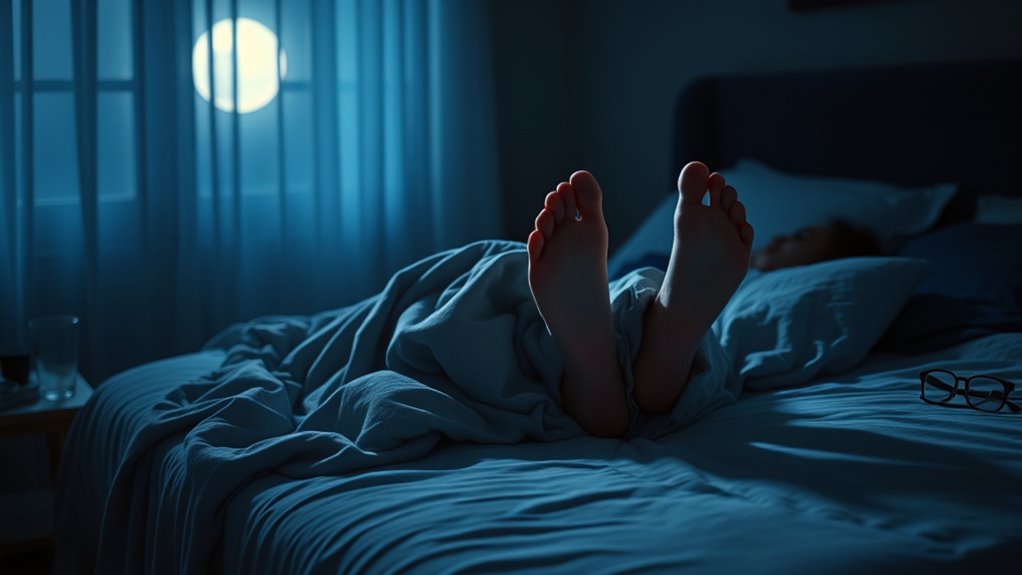
Implementing effective coping strategies can markedly improve your sleep quality despite Restless Legs Syndrome. Prioritize sleep hygiene by establishing a consistent bedtime routine, avoiding caffeine and screens before bed, and creating a comfortable sleep environment. Incorporate stress management techniques like deep breathing, meditation, or gentle yoga to reduce tension that worsens symptoms. Here are four strategies to contemplate:
- Maintain a regular sleep schedule to reinforce your body’s sleep-wake cycle.
- Practice relaxation exercises to ease stress and calm your limbs.
- Limit stimulants and heavy meals close to bedtime.
- Keep your bedroom cool, dark, and quiet to promote restful sleep.
Frequently Asked Questions
Can Restless Legs Syndrome Occur During the Day?
Yes, restless legs syndrome can occur during the day. You might experience daytime symptoms, especially when you’re inactive or relaxing, which can be triggered by certain daytime triggers like stress or caffeine. These sensations often motivate you to move, even in the middle of the day. Recognizing these triggers helps you manage symptoms better, so staying active and avoiding stimulants may provide some relief during daytime hours.
Is RLS Linked to Other Neurological Disorders?
Like a pioneer lost in the digital age, you might wonder if RLS is linked to other neurological disorders. Yes, it’s connected through neurological pathways, and disorder correlations exist with conditions like Parkinson’s disease and multiple sclerosis. These connections suggest RLS isn’t just a standalone issue but part of broader neurological health. Recognizing these links can guide you toward better diagnosis and personalized treatment options.
Are There Specific Foods That Trigger RLS Symptoms?
Certain foods can trigger RLS symptoms due to diet triggers and food sensitivities. You might notice that caffeine, alcohol, and foods high in sugar or additives worsen your symptoms. Additionally, processed foods and those containing nitrates or artificial ingredients could increase discomfort. Pay attention to your body’s reactions and consider keeping a food diary to identify personal triggers. Adjusting your diet by reducing these foods may help lessen your RLS symptoms.
How Does RLS Affect Mental Health Over Time?
You might notice that RLS affects your mental health over time by increasing anxiety, stress, and even depression. The constant discomfort and sleep disruptions can wear you down emotionally, leading to long-term psychological effects like mood swings and difficulty concentrating. If left unmanaged, RLS can considerably impact your overall well-being, so addressing symptoms early helps protect your mental health and reduces the risk of lasting psychological struggles.
Can Exercise Worsen RLS Symptoms at Night?
Imagine your legs as restless waves crashing against the shore. Exercise impact varies; it can either soothe or worsen RLS symptoms. Strenuous activity late in the day might lead to symptom exacerbation, making your limbs more restless at night. However, gentle stretching or moderate exercise earlier can help reduce discomfort. Pay attention to how your body responds, adjusting your routine to prevent triggering nighttime restlessness.
Conclusion
If you often find your legs restless at night, understanding RLS can help you take action. Remember, about 10% of adults experience this condition, and many find relief through lifestyle changes or medical treatments. Don’t ignore persistent symptoms—they can impact your overall health and quality of sleep. With the right approach, you can regain restful nights and improve your well-being. Take charge today and consult a healthcare professional if needed.