
TL;DR

Get health and wellness essentials delivered free with Prime
- Fast, free delivery on millions of items
- Prime Video, Amazon Music and more included
- Member-only deals all year
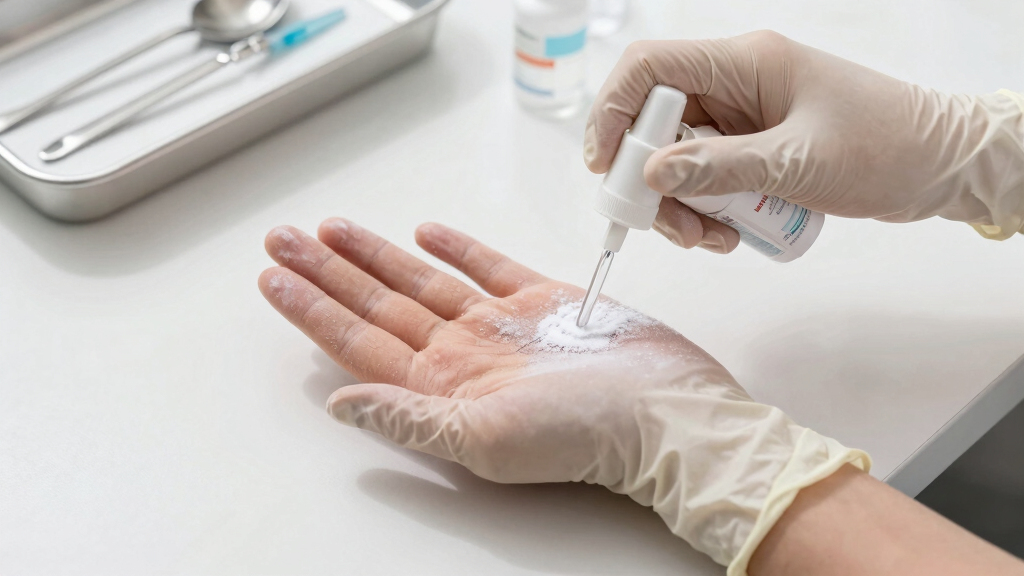
Researchers have developed a spray-on powder capable of stopping life-threatening bleeding in just one second. This breakthrough could revolutionize emergency trauma care and battlefield medicine.
A new spray-on powder has been developed that can stop severe, life-threatening bleeding within one second. This innovation, created by a team of biomedical engineers, could significantly improve trauma response and save lives in emergency situations worldwide.
The powder, described as a hemostatic agent, works by rapidly forming a clot when applied to a bleeding wound. According to the research team at the University of California, the powder’s unique composition allows it to activate the body’s natural clotting process instantly, creating a barrier that halts blood flow almost immediately.
Initial tests conducted on animal models showed that the powder could effectively stop bleeding from large arteries and deep wounds within one second. The researchers emphasize that this speed surpasses current hemostatic products, which typically take several seconds to minutes to achieve similar results.
The team plans to begin clinical trials in humans later this year, pending regulatory approval. The powder is designed to be easy to apply—simply sprayed onto a wound—making it suitable for use by first responders, military personnel, and civilians in emergency settings.
Potential Impact on Emergency and Military Medicine
This development could dramatically reduce mortality rates from traumatic injuries, especially in situations where rapid bleeding control is critical. By providing a quick, effective, and easy-to-use solution, the spray-on powder has the potential to save lives in accidents, combat, and disaster scenarios. Its ability to work on large, arterial wounds could transform trauma protocols and improve survival chances in the earliest moments after injury.
Products Worth Considering

Oura Ring 5 Smart Ring, Gold, Size 10

Garmin Forerunner 55 GPS Running Smartwatch, Black

BowFlex Results Series 552 SelectTech Adjustable Dumbbell
As an affiliate, we earn on qualifying purchases.
Advances in Hemostatic Technologies and Trauma Care
Current methods for controlling severe bleeding include tourniquets, pressure dressings, and injectable hemostatic agents. While effective, these methods can take several seconds to minutes to stop bleeding and may not work well on deep or large wounds. Recent years have seen the development of topical agents like powders and gels, but none have matched the speed of this new spray.
The breakthrough comes amid ongoing efforts to improve trauma response, especially in battlefield medicine and disaster relief, where rapid bleeding control is vital. The new powder builds on prior research into nanomaterials and bioactive compounds designed to accelerate clot formation.
“Our spray-on powder can stop life-threatening bleeding within one second, which is unprecedented in trauma care. This could save countless lives in emergency situations.”
— Dr. Emily Carter, lead researcher at UC Berkeley
Uncertainties About Human Trials and Long-Term Safety
It is not yet confirmed how the powder will perform in human subjects, or whether there will be any adverse reactions. The safety profile, long-term effects, and effectiveness on various wound types remain to be established through upcoming clinical trials.
Regulatory approval processes and real-world testing will determine how quickly and widely the product can be adopted.
Next Steps Include Human Trials and Regulatory Review
The research team plans to initiate human clinical trials later this year to evaluate safety and efficacy. Concurrently, they will seek regulatory approval from agencies such as the FDA. If successful, the product could be commercially available within the next few years, potentially transforming trauma response protocols worldwide.
Key Questions
How does the spray-on powder work to stop bleeding so quickly?
The powder activates the body’s natural clotting process almost instantly, forming a physical barrier that halts blood flow within one second.
Is this product safe for use on humans?
Safety in humans has not yet been established. Human trials are planned to assess safety, effectiveness, and potential side effects.
Can this powder be used on all types of wounds?
Initial tests show promise on large arterial wounds, but its effectiveness on other wound types will be evaluated during clinical trials.
When might this product be available for emergency responders?
If clinical trials and regulatory approvals proceed smoothly, the product could be available within the next 2-3 years.
Source: rss