

Long-term sleep improvement works best when you layer changes gradually, as it helps your body adapt naturally. By slowly adjusting routines, light exposure, and sleep habits, you reinforce healthy patterns that become sustainable over time. Each step builds on the previous one, creating a stable foundation for better sleep. Patience and consistent effort lead to lasting results, and if you keep exploring, you’ll discover even more ways to support your sleep health.
Key Takeaways
- Layered approaches build sustainable habits, gradually enhancing sleep quality over time.
- Combining routines, light management, and environment creates a comprehensive, long-lasting sleep improvement.
- Small, incremental changes reinforce each other, leading to more stable and effective sleep patterns.
- Long-term progress requires patience, with each layer supporting the next for cumulative benefits.
- Multiple interconnected strategies address different aspects of sleep, ensuring lasting positive effects.
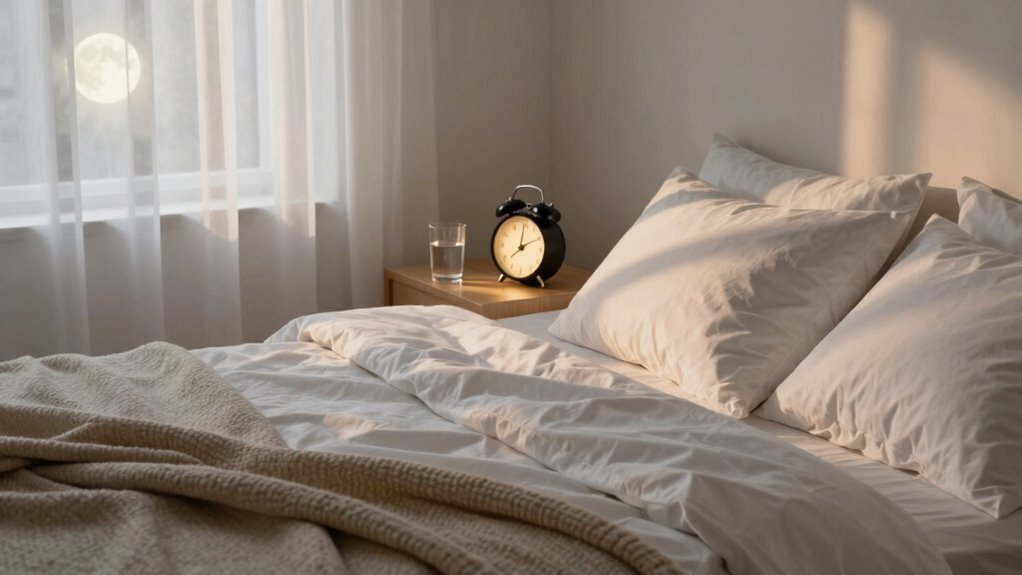
Getting enough quality sleep is essential for your overall health and well-being, but many people struggle to achieve restful nights. Improving sleep isn’t a quick fix; it’s a layered process that builds over time as your body and mind adapt to new habits. One key aspect of this process is dream recall. When you start paying attention to your dreams, you become more aware of your sleep cycles and how your brain processes rest. Remembering your dreams can motivate you to refine your sleep patterns because it’s a sign you’re entering the REM stage more consistently. As you enhance your dream recall, you may notice that your nights become more vivid and memorable, which signals a deeper alignment with your natural sleep rhythms.
Pay attention to dreams to better understand and improve your sleep cycles and overall rest quality.
Another essential layer is circadian alignment. Your body operates on an internal clock called the circadian rhythm, which regulates sleep-wake cycles, hormone production, and alertness. When your daily schedule aligns with this rhythm—meaning you go to bed and wake up at consistent times—your sleep quality improves markedly. Achieving circadian alignment often requires adjusting your exposure to light, particularly in the evening, and establishing a routine that supports your natural cycle. Over time, this consistency helps you fall asleep faster and enter restorative sleep stages more easily, making your overall sleep more efficient and revitalizing. Recognizing the importance of light exposure can significantly influence your circadian rhythm and sleep quality.
Long-term sleep improvement also involves understanding that these layers interact and reinforce each other. For example, as you better align your sleep with your circadian rhythm, you’re likely to experience more vivid dreams and better dream recall. This heightened awareness can motivate you to maintain regular sleep patterns and fine-tune your environment for ideal rest. Additionally, understanding sleep cycles can help you optimize your sleep duration and quality, as different stages contribute uniquely to restorative processes. Being aware of how sleep architecture functions can further enhance your ability to structure your sleep for maximum benefit. Moreover, appreciating the role of light-dark cycles in regulating your biological clock can help you develop more effective strategies for sleep improvement. Conversely, as you improve your dream recall, you may become more conscious of the quality of your sleep and the importance of consistency. It’s a cycle—each layer supports the others, creating a foundation for sustained, healthy sleep habits.
Ultimately, long-term sleep improvement isn’t about quick fixes or drastic changes. It’s about gradually layering your efforts—adjusting your light exposure, setting a consistent schedule, and paying attention to your dreams. Over time, these small steps accumulate, helping you develop a natural, restful sleep pattern that enhances your overall health and well-being. Patience and persistence are key, as each layer takes time to establish, but the payoff is a more restorative, satisfying sleep that benefits every aspect of your life.

Sleep ZM Blue Light Blocking Glasses for Women + Men – Better Sleep + Anti Eye Strain Protection – Computer Screens & Gaming – Black Wayfarer – 99% Night-time Amber Lens
- Blue Light Blocking: Filters up to 99.9% of blue light
As an affiliate, we earn on qualifying purchases.
As an affiliate, we earn on qualifying purchases.
Frequently Asked Questions
How Long Does It Typically Take to See Sleep Improvements?
You typically see sleep improvements within a few weeks of practicing better sleep hygiene and establishing consistent bed routines. It might take around 2 to 4 weeks for your body to adjust, but patience is key. Stick with your new habits, like avoiding screens before bed and keeping a regular sleep schedule. Over time, these layers of change will help you fall asleep faster and enjoy more restful nights.
Can Supplements Replace Lifestyle Changes for Better Sleep?
Supplements can’t fully replace lifestyle changes for better sleep, as relying solely on them can lead to supplement dependency. Natural remedies like maintaining a consistent sleep schedule, reducing screen time before bed, and managing stress often create more sustainable improvements. While supplements might offer quick relief, integrating lifestyle habits addresses the root causes of sleep issues, leading to long-term, healthier sleep patterns without dependence on external aids.
Is It Possible to Fully Reverse Chronic Sleep Issues?
It’s unlikely you can fully reverse chronic sleep issues without addressing underlying habits. Improving sleep hygiene by sticking to consistent routines and optimizing your environment helps establish better sleep patterns. Additionally, achieving circadian alignment by syncing your activities with your natural body clock can considerably enhance sleep quality. Combining these strategies over time creates a layered approach, making long-term sleep improvement possible, even if complete reversal takes patience and ongoing effort.
How Do Stress Levels Influence Long-Term Sleep Quality?
Stress levels directly impact your long-term sleep quality because high stress increases cortisol, which interferes with your sleep cycles. By practicing stress management techniques, like meditation or deep breathing, you help regulate cortisol levels, promoting better sleep. Consistently managing stress allows your body to relax more effectively at night, leading to improved sleep over time. So, making stress reduction a priority supports your long-term sleep health.
Are Sleep Improvements Sustainable Without Ongoing Effort?
Sleep improvements can be sustainable if you maintain good sleep hygiene and support your circadian rhythms. While some habits may become ingrained, ongoing effort helps reinforce healthy patterns. Without continued attention, old habits might creep back, disrupting your sleep. So, even if progress feels stable, staying mindful of your routines and environmental factors guarantees these improvements last long-term, making restful sleep a consistent part of your life.

Odokee Sunrise Alarm Clock White Noise Machine: Natural Wake Up Light
- Gentle Sunrise Wake-Up: Gradual brightening over 5-60 minutes
- Customizable Alarm Duration: Adjust sunrise simulation length
- 25 Sleep Sounds: White, pink, brown, blue noise, natural sounds
As an affiliate, we earn on qualifying purchases.
As an affiliate, we earn on qualifying purchases.
Conclusion
So, if you’re aiming for lasting sleep improvements, remember that layering strategies works best. It’s no coincidence that those who gradually build habits see more sustainable results—much like how a small, consistent effort often leads to big change over time. Don’t expect overnight fixes; instead, embrace the process and trust that each small step layers onto the next, creating a solid foundation for better sleep that lasts.

Amazon Basics Portable Room Darkening Blackout Curtain Shade with Suction Cups, Noise Reduction, 50"W x 78"L, Moon and Stars, 1-Pack
- Energy Saving: Insulating blackout curtain barrier
- Noise Reduction: Reduces outside noise
- Customizable Fit: Adjustable with Velcro tabs
As an affiliate, we earn on qualifying purchases.
As an affiliate, we earn on qualifying purchases.
dream journal for sleep improvement
As an affiliate, we earn on qualifying purchases.
As an affiliate, we earn on qualifying purchases.