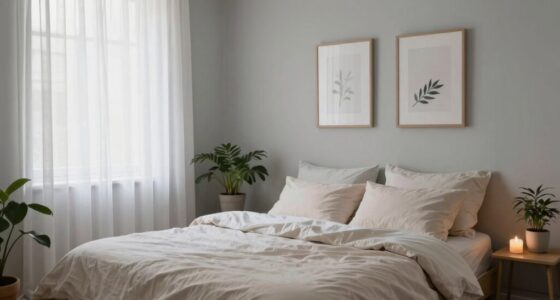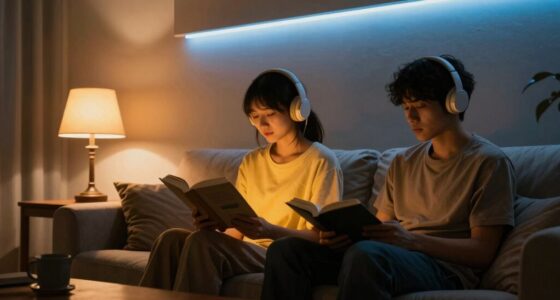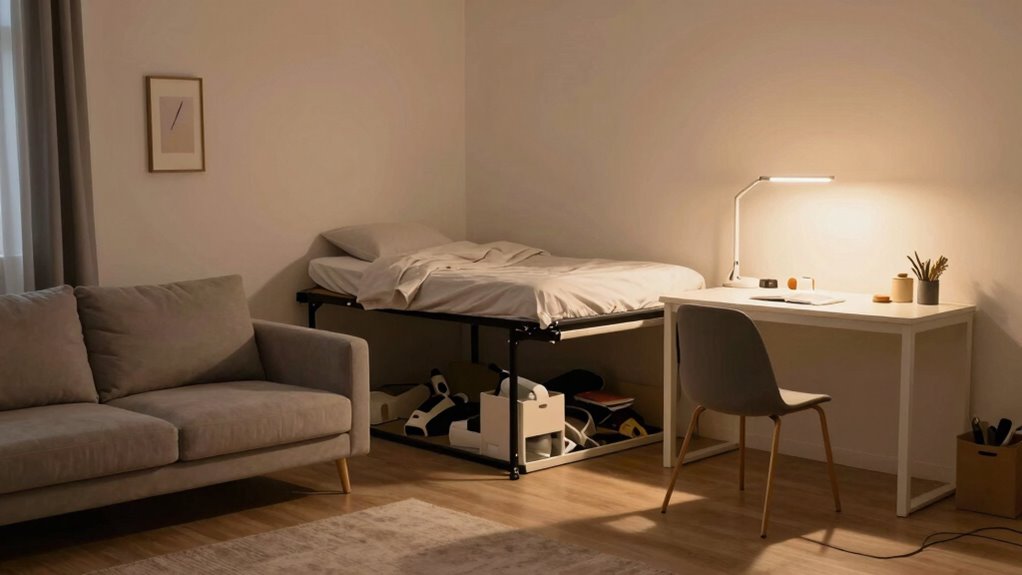
Multiuse rooms can make sleep harder because they blend spaces for work, leisure, and rest, leading to noise, clutter, and unclear boundaries. Unpredictable sounds from household chores, electronics, or TV disturb your rest and interrupt your sleep cycles. Clutter from work or hobbies keeps your mind alert, making it tough to unwind. Without clear zones, your brain stays on alert, affecting relaxation. Keep exploring to discover practical ways to create a more sleep-friendly multiuse space.

Get health and wellness essentials delivered free — and shop member deals
- Fast, free delivery on millions of items
- Access to Prime Big Deal Days deals on October 6–7
- Prime Video, Amazon Music and more included
Key Takeaways
- Ambient noises from various activities cause unpredictable sleep disruptions in multiuse rooms.
- Clutter and mixed-purpose items create visual and mental distractions, hindering relaxation.
- Lack of clear boundaries leads to cognitive dissonance between activity and rest zones.
- Frequent environment switching reduces mental cues necessary for establishing consistent sleep routines.
- Environmental factors like inadequate soundproofing and lighting interfere with sleep quality.
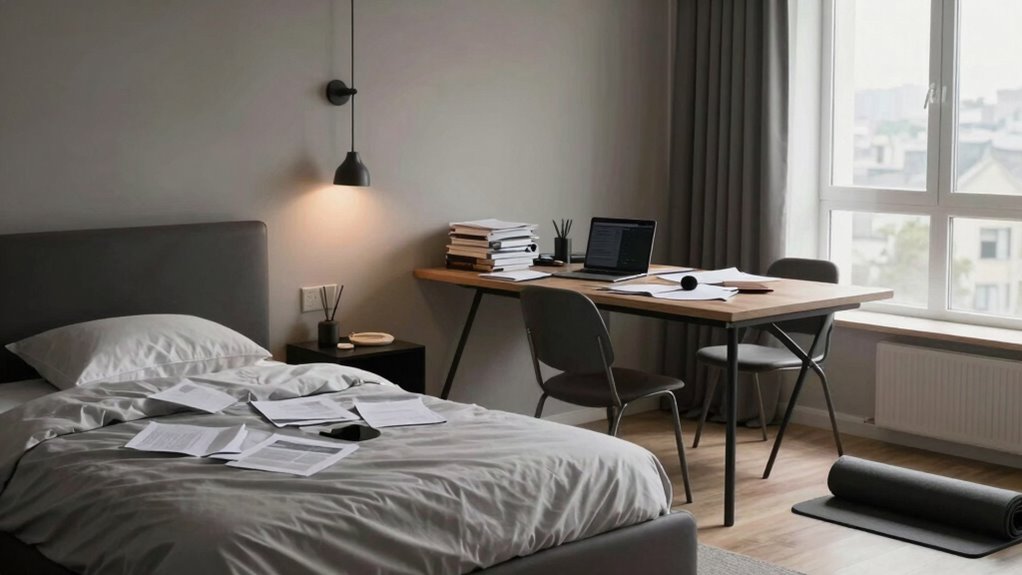
Having a room that serves multiple purposes can considerably impact your sleep quality, especially if the space isn’t designed with rest in mind. When your bedroom doubles as an office, workout space, or entertainment zone, it becomes challenging to create a calming environment conducive to sleep. One of the biggest issues is ambient noise. With different activities happening at various times, sounds from a home office, TV, or even household chores can intrude on your rest. These noises aren’t always predictable, and they can prevent you from falling asleep or cause frequent awakenings during the night. Even subtle sounds, like typing on a keyboard or a running appliance, can disrupt your sleep cycles if you’re sensitive to noise.
Multiuse rooms can hinder sleep by introducing unpredictable noise and distractions that disrupt rest and relaxation.
Room personalization also plays a significant role in how well you sleep. When a space is cluttered with items related to work, hobbies, or other daily tasks, it’s harder to mentally disconnect when it’s time to rest. If your room is filled with electronics, exercise equipment, or work-related materials, it can send mixed signals to your brain, making it difficult to switch into a restful state. Personalization that leans towards functional diversity rather than a calm, relaxing atmosphere often leads to a less effective sleep environment. You might find yourself feeling more alert or anxious when trying to unwind, simply because the room reminds you of responsibilities or activities outside of sleep.
Another challenge with multiuse rooms is maintaining a consistent routine. When your space is constantly in use for different purposes, it’s tough to establish habits that signal bedtime. For instance, if you often work late into the night at your desk, your mind associates that space with alertness rather than relaxation. The switching of environments can create cognitive dissonance, making it harder for your body to recognize when it’s time to wind down. Plus, the clutter and visual distractions from various activities can overstimulate your senses, keeping your mind active when it should be calm. Additionally, ambient noise levels from different activities can vary widely, further affecting your ability to relax. Creating a dedicated space for sleep — even within a multiuse room — can help your brain associate that area specifically with rest and recovery.
Finally, the lack of dedicated boundaries in a multiuse room makes it harder to foster a sleep-friendly atmosphere. Without clear divisions between work, entertainment, and sleep zones, it’s easier for your brain to stay alert in the space meant for rest. To improve your sleep quality, you need to contemplate how ambient noise, room personalization, and spatial boundaries influence your sleep environment. Creating a dedicated, serene corner for sleep — even within a multiuse room — can make a notable difference in how quickly and deeply you rest. Moreover, implementing simple design strategies like spatial boundaries can reinforce the separation between active and restful zones, supporting healthier sleep patterns. The use of soundproofing techniques can also further minimize disruptions caused by ambient noise. Additionally, paying attention to light control can significantly enhance the sleep environment by reducing visual stimuli that may interfere with melatonin production.
soundproof room dividers for multiuse spaces
As an affiliate, we earn on qualifying purchases.
As an affiliate, we earn on qualifying purchases.
Frequently Asked Questions
How Can I Improve Sleep in a Multiuse Space?
To improve sleep in a multiuse space, focus on room division to create distinct sleeping areas, reducing noise and visual distractions. Use soft, calming scents like lavender or chamomile to promote relaxation before bedtime. Keep the space dark and cool, and establish a consistent sleep routine. These strategies help your mind associate the area with rest, making it easier to fall asleep even in a shared environment.
Are There Specific Design Tips to Reduce Noise?
Soundproofing strategies markedly diminish disruptive noise, helping you sleep soundly. Start with simple soundproofing techniques like adding thick rugs and heavy curtains, which absorb sound. Incorporate acoustic treatments such as wall panels or foam tiles to further dampen noise. Sealing gaps around doors and windows prevents sound leaks. These tactics transform your space, making sleep more serene and soothing despite the multiuse environment’s inevitable interruptions.
What Lighting Options Promote Better Sleep?
You can promote better sleep by using ambient lighting, which creates a calm and relaxing atmosphere in your room. Opt for sleep-promoting bulbs that emit warm, soft light, ideally with adjustable brightness, so you can dim the lights as bedtime approaches. Avoid harsh, bright lights in the evening, as they can disrupt your circadian rhythm. These lighting choices help signal to your body that it’s time to unwind and rest.
Can Furniture Arrangement Affect Sleep Quality?
Furniture, flexibility, and flow directly influence sleep quality. When you carefully plan furniture placement and room zoning, you create a calming, clutter-free environment that promotes peaceful slumber. Avoid placing beds in high-traffic zones or near noise sources. Proper room zoning separates work, relaxation, and sleep areas, helping your mind associate specific spaces with rest. Thoughtful furniture arrangement fosters focus, minimizes distractions, and ultimately encourages better sleep in your multiuse room.
How Does Screen Time Impact Sleep in Shared Rooms?
Screen time impacts sleep in shared rooms by increasing screen distractions, making it harder to unwind. When you’re exposed to screens before bed, the blue light can interfere with your melatonin production, disrupting your natural sleep cycle. This hinders your ability to stick to a calming bedtime routine, leading to poorer sleep quality. To improve your rest, try minimizing screen use at least an hour before bed and establish a relaxing bedtime routine.
noise-canceling sleep headphones
As an affiliate, we earn on qualifying purchases.
As an affiliate, we earn on qualifying purchases.
Conclusion
If you keep turning your multiuse room into a chaotic whirlwind every day, don’t be surprised if your sleep turns into a never-ending nightmare. Your brain struggles to switch off when the space is constantly changing, making restful sleep feel like chasing a mythical creature. So, if you want truly deep, peaceful sleep, keep your multiuse room calm, consistent, and clutter-free—otherwise, you might just be inviting insomnia to move in permanently!
clutter storage solutions for bedroom
As an affiliate, we earn on qualifying purchases.
As an affiliate, we earn on qualifying purchases.
As an affiliate, we earn on qualifying purchases.
Fall Picks
fall essentials
As an affiliate, we earn on qualifying purchases.