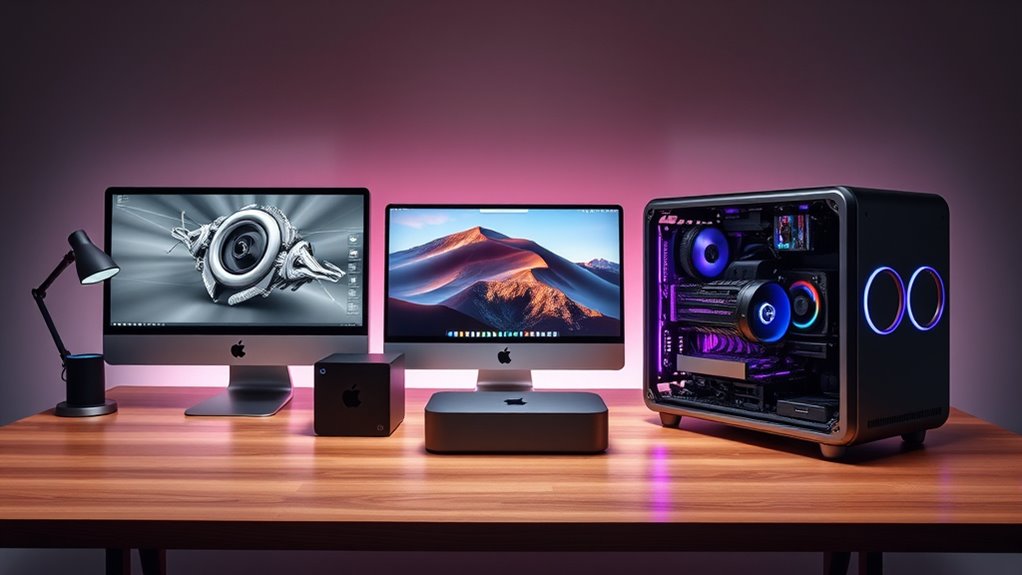

For 3D rendering in 2025, I recommend considering the latest Mac Studio models powered by the M4 chip. They offer a compact size combined with powerful performance, featuring up to 24GB of unified memory and fast SSD storage. Multiple connectivity options support multi-monitor setups and high-resolution renders. While higher-end configurations are ideal, even some entry models handle demanding tasks well. Keep exploring to discover the top choices that fit your workflow and budget seamlessly.
Key Takeaways
- Choose Mac Studio models with the latest M4 chip featuring a 10-core CPU and GPU for optimal 3D rendering performance.
- Opt for configurations with 24GB of unified memory and 512GB SSD for handling large project files efficiently.
- Prioritize models supporting multiple high-resolution displays via Thunderbolt 4 and HDMI for enhanced multitasking.
- Consider models with versatile connectivity options like USB-C, USB-A, and Wi-Fi 6E for seamless peripheral integration.
- Select Mac Studios designed for creative workflows, balancing power, space efficiency, and software compatibility for demanding 3D tasks.

Apple 2024 Mac mini Desktop Computer with M4 chip with 10‑core CPU and 10‑core GPU: Built for Apple Intelligence, 16GB Unified Memory, 256GB SSD Storage, Gigabit Ethernet. Works with iPhone/iPad
- Compact Size: Five by five inches of power
- Powerful M4 Chip: 10-core CPU and GPU for high performance
- Ample Memory: 16GB Unified Memory for multitasking
As an affiliate, we earn on qualifying purchases.
Apple 2024 Mac mini Desktop Computer with M4 Chip
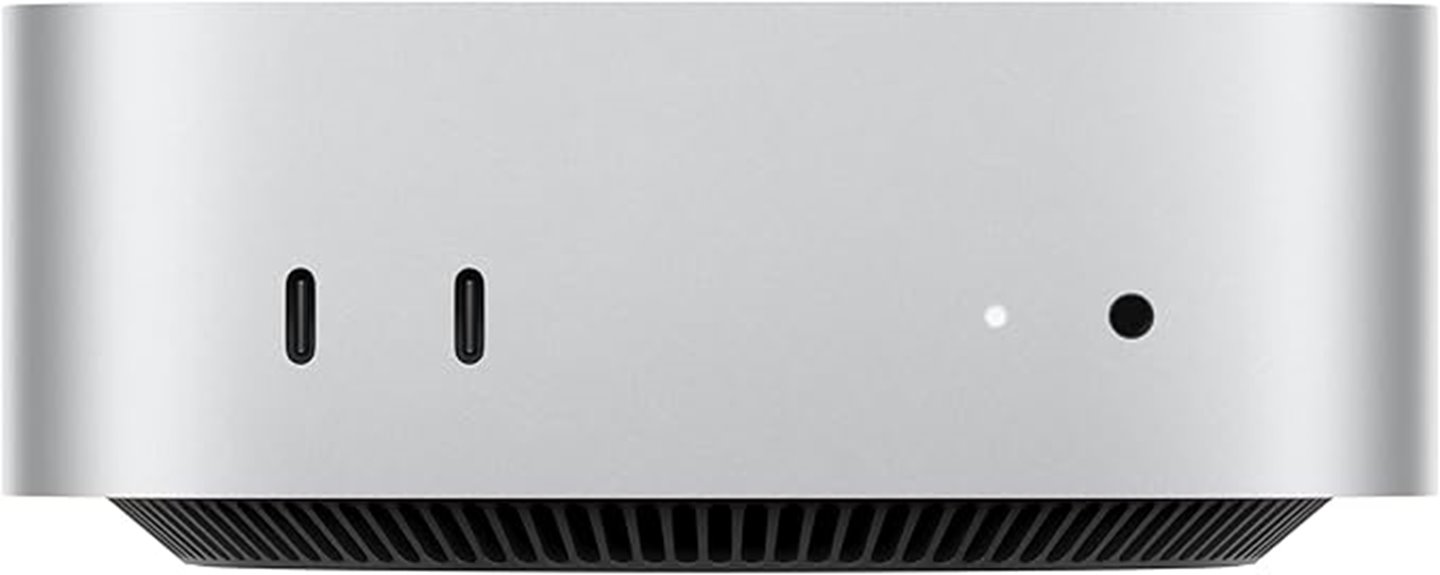
If you’re looking for a compact yet powerful option for 3D rendering, the Apple 2024 Mac mini with the M4 chip is an excellent choice. Its five-by-five-inch design lets you place it easily next to your monitor or in tight spaces. Powered by the M4 chip with a 10-core CPU and GPU, it offers snappy, reliable performance for demanding tasks. With 16GB of unified memory and a 256GB SSD, it handles large projects smoothly. Plus, its versatile ports—including Thunderbolt, HDMI, and USB-C—make connecting peripherals simple. It’s perfect for creators needing a small, efficient machine that doesn’t compromise on power.
Best For: creative professionals and small teams needing a compact, powerful computer for 3D rendering, design, and multimedia tasks.
Pros:
- Small, space-saving design that fits seamlessly into any workspace.
- Powerful M4 chip with 10-core CPU and GPU ensures fast performance for demanding applications.
- Versatile connectivity options including Thunderbolt, HDMI, and USB-C for easy peripheral integration.
Cons:
- Limited storage capacity with 256GB SSD may require external drives for large projects.
- No dedicated graphics card, which might affect performance with highly complex 3D rendering tasks.
- Higher price point compared to some other small form factor desktops with similar specs.
Apple 2024 Mac mini Desktop Computer with M4 chip with 10‑core CPU and 10‑core GPU: Built for Apple Intelligence, 24GB Unified Memory, 512GB SSD Storage, Gigabit Ethernet. Works with iPhone/iPad
- Compact Size: Five by five inches of powerful performance
- Powerful M4 Chip: Includes 10-core CPU and GPU for speed
- Ample Memory: 24GB Unified Memory for multitasking
As an affiliate, we earn on qualifying purchases.
Apple 2024 Mac mini Desktop Computer with M4 Chip
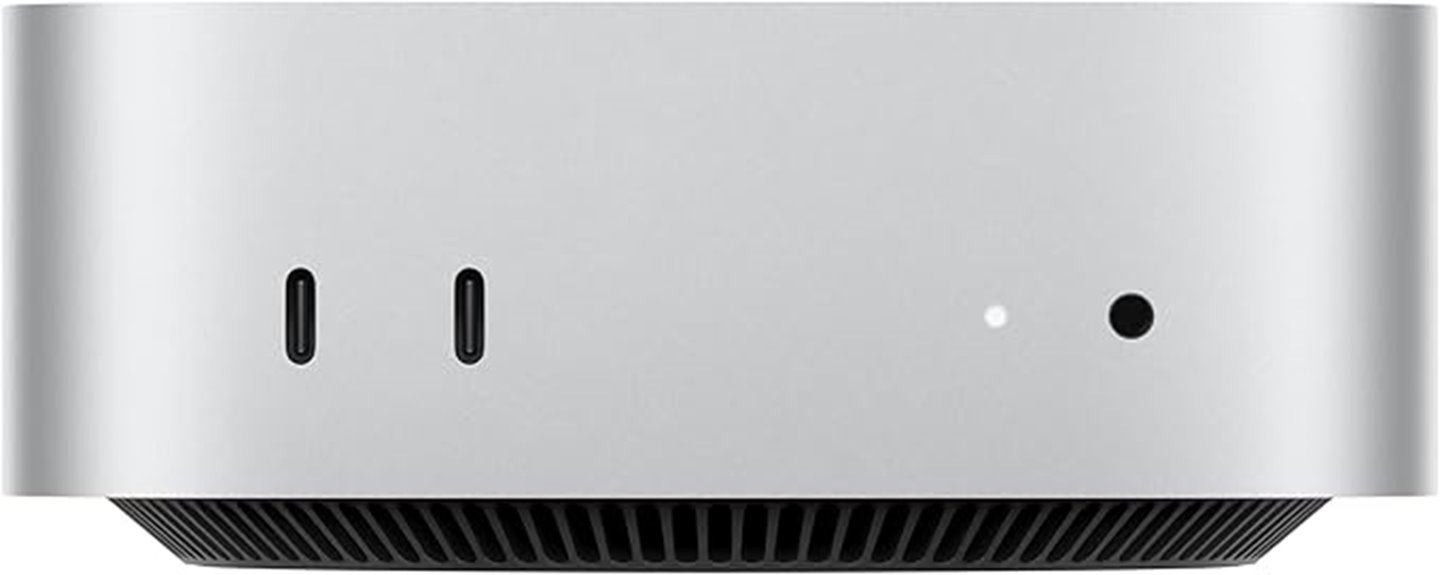
The Apple 2024 Mac mini with M4 chip stands out as an excellent choice for professionals seeking a compact yet powerful desktop for 3D rendering. Its small five-by-five-inch design fits easily anywhere, yet it packs a 10-core CPU and GPU that deliver fast, smooth performance. With 24GB of unified memory and a 512GB SSD, multitasking and large files are handled effortlessly. Connectivity options like Thunderbolt, HDMI, and USB-C make integration simple. Plus, it’s optimized for creative apps like Adobe Creative Cloud. Despite its size, this Mac mini offers impressive power, making it an ideal space-saving solution for demanding 3D rendering tasks.
Best For: professionals and creatives seeking a compact, high-performance desktop ideal for 3D rendering and multitasking.
Pros:
- Small, space-saving design that fits easily into any workspace
- Powerful M4 chip with 10-core CPU and GPU for smooth performance
- Ample 24GB unified memory and 512GB SSD for multitasking and large files
Cons:
- Limited upgrade options due to its compact form factor
- May require additional peripherals for complete setup
- Higher price point compared to some traditional mini desktops
Apple 2024 Mac mini Desktop Computer with M4 chip with 10‑core CPU and 10‑core GPU: Built for Apple Intelligence, 16GB Unified Memory, 512GB SSD Storage, Gigabit Ethernet. Works with iPhone/iPad
- Compact Size: Five by five inches of power
- Powerful M4 Chip: Unleashes full speed and capabilities
- Elegant Design: Fits next to monitor, easy to place
As an affiliate, we earn on qualifying purchases.
Apple Mac mini Desktop Computer with M4 Chip (16GB, 512GB SSD)
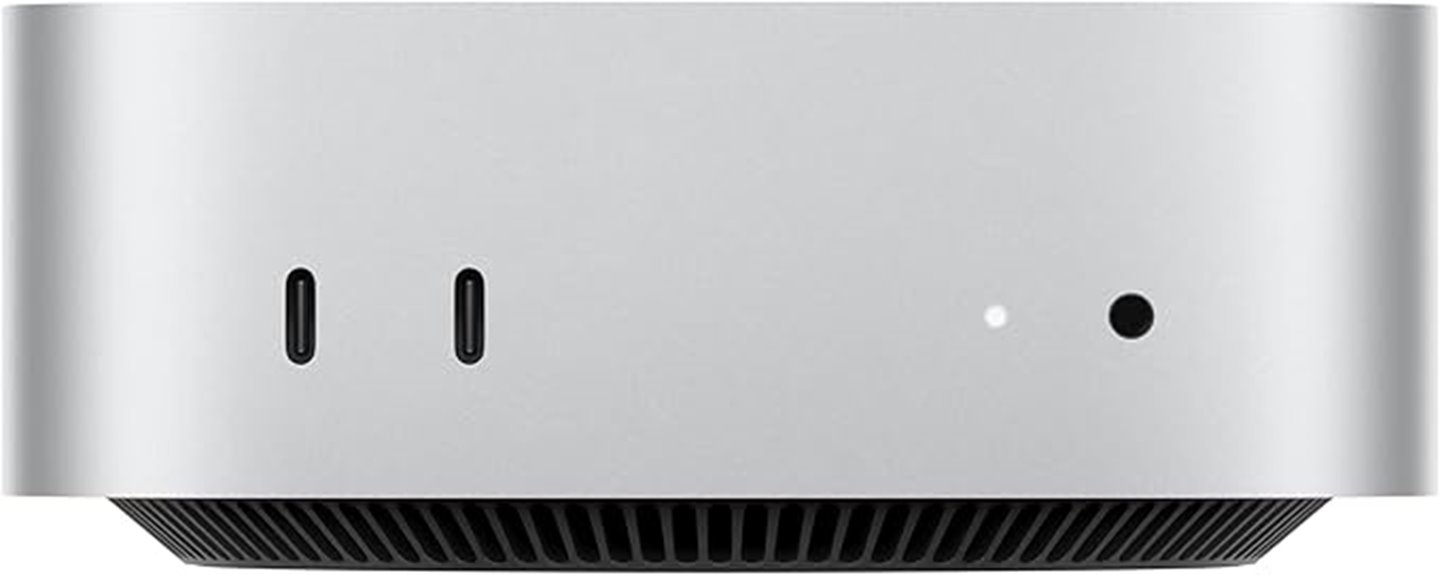
For those seeking a compact yet powerful workstation for 3D rendering in 2025, the Apple Mac mini with the M4 chip stands out as an excellent choice. Its small size belies its impressive performance, thanks to the 10-core CPU, 10-core GPU, and 16-core Neural Engine. With 16GB of unified memory and a fast 512GB SSD, it handles demanding tasks smoothly. It supports up to three displays and offers versatile connectivity, including Thunderbolt 4 and Wi-Fi 6E. Designed for Apple’s ecosystem and eco-friendly, this mini packs power in a tiny footprint, making it ideal for artists and professionals needing a reliable, space-saving workstation.
Best For: Creative professionals and power users seeking a compact, high-performance workstation for demanding tasks like 3D rendering and multimedia editing.
Pros:
- Compact design easily fits in small workspaces or next to monitors
- Powerful M4 chip with 10-core CPU and GPU delivers fast, smooth performance
- Supports multiple high-resolution displays and versatile connectivity options
Cons:
- Limited upgradeability due to integrated hardware design
- May require additional peripherals or accessories for full functionality
- Higher cost compared to some traditional desktop setups
Factors to Consider When Choosing Mac Studio for 3D Rendering
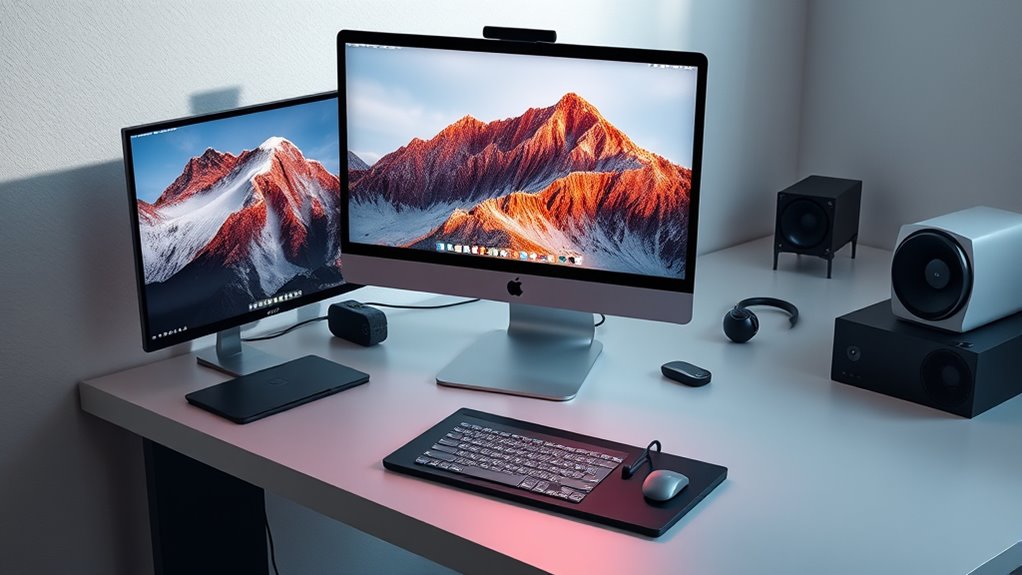
When choosing a Mac Studio for 3D rendering, I consider several key factors to guarantee ideal performance. I look at processing power, RAM capacity, and graphics card options to match my project needs, along with storage and connectivity for smooth workflow. These elements help me select the best setup for efficient and reliable 3D rendering.
Processing Power Needs
Choosing the right Mac Studio for 3D rendering hinges largely on processing power, as it directly impacts how quickly and efficiently complex scenes are rendered. Higher core counts, like 12 or more, *important* cut down rendering times for intricate models. A dedicated GPU with high CUDA or Metal core counts further boosts performance and minimizes bottlenecks. Faster CPU clock speeds and multi-threading capabilities enable quicker calculations and scene updates, *vital* for demanding projects. Advanced processors with larger caches help manage large 3D files and complex textures more effectively. Additionally, sufficient RAM and high memory bandwidth are *essential* for smooth multitasking and handling detailed models during rendering. Prioritizing these processing features ensures your Mac Studio can meet the intense demands of professional 3D workflows.
RAM Capacity Importance
Processing power is essential for fast 3D rendering, but without enough RAM, even the most powerful Mac Studio can slow down. Adequate RAM allows smooth handling of complex models and large files, preventing constant disk swapping that hampers speed. For most 3D tasks, at least 16GB of RAM is necessary, but for intensive projects with high-resolution textures and detailed scenes, 32GB or more is ideal. More RAM also boosts multitasking, letting you run multiple applications and plugins simultaneously without lag. When choosing a Mac Studio, consider your workload: upgrading RAM can notably improve your workflow efficiency and reduce render times. Ultimately, sufficient RAM capacity directly impacts your ability to work seamlessly on demanding 3D projects.
Graphics Card Selection
A powerful graphics card is indispensable for achieving fast, high-quality 3D rendering on your Mac Studio. Look for dedicated GPUs with high CUDA or Metal core counts, as they markedly boost rendering speed and detail. VRAM capacity is essential—8GB or more helps handle complex models and high-res textures smoothly. Compatibility with your preferred professional 3D software and support for high-resolution displays are also key factors. When choosing between AMD and NVIDIA, consider which brand aligns better with your workflow, especially regarding software optimization. Future-proofing is critical; select a GPU that supports the latest APIs and hardware acceleration features to stay ahead. A well-chosen graphics card ensures your Mac Studio can handle demanding projects efficiently now and in the future.
Storage Requirements
Having ample storage is essential when working on complex 3D rendering projects, as large files and numerous assets can quickly consume space. High-capacity SSDs, like 512GB or 1TB, offer faster data access, which boosts workflow efficiency. It’s wise to contemplate future scalability by choosing storage options that can be upgraded or supplemented with external drives, ensuring your setup remains flexible. Smaller storage capacities may require frequent file management or external drives, which can disrupt your productivity. The storage choice should match the size and complexity of your projects to avoid bottlenecks. Investing in sufficient onboard storage from the start helps maintain smooth workflows and reduces the hassle of managing space mid-project, ultimately saving time and keeping your creative process uninterrupted.
Connectivity Options
Choosing the right connectivity options on a Mac Studio is vital for a smooth 3D rendering workflow, especially when dealing with large files and multiple peripherals. I look for models with multiple Thunderbolt 4 ports, which support high-speed data transfer and can connect several external displays. HDMI ports are essential for hooking up high-resolution monitors, ideally 4K or 8K, to visualize detailed work. USB-C and USB-A ports are also important for connecting external drives, input devices, and other peripherals. Stable network connections matter, so I prioritize models with Gigabit Ethernet or higher for fast data transfer. If I integrate audio workflows, I consider models with additional audio output options. These connectivity features ensure my setup remains efficient and versatile for demanding 3D rendering tasks.
Software Compatibility
Ensuring that your Mac Studio is compatible with your preferred 3D rendering software is essential for a smooth workflow. You should verify that the software, like Blender, Maya, or Cinema 4D, supports the latest macOS versions and leverages Metal for hardware acceleration, maximizing performance. Check if the software efficiently utilizes multi-core CPU and GPU resources, especially for rendering complex scenes. It’s also important to confirm whether the application offers a native macOS version or relies on virtualization, which can impact speed and stability. Additionally, ensure compatibility with Apple Silicon to benefit from features like Neural Engine acceleration. These factors ensure you get the most out of your Mac Studio’s power, avoiding bottlenecks and ensuring seamless 3D rendering workflows.
Budget Considerations
When selecting a Mac Studio for 3D rendering, budget considerations play a key role in making the right choice. Higher-end models with more RAM, better GPUs, and larger storage options come with a markedly increased price. If you’re budget-conscious, opting for a lower-spec configuration might be necessary, but keep in mind you’ll likely need to upgrade later, which could cost more over time. Don’t forget to factor in additional expenses like external displays, storage drives, and peripherals, as these can add up quickly. Comparing Mac Studio prices with other high-performance computers can help you determine if it fits your financial limits. Sometimes investing in a more powerful model upfront is more cost-effective, reducing future upgrade costs and ensuring long-term performance.
Frequently Asked Questions
How Does GPU Performance Impact 3D Rendering Speed on Mac Studios?
GPU performance directly impacts my 3D rendering speed because it handles the complex calculations needed for rendering detailed scenes. A powerful GPU reduces rendering times markedly, allowing me to work more efficiently. When I choose a Mac Studio with a top-tier GPU, I notice smoother workflows and faster previews. So, investing in a strong GPU truly boosts my productivity and helps me meet tight deadlines with ease.
Are Mac Studios Compatible With All Major 3D Rendering Software?
Mac Studios are compatible with most major 3D rendering software like Blender, Maya, and Cinema 4D. I’ve found that they run these programs smoothly, thanks to their powerful hardware and optimized macOS support. However, some specialized or Windows-only applications might require virtualization or dual-boot setups. Overall, I’d say Mac Studios are versatile and capable, making them a solid choice for 3D artists and designers.
What Are the Best Storage Options for Large 3D Projects on Mac?
For large 3D projects on my Mac, I recommend using fast external SSDs like Thunderbolt 3 or 4 drives. They offer great speed and capacity, keeping my workflow smooth. I also consider network-attached storage (NAS) for extensive projects, providing scalable storage and easy access. Internal SSDs are good too, but I find external options give me more flexibility and space for hefty files.
How Does Thermal Management Affect Long Rendering Sessions?
Thermal management is vital during long rendering sessions because it keeps my Mac from overheating, which can throttle performance or cause crashes. Good cooling ensures the system maintains peak speeds without slowing down. I always make certain my Mac has proper ventilation or uses external cooling solutions. This way, I can render for hours without worrying about thermal issues affecting my work quality or device longevity.
Can Mac Studios Be Upgraded for Future 3D Rendering Demands?
Upgrading a Mac Studio for future 3D rendering is like trying to add new wings to a sturdy house—it’s limited. While some components like RAM can be upgraded, the GPU and CPU are often soldered in, making upgrades tough. I’ve found that investing in the latest model with the best specs upfront is smarter, so you’re ready for demanding projects without frustrating limitations down the road.
Conclusion
Choosing the right Mac Studio for 3D rendering in 2025 means trusting in power and reliability—much like the trusty steed that carried explorers through uncharted lands. With the M4 chip‘s cutting-edge performance, you’re ready to conquer complex projects with ease. Don’t settle for less; these machines are your modern-day Excalibur, ready to turn your creative visions into reality. Embrace the future of rendering, and let your imagination run wild!