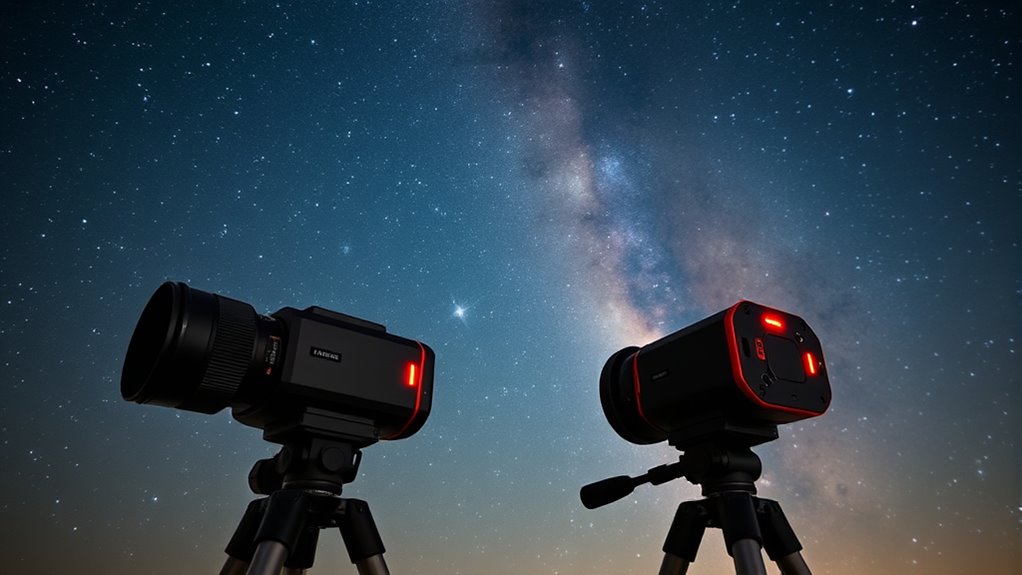

Choosing a cooled CMOS camera for deep sky imaging comes down to matching sensor size, pixel scale, and workflow to your telescope and goals. I put the ZWO ASI2600MM Pro first for its large monochrome sensor and 16-bit conversion, while the SVBONY SV405CC is my one-shot color pick for its larger pixels and broad software support. The ZWO ASI183MC Pro offers the most pixels in a color format here, but its small pixels and separate cooler power supply call for a suitable setup.

Get health and wellness essentials delivered free with Prime
- Fast, free delivery on millions of items
- Prime Video, Amazon Music and more included
- Member-only deals all year
These five cameras occupy different lanes: monochrome models can capture narrowband data with filters but need a filter system, while color models simplify acquisition at the cost of less control over each color channel. Sensor area affects framing; pixel size affects sampling; cooling helps control sensor noise during long exposures. I rank these options by how well their supplied features support deep sky work and how clearly their tradeoffs fit a buyer type.
Key Takeaways
- The ZWO ASI2600MM Pro has the largest sensor in this group and 16-bit conversion, making it the strongest choice for expansive monochrome deep sky imaging.
- The SVBONY SV405CC pairs a 4/3-inch sensor with 4.63 μm pixels and broad OS support, suiting one-shot color users who want larger pixels.
- The ZWO ASI183MC Pro provides 20.1 MP in color, but its 2.4 μm pixels favor careful matching to telescope focal length and seeing.
- The ZWO ASI585MC Pro and ASI585MM Pro share a compact 8.29 MP sensor; choose color for simpler capture or monochrome for filter-based control.
- A separate 12 V supply is required for the ASI183MC Pro cooler and the ASI585MM Pro; include power and any monochrome filter equipment in your setup plan.
| ZWO ASI2600MM Pro Cooled Monochrome Astronomy Camera |  | Best Overall for Advanced Monochrome Imaging | Sensor: Sony IMX571 CMOS, monochrome | Resolution: 26.1 MP (6248 × 4176) | Sensor area: 23.5 × 15.7 mm | VIEW ON AMAZON | See Our Full Breakdown |
| SVBONY SV405CC Cooled Astrophotography Camera (IMX294) |  | Best One-Shot Color Versatility | Sensor: Sony IMX294 back-illuminated 4/3-inch CMOS | Resolution: 4144 × 2822 (11.7 MP) | Pixel size: 4.63 μm | VIEW ON AMAZON | See Our Full Breakdown |
| ZWO ASI183MC Pro 20.1 MP Cooled Color Astronomy Camera |  | Best for High-Resolution Color | Resolution: 5496 × 3672 (20.1 MP) | Pixel size: 2.4 μm | Cooling: TEC cooling to 40–45°C below ambient | VIEW ON AMAZON | See Our Full Breakdown |
| ZWO ASI585MM Pro Cooled Monochrome Astronomy Camera |  | Best Compact Monochrome Option | Sensor: 1/1.2-inch 4K monochrome CMOS | Resolution: 3840 × 2160 (8.29 MP) | Pixel size: 2.9 μm | VIEW ON AMAZON | See Our Full Breakdown |
| ZWO ASI585MC Pro Cooled Color Astronomy Camera |  | Best Compact Color and Multi-Use Pick | Sensor: 1/1.2-inch Sony IMX585 CMOS | Resolution: 3840 × 2160 (8.29 MP) | Pixel size: 2.9 μm | VIEW ON AMAZON | See Our Full Breakdown |
| cooled cmos astro cameras for deep sky imaging | Resolution | Pixel size | Cooling | Sensor |
|---|---|---|---|---|
| ZWO ASI2600MM Pro Cooled Monoc | 26.1 MP (6248 × 4176) | 3.76 μm | 30–35°C below ambient | Sony IMX571 CMOS, monochrome |
| SVBONY SV405CC Cooled Astropho | 4144 × 2822 (11.7 MP) | 4.63 μm | Two-stage TEC, up to 30°C below ambient | Sony IMX294 back-illuminated 4/3-inch CMOS |
| ZWO ASI183MC Pro 20.1 MP Coole | 5496 × 3672 (20.1 MP) | 2.4 μm | TEC cooling to 40–45°C below ambient | — |
| ZWO ASI585MM Pro Cooled Monoch | 3840 × 2160 (8.29 MP) | 2.9 μm | Two-stage TEC, up to 35°C below ambient | 1/1.2-inch 4K monochrome CMOS |
| ZWO ASI585MC Pro Cooled Color | 3840 × 2160 (8.29 MP) | 2.9 μm | Two-stage TEC, up to 35°C below ambient | 1/1.2-inch Sony IMX585 CMOS |
More Details on Our Top Picks
ZWO ASI2600MM Pro Cooled Monochrome Astronomy Camera
I rank the ASI2600MM Pro first for deep sky imaging when a buyer is ready for a monochrome workflow. Its 23.5 × 15.7 mm sensor is substantially larger than the 1/1.2-inch sensors in the ASI585 models, giving a broader field of view with a comparable telescope. The 26.1 MP resolution and 3.76 μm pixels balance coverage and sampling, while 16-bit conversion gives more tonal steps to work with during processing than the 12-bit ASI585MC Pro specification.
That capability comes with a slower full-resolution rate of 3.51 fps, a limitation for planetary capture but a less central concern for long deep sky exposures. Compared with the color SV405CC, this camera requires separate filters and a more involved capture plan, but monochrome can suit narrowband imaging and deliberate channel control. Its cooling range is listed at 30–35°C below ambient; this is useful for managing sensor heat, but does not by itself determine final image quality.
I would choose it for a system built around deep sky work and a willingness to assemble a monochrome imaging train. It is a poor fit for anyone seeking a compact, uncomplicated color camera or one device for frequent high-speed planetary recording. The 27.5 mm back focus and external imaging accessories should be checked against the telescope and filter wheel before purchase.
Pros:- Large 26.1 MP sensor area for wider framing
- 16-bit conversion and stated 13.9-stop dynamic range
- 3.76 μm pixels and 91% stated quantum efficiency
- 512 MB buffer for data handling
Cons:- Monochrome imaging requires filters and a more involved capture workflow
- Full-resolution frame rate is 3.51 fps
- Cooling is specified at 30–35°C below ambient, less than the ASI183MC Pro listing
Best for: Deep sky imagers building a monochrome system who value a large sensor, 16-bit conversion, and broad framing.
Not ideal for: Beginners who want one-shot color, buyers avoiding filters, or users prioritizing high frame rates for planetary video.
- Sensor:Sony IMX571 CMOS, monochrome
- Resolution:26.1 MP (6248 × 4176)
- Sensor area:23.5 × 15.7 mm
- Pixel size:3.76 μm
- ADC:16-bit
- Cooling:30–35°C below ambient
- Read noise:1.0 e
- Full-resolution frame rate:3.51 fps
Our verdict“I recommend the ASI2600MM Pro as the most capable deep sky option here for buyers prepared to build around monochrome imaging.”
SVBONY SV405CC Cooled Astrophotography Camera (IMX294)
The SV405CC is my leading one-shot color option for buyers who want a moderately large sensor and a flexible computer setup. Its back-illuminated 4/3-inch IMX294 sensor has 11.7 MP and relatively large 4.63 μm pixels. Compared with the 2.9 μm pixels in the ASI585 cameras, that pixel size may be easier to pair with longer focal lengths without oversampling, depending on the telescope and local seeing. The stated 63 ke− full well capacity also gives buyers a useful point of comparison when planning exposure settings.
Two-stage TEC cooling is specified to reach 30°C below ambient, and Smart HCG mode activates at gain 120 or higher to lower read noise while retaining dynamic range according to the supplied description. This cooling figure is lower than the listed 35°C for the ASI585 cameras and 40–45°C for the ASI183MC Pro. Its appeal is instead the combination of sensor format, color capture, and Windows, Linux, Mac, Chrome OS, and Raspberry Pi support, alongside SharpCap, TheSkyX, and ASCOM compatibility.
The 256 MB buffer and USB 3.0 interface support data transfer, though its 19 fps RAW8 rate is far below the ASI585 models’ roughly 47 fps. For deep sky imaging, that distinction matters less than sensor scale and capture workflow. I would skip it if maximum cooling or high-speed planetary capture is the priority; for an adaptable color rig, it is a notably broad fit.
Pros:- Back-illuminated 4/3-inch IMX294 sensor with 11.7 MP
- 4.63 μm pixels and stated 63 ke− full well capacity
- Smart HCG mode for lower read noise at higher gain
- Broad OS, software, and Raspberry Pi compatibility
Cons:- Cooling is listed at up to 30°C below ambient, less than several competitors
- 19 fps RAW8 maximum is slower than the ASI585 models
- Color sensor offers less per-channel control than monochrome cameras
Best for: One-shot color imagers who want a 4/3-inch sensor, larger pixels, and compatibility across varied operating systems.
Not ideal for: Buyers who prioritize the deepest listed cooling, the highest video frame rates, or monochrome narrowband capture.
- Sensor:Sony IMX294 back-illuminated 4/3-inch CMOS
- Resolution:4144 × 2822 (11.7 MP)
- Pixel size:4.63 μm
- ADC:14-bit
- Cooling:Two-stage TEC, up to 30°C below ambient
- HCG mode:Activates at gain 120 or higher
- Frame rate:19 fps RAW8 / 16 fps RAW16
- Interface and buffer:USB 3.0; 256 MB DDRIII
Our verdict“I would pick the SV405CC for flexible one-shot color imaging with larger pixels and unusually broad computer support.”
ZWO ASI183MC Pro 20.1 MP Cooled Color Astronomy Camera
For a color camera with many pixels, the ASI183MC Pro is the standout: its 20.1 MP sensor has more than twice the resolution of either ASI585 model. That can preserve fine detail across a given field, but its 2.4 μm pixels are the smallest in this group. I would match it carefully to focal length and typical seeing; at a short focal length it can sample finely, while at a long focal length it may ask more of tracking, focus, and atmospheric conditions than the larger-pixel SV405CC.
The specified TEC cooling range of 40–45°C below ambient is the strongest cooling figure among these listings. A 256 MB buffer and USB 3.0 connection support capture, and the package description mentions both 1.25-inch and 2-inch telescope connections. Unlike the ASI585MC Pro, it requires a separate 12 V, 3 A supply for the cooler, which adds a power-planning step. Its 19 fps full-resolution rate is also well below the ASI585MC Pro’s 46.9 fps.
I see this as a specialist color choice for buyers who value resolution and can take advantage of its small pixels. It is less straightforward than the SV405CC for a general-purpose color setup, since it combines a smaller pixel pitch with extra power needs. Solar imaging requires a suitable solar filter, which is not included; for this roundup’s deep sky focus, its most distinctive case is detailed color capture at a well-matched image scale.
Pros:- 20.1 MP resolution exceeds every other color option here
- Cooling listed at 40–45°C below ambient
- USB 3.0 and 256 MB buffer
- Includes 1.25-inch and 2-inch telescope adapters
Cons:- Very small 2.4 μm pixels need careful telescope matching
- Separate 12 V, 3 A cooler supply is required and not included
- 19 fps maximum is slower than either ASI585 model
Best for: Color imagers with a telescope and seeing conditions suited to fine 2.4 μm sampling who want high pixel count.
Not ideal for: Buyers seeking larger pixels, simpler power wiring, or the higher capture rate of the ASI585 series.
- Resolution:5496 × 3672 (20.1 MP)
- Pixel size:2.4 μm
- Cooling:TEC cooling to 40–45°C below ambient
- Maximum frame rate:19 fps at maximum resolution
- Buffer:256 MB DDR3
- Connectivity:USB 3.0; USB 2.0 accessory hub
- Telescope connections:1.25-inch nosepiece and 2-inch adapter with T-thread
- Cooler power:Separate 12 V, 3 A supply required
Our verdict“I recommend the ASI183MC Pro to color imagers whose optics and conditions can make practical use of its high resolution and small pixels.”
ZWO ASI585MM Pro Cooled Monochrome Astronomy Camera
The ASI585MM Pro brings monochrome capture into a smaller sensor format. Its 8.29 MP, 1/1.2-inch sensor is much smaller than the ASI2600MM Pro’s 23.5 × 15.7 mm area, so it frames a narrower patch of sky with the same telescope. In exchange, its compact format can suit a smaller optical train, and the 2.9 μm pixels and 47 fps full-resolution rate make it more adaptable to high-speed lunar or planetary capture than the slower ASI2600MM Pro.
For deep sky work, the monochrome sensor allows separate filter-based capture and more direct control of channels. The stated 91% peak quantum efficiency and cooling to 35°C below ambient are promising specifications, though they do not replace matching exposure strategy and optics to the target. A 512 MB cache supports data handling. The camera requires an external 11–14 V supply, with a 12 V, 3–5 A adapter recommended, so it needs more power planning than the color ASI585MC Pro listing.
This model makes most sense for someone who wants one compact camera for deep sky and faster imaging, and already accepts monochrome filters. The ASI2600MM Pro is the stronger deep sky choice when a wide field and larger sensor are priorities; the ASI585MC Pro is easier to run if color is preferred. The small sensor and additional filter workflow are real compromises for a first cooled camera.
Pros:- Monochrome sensor supports separate filter and narrowband capture
- 47 fps full-resolution rate suits fast imaging too
- 91% stated peak quantum efficiency
- 512 MB DDR3 cache
Cons:- Small 1/1.2-inch sensor frames less sky than the ASI2600MM Pro
- External 11–14 V power supply is required and not included
- Monochrome workflow adds filters and capture steps
Best for: Imagers seeking a compact monochrome camera for deep sky sessions plus fast lunar or planetary capture.
Not ideal for: Buyers who need a wide field of view, want simple one-shot color, or do not want a separate power supply and filters.
- Sensor:1/1.2-inch 4K monochrome CMOS
- Resolution:3840 × 2160 (8.29 MP)
- Pixel size:2.9 μm
- Maximum frame rate:47 fps at full resolution
- Cooling:Two-stage TEC, up to 35°C below ambient
- Full well capacity:40 ke−
- Buffer:512 MB DDR3 cache
- Power:External 11–14 V supply; 12 V, 3–5 A recommended
Our verdict“I would choose the ASI585MM Pro when compact monochrome versatility and fast capture matter more than sensor area.”
ZWO ASI585MC Pro Cooled Color Astronomy Camera
The ASI585MC Pro is the compact color alternative to the ASI585MM Pro, sharing its 1/1.2-inch, 8.29 MP sensor format while avoiding the need for a monochrome filter sequence. Its 2.9 μm pixels, stated 91% peak quantum efficiency, and two-stage cooling to 35°C below ambient make it a capable small-format option for deep sky use. It also offers up to 46.9 fps at full resolution, which is far quicker than the ASI183MC Pro’s 19 fps and useful if lunar, solar-with-filter, or planetary capture is part of the plan.
The compact sensor is the main constraint for deep sky framing. Compared with SVBONY’s 4/3-inch SV405CC, the ASI585MC Pro covers less sky with a given telescope; the SV405CC also has larger pixels and a 14-bit ADC. The ASI585 has a USB 2.0 accessory hub and USB 3.0 imaging connection, but its listed full well capacity is inconsistent: the provided description says 47 ke− while the specification says 40 ke−. I would treat that figure as unresolved until confirmed with the seller or manufacturer.
For a buyer prioritizing one-shot color, fast capture, and a small sensor package, this is the most versatile compact color choice here. It is less compelling for wide deep sky targets than the SV405CC or ASI2600MM Pro, and buyers should plan around its 12-bit ADC specification. The USB hub is convenient for accessories, though it operates at USB 2.0 speed.
Pros:- 46.9 fps full-resolution capture
- Two-stage TEC cooling to 35°C below ambient
- Compact color camera suited to mixed target use
- USB 2.0 accessory hub alongside USB 3.0 imaging
Cons:- 1/1.2-inch sensor offers narrower framing than the SV405CC or ASI2600MM Pro
- Full well capacity differs between the supplied description and specification
- USB hub is USB 2.0 and ADC is 12-bit
Best for: A one-shot color buyer who wants a compact sensor, fast frame rates, and the option to capture planetary or lunar targets.
Not ideal for: Deep sky imagers who need a broad field of view, higher bit depth, or a monochrome narrowband workflow.
- Sensor:1/1.2-inch Sony IMX585 CMOS
- Resolution:3840 × 2160 (8.29 MP)
- Pixel size:2.9 μm
- Peak quantum efficiency:91%
- Cooling:Two-stage TEC, up to 35°C below ambient
- Maximum frame rate:46.9 fps at full resolution
- ADC:12-bit
- Interfaces:USB 3.0 imaging; USB 2.0 Type-B hub
Our verdict“I recommend the ASI585MC Pro for compact, fast one-shot color capture, with the caveat that its listed full well figure needs confirmation.”

How We Picked
I compared each camera through the needs of deep sky imaging: sensor area and resolution for framing and detail, pixel size for sampling, cooling for long-exposure sessions, and connections or power requirements that shape a practical rig. I also weighed the acquisition workflow. One-shot color avoids a sequence of separate color filters, while monochrome can give the imager direct control over luminance and narrowband capture at the cost of more equipment and processing steps.
The ranking reflects distinct strengths, not a claim that one sensor suits every telescope. The ASI2600MM Pro leads for its larger imaging area, 16-bit conversion, and stated dynamic range. SVBONY’s SV405CC ranks as the most flexible color choice in this set, with a 4/3-inch sensor and support across several operating systems. The ASI183MC Pro earns a place for resolution in a color camera, though its small pixels demand more attention to image scale. The two ASI585 models are compact alternatives with fast readout and high stated peak quantum efficiency; sensor size keeps them behind the larger format options for broad framing.
I used the supplied product specifications and descriptions. Where the supplied information conflicts, such as the ASI585MC Pro full well capacity, I identify that uncertainty rather than treating one figure as settled. The listed attributes do not establish real-world performance across all telescopes, skies, software versions, or capture settings.
Factors to Consider When Choosing Cooled Cmos Astro Cameras For Deep Sky Imaging
I would start with the imaging workflow and telescope, then compare sensor size and pixel pitch. Those choices shape framing, detail, and how much supporting equipment the camera needs.Choose color or monochrome first
One-shot color is the simpler route: the SV405CC, ASI183MC Pro, and ASI585MC Pro capture color with one sensor and avoid a filter wheel. That makes acquisition less involved, especially for a first cooled camera. Monochrome options such as the ASI2600MM Pro and ASI585MM Pro call for filters and more capture planning, but let you record individual channels and use narrowband filters. I would choose monochrome when that control is worth the added optical and processing workflow.
Match sensor area to your target framing
Sensor area sets how much sky your telescope projects onto the camera. The ASI2600MM Pro’s 23.5 × 15.7 mm sensor is the largest listed, and the SV405CC’s 4/3-inch IMX294 is larger than the 1/1.2-inch ASI585 sensors. This can matter when framing extended nebulae or large galaxies. A smaller sensor can still suit compact targets and smaller rigs, but may make a wide target difficult to fit. Check a field-of-view calculator with your telescope’s focal length before deciding.
Relate pixel size to focal length
Pixel size affects image scale in combination with focal length. The ASI183MC Pro’s 2.4 μm pixels sample finely, while the SV405CC’s 4.63 μm pixels are larger. Fine sampling can help capture small detail when optics and seeing support it, but it can also spread a target over more pixels and place greater demands on tracking and focus. I would compare pixel scale for your actual telescope rather than treating a smaller pixel as automatically better.
Treat cooling and bit depth as parts of a system
TEC cooling helps reduce sensor dark current during long exposures; the listed temperature differences range from 30°C below ambient on the SV405CC to 40–45°C on the ASI183MC Pro. Cooling figures are not a direct ranking of finished images, since ambient temperature, exposure length, gain, calibration, and sensor behavior also matter. Bit depth describes the number of recorded tonal steps: the ASI2600MM Pro lists 16-bit conversion, the SV405CC 14-bit, and the ASI585MC Pro 12-bit. Consider these alongside your capture settings and processing habits.
Plan power, adapters, and accessories
Camera electronics and the cooler can have different power needs. The ASI183MC Pro requires a separate 12 V, 3 A supply for cooling, and the ASI585MM Pro lists an external 11–14 V supply requirement. Check what is included before assembling a field setup. Monochrome cameras also need filters and typically a filter wheel or other filter arrangement; color cameras sidestep that equipment. Verify back focus, adapters, USB connections, and software support against the rest of the imaging train before purchase.
Frequently Asked Questions
Which camera in this comparison is best for deep sky imaging?
I rank the ZWO ASI2600MM Pro first for deep sky work because it combines the largest stated sensor area, 26.1 MP resolution, and 16-bit conversion. It is a monochrome camera, though, so it suits buyers prepared to add filters and manage a more involved capture workflow. For simpler one-shot color, I would look at the SVBONY SV405CC instead.
Should I choose a cooled color or monochrome astro camera?
A cooled color camera is the more direct choice when you want to collect color without changing filters during a session. The SV405CC and ASI585MC Pro are examples here. Monochrome cameras such as the ASI2600MM Pro and ASI585MM Pro support separate channel capture and narrowband filters, but call for additional equipment and processing. I would choose based on whether that control is worth the extra workflow to you.
Does a larger sensor always produce a better deep sky image?
A larger sensor records a wider field with a given telescope, which helps with extended targets and framing. It does not guarantee a better image: telescope optics, pixel scale, focus, tracking, exposure, and sky conditions also matter. In this group, the ASI2600MM Pro has the largest stated sensor area, while the smaller ASI585 models may suit compact systems or smaller targets.
Which camera has the highest resolution?
The ZWO ASI2600MM Pro has the highest stated resolution at 26.1 MP, followed by the color ASI183MC Pro at 20.1 MP. Resolution is only one part of the match: the ASI183MC Pro’s 2.4 μm pixels are particularly small, and the ASI2600MM Pro’s monochrome workflow requires filters. I would check pixel scale and field of view alongside megapixel count.
What should I check before buying a cooled astronomy camera?
I would confirm that the sensor’s field of view and pixel scale suit your telescope, then check software and operating system compatibility, cooler power requirements, back focus, and USB connections. For a monochrome model, account for filters and their mounting arrangement. The supplied ASI585MC Pro information gives conflicting full well capacity figures of 40 and 47 ke−, so I would confirm that specification before relying on it.
Conclusion
My picks depend on the system you want to build. For a large-sensor monochrome setup, I would start with the ASI2600MM Pro. For adaptable one-shot color and broader computer compatibility, the SV405CC is the clearest fit. Choose the ASI183MC Pro if high-resolution color and fine sampling match your telescope; pick the ASI585MC Pro for compact color and fast capture, or the ASI585MM Pro when compact monochrome versatility matters more than sensor area. Before settling on one, check image scale, framing, cooler power, and any filters or adapters your rig will need.
Fall Picks
fall essentials
As an affiliate, we earn on qualifying purchases.