Blue light glasses can help improve your sleep by filtering out blue light from screens, which suppresses melatonin and disrupts circadian rhythms. They are designed with tinted lenses that block high-energy visible light, reducing eye strain and aiding in falling asleep faster. Scientific studies support their effectiveness for better sleep quality, especially when combined with good sleep habits. Keep exploring to discover if they’re a good fit for your nightly routine.
Open a free Amazon Business account
Business pricing, bulk buying and tax-exempt orders.
As an affiliate, we earn on qualifying purchases.
Key Takeaways
- Blue light glasses can reduce blue light exposure, helping prevent melatonin suppression and improve sleep quality.
- Scientific studies show they increase melatonin levels and decrease sleep onset time when worn in the evening.
- Effectiveness depends on lens tint; darker or amber lenses block more blue light for better sleep benefits.
- They are most beneficial when combined with good sleep hygiene practices like limiting screen time before bed.
- While helpful, blue light glasses are not a complete solution; lifestyle habits also significantly impact sleep quality.
blue light blocking glasses for sleep
As an affiliate, we earn on qualifying purchases.
As an affiliate, we earn on qualifying purchases.
Understanding Blue Light and Its Effects on Sleep
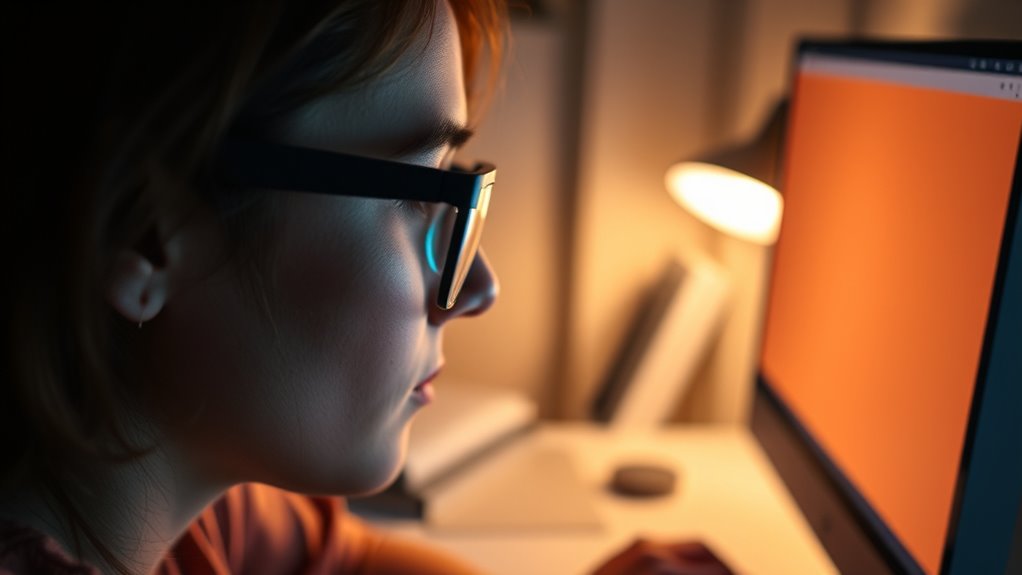
Blue light, a high-energy visible light emitted by screens, can considerably disrupt your sleep patterns. When exposed to blue light at night, your body experiences melatonin suppression, the hormone responsible for signaling sleep. This suppression delays the onset of sleep and reduces sleep quality. Blue light also causes circadian disruption, throwing off your internal biological clock. As a result, your sleep-wake cycle becomes misaligned with natural day and night rhythms. This interference doesn’t just make falling asleep harder; it can also lead to longer periods of wakefulness during the night and less restorative sleep overall. Understanding how blue light impacts melatonin and circadian rhythms helps you see why managing exposure, especially before bedtime, is essential for better sleep health. Additionally, high-energy visible light can increase alertness, making it even harder to wind down after screen time. Recognizing the impact on circadian rhythms underscores the importance of managing blue light exposure for overall sleep quality.
amber blue light glasses for night
As an affiliate, we earn on qualifying purchases.
As an affiliate, we earn on qualifying purchases.
How Blue Light Glasses Function and Their Design
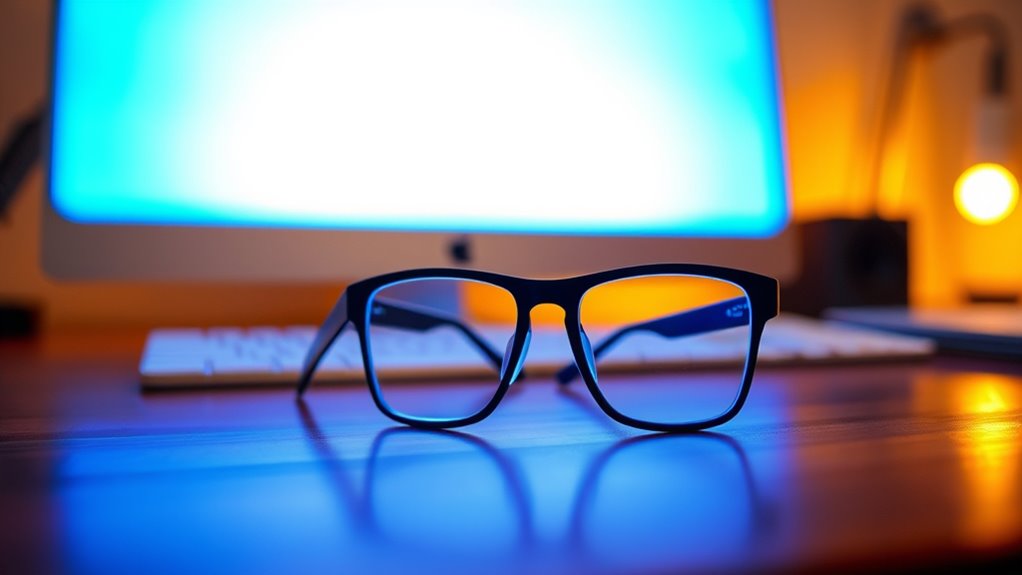
Blue light glasses are specially designed to filter or block the high-energy blue light emitted by screens, helping to protect your sleep from disruption. Their effectiveness depends on the lens tint; darker or amber tints absorb more blue light, offering better protection. Some lenses have a slight yellow hue to improve contrast and reduce eye strain. The frame material also matters—lightweight and durable options like acetate or metal ensure comfort during prolonged wear. The lenses are often coated with anti-reflective layers to minimize glare, enhancing clarity. Overall, the design focuses on balancing filtration with visual comfort. By choosing the right lens tint and sturdy frame material, you can wear these glasses comfortably while shielding your eyes from disruptive blue light. Proper lens tint can significantly impact their effectiveness in filtering blue light, especially when considering the study techniques that help optimize your sleep hygiene. Additionally, selecting glasses with lightweight materials can improve comfort for long-term wear. Incorporating quality manufacturing standards also ensures durability and consistent performance over time.
blue light glasses with anti-reflective coating
As an affiliate, we earn on qualifying purchases.
As an affiliate, we earn on qualifying purchases.
Scientific Evidence Supporting Blue Light Glasses
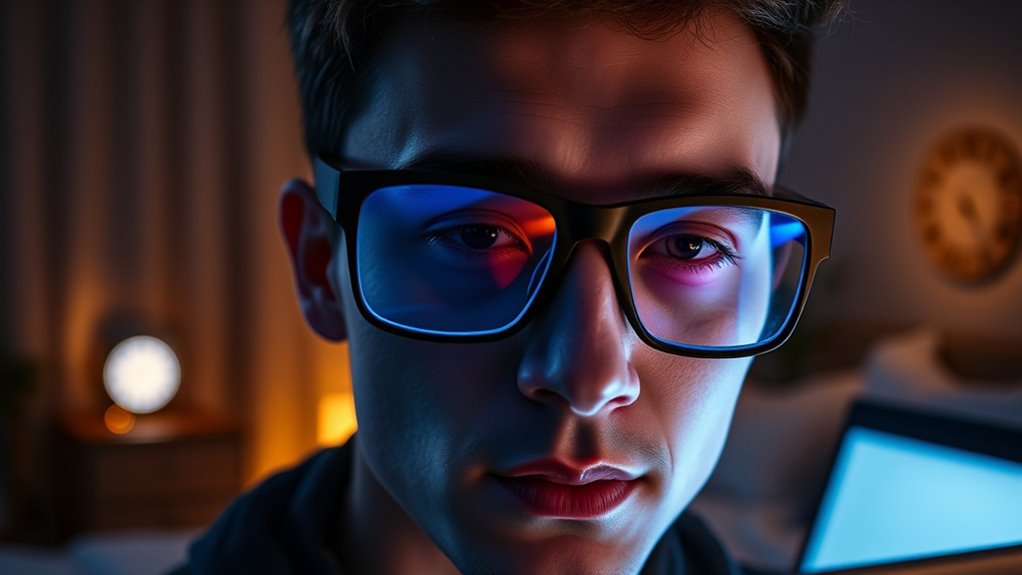
Research shows that blue light glasses can effectively improve sleep quality by reducing exposure to blue light emitted from screens. Scientific studies indicate that wearing these glasses diminishes melatonin suppression caused by blue light, allowing your body to maintain its natural sleep signals. By blocking or filtering blue wavelengths, they help prevent circadian disruption, which occurs when your internal clock is thrown off by artificial light sources in the evening. Multiple clinical trials support their effectiveness, showing increased melatonin levels and better sleep onset times among users. While results can vary, the evidence suggests that blue light glasses are a practical tool for minimizing the negative impact of nighttime screen exposure, helping you align your sleep patterns with your natural circadian rhythms.
lightweight blue light glasses for prolonged wear
As an affiliate, we earn on qualifying purchases.
As an affiliate, we earn on qualifying purchases.
Practical Tips for Improving Sleep Hygiene
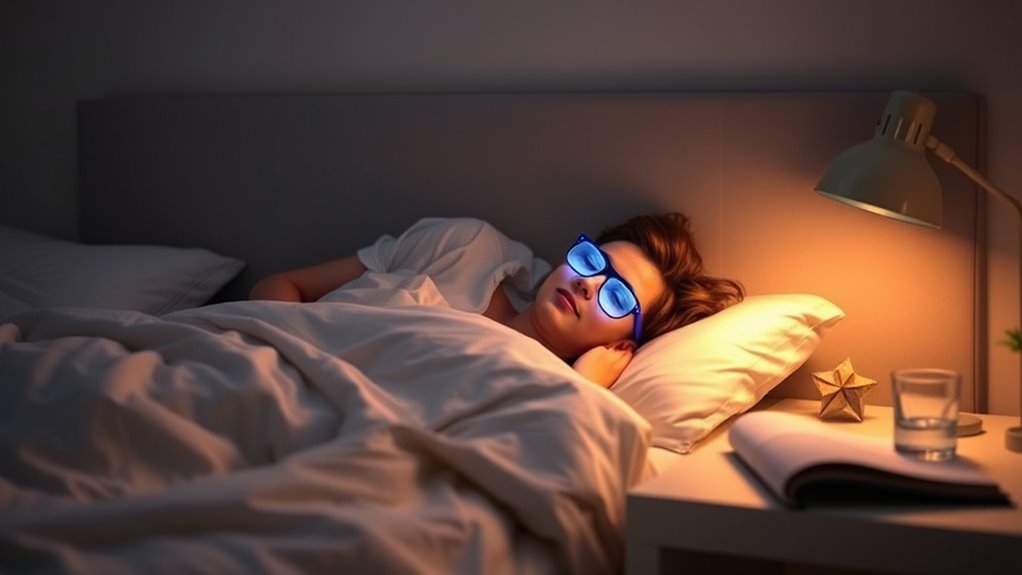
Improving sleep hygiene involves adopting daily habits that promote restful and consistent sleep. Establishing a calming sleep routine helps signal your body it’s time to wind down. Keep your room environment cool, dark, and quiet to create an ideal sleep setting. Limit screen time before bed and avoid bright lights that can interfere with melatonin production. Consistency is key: go to bed and wake up at the same time every day. Using sleep science principles, you can make targeted adjustments to enhance your sleep quality. A good sleep environment can significantly enhance your overall sleep quality and help establish better sleep hygiene. Incorporating sleep-friendly habits can further improve your ability to rest well each night. Creating a consistent sleep schedule supports your body’s natural circadian rhythms, making it easier to fall asleep and wake up refreshed.
Making an Informed Choice: Are Blue Light Glasses Worth It?
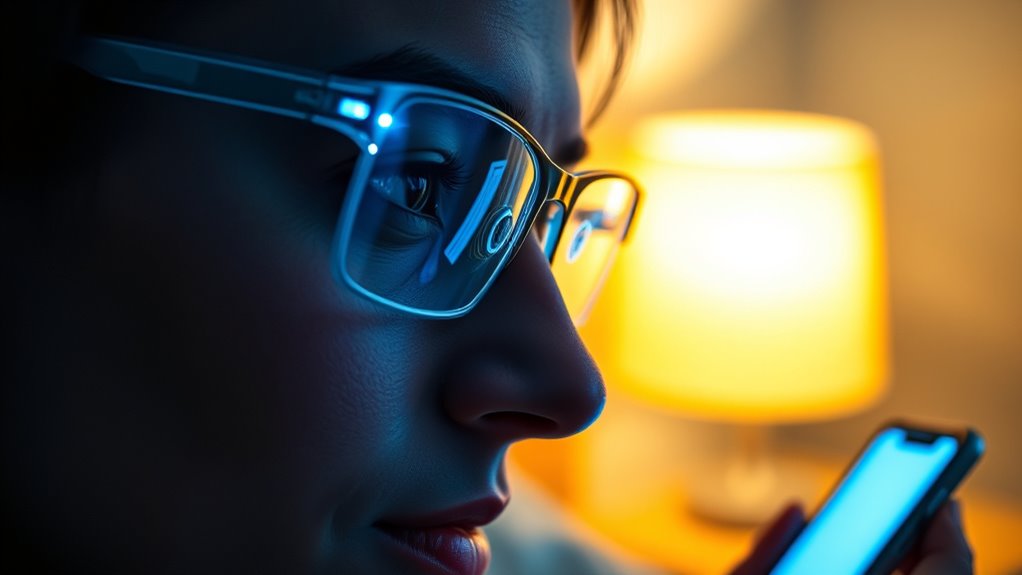
While blue light exposure from screens can disrupt your sleep cycle, investing in blue light glasses might be worth considering. If you often experience eye strain after long screen time, these glasses can help reduce discomfort and improve your viewing experience. However, they’re not a magic fix; a digital detox—reducing screen time before bed—remains essential. Think about your habits: if you’re frequently battling eye strain and struggling to unwind, blue light glasses could be a helpful tool. But if you’re committed to a broader approach, combining glasses with screen breaks and a digital detox will likely yield the best results. Additionally, understanding the impact of blue light on sleep can help you make more informed decisions. Recognizing the effect of environment on sleep quality can guide you in creating healthier bedtime routines and choosing effective solutions. Being aware of how screen time duration influences your sleep can further help you manage your habits better. Incorporating behavioral changes based on social-science research can enhance your sleep hygiene. Increasing awareness of blue light’s biological effects can motivate you to adopt healthier digital habits. Ultimately, weighing the benefits against your lifestyle will help you decide if they’re worth trying.
Frequently Asked Questions
Can Blue Light Glasses Completely Eliminate Sleep Disruptions Caused by Screens?
Blue light glasses can’t completely eliminate sleep disruptions caused by screens, but they can markedly improve your sleep quality. If you’re screen-dependent late at night, these glasses reduce blue light exposure, helping your body produce melatonin naturally. While they aren’t a cure-all, wearing them consistently can lessen the negative impact of screens on your sleep patterns, making it easier to fall asleep and enjoy more restful nights.
Are There Any Side Effects From Wearing Blue Light Glasses Regularly?
Wearing blue light glasses regularly is generally safe, but some people may experience side effects like eye strain or skin irritation around the nose and temples. If you notice discomfort, try adjusting the fit or taking breaks from wearing them. While they can reduce eye strain caused by screens, avoid over-reliance. If issues persist, consult an eye care professional to verify they’re suitable for your needs.
How Long Should I Wear Blue Light Glasses Before Bedtime?
You should wear blue light glasses about 1 to 2 hours before bedtime to reduce screen time’s impact on your eye health and sleep quality. Limiting blue light exposure helps your body produce melatonin naturally, promoting better sleep. Make sure to take breaks from screens, especially in the evening, to protect your eyes and support overall health. Consistent use can enhance your sleep hygiene and eye comfort.
Do Different Brands of Blue Light Glasses Vary in Effectiveness?
Yes, different brands of blue light glasses can vary in effectiveness. You should consider brand reputation and lens quality when choosing. Reputable brands often use higher-quality lenses that block more blue light, enhancing sleep benefits. Cheaper or lesser-known brands might cut corners, reducing effectiveness. Always read reviews, check for certifications, and prioritize brands with proven track records to make certain you get the best possible protection for your eyes and sleep quality.
Are Prescription Blue Light Glasses More Effective Than Non-Prescription Ones?
Prescription blue light glasses tend to be more effective than non-prescription ones because they’re customized to your vision needs, ensuring better eye protection. As you follow fashion trends, you’ll notice stylish frames that fit your face perfectly. Manufacturing processes for prescription glasses involve precise lens crafting, which enhances their effectiveness. So, investing in prescription options can offer superior eye comfort, especially if you spend long hours on screens, compared to standard non-prescription glasses.
Conclusion
So, as you’ve seen, blue light glasses might just be a coincidence of modern tech and your sleep cycle. While they may help some find better rest, the real secret lies in good sleep habits. Sometimes, the simplest changes—like dimming screens before bed—are all you need. Whether these glasses work for you or not, staying mindful of your sleep routine could be the unexpected key to sweeter dreams.
Fall Picks
fall essentials
As an affiliate, we earn on qualifying purchases.