
TL;DR

Get health and wellness essentials delivered free — and shop member deals
- Fast, free delivery on millions of items
- Access to Prime Big Deal Days deals on October 6–7
- Prime Video, Amazon Music and more included
Skilled Nursing News reports that nursing home operators Signature HealthCARE and Trilogy Health Services are expanding specialized staff training and monitoring as residents present with higher acuity, multiple conditions and behavioral challenges. Their approaches include wound care certifications, infection tracking, medication reviews and recurring clinical quality reviews; the report does not provide comparative outcome data.
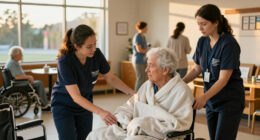
Two nursing home operators are expanding staff training and clinical monitoring for residents with more complex medical and behavioral needs, according to a report published by Skilled Nursing News. Leaders at Signature HealthCARE and Trilogy Health Services described programs covering wound care, infection prevention, medication use and behavioral health, with recurring reviews intended to identify care problems and patterns.
Signature HealthCARE Chief Nursing Officer Barbara Revelette said nurses are administering and monitoring more intravenous medications as resident acuity rises. She said such care requires more nursing time and can add costs even when payment rates for the services increase. “You really have to look at what quality you’re providing, ensuring that you have the proper staff because some of these processes are complex that are coming to us,” Revelette said.
Trilogy Health Services reviews weekly information including unplanned hospitalizations, antipsychotic use, infections, abnormal laboratory results and critical lab reports, according to Senior Vice President and Chief Nursing Officer Rhonda Dempsey. The medical director reviews the data, and recurring patterns can be brought to monthly Quality Assurance and Performance Improvement meetings for further investigation and root-cause analysis.
Both operators described programs to standardize wound care and infection prevention. Trilogy has added a wound-care-certified nurse at each campus and uses a dashboard to track services. Dempsey said it also uses a wound-care formulary, an approved list of dressings and treatments. Signature, meanwhile, sent 150 nurses through wound-care certification over the past two years, Revelette said, using grant funding to support training. Its infection prevention training includes practical demonstrations in which staff perform tasks while an instructor observes.
Training Meets More Complex Care
The programs address a practical challenge for nursing homes: care involving multiple conditions, IV medications, wounds and behavioral needs can require more staff time and specific skills. Operators say standardized procedures and training can help staff provide care consistently across facilities, while monitoring can flag areas that warrant closer review.
The approach also links clinical oversight to resource decisions. Revelette said higher-acuity services bring additional costs alongside increased payment rates. That makes staffing capacity and the quality of care delivered relevant to both residents and operators. The report describes the operators’ methods, but does not establish that these initiatives have reduced infections, hospitalizations or medication use.
wound care certification courses for nurses
As an affiliate, we earn on qualifying purchases.
As an affiliate, we earn on qualifying purchases.
How Operators Review Care
Trilogy’s weekly review is part of a broader cycle: the medical director examines clinical events, and patterns may be discussed at monthly QAPI meetings. Dempsey said these meetings can lead to focused projects. One example is a commitment to seek Joint Commission accreditation for the company’s assisted living properties, a voluntary process that includes on-site surveys and interviews with staff and residents, according to the report.
Medication use is another focus. Dempsey said Trilogy staff work with pharmacy teams to review medications at admission, check whether diagnoses support their use and educate clinicians involved in assisted living care, with particular attention to antipsychotic prescribing. Signature’s training for behavioral challenges often begins during staff onboarding, Revelette said, to help workers recognize when behavior may affect day-to-day care.
“If you’re acquiring and spreading internally, we do a drill down. We set targets company wide, and then monitor what is happening.”
— Rhonda Dempsey, senior vice president and chief nursing officer at Trilogy Health Services
infection prevention training kits for healthcare staff
As an affiliate, we earn on qualifying purchases.
As an affiliate, we earn on qualifying purchases.
Outcomes and Costs Remain Unreported
The report does not provide facility-level data showing whether the programs have changed infection rates, wound outcomes, hospitalizations or antipsychotic use. It also does not compare results across operators or give a full accounting of training, staffing and monitoring costs. The reported figures and practices come from company leaders; the article does not independently verify their effects.
It is also unclear how widely each program has been implemented, how often dashboards trigger corrective action, or whether staffing levels are sufficient across all locations. The report describes initiatives and review processes, rather than measured results or a sector-wide assessment.
intravenous medication administration supplies
As an affiliate, we earn on qualifying purchases.
As an affiliate, we earn on qualifying purchases.
Ongoing Reviews and Certification
Trilogy’s described process will continue through its weekly clinical reviews and monthly QAPI discussions, where staff can examine recurring issues and develop focused improvement projects. Its infection monitoring program compares facility performance with company targets, according to Dempsey.
Signature’s account points to continued investment in certifications, onboarding and practical infection-prevention training. The report does not identify a future deadline for either operator or announce new outcome figures. Further evidence on whether these approaches improve resident outcomes would require later reporting of comparable measures over time.
clinical monitoring dashboard software for nursing homes
As an affiliate, we earn on qualifying purchases.
As an affiliate, we earn on qualifying purchases.
Key Questions
Which nursing home operators are described in the report?
The report covers Signature HealthCARE and Trilogy Health Services, both based in Louisville, Kentucky.
What kinds of clinical programs are involved?
The programs discussed include wound care, infection prevention, behavioral health, antipsychotic reduction and IV medication care. The operators also described staff certifications, training and clinical-data reviews.
How does Trilogy monitor clinical issues?
Trilogy reviews weekly information such as hospitalizations, infections, medication use and laboratory results. Its medical director reviews the information, and patterns may be examined at monthly Quality Assurance and Performance Improvement meetings.
Has the report shown that these programs improve outcomes?
No outcome comparison is provided. The report describes operator practices and leaders’ accounts, but does not quantify whether the programs changed infection rates, hospitalizations, wound outcomes or medication use.
Source: rss
Fall Picks
fall essentials
As an affiliate, we earn on qualifying purchases.