TL;DR

Get health and wellness essentials delivered free with Prime
- Fast, free delivery on millions of items
- Prime Video, Amazon Music and more included
- Member-only deals all year
The idea that women should tailor workouts to their menstrual cycle lacks strong scientific backing. Experts emphasize individual experiences vary, and more research is needed. Current evidence suggests muscle-building ability remains consistent across cycle phases.
There is no strong scientific evidence to support the idea that women should modify their workout routines based on their menstrual cycle, according to experts.
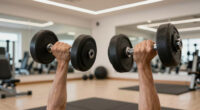
Social media has popularized the notion that women can optimize their fitness by aligning their training with different phases of their menstrual cycle — lifting heavier weights during ovulation and choosing gentler exercises during other times. However, Dr. Marianna Apicella, a researcher at the University of Leicester specializing in female physiology, states that high-quality evidence supporting this practice is lacking. Her research indicates that muscle-building capacity does not significantly fluctuate across the cycle’s phases, including the follicular and luteal phases.
While some women report feeling stronger or weaker at certain times, these perceptions are often linked to symptoms such as cramps, fatigue, or mood changes, rather than physiological differences in muscle performance. Apicella emphasizes that individual experiences vary and that more research is necessary to understand how women’s bodies respond to exercise throughout their cycle.
Why It Matters
This matters because many women are influenced by fitness trends on social media that promote cycle-based training. Without scientific backing, such practices may lead to unnecessary restrictions or misconceptions about women’s physical capabilities. Recognizing that muscle strength remains relatively stable across the cycle can promote more inclusive and individualized approaches to fitness.
As an affiliate, we earn on qualifying purchases.
Background
The idea of syncing workouts with the menstrual cycle gained popularity on social media platforms, with some claiming it can enhance performance and recovery. Scientific research, however, remains limited. Previous studies have shown mixed results, but recent research by Dr. Apicella suggests there is no significant difference in muscle-building ability across cycle phases, challenging the trend’s validity.
“There’s not really much concrete evidence supporting the idea that workout performance varies significantly across the menstrual cycle.”
— Dr. Marianna Apicella
“Everyone’s different, so some might feel stronger at certain points, but symptoms like cramps or fatigue are likely influencing these perceptions.”
— Dr. Apicella
As an affiliate, we earn on qualifying purchases.
What Remains Unclear
It is still unclear how individual differences and symptoms influence perceived workout performance, and whether future research might identify specific cycle-related physiological changes. The current consensus is that more studies are needed to confirm or refute these claims definitively.
As an affiliate, we earn on qualifying purchases.
What’s Next
Researchers plan to conduct more detailed studies on women’s physiological responses to exercise during different cycle phases. Meanwhile, fitness professionals are encouraged to advise clients based on personal comfort and performance rather than cycle-based routines.
As an affiliate, we earn on qualifying purchases.
Key Questions
Should I change my workout routine based on my menstrual cycle?
Current evidence suggests there’s no need to modify your routine solely based on your cycle. Focus on how you feel and your individual performance.
Does my strength fluctuate during my cycle?
Research indicates that muscle-building ability remains broadly consistent across cycle phases, although individual experiences may vary due to symptoms.
Can symptoms like cramps affect my workout performance?
Yes, symptoms such as cramps, fatigue, or mood swings can influence how you feel during exercise, but they do not necessarily reflect changes in physical capacity.
What should I do if I feel less energetic during my period?
Listen to your body and adjust your activity level accordingly. Gentle exercises like yoga or walking may be more suitable during symptomatic days.
Source: Guardian Life
Halloween Picks
halloween
As an affiliate, we earn on qualifying purchases.