
Your circadian rhythm is your body’s internal clock that controls your sleep-wake cycle over roughly 24 hours. It responds to cues like light and darkness, influencing hormones such as melatonin to make you sleepy or alert. The master switch is in your brain’s SCN, which adjusts your cycle based on environmental signals. Disruptions can cause sleep problems and mood swings. Keep your rhythm healthy by sticking to regular habits—if you’re curious, there’s more to explore.

Get health and wellness essentials delivered free — and shop member deals
- Fast, free delivery on millions of items
- Access to Prime Big Deal Days deals on October 6–7
- Prime Video, Amazon Music and more included
Key Takeaways
- The circadian rhythm is a natural 24-hour cycle that regulates sleep, alertness, and bodily functions.
- It is controlled by the suprachiasmatic nucleus (SCN) in the hypothalamus, which responds to light signals.
- External factors like light exposure and sleep schedules influence the internal clock’s synchronization.
- Disruptions to this rhythm can cause sleep issues, mood swings, and hormonal imbalances.
- Maintaining consistent sleep routines and proper light exposure supports a healthy circadian cycle.
blue light blocking glasses for sleep
As an affiliate, we earn on qualifying purchases.
As an affiliate, we earn on qualifying purchases.
What Is the Circadian Rhythm?

The circadian rhythm is the natural, internal process that regulates your sleep-wake cycle over a roughly 24-hour period. It influences your sleep patterns, telling you when to feel alert or sleepy. This internal clock responds to external cues like light and darkness, helping your body prepare for rest or activity. Hormonal fluctuations are a key part of this process, with hormones like melatonin rising at night to promote sleep and decreasing during the day to boost alertness. Your circadian rhythm ensures your body’s functions stay synchronized, so you feel energized when you need to be and tired when it’s time to rest. external cues like light exposure play a crucial role in maintaining and regulating your internal clock. Proper filtration of light signals is essential for accurate synchronization of your circadian rhythm, preventing disruptions that could affect your sleep quality. Additionally, understanding the internal clock’s mechanisms can help optimize your sleep environment for better rest and alertness. Recognizing how light and darkness impact your internal clock can further enhance your sleep hygiene and overall health. Furthermore, understanding these mechanisms can aid in developing personalized sleep strategies to improve overall well-being.
melatonin supplements for sleep regulation
As an affiliate, we earn on qualifying purchases.
As an affiliate, we earn on qualifying purchases.
How the Body Regulates the Internal Clock
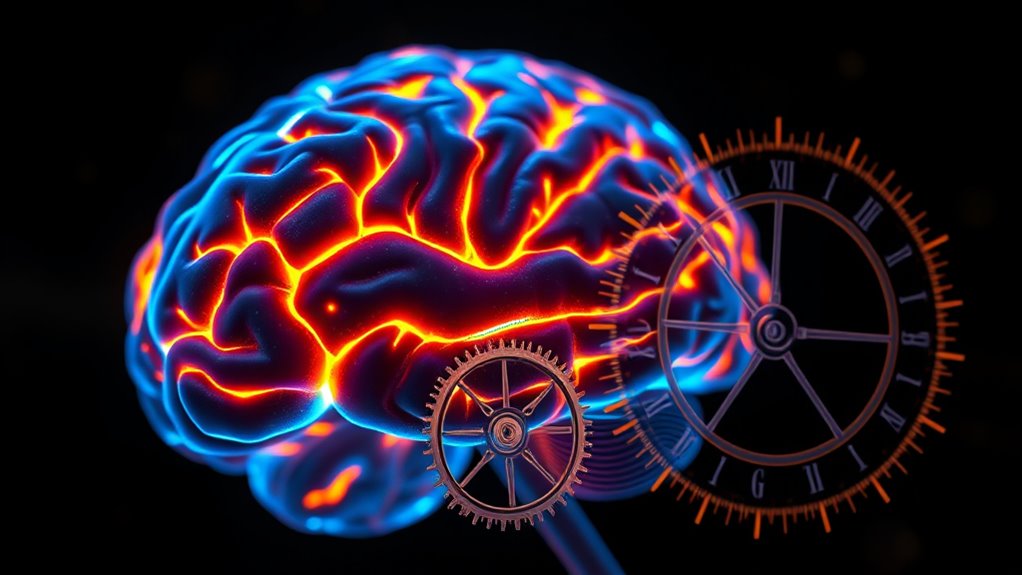
Your body regulates its internal clock primarily through a group of nerve cells called the suprachiasmatic nucleus (SCN), located in the brain’s hypothalamus. The SCN acts as the master control center, coordinating biological processes that keep your sleep-wake cycles in sync with the environment. It receives light signals through your eyes and adjusts signals to other parts of your brain and body. This coordination ensures you feel alert during the day and sleepy at night. The SCN influences hormone release, body temperature, and metabolism, all critical for maintaining your circadian rhythm. By regulating these biological processes, your body keeps your internal clock aligned with the external day-night cycle, supporting healthy sleep patterns and overall well-being. Additionally, understanding circadian rhythm regulation can help optimize your daily routines for better health. Recognizing how light exposure impacts the internal clock can further improve your sleep quality and daily productivity. Consistent routines, proper light management, and biological clock synchronization are essential tools for maintaining a healthy circadian rhythm.
smart sleep trackers with circadian rhythm analysis
As an affiliate, we earn on qualifying purchases.
As an affiliate, we earn on qualifying purchases.
Factors That Influence Your Circadian Rhythm

Multiple factors can influence your circadian rhythm, causing it to shift or become irregular. Light exposure plays a crucial role; bright light in the evening can delay your internal clock, making you feel sleepy later, while morning light helps reset it, promoting earlier sleep times. Melatonin production is also essential—it’s a hormone your body releases in response to darkness, signaling that it’s time to sleep. Disrupting this process, such as exposure to artificial light at night or irregular sleep schedules, can interfere with melatonin levels, leading to difficulty falling asleep or feeling rested. Understanding light exposure patterns can help you better regulate your sleep cycle. In addition, the influence of modern technology like screens and electronic devices can significantly affect melatonin production, further disrupting your internal clock. Environmental cues, like shift work or travel across time zones, further impact your internal clock. Recognizing these factors helps you understand how external influences can alter your circadian rhythm and affect your overall sleep health. For example, artificial light at night can suppress melatonin more than natural light, making it harder to fall asleep.
light therapy lamps for circadian rhythm
As an affiliate, we earn on qualifying purchases.
As an affiliate, we earn on qualifying purchases.
Signs of a Disrupted Internal Clock

When your internal clock becomes disrupted, you may notice changes in your sleep patterns and daily functioning. Sleep disturbances are common, causing you to struggle falling asleep or waking frequently. Hormonal imbalances may also occur, leading to irregular appetite, mood swings, and low energy. Here are some signs to watch for:
- Inconsistent sleep schedule and difficulty waking up
- Feeling tired despite enough hours of sleep
- Sudden changes in mood or appetite
Maintaining connected fitness technology can help monitor and support your circadian health. These symptoms indicate your internal rhythm isn’t syncing properly, affecting your overall health. Recognizing these signs early helps you address potential issues before they escalate, supporting your body’s natural cycle. Disruptions can also impact hormonal regulation, further affecting your well-being. Additionally, irregular routines can interfere with your biological clock, making it harder for your body to restore balance overnight.
Tips for Maintaining a Healthy Circadian Cycle

Maintaining a healthy circadian cycle requires consistent habits that support your body’s natural rhythms. Prioritize good sleep hygiene by sticking to a regular sleep schedule, even on weekends. Create a relaxing bedtime routine and keep your sleep environment cool, dark, and quiet. Managing light exposure is essential—seek natural light during the day to reinforce your internal clock and limit screen time before bed to avoid blue light, which can disrupt melatonin production. Use blackout curtains or a sleep mask if needed. Staying active during daylight hours also helps regulate your cycle. Incorporating cultural symbols for strength into your routine can serve as a reminder of resilience and perseverance in maintaining healthy habits. Additionally, regularly reviewing and adjusting your habits based on goal tracking can optimize your circadian health. Being mindful of light exposure patterns can further enhance your circadian rhythm and overall sleep quality. Recognizing the importance of circadian rhythm regulation can motivate you to stick to these healthy habits. By establishing these habits, you’ll promote better sleep quality and keep your circadian rhythm balanced, supporting overall health and well-being.
Frequently Asked Questions
How Does Age Affect Circadian Rhythm?
As you age, your circadian rhythm experiences developmental changes and aging effects that can disrupt your sleep patterns. You might find it harder to fall asleep, wake up earlier, or feel less refreshed. These changes happen because your internal clock shifts and becomes less synchronized with external cues like light. Recognizing these aging effects helps you adapt your routines, ensuring better sleep and overall well-being as you grow older.
Can Shift Work Permanently Alter Internal Clocks?
Like a ship thrown off course, shift work can permanently alter your internal clock. You might experience ongoing sleep deprivation and disrupted hormone regulation, making it hard to reset your circadian rhythm. Over time, this misalignment can lead to health issues. To minimize damage, try maintaining consistent sleep schedules, even with shift work, and prioritize light exposure and sleep hygiene to support your body’s natural timing.
What Role Does Light Therapy Play in Resetting the Clock?
Light therapy helps reset your internal clock by providing controlled light exposure that influences melatonin regulation. When you sit in front of a specialized light box, it signals your brain to adjust your circadian rhythm, especially if your sleep schedule is out of sync. Regular exposure to bright light at strategic times can promote wakefulness during the day and better sleep at night, effectively resetting your internal clock.
Are There Genetic Factors Influencing Circadian Patterns?
Your circadian patterns are influenced by genetic predisposition, meaning some people naturally have different sleep-wake cycles. Variations in circadian genes can affect how your internal clock functions, making you more prone to staying awake late or waking early. These genetic factors can also impact your response to light therapy and overall sleep quality. Understanding your genetic makeup can help you tailor strategies to improve your sleep and daily rhythm.
How Does Jet Lag Specifically Disrupt Internal Timing?
Imagine you’re in 1928, and jet lag throws your internal clock into chaos. It disrupts your sleep cycle by confusing your brain’s timing signals, especially affecting melatonin production. This hormone, which signals sleepiness, gets out of sync with your new time zone, making you feel exhausted or alert at odd hours. As a result, your body’s natural rhythm struggles to adjust, causing ongoing sleep cycle disruption until your internal clock realigns.
Conclusion
Now that you understand how your internal clock guides every waking moment, think of your circadian rhythm as the maestro of your life, conducting your body’s symphony with the precision of a master. When it’s in sync, you feel unstoppable, like a superhero soaring through each day. But if it’s out of tune, chaos erupts—like a wild storm tearing through your days and nights. Keep it balanced, and watch your life turn into a masterpiece of harmony!
Cold & flu season Picks
humidifiers
As an affiliate, we earn on qualifying purchases.